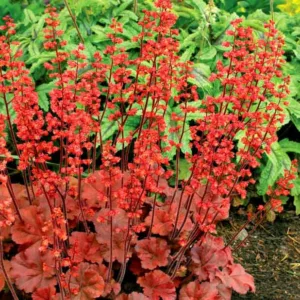
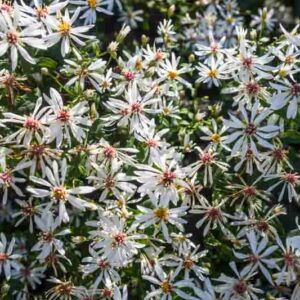
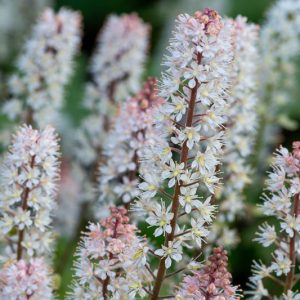
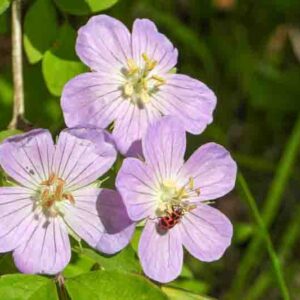
Alumroot, American Alumroot, American Alum Root, American Sanicle, Coral Bells, Rock Geranium, Heuchera glauca
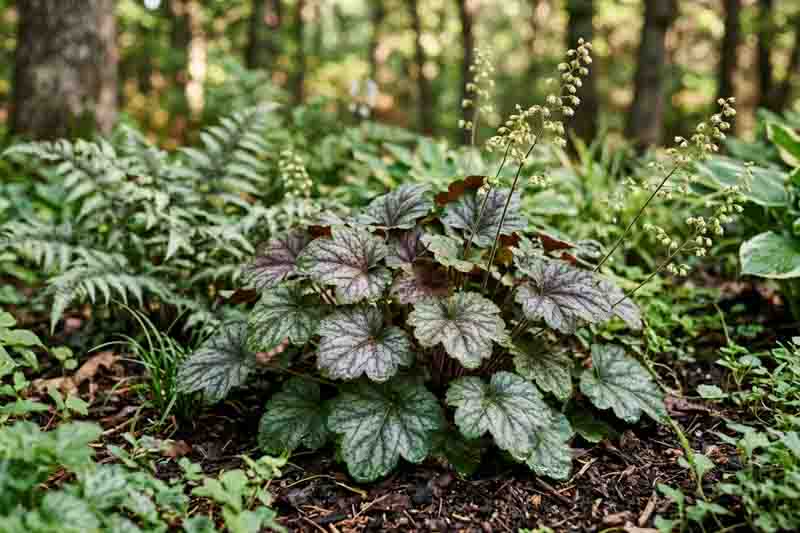


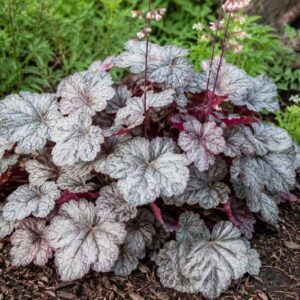
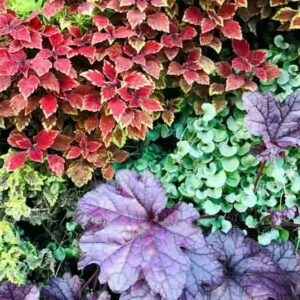
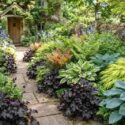
Some shade plants earn their place with flowers. Heuchera americana (American Alumroot) does it with leaves. Its softly lobed foliage forms neat mounds, often patterned with silver, bronze, or purple veins that catch the light beneath trees. In spring, slender flowering stems rise above the leaves, carrying clouds of tiny, bell-shaped blooms.
Native to eastern North America, this adaptable perennial is particularly useful along woodland paths, shaded borders, and rocky slopes. It offers color and texture long after spring wildflowers have finished blooming, provided its roots have good drainage and protection from excessive summer heat.
Summary: North American native clump-forming perennial with decorative, lobed foliage and delicate spring flowers.
Use: Ideal for woodland gardens, shade borders, shaded slopes, pathways, and native plantings.
Highlight: Attractive foliage throughout the growing season, with naturally variable leaf markings and valuable flowers for pollinators.
Wildlife: Visited by bees and other beneficial insects; generally resistant to deer browsing.
| Botanical Name | Heuchera americana L. |
|---|---|
| Family | Saxifragaceae (Saxifrage Family) |
| Common Names | American Alumroot, American Alum Root, Coral Bells, Rock Geranium |
| Native Range | Eastern and central United States and southeastern Canada |
| Plant Type and Habit | Clump-forming herbaceous perennial with a basal rosette; foliage may persist through mild winters |
| Hardiness | USDA Zones 4-9 |
| Size | Foliage typically 6-12 in. tall (15-30 cm); flower stalks 1-3 ft. (30-90 cm); spreads about 12-18 in. (30-45 cm) |
| Exposure | Partial shade to dappled shade; morning sun tolerated with sufficient moisture |
| Soil | Humus-rich, acidic to slightly acidic, well-drained soil; tolerates occasional dryness once established |
| Foliage | Rounded, heart-shaped, shallowly lobed leaves, green or marked with silver, bronze, or purple |
| Flowers | Tiny greenish, creamy, or pinkish-purple bells on airy stems, mainly spring to early summer |
American Alumroot belongs to the Saxifragaceae family and occurs naturally in eastern and central North America. It inhabits rocky woods, forest slopes, and shaded rock outcrops, often in acidic soils. Unlike many modern ornamental Coral Bells, it is a naturally occurring species.
The plant forms a dense basal rosette from a short crown, gradually developing into a rounded clump. Most foliage remains under 12 in. tall, while slender flowering stems can rise 1-3 ft. above the leaves. Mature clumps generally spread 12-18 in. across.
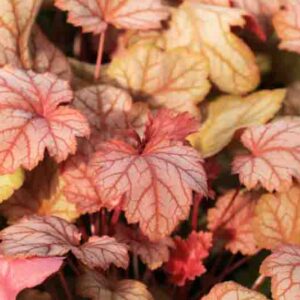
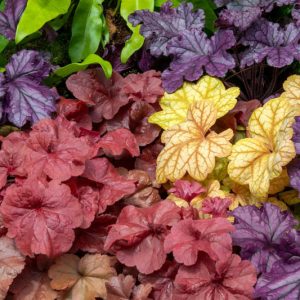
Each long-stalked leaf is broadly rounded to heart-shaped, with shallow lobes and scalloped edges. Some plants are predominantly green; others display silvery marbling, purple veins, or bronze tones. Individual plants and cultivars vary considerably, so wild-type foliage should not be expected to match the vivid colors of every nursery selection.
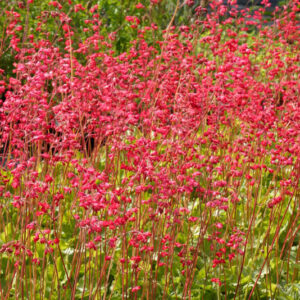
In spring and early summer, thin stems carry loose sprays of tiny, drooping flowers, often creamy, greenish, or faintly purple. Orange-tipped stamens may be visible close up. The flowers develop into small, dry seed capsules.
Hardy in USDA Zones 4-9, American Alumroot is grown chiefly for its foliage. Leaves may remain attractive through mild winters but can die back in colder conditions. New growth emerges from the crown in spring.
The flowers provide nectar for bees and other pollinating insects. NCSU also identifies the genus Heuchera as a resource for the specialist bee Colletes aestivalis. Allowing some flowering stems to remain benefits pollinators even when the foliage is the main ornamental attraction.
American Alumroot is generally considered resistant to deer and rabbits because its tannin-rich foliage is relatively unpalatable. Hungry animals may still browse young plants.
Established plants tolerate occasional dry soil, particularly in cool shade. However, prolonged drought can cause leaf scorch or wilting. Dry-shade tolerance should not be confused with an ability to thrive in hot, exposed, drought-stricken beds.
Heuchera americana is not generally recognized as a significantly poisonous ornamental, but reliable species-specific toxicological information is limited. It should not be treated as edible, and pets should be discouraged from chewing garden plants.
American Alumroot is native within much of eastern and central North America and is not generally considered an invasive garden plant. Clumps enlarge gradually, and seedlings may appear where conditions are favorable.
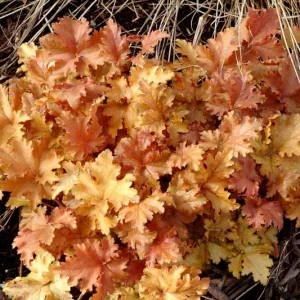
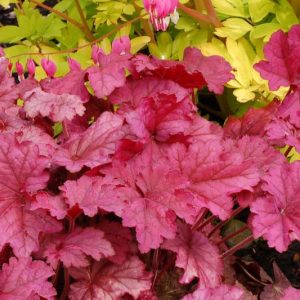
Many colorful Coral Bells sold at garden centers are hybrids involving several Heuchera species. Purple, lime-green, orange, and nearly black foliage varieties are not necessarily pure H. americana.
For a regional native planting, check the botanical label and the plant’s provenance. Some selections of American Alumroot preserve the species’ distinctive veining, while named hybrids may have different parentage, size, or heat tolerance.
A nursery label saying “Coral Bells” does not identify a species. For a native woodland garden, look specifically for Heuchera americana, then check whether the plant is a wild-type selection, a named cultivar, or a hybrid. These distinctions matter when selecting plants for locally appropriate native landscapes.
Partial shade or dappled woodland light is ideal. Morning sun is usually tolerated, especially in cooler climates. In hot regions, afternoon shade protects foliage from scorching. Deep shade may reduce flowering and produce looser growth.
Plant in humus-rich, well-drained soil, preferably slightly acidic. Water regularly during establishment, then irrigate during extended dry periods. Avoid heavy, persistently wet soil, especially around the crown, where rot may develop.
American Alumroot tolerates cold winters across much of its range. In hot, humid summers, good drainage and air movement become particularly important. Avoid crowding foliage beneath dense shrubs or against walls where moisture lingers.
Ground beneath mature trees can become surprisingly dry because roots compete for water. Before planting American Alumroot, check both light and soil moisture. A shaded slope with loose, moisture-retentive soil may suit it better than compacted ground directly beneath a thirsty tree.
Plant in spring or early fall, spacing clumps approximately 12-18 in. apart. Set the crown at soil level rather than burying it beneath mulch. A light dressing of leaf mold helps conserve moisture and resembles the natural woodland floor.
Remove damaged winter leaves in spring and trim spent flower stalks if a neater appearance is preferred. Older clumps sometimes develop raised, woody crowns or lose vigor. Lift and divide healthy sections every 3-4 years when needed, replanting them at the proper depth.
Division is the simplest method. Seeds may also be sown, but seedlings can vary in leaf coloration and will not necessarily resemble a named cultivar. For consistent foliage patterns, use division or other vegetative propagation.
American Alumroot is generally low maintenance, but crown health, soil drainage, and summer exposure deserve attention.
| What You See | Possible Cause | Check First |
|---|---|---|
| Brown, crispy leaf edges | Heat, intense sun, or dry soil | Afternoon exposure and moisture |
| Yellow leaves, soft crown | Excess moisture or crown rot | Drainage and planting depth |
| Wilting despite wet soil | Possible root damage | Root health and soil saturation |
| Ragged leaf edges | Slugs, snails, or other feeding | Leaf undersides and nighttime activity |
| White powdery coating | Powdery mildew | Air circulation and crowded foliage |
| Older clump loses vigor | Aging crown or unsuitable conditions | Crown position and need for division |
Vine weevil larvae can occasionally damage roots and crowns, particularly in containers. Inspect declining plants before treating for pests, since drought and waterlogging can produce similar above-ground symptoms.
If foliage collapses unexpectedly, gently inspect the central crown. A firm crown with dry surrounding soil suggests a different problem from a soft, decaying crown in waterlogged ground. Identifying the cause before adding more water can save the plant.
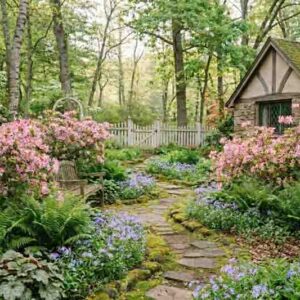
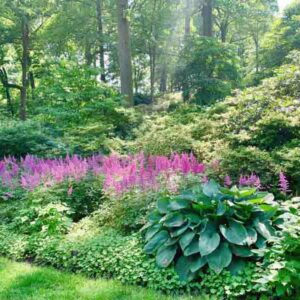
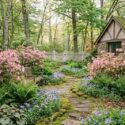
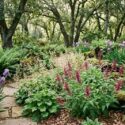
Use its patterned foliage as a repeating ground layer among flowering woodland plants. These eastern North American natives share broadly compatible requirements for partial shade and reasonably well-drained soil.
Repeat three to five Alumroot clumps along a shaded path, thread Woodland Phlox between them, and anchor the planting with Christmas Ferns. Add Foam Flower where the soil remains consistently moist. The spring flowers fade, but contrasting leaf shapes keep the border interesting for months.
Yes. American Alumroot is native to much of the eastern and central United States and southeastern Canada, occurring naturally in rocky woodlands and shaded slopes.
Yes. It performs best in partial or dappled shade, particularly in warm regions. Morning sun is usually tolerated, but intense afternoon sun can scorch the leaves.
Established plants tolerate occasional dry soil, especially in shade, but prolonged drought can cause wilting and leaf scorch. Water during extended dry periods.
Generally, yes. Its tannin-rich foliage is relatively unpalatable to deer and rabbits, although hungry animals may still browse it.
No. Heuchera americana is a native species, while many colorful Coral Bells sold in nurseries are hybrids involving multiple Heuchera species. Check the botanical label and provenance.
Royal Botanic Gardens, Kew – Heuchera americana: Taxonomy and Native Distribution.
North Carolina State Extension – American Alumroot: Growing Conditions and Wildlife Value.
North Carolina State Extension – Heuchera: Cultivation and Propagation.
Updated: October 2026
| Hardiness |
4 - 9 |
|---|---|
| Plant Type | Perennials |
| Plant Family | Saxifragaceae |
| Genus | Heuchera |
| Common names | Alum Root, Coral Bells |
| Exposure | Full Sun, Partial Sun |
| Season of Interest | Spring (Mid, Late), Summer (Early, Mid, Late), Fall, Winter |
| Height | 1' - 3' (30cm - 90cm) |
| Spread | 1' - 2' (30cm - 60cm) |
| Spacing | 12" - 18" (30cm - 50cm) |
| Maintenance | Low |
| Water Needs | Average |
| Soil Type | Clay, Loam, Sand |
| Soil pH | Neutral |
| Soil Drainage | Moist but Well-Drained |
| Characteristics | Cut Flowers, Showy |
| Native Plants | Alabama, Arkansas, Connecticut, Delaware, Georgia, Illinois, Indiana, Kentucky, Louisiana, Maryland, Michigan, Midwest, Mississippi, Missouri, New Jersey, New York, North Carolina, Northeast, Ohio, Oklahoma, Pennsylvania, South Carolina, Southeast, Southwest, Tennessee, United States, Virginia, West Virginia |
| Tolerances | Deer, Drought, Dry Soil, Rabbit, Clay Soil, Black Walnut |
| Attracts | Bees |
| Garden Uses | Banks And Slopes, Beds And Borders, Ground Covers, Patio And Containers, Rain Gardens, Underplanting Roses And Shrubs |
| Garden Styles | City and Courtyard, Coastal Garden, Gravel and Rock Garden, Informal and Cottage, Pollinator Garden, Woodland Garden |
| Toxic to Humans | No known toxicity |
| Toxic to Cats | Not toxic |
| Toxic to Dogs | Not toxic |
| Toxic to Horses | Not toxic |


| Hardiness |
4 - 9 |
|---|---|
| Plant Type | Perennials |
| Plant Family | Saxifragaceae |
| Genus | Heuchera |
| Common names | Alum Root, Coral Bells |
| Exposure | Full Sun, Partial Sun |
| Season of Interest | Spring (Mid, Late), Summer (Early, Mid, Late), Fall, Winter |
| Height | 1' - 3' (30cm - 90cm) |
| Spread | 1' - 2' (30cm - 60cm) |
| Spacing | 12" - 18" (30cm - 50cm) |
| Maintenance | Low |
| Water Needs | Average |
| Soil Type | Clay, Loam, Sand |
| Soil pH | Neutral |
| Soil Drainage | Moist but Well-Drained |
| Characteristics | Cut Flowers, Showy |
| Native Plants | Alabama, Arkansas, Connecticut, Delaware, Georgia, Illinois, Indiana, Kentucky, Louisiana, Maryland, Michigan, Midwest, Mississippi, Missouri, New Jersey, New York, North Carolina, Northeast, Ohio, Oklahoma, Pennsylvania, South Carolina, Southeast, Southwest, Tennessee, United States, Virginia, West Virginia |
| Tolerances | Deer, Drought, Dry Soil, Rabbit, Clay Soil, Black Walnut |
| Attracts | Bees |
| Garden Uses | Banks And Slopes, Beds And Borders, Ground Covers, Patio And Containers, Rain Gardens, Underplanting Roses And Shrubs |
| Garden Styles | City and Courtyard, Coastal Garden, Gravel and Rock Garden, Informal and Cottage, Pollinator Garden, Woodland Garden |
| Toxic to Humans | No known toxicity |
| Toxic to Cats | Not toxic |
| Toxic to Dogs | Not toxic |
| Toxic to Horses | Not toxic |
How many Heuchera americana (American Alum Root) do I need for my garden?
| Plant | Quantity | |
|---|---|---|
| Heuchera americana (American Alum Root) | N/A | Buy Plants |
Create a membership account to save your garden designs and to view them on any device.
Becoming a contributing member of Gardenia is easy and can be done in just a few minutes. If you provide us with your name, email address and the payment of a modest $25 annual membership fee, you will become a full member, enabling you to design and save up to 25 of your garden design ideas.
Join now and start creating your dream garden!