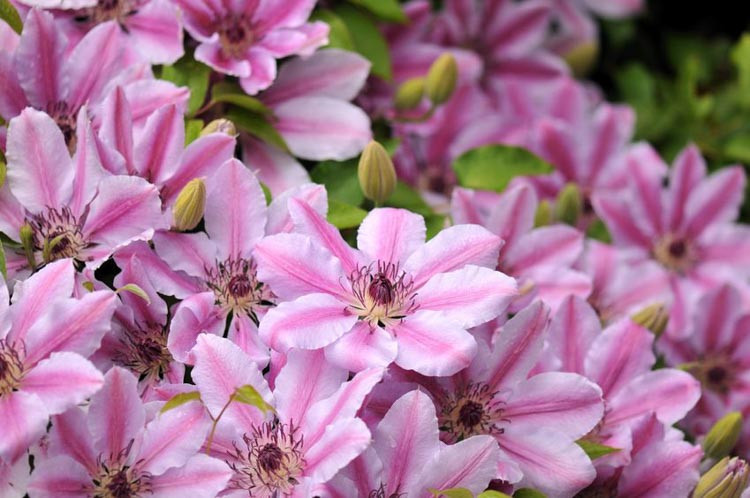
Flowering Vine Garden Ideas
Imagine a garden arch smothered in purple clematis, a pergola draped with fragrant wisteria, or a plain fence transformed by colorful honeysuckle. Flowering vines bring a special kind of magic to gardens, adding height, color, fragrance, and a wonderful sense of enclosure. Best of all, you don’t need a large garden to enjoy them. A carefully chosen climber can transform a small courtyard, soften an ordinary wall, or create a beautiful flowering entrance. Explore inspiring flowering vine garden ideas, discover stunning plant combinations, and learn how to create a lush, inviting garden that feels naturally beautiful.
Explore Beautiful Flowering Vine Ideas for Pergolas, Garden Arches, Fences, and Walls
Flowering vines can transform the appearance and atmosphere of almost any outdoor space. The best designs combine an attractive structure with a climber whose mature size, flowering habit, and growth rate suit the setting.
How do you create a spectacular flowering pergola? Wisteria is famous for its cascading clusters of purple, lavender, pink, or white flowers. A mature wisteria can create a breathtaking overhead display, particularly when its flowers hang freely beneath a substantial pergola. For a North American native option, consider Wisteria frutescens (American Wisteria). It generally grows less aggressively than Chinese or Japanese wisteria, although it still needs a strong support and regular pruning.
What are the most beautiful flowering vines for garden arches? Clematis is an excellent choice because its flowers come in so many colors and forms. Deep purple Clematis ‘Jackmanii’ creates a striking summer display, while earlier-flowering clematis can bring color to spring entrances. Choose varieties suited to the arch’s size and train the stems gently across the structure.
How can you transform a plain fence with flowering vines? A trellis or horizontal wire system allows honeysuckle, clematis, jasmine, and other flowering climbers to spread across a fence. Coral honeysuckle is especially attractive where hummingbirds are present, while star jasmine creates an elegant evergreen covering in mild climates. Let some of the fence remain visible rather than forcing every stem into a dense tangle.
What flowering vines look beautiful against house walls? White clematis, fragrant jasmine, and climbing hydrangea can soften masonry and add charm to an ordinary facade. Climbing Hydrangea is particularly effective against substantial, suitable walls in partially shaded gardens. Because it attaches using aerial rootlets, avoid planting it directly against damaged masonry, fragile finishes, or surfaces that may need frequent repairs.
How do you create a fragrant garden entrance? Position star jasmine or an appropriately sized fragrant honeysuckle near a doorway, pathway, or seating area. Their flowers add an extra dimension to the garden, particularly during warm weather. A simple arch or trellis is often enough to create a memorable entrance without overwhelming the surrounding planting.
Can flowering vines create a beautiful privacy screen? Yes. Evergreen star jasmine can provide lasting foliage coverage in suitable climates, while honeysuckle and clematis create attractive seasonal screens. Choose plants whose growth can be managed without overwhelming nearby shrubs or buildings. Remember that deciduous vines generally provide little screening during winter.
What are the best flowering vine ideas for small courtyards? Compact clematis, black-eyed Susan vine, and container-grown jasmine are attractive choices. Use narrow trellises or freestanding obelisks to introduce height without sacrificing floor space. Limit the planting to one or two complementary colors for a more elegant result.
How can flowering vines enhance a Mediterranean garden? Fragrant jasmine, passionflower, and certain clematis are beautiful choices for sheltered courtyards and sunny walls. Combine them with lavender, rosemary, silver foliage, and warm-toned paving for a relaxed, sun-loving atmosphere. Match the plants to your actual winter temperatures rather than relying on garden style alone.
Gardenia’s design tip: Treat the support as part of the garden’s architecture. An attractive wooden arbor, simple metal arch, or beautifully proportioned pergola adds interest even when the flowering vine is dormant.
Explore Gardenia’s Arbor, Pergola, and Trellis Garden Ideas, A Beautiful Clematis-Covered Entrance, and Climbers for Mediterranean-Style Gardens.
Discover Stunning Flowering Vine Combinations with Clematis, Wisteria, Jasmine, and Roses
Combining flowering vines can create extraordinary displays, especially when the plants complement one another in flower color, shape, and blooming season. The secret is choosing compatible climbers that share suitable growing conditions without competing for space or overwhelming their support.
Wisteria with spring-flowering clematis: For a spectacular spring display, combine cascading wisteria flowers with the delicate blossoms of Clematis montana. The contrast between hanging wisteria racemes and numerous smaller clematis flowers is particularly beautiful on a substantial arch or pergola. Both are vigorous, so this combination needs considerable room and a very strong structure. Discover Gardenia’s A Super Climbing Duo with Clematis montana and Wisteria.
Pink climbing roses with purple clematis: Few garden combinations are more romantic. Soft pink roses provide generous, rounded flowers, while purple clematis introduces contrasting star-shaped blossoms. Explore Gardenia’s Pink Climbing Rose and Purple Clematis Combination, a lovely choice for cottage garden arches and trellises.
Blush-white roses with striped clematis: Rosa ‘Madame Alfred Carrière’ and Clematis ‘Nelly Moser’ create a wonderfully delicate display in soft pink and creamy white. Their contrasting flower forms look especially attractive against traditional stone or weathered timber. Discover Romantic Blush Rose and Pink-Striped Clematis.
Apricot roses with lavender-blue clematis: Warm apricot and salmon-pink flowers contrast beautifully with cool blue and purple clematis. Rosa ‘Compassion’, Clematis ‘Perle d’Azur’, and Clematis ‘Comtesse de Bouchaud’ create a colorful combination for a generously sized garden structure. Explore Gardenia’s Romantic Apricot, Blue, and Pink Climbing Combination.
Golden roses with violet clematis: Yellow and purple create a particularly striking contrast. Rosa ‘Graham Thomas’ and Clematis ‘Wisley’ offer warm golden flowers paired with violet-blue blooms. See Gardenia’s Beautiful Yellow Rose and Purple Clematis Combination.
Coral honeysuckle with blue-flowering perennials: The tubular red-orange flowers of Lonicera sempervirens make a beautiful contrast with blue salvias, nepeta, or other locally adapted perennials. Train the honeysuckle along a fence and repeat the blue flowers in generous groups at its base for a naturalistic, wildlife-friendly design.
Star jasmine with lavender and silver foliage: In a mild, sunny courtyard, the fragrant white flowers and dark evergreen leaves of star jasmine contrast beautifully with lavender and silvery Mediterranean-style plants. Choose a well-drained planting position and adjust watering to accommodate each plant’s needs.
Passionflower with ornamental grasses: The intricate flowers of passionflower look especially striking against the fine textures of ornamental grasses. Train the vine on a trellis or fence and use grasses as a softer foreground. Choose regionally appropriate species and leave enough room for vigorous summer growth.
Should you combine flowering vines that bloom together? Not always. Simultaneous flowering creates a dramatic, concentrated display, while combinations with staggered bloom times can extend garden interest from spring through fall. Choose according to whether your priority is maximum seasonal impact or a longer flowering period.
Can two vigorous flowering vines share the same pergola? Sometimes, but caution is essential. Wisteria and Clematis montana, for example, can both become substantial plants. Their combined weight and growth may overwhelm an ordinary domestic structure. In smaller gardens, one vigorous vine combined with lower-growing companion plants is often a better solution.
Gardenia’s combination advice: Choose one dominant flowering vine and let its flowers be the focus. Use complementary climbers or perennials to add contrast, not competition. A simple planting with two or three carefully chosen species often creates a more beautiful result than an overcrowded mixture.
Explore Gardenia’s Arbor, Pergola, and Trellis Plant Combinations, Combining Roses and Clematis, and Beautiful Clematis Varieties.
Learn How to Design Flowering Vine Gardens for Pollinators, Privacy, Small Spaces, and Year-Round Beauty
A beautiful flowering vine garden is more than a collection of climbing plants. The most successful designs consider fragrance, seasonal interest, wildlife, proportions, and the way the planting connects with surrounding borders and garden structures.
How do you create a pollinator-friendly flowering vine garden? Choose flowering climbers that provide useful resources for local wildlife. Coral honeysuckle attracts hummingbirds, native passionflower supports certain butterfly species, and suitable flowering vines can provide nectar or pollen for bees. Combine climbers with nectar-rich perennials that flower at different times to extend the season of interest.
Which native flowering vines are best for wildlife? In suitable parts of North America, Coral Honeysuckle, American Wisteria, and Maypop can be valuable choices. Their native ranges and ecological benefits differ, so select plants appropriate to your region rather than assuming every North American native is suitable everywhere.
How can flowering vines improve a small garden? Vertical planting creates more greenery without occupying much ground space. A compact clematis on a narrow trellis, black-eyed Susan vine climbing a container obelisk, or fragrant jasmine covering a sheltered fence can make a small courtyard feel richer and more inviting.
How do you create a private, flower-filled seating area? Use a pergola, trellis screen, or fence planted with appropriately sized vines. Star jasmine can provide evergreen coverage in suitable climates, while deciduous flowering vines offer seasonal shade and color. Position the support to frame the seating area without blocking circulation or making the space feel enclosed and dark.
Can flowering vines provide natural shade? Yes. Vigorous vines trained across a sturdy pergola can create attractive summer shade. Deciduous vines offer the added advantage of allowing more sunlight through after their leaves fall. However, the structure must be strong enough to support the mature plant, particularly with woody climbers such as wisteria.
How do you design a fragrant flowering vine garden? Place strongly scented climbers near frequently used paths, doorways, windows, and seating areas. Star jasmine is particularly rewarding in mild climates, while selected honeysuckle and wisteria cultivars provide additional fragrance. Consider flowering time so the perfume can be enjoyed during the months when the outdoor space is most frequently used.
What companion plants look best beneath flowering vines? Hardy geraniums, nepeta, salvia, lavender, and ornamental grasses can create beautiful layered borders, provided their growing requirements suit the site. Use lower-growing plants to soften the base of the support and repeat a few species to give the planting visual cohesion.
How can you create year-round interest? Combine flowering vines with evergreen foliage, spring bulbs, summer perennials, and plants with attractive autumn textures. Evergreen star jasmine can provide winter structure in mild regions, while the woody framework of deciduous vines and an attractive pergola can remain visually interesting during dormancy.
Are flowering vines suitable for contemporary gardens? Absolutely. A single flowering climber against a clean-lined trellis can create a powerful focal point. Choose a restrained color palette and combine it with simple foliage plants or ornamental grasses. Avoid excessive species diversity that competes with the architecture.
What are the biggest mistakes when designing a flowering vine garden?
- Choosing vines that grow too large: A vigorous wisteria or trumpet vine can overwhelm an ordinary trellis or small courtyard.
- Using inadequate supports: Always match the structure to the mature weight and climbing habit of the plant.
- Ignoring flowering seasons: A garden can look spectacular for two weeks and uninteresting for the rest of the year if bloom times are not considered.
- Overcrowding the planting: Too many climbers competing for the same support can reduce airflow and make pruning difficult.
- Overlooking invasiveness: Some flowering vines spread aggressively in particular climates and should be avoided where they threaten local ecosystems.
- Forgetting maintenance access: Leave enough room to prune, tie stems, inspect supports, and keep pathways clear.
Gardenia’s final design advice: Start with the structure and the atmosphere you want to create. Choose a flowering vine that fits the available space, then surround it with a few complementary plants that bring color and texture throughout the seasons. The most memorable vertical gardens feel lush and natural without becoming overgrown or difficult to maintain.
Discover Gardenia’s Flowering Arbor and Pergola Garden Ideas, Wildlife-Friendly Garden Plants, and Mediterranean-Style Climbing Plants.