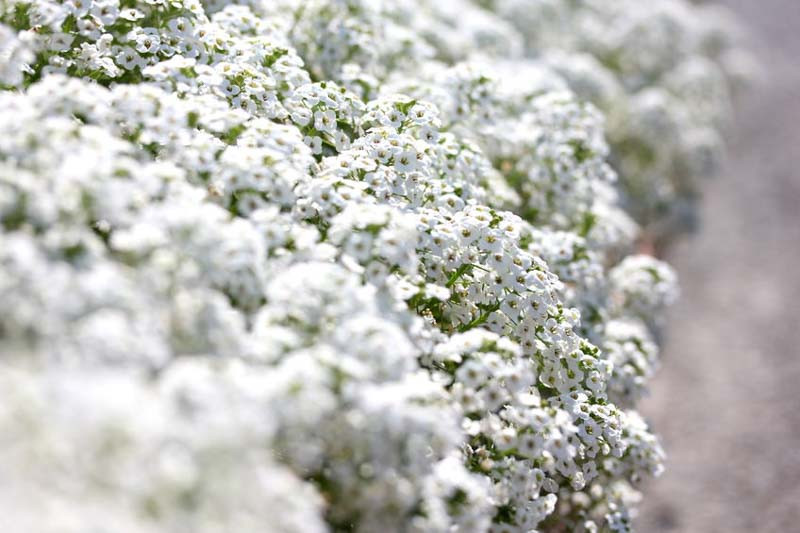
Beautiful Spilling & Trailing Edging Garden Ideas
Imagine a stone wall draped in violet spring flowers, a sunny rock garden overflowing with white and lavender-blue cushions, or golden foliage spilling softly across a gravel edge. Beautiful spilling and trailing garden edging ideas can transform hard lines into graceful planting features, making paths, walls, raised beds, and rocky borders feel wonderfully inviting. Discover inspiring cascading flower gardens, trailing plants for stone walls, creeping flowers for pathway edges, and colorful rock garden combinations. From purple Aubrieta and delicate bellflowers to fragrant thyme, golden sedums, and vivid ice plants, explore gorgeous Gardenia designs and planting ideas for gardens where flowers and foliage can flow naturally over the edge.
Explore Romantic Cascading Flower Gardens for Stone Walls and Raised Beds
There’s something magical about an old stone wall softened by flowers. Purple blossoms spill between the stones, delicate spring flowers tumble over the top, and the hard edges gradually disappear beneath cushions of green and color.
These designs are particularly beautiful when the planting feels relaxed and the stone remains visible in places.
Two published Gardenia designs to explore:
A Cascade of Spring Color with Aubrieta and Saxifraga
This lovely stone-wall planting brings together spreading Aubrieta, compact Saxifraga, and spring-flowering Muscari. Purple, pink, white, and yellow flowers soften the upper edge of the wall, while blue grape hyacinths provide a charming contrast near the base.
The composition is especially appealing because the flowers don’t cover every stone. Irregular clusters cascade over the wall, leaving sections of masonry visible and allowing the plants to retain their individual shapes.
A Romantic Cascading Rock Garden with Colorful Spring Flowers
This colorful planting combines lavender-blue Phlox ‘Emerald Cushion Blue’, purple Aubrieta deltoidea, white Iberis sempervirens, golden Aurinia saxatilis, and red-flowering creeping thyme. Their low, spreading growth forms a brilliant tapestry around natural stones, with cushions of flowers cascading over the edges.
It’s a striking example of how several compatible, low-growing plants can transform an ordinary rocky bank into a beautiful spring garden.
Why these designs work: They combine flowers of similar height but different growth habits. Aubrieta creates spreading, cascading mats, while candytuft and phlox form rounded cushions. The contrasts make the planting feel abundant without looking chaotic.
Try a violet-and-white wall garden: Repeat Aubrieta deltoidea with Iberis sempervirens on a sunny, freely draining wall-top planting. The rich purple and white flowers create a striking spring contrast.
For a longer cascade: Introduce Campanula poscharskyana in a separate suitable planting area. Its violet-blue flowers and spreading stems can soften a raised edge later in the season.
Design tip: Let each plant develop into a generous, irregular patch. A stone wall usually looks more natural when flowering cushions alternate with visible stone than when every inch is covered.
Discover more in Gardenia’s Great Campanulas for Rock Gardens and Small Perennials for Walls and Border Edging.
Discover Flowering Pathways, Soft Gravel Edges, and Colorful Coastal Gardens
A path bordered by low, creeping flowers has a charm that a straight line of taller plants rarely achieves. Small blossoms soften the stones, foliage follows the natural contours of the path, and the planting feels connected to the surrounding garden.
The most successful designs leave the walking surface clear while allowing flowers to flow gently toward it.
Three beautiful published Gardenia gardens:
Golden Aurinia saxatilis, white Iberis sempervirens, and colorful creeping phlox create a cheerful spring display beside garden paving. The spreading plants produce broad cushions that can extend over rocks, low walls, and raised-bed edges.
This combination is especially attractive where spring color is the main attraction and the soil remains freely draining.
A Colorful Coastal Garden with Seaside Daisies and Ice Plants
This striking coastal-inspired garden uses Erigeron glaucus (Seaside Daisy), Delosperma ‘Wheels of Wonder – Fire Wonder’, and Armeria maritima (Sea Thrift). Soft pink daisies contrast with vivid orange-red ice plant flowers, while sea thrift adds rounded pink flowerheads above grass-like foliage.
The lowest succulent plants spread between stones and soften the front of the planting. It’s a beautiful example of using flower color and contrasting forms beside natural rock and gravel.
A Gravel Step Garden Border That Feels Like a Meadow
This relaxed border combines fragrant thyme along the edge with small sea thrift cushions, hardy geraniums, Salvia, and other flowering companions. The plants create a natural-looking transition between gravel steps and the more generous planting behind them.
The design demonstrates an important principle: a little overlap softens a path, but the plants should not grow across the walking surface.
Why these gardens are attractive: Low plants define the edge through their spreading foliage, while taller flowers provide a backdrop. The result feels abundant without sacrificing the visible path.
Try a vibrant coastal-inspired edge: Combine Delosperma ‘Fire Wonder’ with other compatible compact flowering plants in a sunny, sharply drained bed. Its low succulent growth can soften stones and introduce dramatic color.
For fragrance: Use creeping thyme beside the stones, where its aromatic foliage and summer flowers can be enjoyed up close.
Design tip: Let the main walking route remain unmistakable. Trailing plants should create a natural frame, not become an obstacle.
Explore Gardenia’s Colorful Creeping Thyme Varieties, Drought-Tolerant Groundcovers, and Plants for Gravel and Rock Gardens.
Get Inspired by Cottage Garden Cascades, Golden Foliage, and Contemporary Raised Beds
Trailing plants can bring a wonderful sense of movement to small gardens. A compact raised bed overflowing with flowers, a few cushions of golden sedum beside stone steps, or delicate daisies trailing from a courtyard wall can make an outdoor space feel far more inviting.
These ideas work particularly well when a clear architectural edge contrasts with the plants’ relaxed growth.
A published Gardenia design for inspiration:
Flowers and Herbs for a Rock Garden
This garden combines aromatic creeping thyme with other flowering herbs and rock-garden plants. The low thyme forms a soft, spreading layer between more upright forms, showing how fragrant foliage can provide a beautiful link between stone and planting.
Four additional planting ideas to adapt:
- A Violet Bellflower Cascade: Plant Campanula portenschlagiana and Campanula poscharskyana in separate repeated groups along suitable raised edges. Their purple and violet-blue flowers create a beautiful cascade, although both may spread vigorously.
- A Golden Stonecrop Ledge: Let Sedum ‘Angelina’ form low, golden-green drifts around stones and slightly over a sunny raised-bed edge. The foliage provides color beyond the main flowering season.
- A Romantic Daisy Wall: In a suitable mild climate where it is not invasive, allow Erigeron karvinskianus to soften a wide, well-drained wall-top planting with small white and pink daisies. Its fine stems can create a charming informal effect, but self-seeding needs monitoring.
- A Fragrant Purple Thyme Border: Repeat Thymus ‘Purple Carpet’ near a sunny gravel edge, allowing its low aromatic foliage and purple-pink flowers to form a defined carpet. It is especially appealing where it can spread gently around small stones.
For a contemporary garden: Use a single foliage plant in repeated groups beside a simple stone or concrete edge. Golden sedum or another suitable low, spreading variety can provide attractive contrast without a complicated flower palette.
For a romantic cottage garden: Let trailing bellflowers or suitable compact daisies flow over an old stone ledge. Their irregular shapes bring character, especially when the wall itself remains partly visible.
For a low-maintenance garden: Choose plants suited to the existing sunlight and drainage, and avoid vigorous species that need constant trimming to stay within their boundaries.
How do you create lasting seasonal interest? Combine spring-flowering cushions with plants that have attractive foliage afterward, or use different blooming periods in separate compatible groups. Don’t expect every trailing plant to remain covered in flowers from spring through autumn.
What about invasive plants? Check regional guidance before using vigorous bellflowers, Mexican daisy, creeping Jenny, or other spreading plants that can escape beyond their intended location.
Gardenia’s design tip: A good cascade needs somewhere to go. Give each plant room to develop its natural shape, let it soften the edge, and preserve enough visible wall or stone to make the contrast beautiful.
Explore Gardenia’s Best Campanulas for Rock Gardens, Low-Growing Sedums, and Mediterranean Garden Inspiration.