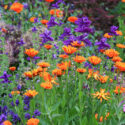
Can that beautiful potted mum become a permanent garden plant? Sometimes. Learn which mums are worth planting, the best time to move them into the ground, why late fall planting often fails, how to improve winter survival, and Gardenia's practical test for deciding whether to plant now or simply enjoy the display.



Yes, you can plant potted mums in the ground – but whether they return next year depends on the mum you bought, when you plant it, and how much time its roots have to establish before winter. A named hardy garden mum planted early enough in well-drained soil has the best chance of establishing as a perennial. A flowering supermarket mum planted shortly before freezing weather is much less predictable.
Potted mums are everywhere in late summer and fall, just when gardeners are tempted to move them from porch pots into flower beds. Unfortunately, the moment mums look most irresistible is not always the best time to establish them as permanent garden plants.
Quick answer: Plant a potted mum in the ground if it is a hardy garden cultivar and you still have enough growing weather for roots to establish. In cold climates, spring planting is safest. An unidentified mum bought in full bloom late in fall can still be planted, but winter survival should be treated as uncertain rather than expected.
If your goal is a chrysanthemum that becomes part of the garden rather than a one-season display, explore Gardenia’s Chrysanthemum collection or compare Chrysanthemums side by side by hardiness, size, bloom season, and growing conditions.
Before you reach for the shovel, check the label. You do not need to identify every detail of the plant – you simply need to know how much confidence you can place in its garden hardiness.
The label matters more than the flowers. A cultivar name and documented hardiness range tell you far more about perennial potential than where the mum was purchased or how spectacular it looks today.
The useful question is not simply “Can I plant this mum?” It is “Does planting this particular mum now make sense in my climate?”
Gardenia’s Plant-or-Wait Matrix combines the four factors that matter most: mum identity, establishment time, drainage, and winter root exposure.
| Your Situation | Plant Now? | Gardenia Recommendation |
|---|---|---|
| Named hardy mum in spring | Yes | Best situation for strong establishment and perennial survival |
| Named hardy mum in late summer or early fall | Usually | Reasonable where several weeks of active root-growing weather remain, but less dependable than spring planting in colder climates |
| Named hardy mum shortly before hard freezes | Possible, but risky | The cultivar may be hardy enough, but establishment becomes the weak point |
| Unnamed supermarket mum in early fall | You can try | Survival is possible, but cultivar hardiness is unknown |
| Unnamed supermarket mum very late in fall | Optional | Enjoy it as seasonal color; successful overwintering is a bonus |
| Florist gift mum | Climate-dependent | Do not assume either landscape hardiness or suitable natural outdoor bloom timing |
Gardenia’s decision rule: The closer your situation is to known hardy cultivar + adequate establishment time + well-drained soil + insulated in-ground roots, the better the odds of turning a potted mum into a lasting garden perennial.
Spring is the safest planting time in cold-winter climates. A spring-planted mum has months to spread its roots through the surrounding soil before winter arrives.
Late summer or early fall may also succeed where a hardy cultivar still has several weeks of active root growth before freezing weather, but fall-planted mums remain less reliable than spring-planted plants in colder regions.
A useful guideline is to think in terms of establishment time rather than a particular month. Illinois Extension recommends planting fall mums about six weeks before the expected first frost to allow roots to develop, although spring planting remains more dependable in colder climates.
The reason is straightforward: a mum planted in September during a long, mild autumn may have plenty of time to root into the surrounding soil. The same plant installed only days before frozen ground begins winter with a considerable disadvantage.
Think in growing weeks, not calendar months. “Plant in fall” means something very different where hard freezes arrive in October than where mild weather continues into December.
If the mum and timing make sense for planting, the process is simple. The aim is to move the root ball with minimal stress and give its shallow roots well-drained soil they can quickly grow into.
There is no need to give a newly planted flowering mum a heavy dose of fertilizer in fall. At this stage, root establishment matters more than encouraging a flush of tender new top growth.
Yes. A potted mum does not need to finish flowering before you plant it in the ground.
If you have already decided to plant and winter is approaching, waiting several additional weeks for every flower to fade simply shortens the establishment window. Move the root ball carefully, water thoroughly, and enjoy the remaining flowers in the garden.
There is an important limit to that advice. A hardy mum purchased immediately before the ground freezes still faces substantial establishment risk. Planting sooner improves the opportunity to root – it does not make very late planting risk-free.
If you have decided to plant, do not wait unnecessarily for every bloom to fade. But when winter is already close, recognize that planting remains a gamble.
When a mum disappears after winter, it is easy to conclude that the plant must have been an annual. Often, that is not what happened.
Chrysanthemums have relatively shallow, fibrous root systems. Those roots are concentrated near the soil surface, where repeated freezing and thawing can be particularly stressful. A spring-planted mum has months to extend its roots beyond the original nursery root ball; a flowering mum planted late in fall may enter winter with very little additional root growth.
Several stresses can then work together:
A mum may therefore be perfectly capable of living for several years and still disappear after one badly timed fall planting. Establishment matters almost as much as the perennial label.
Once a fall-planted mum is in the ground, the goal changes. You are no longer trying to encourage lots of flowers or new stems – you are helping the crown and shallow root system enter winter in the best possible condition.
The winter goal is temperature stability, not warmth. Mulch helps most by reducing repeated freezing and thawing around shallow roots rather than by keeping the ground permanently warm.
In a freezing climate, leaving a hardy mum in a small outdoor nursery pot is usually not safer than growing it in the ground.
The surrounding earth buffers root temperatures. A container is exposed to cold from the top and sides, so its entire root ball can freeze much more thoroughly than roots protected in garden soil.
The better choice depends on why you bought the plant:
A larger container provides more root insulation than a small nursery pot, but pot size cannot turn an unknown or tender cultivar into a reliably hardy one.
If your mum survives winter, look for fresh shoots emerging from the crown near soil level in spring. Do not be alarmed if the previous year’s stems appear completely dead – new growth normally comes from the base.
Once new shoots are clearly developing:
A nameless supermarket mum that survives one winter has given you useful evidence about how it performs in your garden. But a single mild winter does not establish a formal hardiness range. Its long-term performance is still something to observe over subsequent seasons.
For complete seasonal growing advice, see Gardenia’s Chrysanthemum Growing and Care Guide.
There is nothing wrong with buying an enormous flowering mum for a spectacular month of fall color. But if your goal is a plant that becomes part of the perennial garden, shop for the plant rather than the display.
This changes the question from “Will this random fall mum survive?” to the much more useful “Which chrysanthemum is actually suited to my garden?”
Ready to choose instead of guess?
Use Gardenia’s Chrysanthemum comparison tool to compare named cultivars by hardiness, mature size, bloom season, color, and growing conditions, then explore the individual Chrysanthemum profiles before giving one a permanent place in your garden.
Yes, potted mums can be planted in the ground. Your best odds come from a named hardy cultivar given adequate time to establish in sunny, well-drained soil. A supermarket or florist mum planted late in fall is much less predictable.
Use Gardenia’s Plant-or-Wait Matrix – mum identity + establishment time + drainage + winter root exposure – to decide whether planting now makes sense.
Yes. Potted mums can be planted in the ground. Named hardy garden mums given enough time to establish have the best chance of returning. Unidentified fall mums can also be planted, but their winter survival is harder to predict.
Spring is the safest time in cold-winter climates because mums have months to establish roots before winter. Late summer or early fall may also succeed where several weeks of active root growth remain, but fall-planted mums are less reliable in colder regions.
Yes. You do not need to wait until a mum finishes flowering before planting it. If winter is approaching and you have decided to plant, moving it sooner gives the roots more establishment time, although very late planting still carries substantial risk in cold climates.
Yes, but their long-term survival is difficult to predict when the cultivar and hardiness are unknown. Some supermarket mums are hardy, but a cultivar name and USDA hardiness range provide much better evidence of perennial potential than the appearance of the pot.
They may, but fall-planted mums are less reliable than spring-planted mums in cold climates because their shallow roots have less time to establish. Cultivar hardiness, establishment time, drainage, and winter conditions all influence survival.
Plant a potted mum at approximately the same depth it was growing in its container, with the top of the root ball level with the surrounding soil. Avoid burying the crown deeply, then water thoroughly after planting.
In cold-winter climates, leaving old chrysanthemum stems standing through winter can help protect the plant, and research cited by Iowa State found better survival when mums were not cut back in fall. Remove dead growth in spring.
In freezing climates, hardy mums generally receive better root insulation in the ground than in small outdoor pots. However, very late planting still carries establishment risk. Larger containers provide more insulation than small nursery pots but do not change cultivar hardiness.
The recommendations in this guide are based on current horticultural guidance for garden chrysanthemums, fall planting, winter survival, and transplant establishment. Regional conditions vary, so gardeners in cold climates should also consult their local Cooperative Extension service for advice specific to their area.
Updated: September 2026 • Reviewed by Gardenia Editors
| Hardiness |
5 - 9 |
|---|---|
| Heat Zones |
5 - 9 |
| Climate Zones | 2, 2A, 2B, 3, 3A, 3B, 4, 5, 6, 7, 8, 9, 10, 11, 12, 13, 14, 15, 16, 17, 18, 19, 20, 21, 22, 23, 24, H1 |
| Plant Type | Annuals, Perennials, Shrubs |
| Plant Family | Asteraceae |
| Genus | Chrysanthemum |
| Exposure | Full Sun |
| Season of Interest | Summer (Late), Fall |
| Maintenance | Average |
| Water Needs | Average |
| Soil Type | Clay, Loam, Sand |
| Soil pH | Acid, Alkaline, Neutral |
| Soil Drainage | Moist but Well-Drained |
| Characteristics | Cut Flowers, Showy |
| Attracts | Butterflies |
| Landscaping Ideas | Beds And Borders, Patio And Containers |
| Garden Styles | City and Courtyard, Cutting Garden, Informal and Cottage, Traditional Garden |
| Hardiness |
5 - 9 |
|---|---|
| Heat Zones |
5 - 9 |
| Climate Zones | 2, 2A, 2B, 3, 3A, 3B, 4, 5, 6, 7, 8, 9, 10, 11, 12, 13, 14, 15, 16, 17, 18, 19, 20, 21, 22, 23, 24, H1 |
| Plant Type | Annuals, Perennials, Shrubs |
| Plant Family | Asteraceae |
| Genus | Chrysanthemum |
| Exposure | Full Sun |
| Season of Interest | Summer (Late), Fall |
| Maintenance | Average |
| Water Needs | Average |
| Soil Type | Clay, Loam, Sand |
| Soil pH | Acid, Alkaline, Neutral |
| Soil Drainage | Moist but Well-Drained |
| Characteristics | Cut Flowers, Showy |
| Attracts | Butterflies |
| Landscaping Ideas | Beds And Borders, Patio And Containers |
| Garden Styles | City and Courtyard, Cutting Garden, Informal and Cottage, Traditional Garden |
Create a membership account to save your garden designs and to view them on any device.
Becoming a contributing member of Gardenia is easy and can be done in just a few minutes. If you provide us with your name, email address and the payment of a modest $25 annual membership fee, you will become a full member, enabling you to design and save up to 25 of your garden design ideas.
Join now and start creating your dream garden!
Create a membership account to save your garden designs and to view them on any device.
Becoming a contributing member of Gardenia is easy and can be done in just a few minutes. If you provide us with your name, email address and the payment of a modest $25 annual membership fee, you will become a full member, enabling you to design and save up to 25 of your garden design ideas.
Join now and start creating your dream garden!