Want mums in flower for more than a few weeks? Discover when early, midseason and late chrysanthemums bloom, why timing shifts with climate and weather, and how Gardenia's Mum Bloom Sequence Planner helps you combine cultivars into overlapping waves of color from late summer until frost.
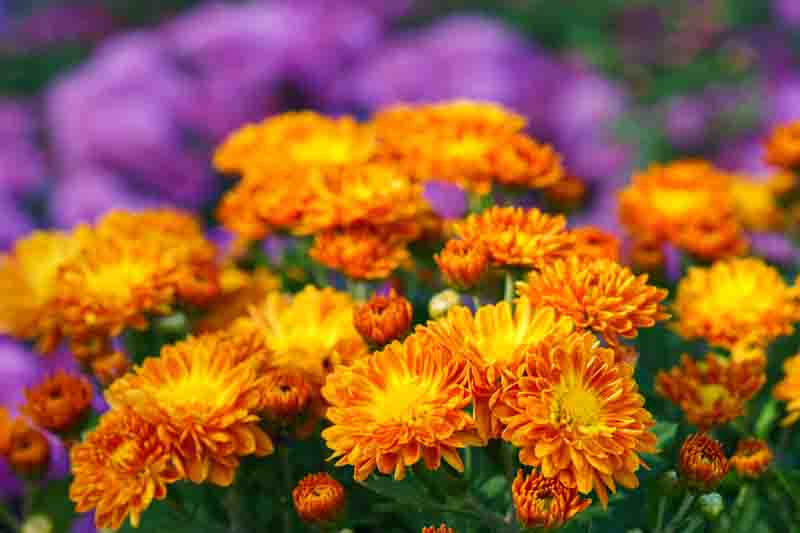


Chrysanthemums can flower from late summer until frost, but they do not all bloom at the same time. Some cultivars open while summer perennials are still flowering, others span much of the fall season, and later mums keep the garden colorful when earlier varieties are fading.
The most useful way to plan chrysanthemum bloom time is not around one fixed month. It is to create a sequence of overlapping flowering windows. Cultivar genetics establish the general schedule, while climate, temperature, night length, pruning, and growing conditions can move the actual dates earlier or later.
Quick answer: Early mums may begin in late summer or early fall. Midseason and broad-season cultivars bridge the heart of autumn, while later mums carry color toward frost. For the longest display, Gardenia recommends building an Early Anchor → Bridge Mum → Late Finisher sequence instead of choosing several cultivars that all peak together.
Use Gardenia’s Chrysanthemum comparison tool to compare cultivars by bloom season, hardiness, mature size, flower color, and growing conditions, or browse the full Chrysanthemum collection.
Most garden chrysanthemums bloom from late summer through fall, but there is no single date when mum season begins.
Chrysanthemums are short-day, or more precisely long-night, plants. Flower initiation is triggered as nights become sufficiently long. Different cultivars respond to different critical night lengths, helping explain why one mum may begin flowering weeks before another growing beside it.
Garden mums have therefore been selected across a broad range of bloom periods. An earlier cultivar may begin while the garden still feels summery, while a genuinely late cultivar may wait until the middle or later part of fall.
These seasonal descriptions are more useful than assigning one rigid month to every cultivar. A plant listed as flowering in early fall may not open on the same September date in California, Minnesota, Virginia, and New England.
Bloom time is a window, not an appointment. Use each cultivar’s documented seasonal range to establish its place in the sequence, then allow local weather and climate to adjust the exact dates.
Traditional advice often divides mums into early, midseason, and late cultivars. That is useful, but real flowering windows overlap. Gardenia’s cultivar profiles show that some mums span much of the season rather than fitting neatly into one narrow category.
Gardenia’s Mum Bloom Sequence Planner therefore assigns chrysanthemums a garden role:
| Sequence Role | Typical Position | Planning Goal |
|---|---|---|
| Early Anchor | Late summer to early/mid-fall | Start mum color early |
| Bridge Mum | Broad fall flowering window | Overlap neighboring waves and maintain continuity |
| Late Finisher | Mid- to late fall or continuing through frost | Keep the display going after earlier mums decline |
Gardenia’s sequence rule: Build the season as Early Anchor → Bridge Mum → Late Finisher. The goal is not to eliminate overlap – overlap is what makes the transition from one flowering wave to the next look continuous.
The cultivars below use the flowering periods stated in Gardenia’s individual plant profiles. The planning labels are Gardenia’s way of translating those recorded bloom windows into a usable garden sequence.
| Cultivar | Gardenia Profile Bloom Time | Sequence Role |
|---|---|---|
| ‘Clara Curtis’ | Late summer to mid-fall | Early Anchor |
| ‘Grandchild’ | Early to mid-fall | Early |
| ‘Matchsticks’ | Early to mid-fall | Early |
| ‘Ruby Mound’ | Early to late fall | Bridge Mum |
| ‘Harmony’ | Late summer to late fall | Broad-season Bridge |
| ‘Overture’ | Late summer to late fall | Broad-season Bridge |
| ‘Rhumba’ | Late summer to late fall | Broad-season Bridge |
| ‘Samba’ | Late summer to late fall | Broad-season Bridge |
| ‘Bolero’ | Late summer to late fall | Broad-season Bridge |
| ‘Will’s Wonderful’ | Mid- to late fall | Late Finisher |
| ‘Jolly Cheryl’ | Mid- to late fall | Late Finisher |
| ‘Apricot’ | Fall through frost | Late-season Finisher |
Important: ‘Apricot’ is included as a late-season finisher because Gardenia records it as flowering through frost. Its profile does not state that it begins specifically in mid- or late fall, so it should not be described as a strictly late-starting cultivar.
Early chrysanthemums start the fall sequence. They are particularly valuable where autumn is short because they begin flowering while there is still plenty of season ahead.
Three Gardenia-profiled choices fit this early role especially well:
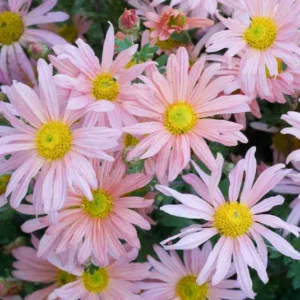
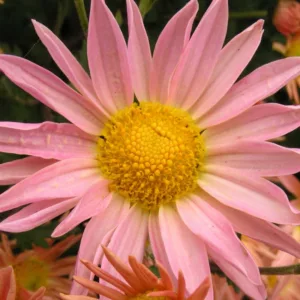
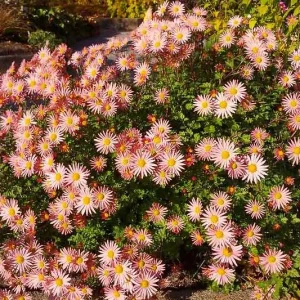
‘Clara Curtis’ is explicitly noted by Gardenia for its early blooms and flowers from late summer to mid-fall. Its warm pink, daisy-like flowers appear in profusion above a broad, spreading mound. It is an excellent early anchor because it begins before many classic fall mums reach their peak.
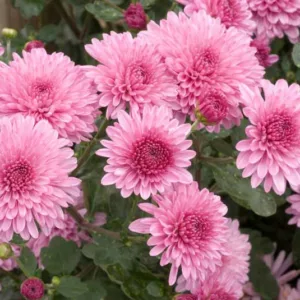
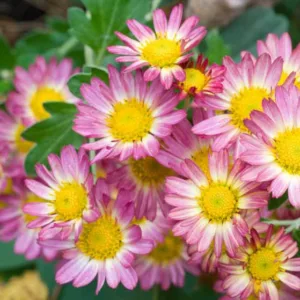
‘Grandchild’ flowers from early to mid-fall. Its large lavender-pink double blooms create a fuller, more traditional chrysanthemum effect than ‘Clara Curtis’, making the two useful stylistic alternatives for the opening part of the season.
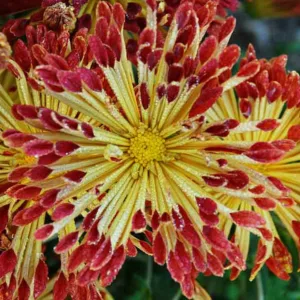
‘Matchsticks’ also flowers from early to mid-fall. Its distinctive spoon-shaped golden-yellow petals tipped with fiery red provide a very different flower form and color palette while occupying a similar seasonal window.
| Hardiness |
5 - 9 |
|---|---|
| Heat Zones |
5 - 9 |
| Climate Zones | 2, 2A, 2B, 3, 3A, 3B, 4, 5, 6, 7, 8, 9, 10, 11, 12, 13, 14, 15, 16, 17, 18, 19, 20, 21, 22, 23, 24, H1 |
| Plant Type | Annuals, Perennials, Shrubs |
| Plant Family | Asteraceae |
| Genus | Chrysanthemum |
| Exposure | Full Sun |
| Season of Interest | Summer (Late), Fall |
| Maintenance | Average |
| Water Needs | Average |
| Soil Type | Clay, Loam, Sand |
| Soil pH | Acid, Alkaline, Neutral |
| Soil Drainage | Moist but Well-Drained |
| Characteristics | Cut Flowers, Showy |
| Attracts | Butterflies |
| Landscaping Ideas | Beds And Borders, Patio And Containers |
| Garden Styles | City and Courtyard, Cutting Garden, Informal and Cottage, Traditional Garden |
Early-season strategy: Choose one of these as your opening mum rather than planting all your chrysanthemums for the same mid-fall peak. ‘Clara Curtis’ starts the sequence earliest on Gardenia’s recorded seasonal ranges, while ‘Grandchild’ and ‘Matchsticks’ carry it into mid-fall.
The middle of the chrysanthemum season does not have to be filled by plants with a narrow “midseason only” window. Gardenia’s profiles contain several cultivars that flower across a much broader portion of autumn. These are particularly valuable as bridge mums.
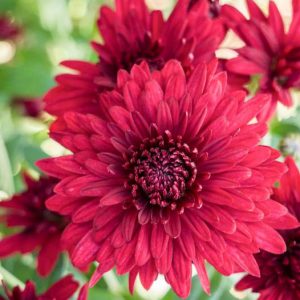
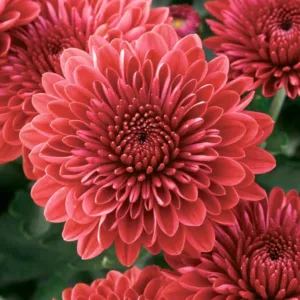
‘Ruby Mound’ flowers from early to late fall. Its rich ruby-red semi-double flowers and long recorded season make it one of the clearest examples of a bridge mum – it overlaps early cultivars while continuing toward the later part of fall.
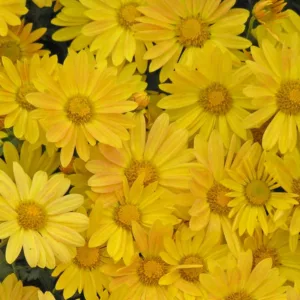
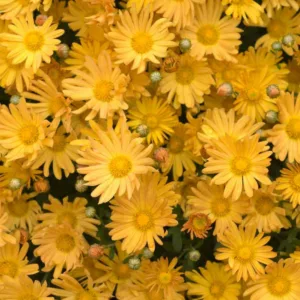
‘Harmony’ is recorded from late summer to late fall. Its bright yellow daisy flowers soften to creamy yellow and pale pink as they age, adding both seasonal length and changing color.
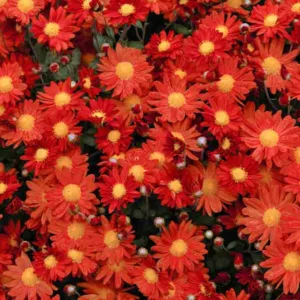
‘Overture’ also flowers from late summer to late fall. Its russet-red flowers fade toward terracotta, giving it a particularly autumnal palette across its broad flowering period.
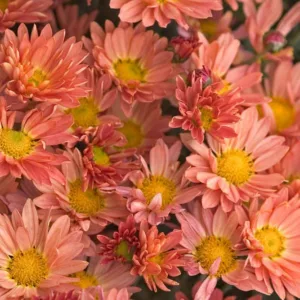
‘Rhumba’ flowers from late summer to late fall. Coral-red blooms open from deeper red buds and gradually soften toward coral-peach, making this another long-window cultivar with changing seasonal color.
‘Samba’ is recorded from late summer to late fall. Its rose-pink daisy flowers and compact, bushy habit make it useful where a long-flowering bridge mum is needed in borders or containers.
‘Bolero’ completes the six-cultivar bridge group. Gardenia records it from late summer to late fall, with large golden-yellow daisy-like flowers held on a compact mound.
Why Gardenia calls these bridge mums: Their documented bloom windows cross more than one conventional seasonal category. Rather than forcing them into a narrow “midseason” label, use them to connect the early and late ends of the mum display.
Late chrysanthemums and late-season finishers carry the garden after many earlier mums are declining. This role becomes increasingly important in climates with a long autumn, but the latest plant is not necessarily the best plant if frost routinely arrives before its display develops.
‘Will’s Wonderful’ is one of the clearest late cultivars in Gardenia’s collection. Its profile specifically records flowering from mid- to late fall. Profuse strawberry-pink daisy-like flowers cover its broad, spreading mound late in the season.
‘Jolly Cheryl’ is also explicitly recorded as flowering in mid- to late fall. Its warm red double flowers cover a compact, bushy plant, making it useful where a smaller late-season mum is preferred.
‘Apricot’ is slightly different. Gardenia describes it as flowering in fall through frost, rather than giving it a specifically late starting point. Its soft apricot and peachy-pink daisy flowers therefore make it an excellent late-season finisher – a plant selected here because its documented display continues to the end of the season.
Later is not automatically better. ‘Will’s Wonderful’ and ‘Jolly Cheryl’ are genuinely documented mid- to late-fall bloomers. ‘Apricot’ earns its place as a finisher because it continues through frost. Choose the late end of your sequence according to how much autumn your climate actually gives you.
The easiest way to create a long chrysanthemum season is not to make one plant flower longer. It is to combine several cultivars whose natural windows overlap.
A simple Gardenia sequence might look like this:
| Role | Example | Recorded Window |
|---|---|---|
| Early Anchor | ‘Clara Curtis’ | Late summer to mid-fall |
| Bridge Mum | ‘Ruby Mound’ | Early to late fall |
| Late Finisher | ‘Will’s Wonderful’ | Mid- to late fall |
The overlap is deliberate. ‘Clara Curtis’ does not need to stop flowering before ‘Ruby Mound’ begins, and ‘Ruby Mound’ should still be contributing color when ‘Will’s Wonderful’ reaches its later display.
You can build completely different color stories using the same principle. A yellow-heavy sequence could use an early cultivar followed by broad-season ‘Harmony’ or ‘Bolero’. A warm autumn scheme might center on ‘Overture’ and ‘Rhumba’ before moving into a red late-season cultivar.
The sequence matters more than making every cultivar identical in color or flower form.
Even a cultivar with a well-established seasonal bloom range will not necessarily begin on exactly the same date every year.
Do not turn a bloom window into a deadline. “Early fall” describes a cultivar’s normal position in the flowering sequence. It does not mean the first flower must open on a particular September date in every garden.
Gardeners naturally shop for mums by color – yellow, burgundy, bronze, red, pink, white, or purple. If you want a display that lasts, however, bloom timing should be one of the first traits you compare.
Three beautiful mums flowering simultaneously create one dramatic peak. Three cultivars occupying different parts of the seasonal sequence create weeks of changing color.
Compare bloom season together with USDA hardiness, mature size, flower form, color, and garden conditions. This is particularly important when you want mums to return as perennials rather than function only as seasonal containers.
Gardenia’s 13 Types of Chrysanthemum explains the major flower-form categories, while the Chrysanthemum comparison tool lets you compare the characteristics that determine how a cultivar fits into your garden.
Your local fall season changes the value of each bloom window.
In colder or short-fall climates, earlier and broad-season mums have an important advantage: they have more time to complete their display before repeated hard freezes arrive. A cultivar that flowers beautifully in late fall farther south may be far less rewarding where the growing season shuts down early.
In climates with long, mild autumns, late chrysanthemums become more valuable because they have time to develop their full display.
Gardenia’s climate rule: The best late mum is not the one that blooms latest – it is the one that reliably flowers before your local season shuts down.
A garden mum may remain attractive for roughly 4-8 weeks under favorable conditions, although cultivar, flower stage, temperature, rainfall, and plant health can shorten or extend the display.
Cool autumn weather often helps flowers remain attractive longer than hot conditions. Heavy rain can damage some blooms, while drought stress may reduce the quality and length of flowering.
Deadheading keeps plants looking tidy and can expose later-developing buds, but it cannot turn an early cultivar into a genuinely late one.
If you want chrysanthemum color for months rather than a few weeks, cultivar sequencing is more reliable than trying to prolong a single flowering period indefinitely.
For complete planting and seasonal care, see Gardenia’s Chrysanthemum Growing and Care Guide.
You do not need dozens of mums to create a long flowering season. Start with three sequence roles and expand only if you want more color or flower forms.
Then record the plants’ actual first-bloom and peak-bloom periods in your garden. Your own observations will refine the general seasonal ranges because local microclimate, exposure, and weather all matter.
If two mums repeatedly peak at exactly the same time, replace one with a cultivar positioned earlier or later. If a late cultivar regularly reaches frost with unopened buds, choose an earlier finisher.
Want a longer mum season instead of more mums at once?
Use Gardenia’s Chrysanthemum comparison tool to compare cultivars by bloom season, hardiness, mature size, color, and growing conditions. Build an Early Anchor → Bridge Mum → Late Finisher sequence around the flowering windows your garden actually needs.
The broader bloom-timing guidance in this article draws on university Extension information about chrysanthemum photoperiod, cultivar flowering differences, heat effects, and season extension. The cultivar-specific flowering windows above come from the linked Gardenia plant profiles.
Explore more on Gardenia: Browse the Chrysanthemum collection, visit the Chrysanthemum guidance hub, explore the 13 Types of Chrysanthemum, or compare Chrysanthemums by bloom season and garden performance.
Chrysanthemum bloom time varies substantially by cultivar. Gardenia’s profiles range from early selections such as ‘Clara Curtis’, ‘Grandchild’, and ‘Matchsticks’, through long-window bridge mums such as ‘Ruby Mound’, ‘Harmony’, ‘Overture’, ‘Rhumba’, ‘Samba’, and ‘Bolero’, to late-season performers such as ‘Will’s Wonderful’, ‘Jolly Cheryl’, and ‘Apricot’.
Gardenia’s Mum Bloom Sequence Planner follows three roles: Early Anchor → Bridge Mum → Late Finisher. Choose flowering windows that overlap, and make sure the late end of the sequence is realistic for the length of autumn in your climate.
Most garden chrysanthemums bloom from late summer through fall. Some cultivars begin in late summer or early fall, broad-season mums can flower through much of autumn, and later varieties continue toward frost. Exact dates vary with cultivar, climate, temperature, and night length.
Gardenia profiles ‘Clara Curtis’ from late summer to mid-fall and ‘Grandchild’ and ‘Matchsticks’ from early to mid-fall, making all three useful choices for the early part of a chrysanthemum bloom sequence.
Gardenia uses the term bridge mum for a chrysanthemum with a broad flowering window that overlaps earlier and later cultivars. Examples include ‘Ruby Mound’, ‘Harmony’, ‘Overture’, ‘Rhumba’, ‘Samba’, and ‘Bolero’.
Gardenia records ‘Will’s Wonderful’ and ‘Jolly Cheryl’ as flowering from mid- to late fall. ‘Apricot’ flowers through frost, making it a useful late-season finisher, although its Gardenia profile does not describe it as a specifically late-starting cultivar.
Combine cultivars with different natural flowering windows. Gardenia’s Mum Bloom Sequence Planner uses an Early Anchor, one or more Bridge Mums, and a Late Finisher so their bloom periods overlap rather than peak simultaneously.
Cultivar genetics establish the general bloom window, but temperature, night length, artificial lighting, pruning date, sunlight, and plant stress can move the actual flowering dates earlier or later.
Early and broad-season cultivars are generally more dependable where autumn is short because they have more time to flower before hard freezes. Late cultivars are most useful when they can reliably complete their display before the local season ends.
A garden mum may remain attractive for roughly 4-8 weeks under favorable conditions, although cultivar, flower stage, weather, rainfall, and plant health can shorten or extend the display. Combining several bloom windows produces a much longer overall season.
Updated: September 2026 • Reviewed by Gardenia Editors
| Hardiness |
5 - 9 |
|---|---|
| Heat Zones |
5 - 9 |
| Climate Zones | 2, 2A, 2B, 3, 3A, 3B, 4, 5, 6, 7, 8, 9, 10, 11, 12, 13, 14, 15, 16, 17, 18, 19, 20, 21, 22, 23, 24, H1 |
| Plant Type | Annuals, Perennials, Shrubs |
| Plant Family | Asteraceae |
| Genus | Chrysanthemum |
| Exposure | Full Sun |
| Season of Interest | Summer (Late), Fall |
| Maintenance | Average |
| Water Needs | Average |
| Soil Type | Clay, Loam, Sand |
| Soil pH | Acid, Alkaline, Neutral |
| Soil Drainage | Moist but Well-Drained |
| Characteristics | Cut Flowers, Showy |
| Attracts | Butterflies |
| Landscaping Ideas | Beds And Borders, Patio And Containers |
| Garden Styles | City and Courtyard, Cutting Garden, Informal and Cottage, Traditional Garden |
Create a membership account to save your garden designs and to view them on any device.
Becoming a contributing member of Gardenia is easy and can be done in just a few minutes. If you provide us with your name, email address and the payment of a modest $25 annual membership fee, you will become a full member, enabling you to design and save up to 25 of your garden design ideas.
Join now and start creating your dream garden!
Create a membership account to save your garden designs and to view them on any device.
Becoming a contributing member of Gardenia is easy and can be done in just a few minutes. If you provide us with your name, email address and the payment of a modest $25 annual membership fee, you will become a full member, enabling you to design and save up to 25 of your garden design ideas.
Join now and start creating your dream garden!