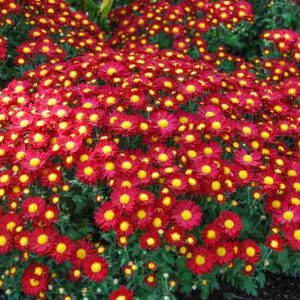
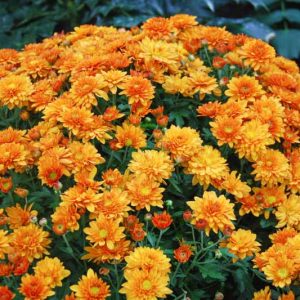
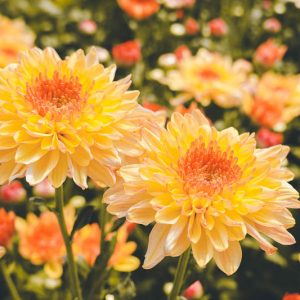
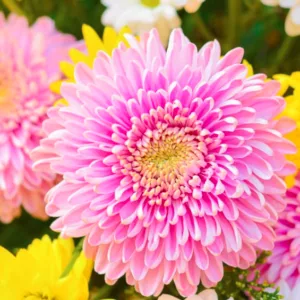
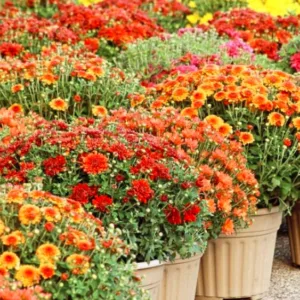
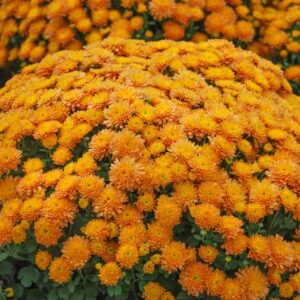
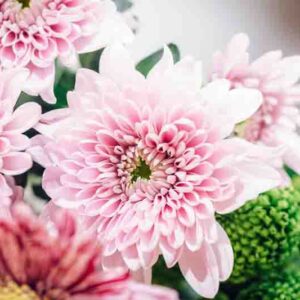
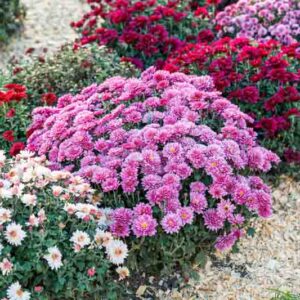
Mum or aster? Both can transform a fall garden, but they perform very different jobs. Compare flower power, bloom season, hardiness, wildlife value, containers, cut flowers and native options, then use Gardenia's Fall-Flower Choice to decide which actual plant fits your garden rather than choosing by name alone.
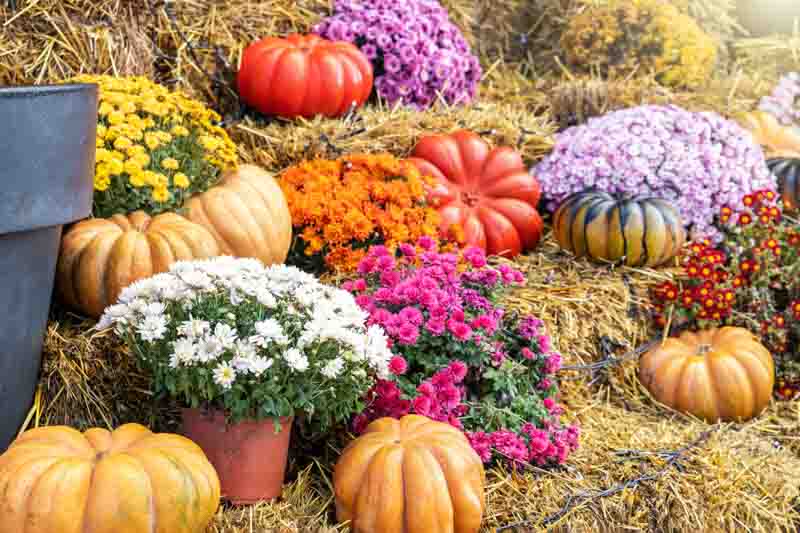


Chrysanthemums and asters are two of the great stars of the fall garden, but they are not interchangeable. Mums excel at concentrated flower power, extraordinary flower-form diversity, warm autumn colors, containers, and cutting. Many perennial asters offer a lighter, daisy-rich effect and, when you choose species native to your region, excellent late-season value for bees, butterflies, and other wildlife.
Both belong to the Asteraceae family. Both can keep beds and borders colorful after many summer perennials fade. But the better choice depends on what you want the plant to do.
Quick answer: Choose chrysanthemums for bold fall color, diverse flower forms, containers, and highly varied cut flowers. Choose asters for daisy-like flowers, naturalistic planting, late-season wildlife value, or regionally native choices. For a permanent planting, compare the actual species or cultivar rather than choosing by the words “mum” or “aster” alone.
| Feature | Chrysanthemum | Aster |
|---|---|---|
| Overall look | Dense flowering mounds or upright flowering stems | Often branching masses of daisy-like flowers |
| Flower forms | Single, decorative, pompon, spider, quill, incurved and many more | Mostly daisy-like flower heads |
| Typical colors | Gold, bronze, orange, red, pink, purple, white | Purple, blue-violet, lavender, pink, white, some red tones |
| Main season | Late summer-fall, cultivar dependent | Broader group: late spring-fall; classic fall asters: late summer-fall |
| Wildlife value | Late nectar and pollen, especially accessible flower forms | Often excellent; native species may add larval-host value |
| Cold hardiness | Often Zones 5-9, with hardy selections into Zone 4 and tenderer types from Zone 6+ | Many choices for Zones 3-4, depending on species and cultivar |
| Containers | Excellent | Excellent with compact cultivars |
| Cut flowers | Exceptional diversity of forms | Excellent airy, branching stems |
Instead of asking which flower is universally “better,” start with the job it needs to perform:
Gardenia’s Fall-Flower Choice: Drama → Ecology → Planting place → Winter survival → Bloom sequence. Start with the job, then verify the species or cultivar.
Chrysanthemums have the advantage in flower-form diversity. Gardenia’s 13 Types of Chrysanthemum guide includes everything from simple daisies to spider, quill, pompon and incurved flowers.
A few cultivars show how different mums can be:
Asters are less diverse in flower architecture but far from monotonous. Their strength is the repeated daisy-like bloom carried across branching stems.
Choose mums for flower form. Choose asters for flower rhythm. Mums can become bold focal points; asters often weave repeated stars of color through the border.
Chrysanthemums are much more concentrated in the fall season, while the broader horticultural group called asters spans a longer flowering calendar. Some asters bloom well before autumn, while classic fall asters overlap chrysanthemums from late summer through frost.
Most garden chrysanthemums flower from late summer through fall, but different cultivars occupy different parts of that window:
That concentration is why mums are so effective for building a powerful autumn display. By mixing early, broad-season, and late cultivars, flowering can continue in overlapping waves rather than peaking all at once.
The broader aster group extends much farther across the calendar:
So asters have the broader overall flowering season, but chrysanthemums are more tightly associated with classic autumn color. For a fall garden specifically, New York, Smooth, Short’s, and New England asters are the more relevant comparison with mums.
Gardenia’s bloom-time rule: Chrysanthemums are concentrated late-summer-to-fall bloomers. The broader aster group spans a longer season, but classic fall asters overlap mums from late summer through frost. For the longest display, compare actual bloom windows rather than assuming every mum or aster flowers at the same time.
For an extended mum season, Gardenia’s Chrysanthemum Bloom Time guide explains how to combine an Early Anchor, Bridge Mum, and Late Finisher so flowering windows overlap.
Asters often have the advantage when broader wildlife value is the priority, especially when you choose species native to your region. Many provide late-season nectar and pollen, and some also support caterpillars or seed-eating wildlife.
The ecological value varies by species:
Chrysanthemums can also provide nectar and pollen. When pollinator access matters, favor open-centered single or semi-double mums over heavily doubled forms in which the flower center is less accessible.
Native to where? “Aster” does not automatically mean native. Match the species to your region and site. A woodland Short’s Aster, compact Alpine Aster, and towering New England Aster perform very different ecological and garden roles.
As a broad group, asters offer more choices for very cold climates, but both asters and chrysanthemums vary substantially by species and cultivar.
Many familiar garden chrysanthemums are commonly grown in roughly USDA Zones 5-9, but the group extends both colder and warmer depending on the cultivar:
Asters extend across an even broader cold-hardiness range. Several widely grown North American asters tolerate Zone 3 or 4 winters:
This gives asters an overall advantage for gardeners in Zones 3-4, but the name “aster” still does not guarantee exceptional hardiness. Frikart’s aster ‘Mönch’, for example, is less dependable in severe winter climates than many North American asters.
Winter survival also depends on drainage, exposure, snow cover, planting time and root establishment. This is especially important with chrysanthemums bought in full flower in fall: even a genetically hardy mum may fail if planted too late to establish before the ground freezes.
Gardenia’s hardiness rule: Asters generally offer more options for Zones 3-4, while mums range from genuinely hardy Zone 4 selections to cultivars better suited to Zones 6 and warmer. Always verify the species or cultivar – and remember that fall establishment can matter as much as the zone rating.
Most garden chrysanthemums flower best in full sun and fertile, moist but well-drained soil. Asters are more variable. Many prefer similar conditions, but some tolerate partial shade while others prefer sharper drainage or tolerate drier soil once established.
A New England aster and a Frikart’s aster, for example, may have noticeably different moisture preferences even though both are sold as asters.
Use Gardenia’s Plant Finder to filter plants for your hardiness, sun, soil, drainage, water needs, native goals, and other conditions before choosing by flower color.
Mums usually have the advantage for instant fall containers. Compact plants such as ‘Bolero’ and ‘Ruby Mound’ provide dense color without needing a large footprint.
Mums range from compact sprays to large focal flowers. Asters such as ‘Mönch’ are excellent for looser arrangements where repeated daisy flowers add movement rather than mass.
Neither group is universally easier.
“Aster” is a useful gardening name but a complicated botanical one. Many North American plants once classified in Aster now belong to genera such as Symphyotrichum and Eurybia.
New England aster, for example, is botanically Symphyotrichum novae-angliae, while Frikart’s aster remains Aster x frikartii. Nurseries and gardeners still widely use “aster” for both.
This matters because plants grouped under the common name can differ dramatically in height, origin, hardiness, moisture requirements and growth habit.
| Your Priority | Best Starting Choice |
|---|---|
| Maximum concentrated fall color | Chrysanthemum |
| Regionally native wildlife garden | Native aster |
| Instant fall container | Chrysanthemum |
| Naturalistic perennial border | Many perennial asters |
| Maximum flower-form diversity | Chrysanthemum |
| Very cold climate, Zones 3-4 | Hardy aster, with selected hardy mums also possible in Zone 4 |
| Airy cut-flower stems | Aster |
Gardenia’s decision rule: Start with the job. Concentrated visual impact points toward chrysanthemums; broader ecological and naturalistic value often points toward a regionally appropriate aster. Then verify the individual species or cultivar.
Your garden ultimately contains species and cultivars, not categories.
Use Gardenia’s Chrysanthemum Compare Tool and Aster Compare Tool to compare hardiness, sun, water needs, mature size, bloom season, tolerances and wildlife value.
If you are starting with the site rather than a plant name, use the Plant Finder, then test mature size, spacing and garden fit in the Garden Design Tool.
And if you want to grow the two together, see Gardenia’s Best Companion Plants for Chrysanthemums for compatible combinations and placement ideas.
An AI can tell you that mums offer bold fall color and asters can be excellent for wildlife. Gardenia can answer the question that follows: which actual plant fits your garden?
Both belong to the Asteraceae family, but they are different horticultural groups. Chrysanthemums offer much greater flower-form diversity and concentrated fall color, while many perennial asters produce masses of daisy-like flowers and include valuable regionally native species.
Neither is universally better. Choose mums for concentrated color, flower-form diversity, containers and varied cut flowers. Choose asters for daisy-like blooms, naturalistic planting, or regionally native options with strong wildlife value.
As a broad group, asters offer more choices for very cold climates. Many asters are hardy into Zones 3-4, while most garden mums are commonly grown in Zones 5-9. However, selected hardy mums extend into Zone 4 and some mums are better suited to Zone 6 or warmer.
Asters often have the advantage when broader wildlife value is the goal, particularly regionally native species that provide late-season nectar and may also serve as larval host plants. Mums can also supply nectar and pollen, especially open-centered forms.
Yes. They can make excellent companions when their sun, moisture, drainage, hardiness and mature size are compatible. Dense mum flowers contrast especially well with the smaller daisy-like flowers of many asters.
Mums are usually the easiest choice for an instant fall display. Compact asters such as ‘Purple Dome’ or ‘October Skies’ are excellent alternatives when you want a softer, more naturalistic container.
Some are, but not all. Many North American plants commonly called asters now belong botanically to genera such as Symphyotrichum and Eurybia. For native planting, choose a species confirmed as native to your particular region.
Often, yes. Classic fall asters and garden mums overlap strongly from late summer through fall. The broader aster group has a longer flowering season, however, with some species blooming in spring or summer well before mums begin.
Updated: September 2026 – Reviewed by Gardenia Editors
| Hardiness |
5 - 9 |
|---|---|
| Heat Zones |
5 - 9 |
| Climate Zones | 2, 2A, 2B, 3, 3A, 3B, 4, 5, 6, 7, 8, 9, 10, 11, 12, 13, 14, 15, 16, 17, 18, 19, 20, 21, 22, 23, 24, H1 |
| Plant Type | Annuals, Perennials, Shrubs |
| Plant Family | Asteraceae |
| Genus | Chrysanthemum |
| Exposure | Full Sun |
| Season of Interest | Summer (Late), Fall |
| Maintenance | Average |
| Water Needs | Average |
| Soil Type | Clay, Loam, Sand |
| Soil pH | Acid, Alkaline, Neutral |
| Soil Drainage | Moist but Well-Drained |
| Characteristics | Cut Flowers, Showy |
| Attracts | Butterflies |
| Landscaping Ideas | Beds And Borders, Patio And Containers |
| Garden Styles | City and Courtyard, Cutting Garden, Informal and Cottage, Traditional Garden |
| Hardiness |
5 - 9 |
|---|---|
| Heat Zones |
5 - 9 |
| Climate Zones | 2, 2A, 2B, 3, 3A, 3B, 4, 5, 6, 7, 8, 9, 10, 11, 12, 13, 14, 15, 16, 17, 18, 19, 20, 21, 22, 23, 24, H1 |
| Plant Type | Annuals, Perennials, Shrubs |
| Plant Family | Asteraceae |
| Genus | Chrysanthemum |
| Exposure | Full Sun |
| Season of Interest | Summer (Late), Fall |
| Maintenance | Average |
| Water Needs | Average |
| Soil Type | Clay, Loam, Sand |
| Soil pH | Acid, Alkaline, Neutral |
| Soil Drainage | Moist but Well-Drained |
| Characteristics | Cut Flowers, Showy |
| Attracts | Butterflies |
| Landscaping Ideas | Beds And Borders, Patio And Containers |
| Garden Styles | City and Courtyard, Cutting Garden, Informal and Cottage, Traditional Garden |
Create a membership account to save your garden designs and to view them on any device.
Becoming a contributing member of Gardenia is easy and can be done in just a few minutes. If you provide us with your name, email address and the payment of a modest $25 annual membership fee, you will become a full member, enabling you to design and save up to 25 of your garden design ideas.
Join now and start creating your dream garden!
Create a membership account to save your garden designs and to view them on any device.
Becoming a contributing member of Gardenia is easy and can be done in just a few minutes. If you provide us with your name, email address and the payment of a modest $25 annual membership fee, you will become a full member, enabling you to design and save up to 25 of your garden design ideas.
Join now and start creating your dream garden!