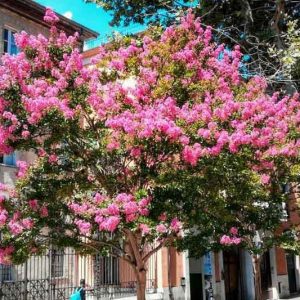
Your crape myrtle is green and growing - so where are the flowers? Discover the nine most common causes of poor blooming, including shade, severe pruning, excess fertilizer, drought, winter damage, and pests. This practical guide helps you diagnose the problem and restore a spectacular summer flower display.



A crape myrtle covered in healthy green leaves but producing few or no flowers can be baffling. These sun-loving shrubs and trees are planted for their spectacular summer display, so a flowerless canopy feels like a major disappointment.
Fortunately, a crape myrtle that is not blooming is rarely a mystery once you examine its growing conditions. Too little sunlight, late pruning, excessive nitrogen, weak spring growth, drought, winter injury, transplant stress, or pest pressure can all interfere with flowering. In some cases, nothing is wrong at all – the plant may simply be a late-blooming cultivar waiting for sustained summer heat.
Crape myrtles, botanically known as Lagerstroemia, flower at the tips of new shoots produced during the current growing season. Anything that limits, delays, or repeatedly removes that new growth can reduce the summer bloom display.
Use the symptoms below to identify the most likely cause, then apply the corresponding fix.
Fast diagnosis: If your crape myrtle has plenty of foliage but no flower clusters, first check sunlight, pruning time, and fertilizer use. If growth is weak rather than lush, investigate root stress, poor drainage, drought, winter damage, or nutrient deficiency.
| What You See | Likely Cause | Best Response |
|---|---|---|
| Dense foliage but no flower panicles | Shade or excess nitrogen | Increase direct sun and stop unnecessary feeding |
| Weak growth and small pale leaves | Root stress, compacted soil, poor drainage, or nutrient shortage | Inspect the root zone and test the soil before fertilizing |
| Many fresh shoots after pruning, but late flowers | Late or severe pruning | Allow regrowth and prune earlier next year |
| Dead branch tips and new shoots emerging from low on the plant | Winter injury | Remove dead wood after growth resumes and allow time for recovery |
| Sticky leaves, black coating, white insects, or distorted buds | Aphids, bark scale, or fungal disease | Identify and treat the underlying pest or disease |
Insufficient sunlight is one of the leading reasons a crape myrtle grows leaves but produces few flowers. These heat-loving plants need strong direct light to generate vigorous shoots and large terminal flower clusters.
A location can appear bright without receiving enough direct sun. A tree beside a house may be illuminated all day yet remain shaded by the building during the most productive hours. Likewise, a site that looks sunny in winter may become heavily shaded once nearby trees leaf out.
Crape myrtles generally need at least 6 hours of direct sunlight to bloom satisfactorily. Eight hours or more usually produces a heavier and more reliable display.
The fix: Observe the plant during summer and count actual hours of direct sun. If neighboring plants are creating unnecessary shade, selective pruning may help. A young crape myrtle in a consistently shaded location may need to be moved while dormant.
Sunlight reality check: Bright shade is still shade. If the canopy receives only filtered light or a few hours of morning sun, poor flowering is not surprising.
Crape myrtles bloom on new wood, so pruning time directly affects flowering. Cutting branches after spring growth has begun removes shoots that may already be preparing to produce flower panicles. The plant must then generate replacement growth, pushing the bloom period later into summer.
Severe topping, often called “crape murder,” is also damaging. Cutting major limbs back to matching stubs destroys the natural framework and produces clusters of long, weak shoots. A topped crape myrtle may still flower, but blooming can be delayed, and the heavy flower heads are carried on poorly attached growth that may bend or break.
The fix: Complete necessary structural pruning in late winter or early spring, before vigorous new growth begins. In colder areas, wait until the threat of severe cold has passed, but prune before the canopy begins active growth.A crape myrtle does not need severe annual pruning to bloom. Prune only to improve structure, remove problems, or maintain a deliberate tree form.
If your crape myrtle is producing long, soft shoots and masses of dark green foliage but few flowers, excess nitrogen may be the culprit. Nitrogen encourages vegetative growth, sometimes at the expense of flower development.
The tree does not have to be fertilized directly for this to happen. Lawn fertilizer applied beneath or near the canopy can enter the same root zone. Plants growing beside heavily fertilized turf or in rich ornamental beds may receive far more nutrients than they need.
The fix: Stop feeding a healthy, rapidly growing plant. Avoid spreading high-nitrogen lawn fertilizer over the root area. If the tree is already growing vigorously, neither a balanced fertilizer nor a high-phosphorus “bloom booster” is likely to improve flowering. Apply nutrients only when a soil test or clear growth symptoms indicate a need.
Green does not always mean healthy flowering: Excessively lush growth can be a warning sign. A crape myrtle should grow steadily, not race upward on soft, overfed shoots.
The opposite problem can also prevent flowering. Because flowers appear at the ends of current-season shoots, a crape myrtle that produces very little new growth has fewer opportunities to form flower clusters.
Weak growth may result from compacted soil, damaged roots, poor drainage, planting too deeply, prolonged drought, low soil fertility, or competition from nearby trees and turf. Pale leaves, unusually short shoots, branch dieback, or a thinning canopy suggest that the plant is struggling rather than merely running late.
The fix: Inspect the root zone before applying fertilizer. Make sure the root flare is visible at the soil surface and that mulch is not piled against the trunks. Check whether water drains freely and whether lawn roots or nearby trees are creating intense competition. If growth remains weak, test the soil before adding nutrients.
Lush, fast growth with no flowers suggests too much nitrogen. Weak, sparse growth with no flowers points toward root stress, poor soil conditions, drought, or a genuine nutrient deficiency.
Established crape myrtles are drought tolerant, but severe moisture stress can still reduce flowering. A plant short of water may limit new shoot growth, abort developing buds, or produce smaller and shorter-lived flower clusters.
Newly planted specimens are particularly vulnerable because their roots have not yet spread into the surrounding soil. Dwarf crape myrtles grown in containers may dry out quickly during hot weather. At the other extreme, constantly wet soil deprives roots of oxygen and can weaken growth just as seriously.
The fix: Water newly planted crape myrtles deeply and regularly during establishment. Once established, irrigate during prolonged dry spells rather than giving frequent shallow sprinklings. Apply 2-3 inches of mulch over the root zone, keeping it several inches away from the trunks.
Crape myrtle cold tolerance varies by cultivar. Near the colder edge of their range, branches may die back during winter. The plant then spends spring rebuilding its canopy from lower stems or roots, delaying or preventing flowers that year.
A late spring freeze can have a similar effect. New shoots may be killed after growth begins, forcing the plant to start over. Even if it recovers fully, flowering may occur much later than usual.
The fix: Wait until new growth clearly reveals which branches are alive, then remove dead wood back to healthy tissue. Choose cultivars reliably hardy in your USDA zone and avoid exposed frost pockets. Do not apply nitrogen late in the growing season, because tender new growth is more vulnerable to winter injury.
A newly planted crape myrtle may devote more energy to root establishment than flowering. Some specimens bloom immediately because flower buds developed at the nursery. Others pause for a season while adapting to garden conditions.
Planting stress becomes worse when the root flare is buried, roots are circling inside the original root ball, soil is compacted, or mulch is heaped against the trunks. Heavy fertilizing and severe pruning do not correct these problems and may create additional stress.
The fix: Keep the root flare at or slightly above the surrounding soil level. Water deeply during establishment, maintain a mulch-free space around the trunks, and allow the plant time to settle. A young tree that is healthy but not yet flowering may simply need another growing season.
Not every crape myrtle flowers at the same time. Cultivar genetics can shift bloom by several weeks, and cooler-than-normal spring or early-summer weather may slow shoot development.
This is why one tree may be covered in flowers while another nearby plant remains green. Differences in cultivar, sunlight, winter injury, plant age, and pruning history can all alter the bloom schedule.
The fix: Confirm the cultivar if possible and wait until its normal flowering window has passed. A healthy, fully leafed-out crape myrtle growing in full sun may simply need more sustained summer heat.
Before assuming failure: Compare your plant with the same cultivar in your region, not with an unrelated crape myrtle that may naturally bloom earlier.
Pests and diseases are less often the sole cause of complete bloom failure, but severe infestations can weaken new growth, damage developing buds, and reduce the overall flower display.
Aphids feed on tender shoots and release sticky honeydew. Crape myrtle bark scale also produces honeydew and often appears as white or gray insects attached to the bark.
The black coating that follows is usually sooty mold growing on that honeydew. The mold is a symptom of the insect problem, not the original cause.
Powdery mildew can distort young leaves and flower buds, especially on susceptible cultivars in humid conditions. Cercospora leaf spot may cause premature leaf loss, although it usually becomes more noticeable later in the season.
The fix: Identify the pest or disease before treating it. Improve sunlight and airflow, avoid excessive nitrogen, and select resistant cultivars when replacing highly susceptible plants. Follow all pesticide labels carefully and avoid spraying flowers while pollinators are active.
Start with the location. Give the plant at least 6 hours of direct sun, preferably 8 or more. Make sure the cultivar has enough room to reach its natural size without repeated shearing or topping.
Support steady spring growth rather than forcing it. Water deeply during establishment and prolonged drought, but do not keep the soil waterlogged. Fertilize only when weak growth or a soil test indicates a genuine need.
Prune selectively before active spring growth begins. Preserve the natural branch structure and remove only growth that is dead, damaged, crossing, rubbing, or badly placed.
Finally, be patient. A young, cold-damaged, recently moved, or naturally late-blooming crape myrtle may need additional time before producing its best display.
If your crape myrtle has leaves but no flowers, begin with sunlight, pruning, and fertilizer. These are the most common and easily corrected causes. A leafy, fast-growing plant often needs more sun or less nitrogen, while a weak plant needs its roots, soil, drainage, and water supply investigated.
Remember that crape myrtles bloom on new growth, but they do not need to be cut back hard. Give the plant a sunny site, preserve its natural structure, support steady growth, and allow for normal differences in cultivar timing. Once the underlying problem is corrected, most healthy crape myrtles return to reliable summer flowering.
A crape myrtle with abundant leaves but no flowers may receive too little direct sun or too much nitrogen. Late pruning, a naturally late bloom time, drought, winter damage, and weak root growth can also delay or reduce flowering.
Crape myrtles need at least 6 hours of direct sunlight each day to flower satisfactorily. Eight hours or more generally produces stronger growth and a heavier bloom display.
Pruning after spring growth begins can remove shoots that would have produced flowers and delay blooming. Severe topping may also postpone flowering and creates weak, poorly attached growth, although a topped plant may still bloom later.
Crape myrtle blooms at the ends of new shoots produced during the current growing season. It does not need severe annual pruning to create this flowering growth.
Yes. Excess nitrogen can produce long shoots and lush foliage while delaying or reducing flowering. Lawn fertilizer spread over the tree’s root zone can cause the same problem.
Crape myrtle cultivars differ in flowering time. Cool weather, winter injury, partial shade, plant age, and late pruning can also delay bloom by several weeks.
It may, but some newly planted crape myrtles flower lightly or not at all while establishing their roots. Correct planting, full sun, regular establishment watering, and patience are more helpful than heavy fertilizer.
Flower buds may fail to open because of severe drought, powdery mildew, insect feeding, cold damage, or unusual weather. Inspect the buds and young shoots closely before choosing a treatment.
Updated: July 2026 • Reviewed by Gardenia Editors
| Hardiness |
6 - 10 |
|---|---|
| Plant Type | Shrubs, Trees |
| Plant Family | Lythraceae |
| Genus | Lagerstroemia |
| Exposure | Full Sun |
| Season of Interest | Spring (Late), Summer (Early, Mid, Late), Fall |
| Height | 2' - 30' (60cm - 9.1m) |
| Spread | 2' - 30' (60cm - 9.1m) |
| Maintenance | Low |
| Water Needs | Average |
| Soil Type | Chalk, Loam, Sand |
| Soil pH | Acid, Neutral |
| Soil Drainage | Well-Drained |
| Characteristics | Showy |
| Tolerance | Deer, Drought, Clay Soil |
| Landscaping Ideas | Beds And Borders, Patio And Containers, Wall-Side Borders |
| Garden Styles | City and Courtyard, Informal and Cottage, Mediterranean Garden |
| Hardiness |
6 - 10 |
|---|---|
| Plant Type | Shrubs, Trees |
| Plant Family | Lythraceae |
| Genus | Lagerstroemia |
| Exposure | Full Sun |
| Season of Interest | Spring (Late), Summer (Early, Mid, Late), Fall |
| Height | 2' - 30' (60cm - 9.1m) |
| Spread | 2' - 30' (60cm - 9.1m) |
| Maintenance | Low |
| Water Needs | Average |
| Soil Type | Chalk, Loam, Sand |
| Soil pH | Acid, Neutral |
| Soil Drainage | Well-Drained |
| Characteristics | Showy |
| Tolerance | Deer, Drought, Clay Soil |
| Landscaping Ideas | Beds And Borders, Patio And Containers, Wall-Side Borders |
| Garden Styles | City and Courtyard, Informal and Cottage, Mediterranean Garden |
Create a membership account to save your garden designs and to view them on any device.
Becoming a contributing member of Gardenia is easy and can be done in just a few minutes. If you provide us with your name, email address and the payment of a modest $25 annual membership fee, you will become a full member, enabling you to design and save up to 25 of your garden design ideas.
Join now and start creating your dream garden!
Create a membership account to save your garden designs and to view them on any device.
Becoming a contributing member of Gardenia is easy and can be done in just a few minutes. If you provide us with your name, email address and the payment of a modest $25 annual membership fee, you will become a full member, enabling you to design and save up to 25 of your garden design ideas.
Join now and start creating your dream garden!