Stop wasting money on plants that were never going to thrive in your yard. This guide shows you how to choose plants by climate, sunlight, and water needs so your garden looks better, lasts longer, and feels easier to manage. Smarter plant choices lead to healthier, more beautiful landscapes.
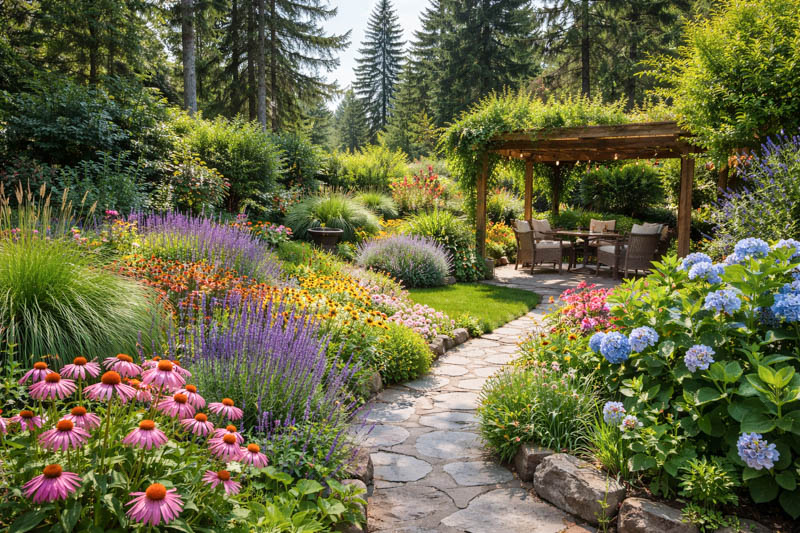


Nothing drains gardening confidence faster than buying a beautiful plant, caring for it properly, and watching it fail anyway. Leaves scorch, roots rot, flowering fizzles, or growth stalls for no obvious reason. In many cases, the problem is not poor care. It is poor fit. The plant was never well matched to the climate, light, soil, or exposure of the place where it was planted.
That is why climate-first gardening works. The best gardens are not built by choosing the trendiest plants or copying photos from somewhere else. They are built by choosing plants that suit the real conditions of the site: your hardiness zone, summer heat, rainfall pattern, humidity, sun exposure, drainage, and the small microclimates that make one part of a yard behave differently from another. If you want a step-by-step walkthrough, see this guide: Find Plants for your Climate – Interactive Plant Finder for Smarter Gardening.
Once you make that shift, gardening becomes easier and cheaper. You stop wasting money on plants that were always going to struggle. You spend less time troubleshooting yellow leaves, weak flowering, brown edges, and slow decline. And you create a garden that looks healthier, fuller, and more settled year after year.
If you want to narrow your options quickly, start with the Gardenia Plant Finder. It lets you filter plants by hardiness zone, sun exposure, moisture needs, plant type, and garden use so you can focus on plants that actually fit your conditions.
A plant can be gorgeous, expensive, and widely recommended – and still be completely wrong for your yard.
Most plant disappointments come from one common mistake: choosing for looks before choosing for fit. A tag may say “full sun.” A roundup may call a plant “easy.” A nursery display may show it in peak bloom. None of that tells you how it will perform in your exact site.
A plant may survive cold winters and still hate humid summers. Another may tolerate heat but collapse in heavy clay. A drought-tolerant perennial may limp along in wet soil without ever becoming vigorous. A hydrangea may look lush in one garden and stressed in another because one gets soft morning light while the other gets reflected afternoon heat from stone, stucco, or pavement.
This is where gardeners lose time and confidence. They assume the plant “should work,” so they keep treating the symptoms instead of questioning the match. But the better question is not, “How do I force this plant to survive?” It is, “Was this plant ever a good fit for this place?”
When a plant keeps struggling, the issue is usually not effort. It is compatibility.
Climate shapes almost every part of plant performance. It affects winter survival, summer stress, flowering, water use, disease pressure, and growth speed. That is why climate should be the first filter in plant selection, not something you think about only after falling in love with a color or foliage texture.
When gardeners search for the best plants for their yard, what they usually mean is the best plants for their climate. That includes more than winter cold. It includes heat intensity, rainfall pattern, humidity, wind, and how harsh the sun feels during the hottest part of the day. A plant that looks effortless in one region can become fussy, thirsty, or disease-prone in another.
Starting with climate does not limit creativity. It protects it. Once you narrow your choices to plants that genuinely suit your conditions, you can still build a cottage border, a modern planting scheme, a pollinator garden, a dry landscape, or an evergreen privacy screen. You are simply building those looks with plants that have a real chance to thrive.
That is why the Gardenia Plant Finder is so useful. It helps you begin with reality, then refine by style, function, and season of interest.
USDA hardiness zone is one of the most useful tools in plant selection because it tells you the average minimum winter temperature in your area. It helps eliminate plants that are unlikely to survive outdoors year after year. For many gardeners, that alone rules out a huge number of poor choices.
But hardiness zone only answers one question: can this plant survive the winter cold? It does not tell you whether the plant will thrive in your summer heat, tolerate your humidity, handle your rainfall, or cope with your soil and drainage. Two gardens in the same hardiness zone can support very different plants because the rest of the climate is different.
That is why hardiness zone should be treated as the starting point, not the final verdict. It helps you rule out the impossible. It does not automatically identify the best choice. If you want a clearer picture of what zones mean, Gardenia’s guide to plant hardiness zones is a useful place to start.
Hardiness zone tells you whether a plant can survive winter. It does not tell you whether it will perform well the rest of the year.
When gardeners say, “I want plants for my climate,” they usually mean several conditions working together: winter lows, summer heat, humidity, rainfall pattern, wind exposure, and growing season length. All of them matter. A plant that tolerates cold may still suffer in long stretches of intense afternoon heat. A plant that loves hot sun may fail if the soil stays wet through winter. A plant that thrives in dry air may become disease-prone when humidity stays high.
This is why good plant selection is about reading patterns, not just labels. What does summer feel like where you garden? Dry and bright? Humid and heavy? Hot during the day but cool at night? Windy enough to strip moisture from leaves? Those details matter because plants respond to them every day.
For hot, dry gardens, it makes sense to start with plants that show natural drought or heat resilience. Gardenia’s collection of drought-tolerant plants is a far better starting point than a generic search for “easy plants” if dry summers, water restrictions, or fast-draining soil are part of your reality.
Even if you understand your region, your own yard still contains smaller zones with different conditions. These are microclimates, and they can completely change how a plant performs. A south-facing wall may create a hot pocket that bakes in summer and stays warmer in winter. A low spot may collect cold air or standing water. A bed beneath mature trees may look cool and shady but be surprisingly dry because roots are pulling moisture away. A courtyard may be sheltered from wind while an open side yard is constantly exposed.
This is one reason the same plant can look fantastic in one part of the yard and miserable in another. The broader climate matters, but exact placement matters too. One bed may get gentle morning sun and cool shade. Another may get punishing western exposure and reflected heat until evening. One border may drain quickly. Another may stay damp for days after rain.
If you want better plant choices, observe the site before you plant. Watch where frost lingers. Notice where leaves burn first in summer. See where water pools and where soil dries quickly. Pay attention to walls, paving, fences, roofs, trees, and slopes. These are often the real reasons a plant succeeds or fails.
Treating the whole yard like one uniform planting area. Most gardens contain several different growing environments.
A plant can be fully hardy in your region and still fail if it gets the wrong amount of light. Full sun, part shade, bright shade, and deep shade are not interchangeable. They also mean different things in different climates. Six hours of direct sun in a cool coastal setting is not the same as six hours of hard summer sun in an inland garden with reflected heat.
This is why plant tags can be helpful but incomplete. “Full sun” is not always a green light for the hottest corner of the yard. “Part shade” does not always mean deep shade under dense evergreen branches. A better approach is to notice the type of light the site gets. Morning sun is gentler than late-day sun. Dappled light is different from dry shade. Bright shade beside a wall is different from the root-heavy shade beneath a tree canopy.
If shade is one of your biggest challenges, start with Gardenia’s collection for shade plants for your climate rather than relying on generic “best shade plants” lists.
Gardeners often focus on flowers, foliage, or hardiness and barely think about what is happening below ground. But the root zone is where long-term performance begins. If the soil stays wetter or drier than the plant can tolerate, nothing above ground will look right for long.
Heavy clay drains slowly and holds moisture longer. Sandy soil drains quickly and can dry out fast, especially in wind or heat. Loam is more balanced, but even loamy soil behaves differently depending on slope, compaction, nearby roots, and organic matter. Some plants thrive in lean, sharply drained soil. Others need consistent moisture and resent drying out. If you mismatch the plant and the soil, you create stress before the plant ever settles in.
A simple way to read your site is to observe it after rain or watering. Does water pool and linger? That suggests drainage issues and a need for moisture-tolerant plants unless you improve the site. Does the area dry out very quickly, especially near walls, paving, or trees? That suggests drought-tolerant plants may be more realistic there.
If the spot stays soggy for days, stop forcing dry-climate plants there. If it dries out in a flash, stop expecting moisture lovers to thrive without extra help.
For plants known to prefer dry air and sharp drainage, it helps to browse proven groups like Lavandula. For plants that often prefer more consistent moisture and gentler exposure, comparing options within groups like Hydrangea is far more useful than generic advice.
Containers create their own mini climate around plant roots. Pots heat up faster, dry out faster, and cool down faster than in-ground beds. That means a plant that is easy in the ground can become surprisingly demanding in a container, especially in hot, exposed locations.
If you are planting pots, balconies, or patios, be especially careful about sun exposure and water needs. Dark containers in full sun can heat roots intensely. Windy decks can dry out pots in hours. Container planting is not just about aesthetics. It is about choosing plants that can tolerate faster drying cycles and more temperature swing at the roots.
Native plants are often an excellent choice because they evolved in local conditions and tend to support local wildlife better than many exotics. They can bring resilience, ecological value, and a stronger sense of place to the garden.
But native plants are not the only climate-smart choice. Many adapted plants also perform beautifully when they come from regions with similar weather patterns. Mediterranean plants often thrive in dry-summer climates. Plants from humid subtropical areas may handle summer heat and moisture more gracefully than species from arid regions.
The most successful gardens often blend both approaches: natives for ecological fit and resilience, alongside adapted ornamentals that add fragrance, structure, or long-season beauty without constant intervention.
If pollinator support matters to you, Gardenia’s guides for plants that attract bees, butterflies, and hummingbirds can help you choose plants that are both climate-appropriate and ecologically useful.
Is this plant native, adapted, or just attractive – and does it truly suit the conditions I can offer?
Once you narrow choices by climate, light, and soil, the next question is what you need the plant to do. This is where good plant selection turns into good design. A plant can screen a view, soften a wall, anchor a border, cover a slope, add evergreen structure, attract pollinators, or keep containers looking lush through the season.
Choosing by function helps prevent a common mistake: falling for a beautiful plant that has no business in that spot. A shrub may be gorgeous in bloom and still be wrong if it outgrows the space, needs more moisture than the bed can provide, or offers no useful role in the overall design.
If privacy is your goal, begin with Gardenia’s options for hedges and screens instead of a general list of attractive shrubs. Choosing the right privacy plants is about more than height – this complete guide covers the best screening plants, privacy hedges, and design strategies for creating a dense, long-lasting living screen.
One of the easiest ways to make a bad plant decision is to shop with your eyes fixed on the nursery pot instead of the mature size. Young shrubs and trees almost always look manageable at purchase. A few years later, they can block windows, swallow pathways, crowd neighboring plants, or demand constant pruning just to stay in bounds.
Spacing matters just as much. Plants packed too tightly may look lush on planting day, but later suffer from poor airflow, crowding, and preventable disease issues. A garden usually looks better and performs better when plants have enough room to reach something close to their natural size and shape.
How big will this plant become, and what job will it be doing when it gets there?
If you want a practical process, keep it simple. Start with your hardiness zone. Then evaluate the exact planting spot: light, heat, drainage, wind, and nearby structures. Next, decide the role the plant needs to play. Finally, compare realistic options based on mature size, maintenance level, and seasonal value.
If you already know your zone, light, and moisture conditions, the Gardenia Plant Finder can turn those facts into a much more realistic shortlist in minutes.
Zone? Light? Drainage? Wind? Mature size? Purpose? If you cannot answer those six questions, you are still guessing.
The most successful gardens are rarely accidents. They are built one smart choice at a time, with plants that fit the conditions they are given. That does not make gardening less creative. It makes creativity more sustainable. Instead of fighting the site, you work with it. Instead of constantly nursing stressed plants, you build around plants that want to be there.
So before you fall for another perfect bloom, another trendy plant list, or another nursery favorite, pause and think about fit. What are your actual conditions? What does this site really offer? What does the plant truly need? When those answers line up, gardening gets easier – and the results get better.
Ready to narrow your choices with more confidence? Explore the Gardenia Plant Finder to filter by climate, light, moisture, plant type, and garden purpose, then use Gardenia’s related guides to compare the strongest candidates for your space.
Create a membership account to save your garden designs and to view them on any device.
Becoming a contributing member of Gardenia is easy and can be done in just a few minutes. If you provide us with your name, email address and the payment of a modest $25 annual membership fee, you will become a full member, enabling you to design and save up to 25 of your garden design ideas.
Join now and start creating your dream garden!
Create a membership account to save your garden designs and to view them on any device.
Becoming a contributing member of Gardenia is easy and can be done in just a few minutes. If you provide us with your name, email address and the payment of a modest $25 annual membership fee, you will become a full member, enabling you to design and save up to 25 of your garden design ideas.
Join now and start creating your dream garden!