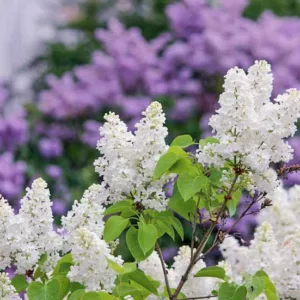
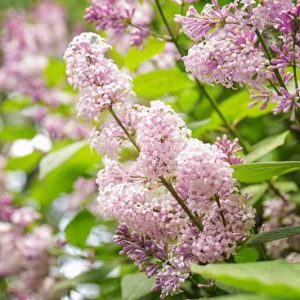
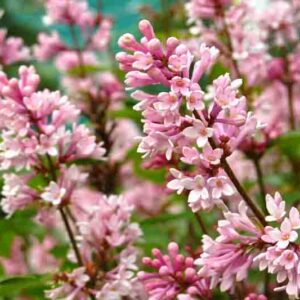
Want more lilacs from a favorite shrub? Learn how to propagate lilacs from rooted suckers, softwood cuttings, layering, grafting, and seed. Discover which methods create an exact copy, why grafted lilacs need special care, when to propagate, and which technique gives home gardeners the best chance of success.



A lilac in full spring bloom naturally makes you want another one. Perhaps you have an old family lilac you would like to preserve, a favorite cultivar you want elsewhere in the garden, or a beautiful shrub that has begun sending up young shoots around its base.
The good news is that lilacs (Syringa) can be propagated in several ways.
The less obvious part is that those methods are not interchangeable.
A rooted sucker from an own-root lilac can be one of the easiest ways to reproduce the parent plant. Layering is slower but forgiving because the new plant remains attached to the parent while roots develop. Stem cuttings can produce true-to-type plants without disturbing the parent shrub, but lilacs can be variable in their willingness to root. Grafting and budding are valuable nursery techniques, but they create a plant composed of a cultivar growing on a separate rootstock.
And seed? It can be fascinating if you want genetic variation, but it is usually the wrong method if your goal is to reproduce a named lilac cultivar exactly.
Before choosing a propagation method, answer four questions:
Gardenia’s propagation rule: Choose the method according to what you are trying to preserve. If the plant is a named cultivar, the real goal is not simply to make another lilac – it is to reproduce the genetics of the lilac you already value.
For most home gardeners, the easiest methods are suckers and layering.
Both reduce the immediate stress placed on the new plant. A rooted sucker already has part of its own root system, while a layered shoot remains attached to the parent until new roots have formed.
Cuttings are useful when the lilac does not sucker conveniently or when you want several new plants without digging close to the parent shrub. They can reproduce named cultivars accurately, but rooting percentages may vary considerably.
Grafting and chip budding are more specialized. They are important in nursery production and can be useful for cultivars that are difficult or inefficient to propagate on their own roots, but they introduce a separate rootstock and require greater skill.
For many gardeners, a practical order of preference is:
Quick answer: If your lilac is own-root and already produces healthy rooted suckers, use them. If it does not, layering is often the easiest next choice. Use cuttings when you need more plants or lack suitable low growth.
This is one of the most important distinctions in lilac propagation.
An own-root lilac grows entirely on its own root system. If a named cultivar is own-root, shoots arising from those roots are genetically the same cultivar.
A grafted lilac consists of two plants joined together: the desired cultivar above and a rootstock below.
That changes the meaning of a sucker.
If a sucker emerges from the rootstock below the graft, it belongs genetically to the rootstock – not necessarily to the named cultivar you see flowering above.
Never assume every sucker is your cultivar. On an own-root lilac, a rooted sucker can reproduce the parent. On a grafted lilac, a sucker arising below the graft may reproduce the rootstock instead.
If you know where the plant was purchased, the nursery label or supplier may state whether it was grown on its own roots. On older shrubs, identifying grafting can be more difficult. Look for a graft union or a noticeable change in stem texture or diameter near the base, but do not rely on appearance alone when cultivar identity matters.
This distinction also matters when renovating old shrubs. Gardenia’s Old Lilac Rejuvenation Guide explains why replacement shoots from own-root plants can be valuable while rootstock shoots on grafted lilacs may need to be removed.
If you have an own-root lilac that suckers freely, this is usually the simplest propagation method.
A sucker is a shoot that arises from the root system, sometimes a short distance from the main framework. Some lilacs produce them abundantly, while others produce few or none.
The best candidates are shoots that have already developed their own fibrous roots.
Early spring is particularly suitable because the young plant is entering active growth and has an entire growing season to establish.
The sucker must bring roots with it. The easiest shoot to see is not necessarily the best one to propagate. Choose the sucker with the strongest independent fibrous root system, not simply the tallest shoot.
Once separated, treat the sucker as a newly planted lilac. Gardenia’s Lilac Planting Guide covers planting depth, watering, mulch, sunlight, drainage, and establishment.
Layering is one of the most forgiving ways to propagate lilacs because the stem remains attached to the parent plant while it develops roots.
That continuing connection supplies water and carbohydrates during the rooting process, so the new plant does not face the immediate survival challenge of a detached cutting.
Layering is especially useful for lilacs with flexible lower branches that can be bent to the soil.
Lilacs can be layered in spring or autumn, and suitable flexible young growth can also be layered during the early growing season. Exact timing matters less than having healthy bendable growth and conditions that keep the rooting zone from drying out.
Layering succeeds because the future lilac does not have to become independent before it has roots. Leave the shoot attached until the new root system is strong enough to support the plant on its own.
Cuttings are an important way to produce lilacs on their own roots, but they are less forgiving than suckers or layering.
Lilac cuttings can be slow or variable in rooting, and success differs among species and cultivars. The condition of the cutting material, timing, humidity, rooting medium, temperature, and aftercare all matter.
For home propagation, softwood cuttings taken in late spring to early summer are generally the first method to try. Semi-ripe cuttings can also be used later in the growing season where appropriate.
Select healthy current-season shoots that are actively growing but not so soft that they collapse immediately after cutting.
Avoid:
Cuttings are a humidity problem before they are a feeding problem. An unrooted lilac cutting cannot replace water efficiently. Preventing excessive moisture loss while maintaining enough air movement to discourage decay is more important than fertilizing it.
Lilacs are not among the easiest woody shrubs to root consistently from stem cuttings.
Failure does not always mean the basic method was wrong. Several factors can reduce rooting success:
Do not judge the method from one cutting. Because rooting can be variable, take several cuttings rather than expecting every stem to produce a plant.
Rooting is not the finish line.
A cutting may have produced enough roots to survive in a propagation tray but still be vulnerable when moved into ordinary garden conditions.
Once roots are well developed:
Think of the process as rooting → growing on → hardening → planting, not simply cutting → garden.
Do not rush a newly rooted cutting outdoors. A cutting can have roots and still be poorly equipped to tolerate hot sun, drying wind, drought, or winter exposure.
When people ask about lilac cuttings, they often mean dormant hardwood stems because those are easy to collect in winter.
However, lilacs are generally propagated more successfully from softwood or suitable semi-ripe growth rather than relying on dormant hardwood cuttings.
That is why home gardeners should normally begin with late-spring or early-summer shoots rather than assuming the woody stems removed during winter pruning are ideal propagation material.
If you have access only to dormant wood, layering, sucker division, or waiting for suitable young shoots may give you a better chance of success than trying to root a bundle of old woody stems.
Grafting takes a piece of the desired lilac cultivar – the scion – and joins it to a compatible plant that provides the roots – the rootstock.
If the graft succeeds, the tissues unite and grow as one plant.
Grafting has historically been important in lilac production, particularly for cultivars that are difficult or inefficient to produce by other methods. Winter grafting remains an accepted propagation technique for Syringa.
But grafting is fundamentally different from cuttings, layering, and own-root suckers because the finished plant has two genetic components.
A grafted lilac may look like one shrub, but biologically it contains the cultivar above and the rootstock below. That is why a sucker from below the graft cannot automatically be treated as a propagation of the named lilac.
For most home gardeners, however, grafting is not the first method to try. Successful grafting requires accurate cuts, close cambial contact, compatible plant material, suitable aftercare, and experience.
Chip budding is another form of vegetative propagation used with lilacs.
Instead of attaching a longer scion, the propagator inserts a single bud with a small chip of supporting tissue into a prepared cut on the rootstock.
Once the tissues unite, the bud can grow and form the desired cultivar.
For lilacs, chip budding is generally carried out in summer and is primarily a nursery or advanced-propagation technique.
The same rootstock warning applies afterward: shoots arising from below the bud union belong to the rootstock and should not be confused with the cultivar.
Yes – but this is where propagation and reproduction need to be separated.
Seed-grown lilacs are produced sexually. They contain a new genetic combination rather than simply reproducing the parent plant.
Seed can be appropriate if:
Seed is generally not the correct method if you want another exact ‘Charles Joly’, ‘Madame Lemoine’, ‘Miss Kim’, or other named cultivar.
A seedling from a cultivar may inherit some characteristics from its parent, but it should not be expected to reproduce that cultivar faithfully.
Seed makes offspring, not copies. If preserving a named cultivar matters, use vegetative propagation – suckers from an own-root plant, layering, cuttings, grafting, or budding.
This is often the most useful way to compare lilac propagation methods.
| Method | Produces the cultivar? | Difficulty | Best use |
|---|---|---|---|
| Own-root sucker | Yes | Easy | Preserving a suckering own-root lilac |
| Layering | Yes | Easy | Low flexible stems |
| Stem cutting | Yes | Moderate | Producing own-root plants |
| Grafting | Yes above the graft | Advanced | Nursery propagation |
| Chip budding | Yes above the union | Advanced | Nursery propagation |
| Seed | No, not reliably for cultivars | Moderate | Species, breeding, experimentation |
If cultivar identity matters, propagate vegetatively. The technique may change, but the principle does not: named lilacs are preserved by cloning, not by sowing their seeds.
Timing depends on the propagation method.
There is therefore no single “lilac propagation season.” The calendar follows the biology of each technique.
Do not ask only, “When should I propagate my lilac?” Ask, “When is the plant material at the right stage for the propagation method I am using?”
Propagation produces a young plant. It does not instantly reproduce the maturity of the parent shrub.
A separated sucker may have a useful head start because it already has a rooted shoot with some maturity. A layered plant can also be relatively substantial when detached.
A small cutting needs more time to build a root system, framework, and flowering capacity.
Seedlings generally require even more patience and may take years to reach flowering maturity.
Do not try to force a young propagated lilac into early bloom with heavy fertilizer. Good root development, strong shoots, suitable sunlight, and correct climate matter more.
When the new lilac is ready for the garden, plant it correctly from the beginning. Gardenia’s step-by-step lilac planting guide explains how to avoid the depth, drainage, spacing, and establishment mistakes that can delay future growth and flowering.
Know what you are copying. Before propagating a named lilac, identify the cultivar, determine whether it is own-root or grafted when suckers are involved, and check applicable propagation rights if the cultivar is protected.
My own-root lilac produces rooted suckers.
Use suckers first. They are usually the simplest way to reproduce the cultivar.
My lilac has flexible low stems.
Try layering. The shoot remains attached to the parent until roots are established.
My lilac has no useful suckers or low branches.
Take several softwood cuttings during the appropriate season.
I want several own-root plants from one cultivar.
Cuttings may be the most practical method if you can provide good humidity and propagation conditions.
My lilac is grafted.
Do not assume root suckers reproduce the cultivar. Use suitable above-graft material for an appropriate vegetative method.
I want an exact copy of a named cultivar.
Do not grow it from seed.
I want to experiment with new genetic combinations.
Seed becomes useful because variability is the point rather than a problem.
I want to graft or bud lilacs.
Treat this as an advanced propagation project requiring compatible stock, precise technique, and careful aftercare.
Gardenia’s priority: Decide whether you need a clone first. Then choose the simplest propagation method that preserves the genetics you actually want.
For an own-root lilac that produces rooted suckers, separating a sucker in spring is usually the easiest method. Layering is another relatively easy technique because the shoot remains attached to the parent while roots form. Cuttings require more careful control of moisture and humidity.
Yes. Lilacs can be propagated from stem cuttings. Softwood cuttings taken in late spring to early summer are generally the best starting point for home gardeners. Rooting can be slow or variable, so take several cuttings rather than relying on one.
Softwood cuttings are generally taken in late spring to early summer from healthy current-season growth. Some lilacs can also be propagated from semi-ripe cuttings later in the growing season.
Lilacs are generally propagated more reliably in a free-draining rooting medium where moisture, humidity, and aeration can be controlled. Water rooting is not the standard recommended method for producing well-rooted lilac plants.
Yes, provided the sucker has useful fibrous roots attached and the parent lilac is growing on its own roots. Spring is particularly suitable. If the parent plant is grafted, suckers may belong to the rootstock rather than the named cultivar.
If a named lilac is growing on its own roots, a sucker arising from those roots is genetically the same cultivar. On a grafted lilac, however, suckers emerging below the graft may be genetically different rootstock growth.
Yes. Simple layering is one of the easiest lilac propagation methods. Bend a flexible lower stem to the ground, bury and secure part of the stem while leaving the tip exposed, and allow roots to develop before separating the new plant from the parent.
Lilacs can be layered in spring or autumn, and suitable flexible young growth can also be layered during the early growing season. Keep the rooting section moist and leave it attached to the parent until a substantial root system has formed.
Rooting speed varies with the stem, season, cultivar, soil moisture, and growing conditions. Do not separate a layer according to a rigid calendar. Wait until it has developed a root system substantial enough to support the new plant independently.
Yes, but seed-grown lilacs are genetically variable. Seed is appropriate for species propagation, breeding, or experimentation, but it should not be used when you need an exact copy of a named cultivar.
Not necessarily. Seedlings receive a new combination of genes and can differ in flower color, fragrance, size, habit, and other characteristics. Named cultivars should be propagated vegetatively if their traits need to be preserved.
Some lilacs, particularly named cultivars, have historically been propagated by grafting or budding. A grafted plant consists of the cultivar above and a separate rootstock below. Suckers arising from the rootstock should not be assumed to reproduce the cultivar.
An own-root lilac grows entirely on its own root system, so its root suckers can reproduce the plant. A grafted lilac combines a cultivar with a separate rootstock. Suckers from below the graft belong genetically to the rootstock rather than necessarily to the cultivar.
If a healthy rooted sucker is available from an own-root lilac, it is usually easier than taking cuttings. Cuttings are more useful when the plant does not sucker, when suckers are inaccessible, or when several new own-root plants are wanted.
Lilacs can be propagated by several methods, but the best technique depends on the plant and on your goal.
If an own-root lilac produces healthy rooted suckers, use them. If a flexible branch reaches the soil, layering offers a low-risk way to create another plant while keeping the shoot attached to its parent. If neither option is available, softwood cuttings allow you to produce true-to-type plants on their own roots.
Grafting and chip budding remain important advanced methods, particularly in nursery propagation, but they create a plant with a separate rootstock. Seed serves another purpose entirely: it produces new genetic individuals rather than faithful copies of named cultivars.
Gardenia’s Lilac Propagation Test: Exact Copy? → Own-Root or Grafted? → Available Plant Material → Simplest Reliable Method.
The most important question therefore comes before scissors, rooting hormone, or potting mix: Are you trying to make another lilac, or are you trying to preserve this particular lilac?
Once you know that, the right propagation method becomes much clearer.
For related guidance, explore Gardenia’s Lilac Collection, When and How to Plant Lilacs, How to Rejuvenate an Old Lilac, and How to Grow and Care for Lilacs.
Updated: September 2026 • Reviewed by Gardenia Editors
| Hardiness |
3 - 7 |
|---|---|
| Plant Type | Shrubs, Trees |
| Plant Family | Oleaceae |
| Genus | Syringa |
| Exposure | Full Sun |
| Season of Interest | Spring (Mid, Late) |
| Maintenance | Low |
| Water Needs | Average |
| Soil Type | Chalk, Clay, Loam, Sand |
| Soil pH | Alkaline, Neutral |
| Soil Drainage | Moist but Well-Drained, Well-Drained |
| Characteristics | Cut Flowers, Fragrant, Showy |
| Landscaping Ideas | Beds And Borders, Hedges And Screens, Patio And Containers |
| Garden Styles | City and Courtyard, Informal and Cottage |
| Hardiness |
3 - 7 |
|---|---|
| Plant Type | Shrubs, Trees |
| Plant Family | Oleaceae |
| Genus | Syringa |
| Exposure | Full Sun |
| Season of Interest | Spring (Mid, Late) |
| Maintenance | Low |
| Water Needs | Average |
| Soil Type | Chalk, Clay, Loam, Sand |
| Soil pH | Alkaline, Neutral |
| Soil Drainage | Moist but Well-Drained, Well-Drained |
| Characteristics | Cut Flowers, Fragrant, Showy |
| Landscaping Ideas | Beds And Borders, Hedges And Screens, Patio And Containers |
| Garden Styles | City and Courtyard, Informal and Cottage |
Create a membership account to save your garden designs and to view them on any device.
Becoming a contributing member of Gardenia is easy and can be done in just a few minutes. If you provide us with your name, email address and the payment of a modest $25 annual membership fee, you will become a full member, enabling you to design and save up to 25 of your garden design ideas.
Join now and start creating your dream garden!
Create a membership account to save your garden designs and to view them on any device.
Becoming a contributing member of Gardenia is easy and can be done in just a few minutes. If you provide us with your name, email address and the payment of a modest $25 annual membership fee, you will become a full member, enabling you to design and save up to 25 of your garden design ideas.
Join now and start creating your dream garden!