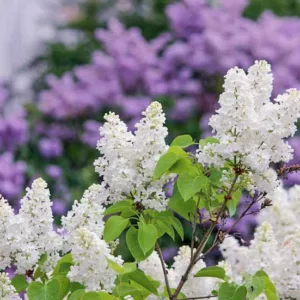
Plant a lilac once and plant it right. Learn the best time to plant lilacs, how much sun and space they need, how deep to set the roots, how to handle clay and drainage, when to water and mulch, and which common planting mistakes can delay healthy growth and flowers.



A lilac can live for decades, sometimes far longer, so planting one is not a small decision. The hole itself may take only twenty minutes to dig, but the choices you make before that point – climate, mature size, sunlight, drainage, planting depth, and spacing – largely determine whether the shrub becomes a fragrant spring showpiece or a disappointing plant that never quite thrives.
The most common lilac planting mistakes happen before the shovel goes into the soil. A beautiful lilac (Syringa) may be planted in too much shade, squeezed into a space that cannot accommodate its mature spread, placed too deeply, or installed in soil that remains wet around the roots. None of those problems is easily corrected later.
The goal is therefore not simply to learn how to plant a lilac bush. It is to choose the right lilac, put it in the right place, and establish it in a way that supports decades of healthy growth and reliable flowers.
Before planting, work through six decisions in order:
Gardenia’s planting rule: Solve climate, space, sun, and drainage before worrying about fertilizer or flowers. A lilac planted in the wrong place cannot be rescued by better aftercare.
Spring and fall are usually the easiest seasons for planting lilacs because temperatures are moderate and establishment stress is lower than it is during summer heat.
Container-grown lilacs can be planted whenever the soil is workable and adequate water is available, but cool spring or fall conditions are usually kinder to a new root system. Avoid planting during extreme heat, drought, frozen soil, or periods when the ground is saturated.
Spring planting is particularly useful in colder climates because the shrub then has a full growing season to establish before winter. Plant once the soil is workable and no longer excessively wet.
Fall can also be an excellent planting season where there is enough mild weather remaining for roots to begin establishing before the ground freezes. Air temperatures may be cool while the soil is still warm enough for root activity.
Bare-root lilacs are normally planted while dormant, typically in early spring or fall. Keep exposed roots cool and moist until they are in the ground.
Best timing: Choose a moderate planting window rather than forcing a lilac into the ground during severe heat, drought, frozen conditions, or saturated spring mud.
A successful planting begins with the plant, not the shovel.
Common lilac (Syringa vulgaris) is the classic fragrant lilac, but many cultivars mature into substantial shrubs. Other lilacs remain more compact, flower at different times, tolerate somewhat different climates, or offer improved disease resistance.
This matters because a lilac that naturally matures at 10-12 ft or more should not be planted beneath a low window or three feet from a walkway with the expectation that annual pruning will keep it permanently compact.
For smaller landscapes, naturally compact plants are far easier to manage. Gardenia’s Pretty Lilacs for Small Gardens highlights varieties better suited to limited spaces.
You can also use Gardenia’s Lilac Comparison Tool to compare mature size, bloom period, hardiness, growing conditions, and other characteristics before planting.
Think twenty years ahead: Plant for the lilac’s mature dimensions, not the size of the nursery pot. Choosing a naturally suitable cultivar is easier than repeatedly correcting an oversized shrub later.
Climate is one of the most important lilac selection factors because many traditional lilacs are plants of cold-winter regions.
Common lilac generally performs best in USDA Zones 3-7. It benefits from winter cold and is less well suited to regions with mild winters and prolonged hot, humid summers. Other lilac species and hybrids extend the range somewhat, so do not assume that every Syringa has identical climate requirements.
If you garden near the warm edge of traditional lilac territory, choose lilacs with a documented record of performing in milder-winter climates rather than assuming every common-lilac cultivar will flower equally well.
Gardenia’s regional lilac guides can help with climate-sensitive choices, including Lilacs for the Lower South, Lilacs for the Middle South, and Lilacs for the Upper South.
Lilacs flower best in full sun. Aim for about six hours or more of direct sunlight when possible. Some lilacs tolerate lighter shade, but flowering generally becomes less reliable as shade increases.
A shrub planted where surrounding trees gradually cast deeper shade may remain alive yet produce fewer flowers as the years pass.
Sunlight also influences disease. Dense, shaded foliage dries more slowly and can favor foliar problems such as powdery mildew and leaf spot.
Sun check: Do not evaluate the site only at planting time. Consider how nearby trees, hedges, fences, and buildings will shade the lilac during the growing season and as the landscape matures.
Lilacs are adaptable shrubs, but drainage is non-negotiable.
Many familiar garden lilacs, especially common lilac and its cultivars, perform best in fertile, well-drained neutral to alkaline soil. Soil preferences vary somewhat across the genus, so check the requirements of the species or cultivar you are planting.
Common lilac can grow in clay as long as the soil drains adequately, so the presence of clay alone does not automatically make a site unsuitable.
The real danger is persistent saturation. Roots need oxygen as well as water, and a planting site that stays soggy after rain can weaken the shrub and increase the risk of root and crown problems.
If water regularly stands in the proposed planting site, correct the drainage problem or choose a different location rather than trying to solve it by digging an extra-deep planting hole.
Gardenia’s drainage test: Heavy soil is not automatically bad lilac soil. Heavy soil that remains saturated is the problem. Evaluate how water moves through the site, not simply whether the soil contains clay.
Older planting advice often recommended turning the planting hole into a pocket of rich compost, peat, fertilizer, and imported topsoil. That is usually unnecessary and can create an abrupt transition between the planting hole and the surrounding native soil.
For most sites, backfill primarily with the soil that came out of the hole. The new roots ultimately need to grow beyond that hole into the surrounding ground.
If the entire planting area has genuinely poor soil, improving a broad bed with organic matter before planting is more useful than creating one highly amended pocket around the root ball.
Do not add fertilizer directly to the planting hole. Newly planted lilacs need root establishment more than a burst of top growth, and high fertilizer concentrations around new roots can do more harm than good.
The planting hole should be wide and relatively shallow, not narrow and deep.
For a container-grown or balled-and-burlapped lilac, dig the hole roughly twice as wide as the root ball, or wider where surrounding soil is compacted. The loosened soil at the sides helps young roots expand outward.
Do not dig the hole deeper than the root system. The uppermost structural roots or root flare should finish at approximately the surrounding soil level, or slightly above it where drainage or settling is a concern.
Deep planting is one of the most avoidable mistakes in woody-plant establishment. Burying the base of the stems under several inches of soil reduces oxygen around roots and keeps bark in conditions for which it is not adapted.
Do not dig twice as deep: “Twice as wide” is useful planting advice. “Twice as deep” is not. Set the lilac on firm soil so the root system does not settle below grade after planting.
Do not assume the top of the nursery container is the correct planting depth.
Sometimes shrubs have excess potting mix or field soil above the first structural roots. Gently remove enough surface material to locate the point where the upper roots emerge from the base of the plant. That is a better reference for planting depth than the container rim.
Container-grown lilacs may also have roots circling around the inside of the pot. Loosen or correct obvious circling roots before planting so they can grow outward into the surrounding soil rather than continuing around the original root ball.
For balled-and-burlapped plants, remove ties and other materials that could constrict the stems or roots. Synthetic burlap should be removed rather than left underground.
Water the lilac before planting if the root ball is dry. A thoroughly hydrated root system is easier to establish than a dry one.
Make the hole roughly twice the width of the root ball but no deeper than the distance from the upper roots to the bottom of the root mass.
Remove the container, locate the upper roots, and loosen or correct circling roots where necessary.
Place it on firm soil with the upper root system at or slightly above surrounding grade. Step back and make sure the plant is upright and positioned attractively before backfilling.
Return the excavated soil around the root ball. Firm it gently enough to eliminate large air pockets without compacting it into a hard mass.
Soak the entire planting area so that water settles soil around the roots and wets both the root ball and surrounding ground.
Bare-root lilacs need slightly different handling because their roots are exposed rather than contained in a root ball.
Keep roots cool and moist until planting, and do not allow them to dry in the sun or wind. Dig a hole large enough for the roots to spread naturally without bending or circling them around the planting hole.
Create enough firm support beneath the center of the plant so that the root collar remains at the correct soil level while roots spread outward and downward naturally.
Backfill gradually, working soil carefully among the roots so that large air spaces are not left behind. Water thoroughly after planting.
Bare-root priority: Do not force long roots into a hole that is too small. Make the planting hole fit the roots rather than twisting the roots to fit the hole.
Spacing should be based on the mature spread of the specific lilac, not a universal number.
Large common lilacs may need 8-12 ft or more of width, while compact cultivars can fit into far smaller spaces. Some lilacs are naturally broader than they are tall.
For a specimen shrub, leave enough room for the plant to develop its natural outline without constant cutting. A hedge can be planted more closely, but tighter spacing also means more competition and less airflow.
Always check the mature width of the cultivar before planting. Gardenia’s lilac plant profiles and comparison tool are especially useful here because spacing requirements vary considerably across the genus.
Use mature spread as the starting point, then adjust for design. A specimen needs room to express its natural shape. A hedge can be closer. A tight foundation planting needs a naturally compact cultivar, not permanent pruning to force a large lilac into a small footprint.
Water thoroughly immediately after planting and continue monitoring soil moisture while the roots establish.
Newly planted lilacs cannot tolerate drought as well as established shrubs because most of their roots are still concentrated in the original root ball. During dry weather, water deeply enough to moisten the entire root zone rather than giving frequent shallow splashes.
At the same time, do not keep the soil continuously saturated. Roots need oxygen, and a constantly soggy planting hole can be as damaging as drought.
How often you need to water depends on rainfall, temperature, soil texture, drainage, plant size, and season. Check the soil rather than following a rigid calendar.
Watering rule: Keep the newly establishing root zone consistently moist but well aerated. “Regular watering” does not mean keeping a lilac permanently wet.
Apply roughly 2-3 in. of organic mulch over the root zone to help conserve moisture, moderate soil temperature, and suppress competing weeds.
Spread mulch outward rather than piling it deeply around the stems. Keep the base and root flare visible.
A “mulch volcano” traps moisture against bark and can encourage decay, root problems, and unwanted rooting close to the stem.
A broad, shallow mulch layer is much more useful than a deep mound.
Usually, no immediate fertilization is necessary.
Lilacs are not heavy feeders, and excessive nitrogen can encourage lush leafy growth at the expense of flowers. A newly planted lilac should be concentrating on root establishment rather than producing an artificially forced flush of shoots.
If soil fertility is genuinely questionable, a soil test is a better basis for fertilizing than routine application.
For established lilacs, light feeding may sometimes be appropriate, but heavy annual fertilization is not a requirement for good flowering.
Routine hard pruning is not necessary just because a lilac has been planted.
Remove broken, dead, badly damaged, or obviously diseased branches. Otherwise, preserve healthy foliage because the leaves help supply energy for root establishment.
Once the shrub is established, routine shaping should follow lilac flowering biology. Most familiar spring-flowering lilacs form the following year’s flower buds soon after their spring display, so unnecessary pruning later in the season can remove those buds.
For detailed timing, see Gardenia’s When and How to Prune Lilacs Without Losing Next Year’s Flowers.
Do not assume a healthy newly planted lilac will flower heavily right away.
Common and French hybrid lilacs may take several years after planting to reach flowering maturity, and some can require five years or more. By contrast, dwarf Korean lilacs, ‘Miss Kim’, and Preston lilacs often begin flowering when relatively young.
A young shrub that is growing vigorously in full sun and otherwise looks healthy may simply need time.
Before applying fertilizer or pruning in frustration, check the basics: climate, sun, drainage, pruning history, and plant maturity.
If an established lilac still refuses to bloom, Gardenia’s Why Is My Lilac Not Blooming? 10 Causes and How to Fix Them provides a full symptom-based diagnosis.
A newly planted lilac may wilt temporarily during hot weather or shed a few leaves while its reduced root system adjusts. That does not automatically mean the plant is dying.
More concerning signs include progressive branch dieback, persistently wilted foliage despite appropriate soil moisture, blackened young growth, soft or decaying tissue near the crown, or soil that remains saturated for long periods.
Before adding fertilizer, check whether the root ball is actually moist. Newly planted shrubs can occasionally be surrounded by damp soil while the original container root ball remains surprisingly dry.
If symptoms suggest disease rather than establishment stress, Gardenia’s Lilac Diseases: What’s Wrong With My Lilac? provides a symptom-to-diagnosis approach.
Gardenia’s establishment checkpoint: When a newly planted lilac struggles, check moisture inside the original root ball, planting depth, drainage, and recent weather before diagnosing nutrient deficiency or reaching for fertilizer.
| Question | What to Check | Best Decision |
|---|---|---|
| Will this lilac flower in my climate? | Hardiness and proven climate adaptation | Choose the species/cultivar before choosing the site |
| Will it fit? | Mature height and spread | Plant for mature size, not nursery size |
| Will it flower well? | Strong direct light, ideally around six hours or more | Choose the sunniest practical location |
| Is the soil suitable? | Drainage, moisture, and cultivar-specific soil preferences | Avoid chronically saturated soil |
| How deep should it go? | Upper structural roots/root flare | Plant at grade or slightly high, never buried |
| What matters after planting? | Root-zone moisture | Water deeply without keeping roots saturated |
Gardenia’s planting priority: A successful lilac begins with compatibility, not fertilizer. Match the plant to the climate and available space, give it sun and drainage, plant it at the correct depth, then concentrate on root establishment.
The best planting month depends on climate, but spring and fall are generally the easiest times because temperatures are moderate. Container-grown lilacs can be planted whenever the ground is workable and adequate water is available, while bare-root lilacs are normally planted while dormant.
Both can work well. Spring gives lilacs a full growing season before winter, while fall offers cooler air temperatures and often warm soil for root growth. Avoid planting during severe heat, drought, frozen ground, or excessively wet soil.
Choose a site with strong direct sun, ideally around six hours or more when possible, good air circulation, and well-drained soil. Make sure there is enough space for the specific lilac to reach its mature height and spread without constant pruning.
Lilacs flower best in full sun. Aim for about six hours or more of direct sunlight when possible. Some lilacs tolerate lighter shade, but flowering generally becomes less reliable as shade increases.
Plant a lilac so that the upper structural roots or root flare are approximately level with the surrounding soil, or slightly above grade where appropriate. Do not bury the base several inches below the surrounding soil.
For container-grown and balled-and-burlapped lilacs, a hole roughly twice as wide as the root ball gives roots loosened soil in which to expand. The hole should not be deeper than the root system.
Usually it is better to backfill mainly with the native soil removed from the hole. If soil improvement is needed, improve a broader planting area rather than creating a small pocket of highly amended soil around the roots.
Usually no. Lilacs do not require heavy feeding, and fertilizer is not a substitute for correct planting, sunlight, drainage, and watering. Heavy nitrogen can encourage leafy growth at the expense of flowers.
Water thoroughly after planting and continue watering during dry periods while the shrub establishes. Frequency depends on weather, soil, and plant size. Keep the root zone consistently moist but not permanently saturated.
Many lilacs, including common lilac, can tolerate clay if drainage is adequate. The important distinction is between clay soil and waterlogged soil. Persistently saturated roots are far more problematic than clay texture itself.
Spacing depends on mature cultivar width and the intended use. Large common lilacs may require substantial room, while dwarf cultivars can be planted in smaller spaces. Use the mature spread of the specific lilac as the starting point.
It varies. Common and French hybrid lilacs may need several years, sometimes five or more, before flowering well. Dwarf Korean, ‘Miss Kim’, and Preston lilacs often flower at a younger age. Good sun, appropriate climate, and correct care help plants reach flowering maturity.
Updated: September 2026 • Reviewed by Gardenia Editors
| Hardiness |
3 - 7 |
|---|---|
| Plant Type | Shrubs, Trees |
| Plant Family | Oleaceae |
| Genus | Syringa |
| Exposure | Full Sun |
| Season of Interest | Spring (Mid, Late) |
| Maintenance | Low |
| Water Needs | Average |
| Soil Type | Chalk, Clay, Loam, Sand |
| Soil pH | Alkaline, Neutral |
| Soil Drainage | Moist but Well-Drained, Well-Drained |
| Characteristics | Cut Flowers, Fragrant, Showy |
| Landscaping Ideas | Beds And Borders, Hedges And Screens, Patio And Containers |
| Garden Styles | City and Courtyard, Informal and Cottage |
| Hardiness |
3 - 7 |
|---|---|
| Plant Type | Shrubs, Trees |
| Plant Family | Oleaceae |
| Genus | Syringa |
| Exposure | Full Sun |
| Season of Interest | Spring (Mid, Late) |
| Maintenance | Low |
| Water Needs | Average |
| Soil Type | Chalk, Clay, Loam, Sand |
| Soil pH | Alkaline, Neutral |
| Soil Drainage | Moist but Well-Drained, Well-Drained |
| Characteristics | Cut Flowers, Fragrant, Showy |
| Landscaping Ideas | Beds And Borders, Hedges And Screens, Patio And Containers |
| Garden Styles | City and Courtyard, Informal and Cottage |
Create a membership account to save your garden designs and to view them on any device.
Becoming a contributing member of Gardenia is easy and can be done in just a few minutes. If you provide us with your name, email address and the payment of a modest $25 annual membership fee, you will become a full member, enabling you to design and save up to 25 of your garden design ideas.
Join now and start creating your dream garden!
Create a membership account to save your garden designs and to view them on any device.
Becoming a contributing member of Gardenia is easy and can be done in just a few minutes. If you provide us with your name, email address and the payment of a modest $25 annual membership fee, you will become a full member, enabling you to design and save up to 25 of your garden design ideas.
Join now and start creating your dream garden!