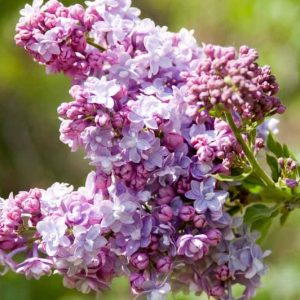
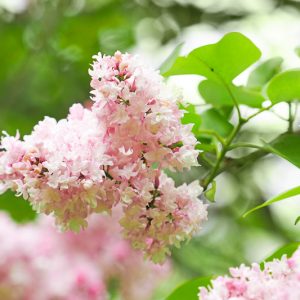
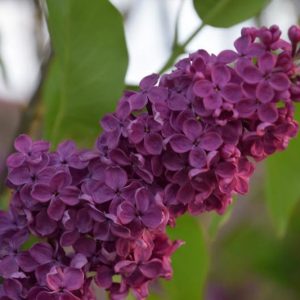
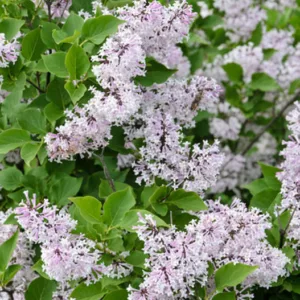
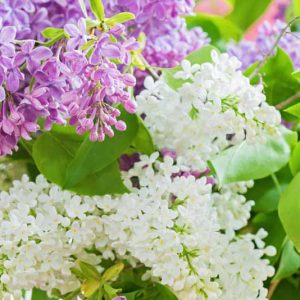
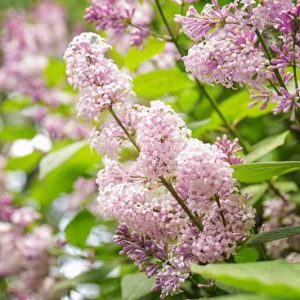
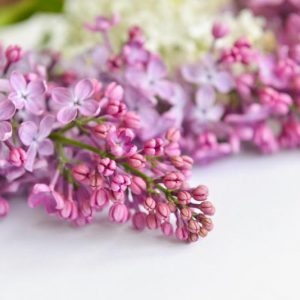
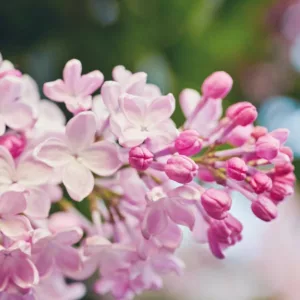
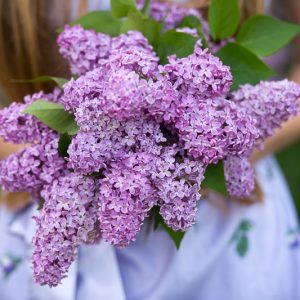
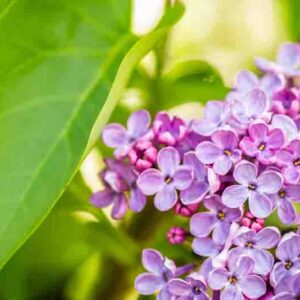
Which lilacs smell the best? Discover exceptionally fragrant varieties in white, lavender, blue, magenta, pink, and purple, from classic French lilacs to smaller selections. Compare scent, bloom timing, mature size, and climate needs - then learn how to place and combine lilacs for weeks of unforgettable spring fragrance.
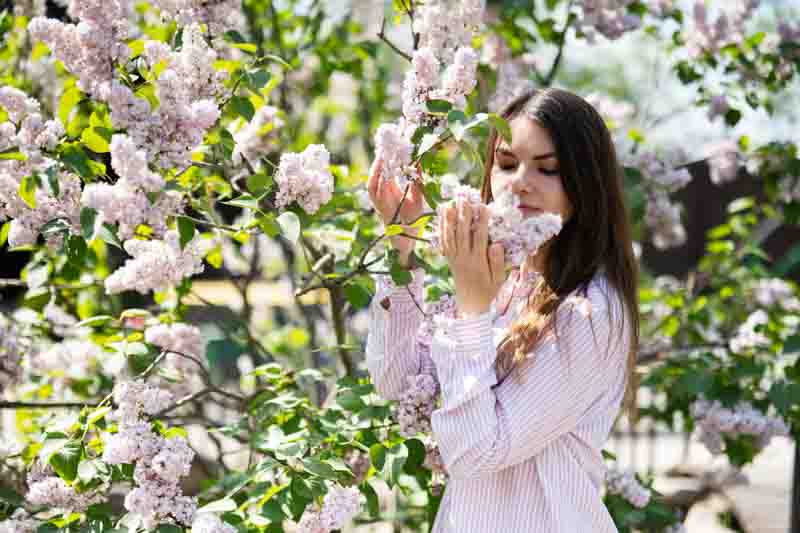


Few garden fragrances are as instantly recognizable as lilac. One warm spring afternoon beside a shrub in full bloom can perfume an entire corner of the garden – sweet, floral, fresh, and unmistakably tied to spring.
But not every lilac smells exactly the same, and not every variety creates the same fragrance experience.
Some lilacs (Syringa) are celebrated for powerful, classic lilac perfume. Others have a lighter, sweeter, or subtly different scent. A mature shrub covered in hundreds of flower clusters can also create a much stronger fragrance in the landscape than a compact plant carrying fewer blooms, even when both are individually scented.
So choosing the most fragrant lilac is not simply a matter of finding a cultivar described as “strongly scented.” You also need to consider flower abundance, bloom timing, climate, mature size, placement, and how you actually want to experience the perfume.
When fragrance is the priority, choose a lilac in this order:
Gardenia’s fragrance rule: The best scented lilac is not simply the one with the strongest fragrance description. It is the fragrant lilac that blooms reliably, fits the garden at maturity, and can be positioned where its perfume will actually be enjoyed.
If the scent you want is the traditional perfume associated with an old lilac hedge or a vase of freshly cut spring lilacs, begin with common lilac (Syringa vulgaris).
This species remains the benchmark for classic lilac fragrance. Its many cultivars offer white, pink, lavender, blue-violet, purple, magenta, and bicolored flowers in both single and double forms.
Common lilac also has an important advantage for fragrance gardens: cultivars flower at slightly different points within the main lilac season. By combining selections that peak at different times rather than planting several shrubs that all flower together, you can extend the period during which the garden smells of lilacs.
That does not mean every Syringa vulgaris cultivar is equally fragrant. Some Gardenia profiles describe cultivars as amazingly or highly fragrant, while others are sweetly scented or only slightly fragrant. If perfume is the priority, that distinction matters.
Start here for classic perfume: Choose a strongly fragrant Syringa vulgaris cultivar unless climate, available space, or another site limitation gives you a reason to select a different lilac group.
For gardeners who want the full old-fashioned lilac experience – substantial shrubs, showy flower clusters, and powerful perfume – these three cultivars are excellent starting points.
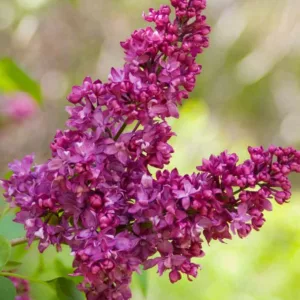
‘Charles Joly’ is one of the great dark French lilacs. Its double magenta-purple flowers are amazingly fragrant, and the deep color gives it much more drama than the pale lavender lilac many gardeners picture first.
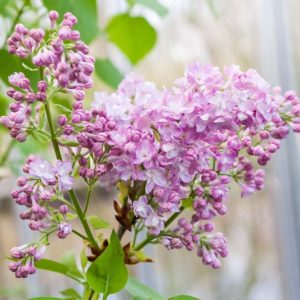
‘Katherine Havemeyer’ produces dense panicles of amazingly fragrant double lavender-purple flowers that gradually soften toward lilac-pink. It is a substantial old-fashioned shrub and an excellent choice when both fragrance and a romantic pastel display are priorities.
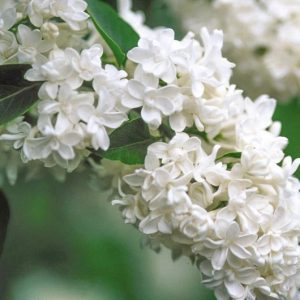
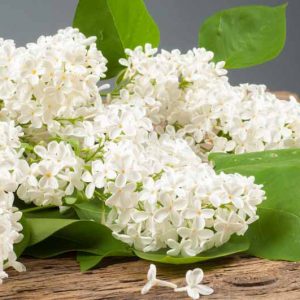
‘Madame Lemoine’ is one of the classic white lilacs. Its large double white flowers are amazingly fragrant, opening from creamy buds and creating a luminous display that is particularly effective near a terrace or against a darker background.
| Hardiness |
3 - 7 |
|---|---|
| Plant Type | Shrubs, Trees |
| Plant Family | Oleaceae |
| Genus | Syringa |
| Exposure | Full Sun |
| Season of Interest | Spring (Mid, Late) |
| Maintenance | Low |
| Water Needs | Average |
| Soil Type | Chalk, Clay, Loam, Sand |
| Soil pH | Alkaline, Neutral |
| Soil Drainage | Moist but Well-Drained, Well-Drained |
| Characteristics | Cut Flowers, Fragrant, Showy |
| Landscaping Ideas | Beds And Borders, Hedges And Screens, Patio And Containers |
| Garden Styles | City and Courtyard, Informal and Cottage |
The best fragrant lilac does not have to be lavender. Several of the strongest choices also offer distinctive flower colors.
‘Beauty of Moscow’, also known as ‘Krasavitsa Moskvy’, opens pinkish-lilac buds into highly fragrant double white flowers touched with the palest pink. It combines strong perfume with one of the most refined flower displays among common lilacs.
‘President Grevy’ produces large panicles of highly fragrant double lavender-blue flowers. It is vigorous and can become a substantial shrub, so it is better suited to a generous border or landscape than a confined planting pocket.
‘Andenken an Ludwig Spath’, often sold as ‘Ludwig Spaeth’, bears long panicles of deeply colored wine-red to purple single flowers that are amazingly fragrant. It is an excellent choice for gardeners who want powerful scent without the soft pastel palette associated with many lilacs.
Color does not predict fragrance. White, lavender, blue, magenta, and deep purple lilacs can all be strongly scented. Choose flower color after confirming fragrance, climate, and mature size.
Not automatically.
Many celebrated fragrant French lilacs happen to have double flowers, including ‘Charles Joly’, ‘Katherine Havemeyer’, ‘Madame Lemoine’, ‘Beauty of Moscow’, and ‘President Grevy’. That can easily create the impression that doubling causes stronger perfume.
But fragrance is a cultivar trait, not a simple single-versus-double rule. Single-flowered cultivars can also be exceptionally fragrant. ‘Andenken an Ludwig Spath’, for example, produces single flowers yet has notably strong perfume.
Choose double flowers because you enjoy their fuller appearance, not because double lilacs can universally be expected to smell stronger.
Fragrance is difficult to reduce to a single number.
Human scent perception varies. One gardener may describe a lilac as intoxicating while another finds the same perfume softer. Temperature, humidity, wind, flower age, and the number of blossoms open at the same time also influence how strongly a shrub seems to smell on a particular day.
A mature lilac carrying hundreds of flower clusters can perfume a surprisingly large area even if each individual flower is not uniquely powerful. A very small shrub may have highly fragrant flowers yet create a more intimate scent experience simply because it carries fewer panicles.
This distinction between flower fragrance and landscape fragrance is important.
When choosing a lilac for scent, think beyond how strongly one flower smells. Fragrance in the garden is the combined effect of scent intensity, the number of open flowers, distance from the observer, weather, and air movement. A heavily flowering shrub beside a frequently used path may deliver more fragrance than a theoretically stronger-scented plant hidden at the back of the property.
Traditional common lilacs can become large shrubs, often reaching 8-15 ft. tall or more with substantial spreads. That is wonderful when you have room for an old-fashioned flowering specimen, but it is unnecessary when you want fragrance beside a patio, courtyard, or smaller urban garden.
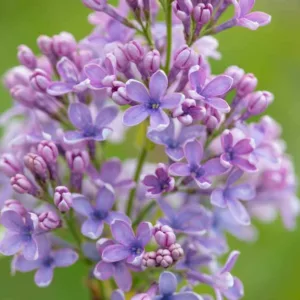
‘Wedgewood Blue’ is a relatively compact common lilac, generally reaching about 4-6 ft. tall and wide, with sweetly fragrant lavender-blue flowers. It is a particularly useful option because it combines recognizable common-lilac character with a much more manageable footprint.
‘Miss Kim’ is compact relative to many traditional lilacs, although it is not a true dwarf. It generally reaches about 6-8 ft. tall and wide and produces abundant sweetly fragrant lavender flowers that mature toward ice blue. Its later bloom period can also help extend the scented lilac season.
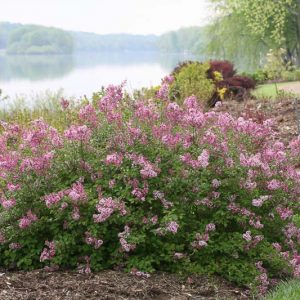
Scent and Sensibility Pink stays significantly lower, generally around 2-3 ft. tall with a broader spread of about 4-6 ft. Its heavily fragrant pink flowers make it a useful choice where fragrance is wanted closer to a patio, path, or small border without the scale of a traditional lilac.
Small-garden reminder: Do not judge suitability by height alone. A lilac that remains relatively short can still spread widely, so compare mature width with the actual planting space before choosing.
For more compact choices and mature dimensions, see Gardenia’s Best Lilacs for Small Gardens.
If fragrance matters, do not focus exclusively on peak-season common lilacs.
Syringa × hyacinthiflora hybrids generally flower about a week before common lilacs, allowing the scented season to begin earlier.
One particularly useful modern selection is Scentara Pura. Its purple flowers are very fragrant, and it flowers earlier than common lilac. It is also documented as requiring less winter chilling than many traditional lilacs.
That can make Scentara Pura useful in some milder-winter regions where traditional common lilacs flower less reliably, provided the overall climate – including summer conditions – remains suitable for growing lilacs successfully.
For a longer fragrant spring: combine an earlier Syringa × hyacinthiflora with strongly scented common lilacs rather than planting several cultivars that all reach peak bloom together.
Common lilacs provide the classic perfume, but their flowering period is concentrated. Gardeners with enough space can stretch the fragrant season by adding later-flowering or repeat-flowering lilacs.
‘Miss Kim’ blooms later than many common lilacs, making it particularly useful for extending the sequence beyond peak common-lilac season.
‘Superba’ produces fragrant rosy-pink flowers and can bloom again intermittently later in the season. It is not a small shrub in terms of footprint – mature plants can spread broadly – but it is useful when the goal is to extend fragrance and there is adequate room.
Reblooming lilacs offer another way to lengthen the season, although they should not be described as flowering continuously from spring through fall. Their major display occurs in spring, followed by new growth and the possibility of additional flowers later. The strength of that later display varies with cultivar, summer heat, moisture, plant vigor, pruning, and climate.
If extending fragrance is your goal, think in terms of a sequence, not one miraculous shrub that remains covered in flowers all season.
Gardenia’s Lilac Blooming Seasons guide compares early, peak, late, and repeat-flowering lilacs so you can plan that sequence more precisely.
This distinction matters because unusual flower color can easily distract from scent.
‘Primrose’, for example, is remarkable because its flowers open creamy yellow – an unusual color among lilacs – but its flowers are only slightly fragrant. It can be a superb ornamental cultivar without being the logical first choice for someone whose main goal is perfume.
‘Sensation’ is famous for its unusual purple-red flowers edged in white. It is sweetly scented and visually unforgettable, but a gardener seeking the strongest fragrance might favor cultivars specifically noted for more powerful scent.
This is why “best lilac” and “best lilac for fragrance” are not identical searches.
Do not rank by appearance alone: A rare color, enormous flower cluster, or celebrated cultivar may be wonderful in the garden without being the strongest fragrance choice. Decide what you want the shrub to do before choosing it.
A famously fragrant lilac is of little value if it barely flowers in your climate.
Traditional Syringa vulgaris performs best where winters provide sufficient cold and summers are generally cool to moderate. Insufficient winter chilling can reduce or prevent reliable flowering in warmer regions.
This is why gardeners should choose for climate before fragrance ranking. In colder regions, the full range of classic common lilacs may be available. In milder-winter areas, selections with documented performance under reduced chilling may be more dependable.
The same principle applies at the colder end of the range. A cultivar must also be reliably hardy where it is planted.
Use Gardenia’s individual lilac profiles and regional recommendations rather than assuming that every highly fragrant cultivar sold online will flower equally well in every garden.
Fragrance starts with flowers: The most strongly scented cultivar on paper cannot perfume a garden if the climate prevents it from blooming well.
One of the most common mistakes with fragrant plants is putting them where nobody spends time.
A lilac at the far end of a large property may look beautiful from a window, but much of its fragrance will go unnoticed unless you regularly walk past it.
Good locations for strongly fragrant lilacs include:
Do not crowd a large lilac against a doorway, foundation, or narrow walkway simply to bring the flowers closer. Mature footprint still comes first.
Place fragrance where people pause or pass. Choose the position according to mature size first, then place the shrub close enough to a path, seating area, or window that its perfume becomes part of the everyday spring garden experience.
Even a highly fragrant cultivar needs enough flowers to create a powerful display.
Give lilacs abundant sunlight. Common lilac generally flowers best in full sun, while excessive shade reduces flowering and may also leave the shrub more open and less impressive.
Plant in fertile but well-drained soil. Lilacs dislike chronically waterlogged roots, and many traditional lilacs perform well in neutral to alkaline conditions.
Avoid automatically applying high-nitrogen fertilizer. Excess nitrogen can encourage leafy growth without improving the flower display.
Prune only when necessary and at the correct time. Spring-flowering lilacs form the following year’s flower buds after the current display, so pruning in late summer, fall, or winter can remove much of the next season’s bloom.
If pruning is needed, carry it out soon after flowering. For old shrubs, selective renewal is usually more useful than repeatedly shearing the exterior. See Gardenia’s When and How to Prune Lilacs Without Losing Next Year’s Flowers.
For complete planting and care instructions, see How to Grow and Care for Lilacs.
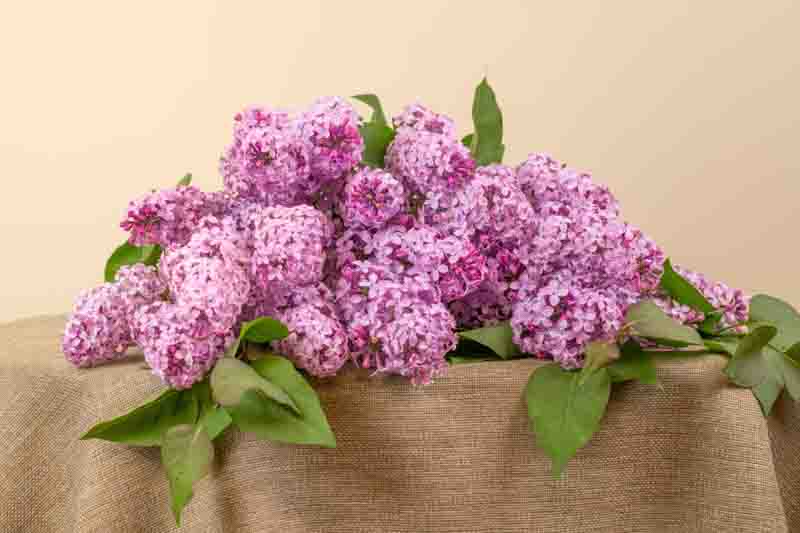
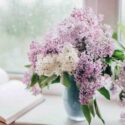
Strongly scented common lilacs are among the great spring cut flowers. A few flower-filled stems can perfume an entire room.
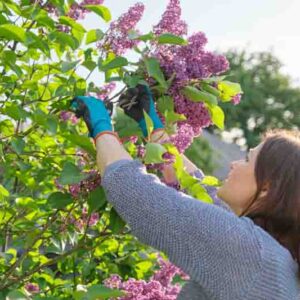
Cut panicles when a good proportion of the florets are open but the flower cluster is still fresh. Harvest during the cooler part of the day and place stems into water promptly.
Because lilac stems are woody, clean cutting and rapid hydration matter. Use sharp pruners rather than crushing or smashing the stems.
For bouquets, large-flowered cultivars such as ‘Madame Lemoine’, ‘Charles Joly’, ‘Katherine Havemeyer’, ‘Beauty of Moscow’, and ‘President Grevy’ combine powerful fragrance with substantial flower clusters.
Remember that removing flowering stems is also pruning. Cut selectively rather than shortening large portions of the shrub simply to fill a vase.
If you have room for several shrubs, do not simply buy three favorite colors. Build the planting around time, fragrance, and scale.
A useful sequence might begin with a fragrant early-flowering Syringa × hyacinthiflora, move into strongly scented common lilacs during peak season, then continue with a later-flowering fragrant lilac such as ‘Miss Kim’. Where space permits, ‘Superba’ or a suitable reblooming lilac can extend the display further.
In a smaller garden, prioritize one cultivar that combines strong fragrance with a realistic mature footprint. In a larger landscape, several cultivars can create a much broader fragrant season.
Gardenia’s Fragrant Season Strategy: Do not maximize the number of lilacs blooming on one weekend. Maximize the number of weeks during which at least one excellent fragrant lilac is in bloom.
Use Gardenia’s Lilac Comparison Tool to compare varieties before planting, combining fragrance with mature size, bloom period, hardiness, flower color, and other characteristics.
Want the strongest classic lilac experience?
Begin with highly fragrant Syringa vulgaris cultivars such as ‘Charles Joly’, ‘Katherine Havemeyer’, ‘Madame Lemoine’, ‘Beauty of Moscow’, ‘President Grevy’, or ‘Andenken an Ludwig Spath’.
Want white flowers plus powerful scent?
Consider ‘Madame Lemoine’ or ‘Beauty of Moscow’.
Want dark purple or magenta flowers?
Look at ‘Charles Joly’ or ‘Andenken an Ludwig Spath’.
Want blue-lavender flowers?
Consider ‘President Grevy’, ‘Katherine Havemeyer’, or the more compact ‘Wedgwood Blue’.
Need a smaller shrub?
Compare ‘Wedgwood Blue’, Scent and Sensibility Pink, and other compact lilacs by mature spread rather than trusting the word “compact” alone.
Want fragrance earlier?
Add an early-flowering Syringa × hyacinthiflora such as Scentara Pura.
Want fragrance later?
Use later-flowering selections such as ‘Miss Kim’, or ‘Superba’ where there is enough room for its mature spread.
Gardenia’s final selection order: Climate → Mature Size → Scent → Bloom Timing → Flower Color. A fragrant lilac succeeds only if the plant itself fits the garden.
Common lilac (Syringa vulgaris) is the classic choice for strong traditional lilac fragrance. Many cultivars are intensely scented, including ‘Charles Joly’, ‘Katherine Havemeyer’, ‘Madame Lemoine’, ‘Beauty of Moscow’, ‘President Grevy’, and ‘Andenken an Ludwig Spath’. There is no universally objective single “most fragrant” cultivar because scent perception and growing conditions vary.
Several common lilac cultivars are documented for exceptionally strong fragrance rather than one cultivar being universally recognized as the strongest. ‘Charles Joly’, ‘Katherine Havemeyer’, and ‘Madame Lemoine’ are particularly notable choices. The apparent strength of fragrance also depends on flower abundance, weather, plant size, and distance from the shrub.
‘Madame Lemoine’ and ‘Beauty of Moscow’ are excellent highly fragrant white lilacs. ‘Madame Lemoine’ produces large double white flowers, while ‘Beauty of Moscow’ opens from pinkish-lilac buds into highly fragrant white flowers touched with a delicate blush.
‘Charles Joly’ is an excellent choice for rich magenta-purple double flowers with powerful fragrance. ‘Andenken an Ludwig Spath’ offers deeply colored wine-purple single flowers and strong scent. Both are traditional common lilacs that require enough room to reach mature size.
Many lilacs are fragrant, but fragrance strength varies among species and cultivars. Some cultivars are noted for intense perfume, while others are sweetly or only slightly fragrant. If scent is your main goal, check the individual cultivar rather than assuming every lilac offers the same fragrance.
No. Flower color does not reliably predict fragrance strength. Strongly fragrant lilacs occur in white, lavender, blue-violet, magenta, pink, and deep purple shades. Choose fragrance according to the cultivar’s documented characteristics rather than flower color.
Not necessarily. Many famous strongly fragrant cultivars happen to have double flowers, but single-flowered lilacs can also have powerful fragrance. Flower form should not be used by itself to predict scent strength.
‘Wedgwood Blue’ is a relatively compact common lilac with sweetly fragrant lavender-blue flowers, generally reaching about 4-6 ft. tall and wide. Scent and Sensibility Pink is lower-growing, at roughly 2-3 ft. tall and 4-6 ft. wide. Always compare mature spread as well as height.
Syringa × hyacinthiflora hybrids bloom earlier than common lilacs. Scentara Pura is a fragrant selection that typically flowers about a week before common lilac and requires less winter chilling than many traditional lilacs.
Yes. Combine fragrant lilacs with different bloom periods rather than choosing several varieties that flower simultaneously. Early Syringa × hyacinthiflora hybrids can begin the season, common lilacs provide peak fragrance, and later-flowering selections such as ‘Miss Kim’ can extend it further.
Plant it in a sunny, well-drained location where its mature height and spread will fit, then position it near a path, terrace, seating area, or openable window where the perfume can be enjoyed. Do not crowd a large lilac against a structure simply to bring its fragrance closer.
Fragrance perception varies with cultivar, the number of open flowers, temperature, humidity, wind, flower age, and individual sensitivity. A young shrub carrying only a few panicles may also create much less landscape fragrance than the same cultivar at maturity.
If scent is your priority, common lilacs remain the place to begin. Cultivars such as ‘Charles Joly’, ‘Katherine Havemeyer’, ‘Madame Lemoine’, ‘Beauty of Moscow’, ‘President Grevy’, and ‘Andenken an Ludwig Spath’ combine traditional lilac perfume with spectacular flowers.
But the strongest fragrance description should never be the only selection criterion. A lilac that becomes too large, fails to flower reliably in your climate, or sits far from where anyone spends time will not deliver the fragrant garden you imagined.
Gardenia’s Fragrant Lilac Selection Test: Scent Strength → Flower Abundance → Bloom Timing → Climate Fit → Mature Footprint → Placement.
For the richest fragrance experience, go one step further: build a sequence of lilacs rather than searching endlessly for one “most fragrant” cultivar. Start early, capture the classic common-lilac peak, extend the season later where space permits, and place those shrubs where you can actually stop and breathe them in.
Explore Gardenia’s lilac collection, compare varieties with the Lilac Comparison Tool, or use the Lilac Blooming Seasons guide to build a longer spring display.
Updated: September 2026 • Reviewed by Gardenia Editors
| Hardiness |
3 - 7 |
|---|---|
| Plant Type | Shrubs, Trees |
| Plant Family | Oleaceae |
| Genus | Syringa |
| Exposure | Full Sun |
| Season of Interest | Spring (Mid, Late) |
| Maintenance | Low |
| Water Needs | Average |
| Soil Type | Chalk, Clay, Loam, Sand |
| Soil pH | Alkaline, Neutral |
| Soil Drainage | Moist but Well-Drained, Well-Drained |
| Characteristics | Cut Flowers, Fragrant, Showy |
| Landscaping Ideas | Beds And Borders, Hedges And Screens, Patio And Containers |
| Garden Styles | City and Courtyard, Informal and Cottage |
Create a membership account to save your garden designs and to view them on any device.
Becoming a contributing member of Gardenia is easy and can be done in just a few minutes. If you provide us with your name, email address and the payment of a modest $25 annual membership fee, you will become a full member, enabling you to design and save up to 25 of your garden design ideas.
Join now and start creating your dream garden!
Create a membership account to save your garden designs and to view them on any device.
Becoming a contributing member of Gardenia is easy and can be done in just a few minutes. If you provide us with your name, email address and the payment of a modest $25 annual membership fee, you will become a full member, enabling you to design and save up to 25 of your garden design ideas.
Join now and start creating your dream garden!