Oriental poppies often look alarming after flowering: the leaves yellow, collapse, or disappear completely. Do not panic - this is usually normal summer dormancy. Learn what to do after Oriental poppies bloom, when to cut foliage back, how to water, and which companions hide the temporary gap.
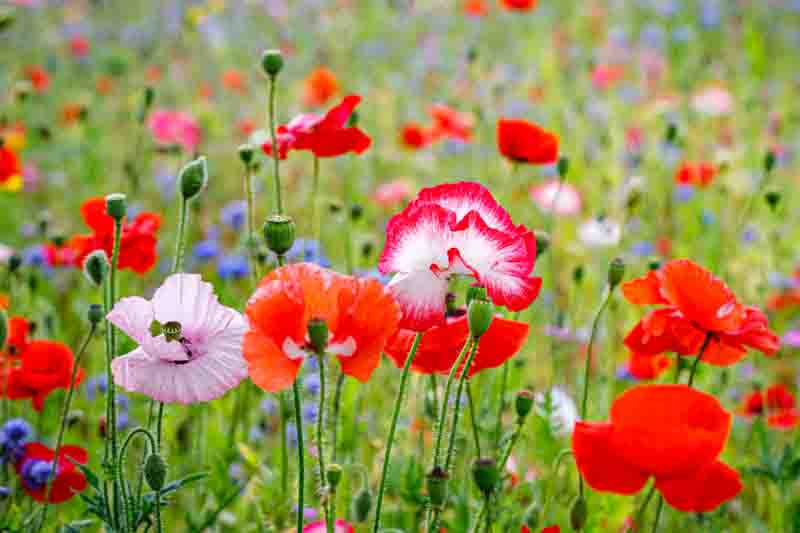


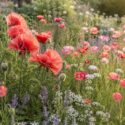
Oriental poppies are unforgettable when they bloom. Their huge, crepe-paper flowers light up the late spring garden in fiery red, orange, coral, salmon, pink, plum, and white. Then, almost as suddenly, the show ends. Petals fall, seedheads remain, leaves yellow, and the whole plant may seem to vanish.
If your Papaver orientale looks as if it has died after blooming, do not panic. In many gardens, this is normal. Oriental poppies are herbaceous perennials with a dramatic seasonal rhythm: they grow strongly in spring, bloom in late spring to early summer, then often enter summer dormancy. The crown usually rests underground and can send up fresh foliage again when conditions cool.
The secret is knowing what to cut, what to leave, how much to water, and how to design around the temporary gap. Treat Oriental poppies like spring stars rather than summer-long filler, and they become much easier to grow beautifully.
Fast answer: After Oriental poppies bloom, remove spent flower stems if you want a tidier plant, but allow the leaves to feed the crown until they yellow. When foliage collapses or disappears, reduce watering, mark the spot, and let the plant rest. Fresh foliage often returns in fall or the following spring.
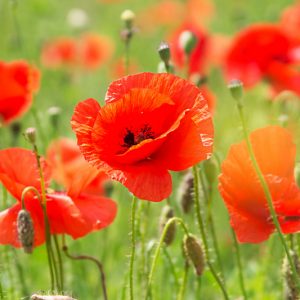
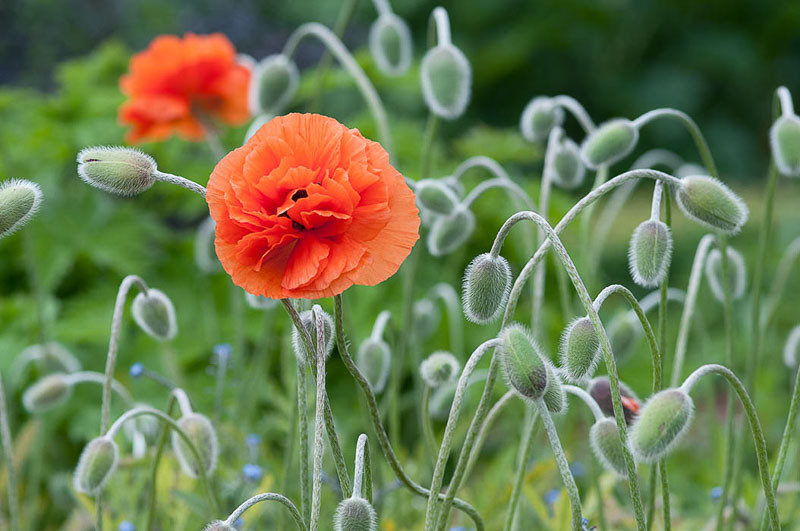 Papaver orientale ‘Fireball’ – Oriental Poppy
Oriental poppies are adapted to make the most of the cool season. They produce a strong rosette of foliage, flower spectacularly, then often retreat underground as heat and dryness increase. This disappearing act can look alarming, but it is usually dormancy, not death.
During dormancy, the visible top growth may die back while the crown remains alive below the soil. This is one reason Oriental poppies are best planted with companions. They are magnificent in bloom but not reliable as all-season foliage plants.
This habit is especially common in warm summer climates, dry gardens, or borders where the plant has finished its spring growth cycle. In cooler climates, foliage may persist longer or reappear sooner. Either way, the post-bloom decline is part of the plant’s natural rhythm.
| What You See | Likely Meaning | What to Do |
|---|---|---|
| Leaves yellow after flowering | Normal post-bloom decline | Wait until leaves wither before removing |
| Foliage collapses in summer | Likely summer dormancy | Mark the spot and reduce watering |
| New leaves appear in fall | Plant is alive and restarting growth | Leave new foliage in place |
| Crown is mushy or foul-smelling | Possible rot | Improve drainage; avoid overwatering |
| No regrowth for a full growing season | Plant may have failed | Replace in a better-drained site |
Once the petals drop, you have a choice. If you want a tidy border, cut the spent flower stems down near the base. This keeps the plant from looking messy and lets nearby perennials take visual attention.
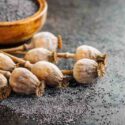
If you like the sculptural look of poppy seedheads, you can leave some stems standing for a while. Oriental poppy seedheads can add texture after the petals fall. However, if the stems become brown, floppy, or visually distracting, remove them.
Design tip: Leave a few seedheads only if they look intentional. In a tidy perennial border, cutting spent stems often makes the whole planting look fresher.
After flowering, let green leaves remain as long as they look healthy. The foliage is still feeding the crown. Cutting it too early may weaken the plant, especially if it is young, newly planted, or recovering from stress.
Once the leaves yellow, brown, or collapse, they are no longer doing much useful work. At that stage, you can trim them back to the ground or remove the dead leaves by hand. Do not tug hard if the plant is not fully dry; you do not want to disturb the crown.
Cut flower stems when the blooms are finished, but wait to remove foliage until it yellows or dries. Green leaves are still helping the plant store energy for future growth.
Oriental poppies need moisture while they are actively growing, especially in spring. But once the foliage has disappeared and the plant is dormant, constant watering can be harmful. A resting crown in wet soil is more likely to rot.
This does not mean the soil should become bone-dry for months in every climate. It means you should avoid treating a dormant Oriental poppy like a thirsty summer annual. Water nearby plants according to their needs, but do not keep the poppy crown soggy.
Good drainage matters more than heavy irrigation. If the area stays wet after rain or receives frequent summer irrigation, Oriental poppies may struggle over time.
One of the easiest mistakes is forgetting where the plant is once it disappears. Then you plant something over it, dig into the crown, or accidentally damage the roots while tidying the border.
Place a small label, decorative stone, or subtle marker near the crown before the foliage vanishes. This is especially helpful in mixed borders where summer perennials expand and hide the empty space.
If an Oriental poppy disappears in summer, the crown may still be alive underground. Mark the spot so you do not accidentally cultivate, divide, or replant directly over it.
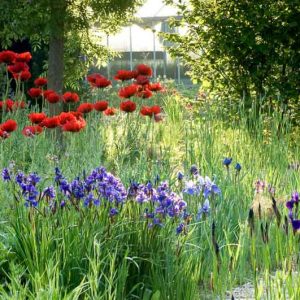
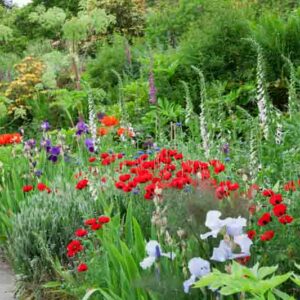
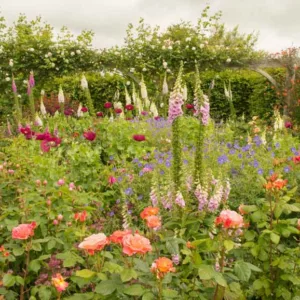
The best way to handle Oriental poppy dormancy is to plan for it before it happens. Plant companions nearby that look good after the poppies finish. Choose plants that enjoy similar conditions: sun, well-drained soil, and moderate to low summer water once established.
Good companions should either bloom later, expand as poppies decline, or provide foliage that hides the empty space. Use airy, mound-forming, or vertical plants that do not smother the poppy crown.
| Companion | Why It Works | Best Use |
|---|---|---|
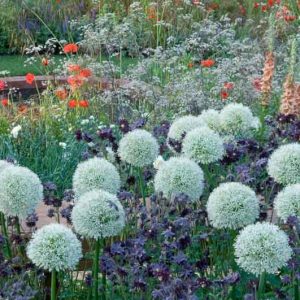
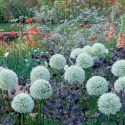
| Allium | Blooms around the same season and adds vertical structure as poppies peak. | Spring and early summer borders |
| Iris germanica | Likes sun and drainage, and its sword-like leaves contrast with poppy foliage. | Classic late spring combinations |
| Nepeta | Soft, spreading foliage and long bloom help cover gaps as poppies fade. | Front-of-border edging |
| Salvia | Upright flower spikes continue the color show after poppies decline. | Sunny perennial borders |
| Shasta Daisy | Later flowers and sturdy foliage help fill the border after poppies bloom. | Summer cottage gardens |
| Ornamental Grasses | Emerging summer foliage hides gaps without competing heavily in spring. | Naturalistic plantings |
Post-bloom care is mostly about restraint. Oriental poppies do not need heavy fussing after flowering, and too much attention can cause more harm than good.
You can deadhead Oriental poppies if you prefer a cleaner look. Remove the spent flower stem once the petals fall, cutting it near the base. This tidies the plant and may reduce unwanted seedlings.
However, deadheading will not turn Oriental poppies into repeat-blooming summer perennials. Their bloom season is naturally short and spectacular. The main reason to deadhead is appearance, not a long second flowering season.
Usually, no heavy feeding is needed after bloom. Oriental poppies grow best in well-drained soil and can perform well with modest fertility. Too much fertilizer, especially nitrogen, may encourage soft foliage rather than improving long-term performance.
If soil is poor, a light spring feeding or a thin layer of compost around the plant can help. Avoid piling compost directly over the crown, and avoid pushing growth during dormancy.
Oriental poppies dislike root disturbance. If you must move or divide them, do it while the plant is dormant or just as growth begins, and handle the roots carefully. Avoid moving them immediately after flowering while foliage is still feeding the crown, and avoid breaking the thick roots unnecessarily.
In many gardens, the best strategy is to choose the right site from the beginning: full sun, good drainage, and room for companion plants. Once established, Oriental poppies are often happiest left alone.
Transplant caution: Move Oriental poppies only when necessary. Their thick roots are easily disturbed, and plants may skip bloom while they recover.
Usually, Oriental poppies bloom once, in late spring to early summer. They are grown for a dramatic seasonal display, not for continuous flowering. In some climates or cultivars, a small amount of later flowering may happen, but gardeners should not rely on repeat bloom as the main feature.
To keep the garden colorful after Oriental poppies finish, pair them with summer-blooming companions rather than expecting the poppies to carry the border alone.
| Season | What Happens | What to Do |
|---|---|---|
| Spring | Fresh foliage grows quickly and buds form | Water during dry spells; keep weeds down |
| Late spring to early summer | Large flowers open for a short, dramatic display | Enjoy blooms; cut flowers carefully; deadhead if desired |
| After bloom | Leaves begin to yellow or collapse | Remove spent stems; leave green foliage until it fades |
| Summer | Plant may disappear during dormancy | Reduce water near crown; do not dig; let companions fill in |
| Fall | New foliage may reappear in cooler weather | Leave new foliage; avoid heavy wet mulch over crown |
For plant details, start with Gardenia’s Oriental poppy guide, explore Papaver poppies, compare options with Compare All Papaver Plants, and browse types of poppies to discover.
For specific Oriental poppy cultivars, see Papaver orientale ‘Royal Wedding’, Papaver orientale ‘Turkenlouis’, Papaver orientale ‘Helen Elizabeth’, Papaver orientale ‘Princess Victoria Louise’, and Papaver orientale ‘Patty’s Plum’.
For broader help, read Why Won’t My Poppies Bloom?, Annual vs Perennial Poppies, and Do Poppies Come Back Every Year?.
For design ideas, browse Garden Ideas with Poppies or use the Gardenia Garden Design Tool to plan a border that looks good before, during, and after Oriental poppy bloom.
When Oriental poppy leaves disappear after blooming, the plant is usually not dying. It is entering dormancy. Remove spent flower stems, leave green foliage until it yellows, reduce watering once the crown rests, and mark the spot so you do not disturb it.
The best solution is design, not panic. Treat Oriental poppies as spectacular late-spring stars, then let companion plants take over as the foliage fades. With sun, drainage, patience, and good planting partners, Oriental poppies can return year after year for one of the most dramatic flower shows in the perennial garden.
Oriental poppy leaves often disappear after blooming because the plant enters summer dormancy. The foliage may yellow, collapse, or vanish while the crown remains alive underground. This is normal in many gardens, especially as weather warms.
Cut spent flower stems after the petals fall if you want a tidy border. Wait to remove the leaves until they turn yellow, brown, or dry. Green foliage should be left in place because it helps feed the crown.
Not usually. Oriental poppies commonly go dormant after flowering, so the foliage may die back while the crown remains alive. Mark the spot and wait for new growth in fall or spring before assuming the plant has died.
Water less once Oriental poppies are dormant. The crown should not sit in soggy soil. Water nearby plants as needed, but avoid keeping the poppy crown constantly wet during summer dormancy.
Oriental poppies are usually grown for one dramatic late-spring to early-summer bloom period. Deadheading improves appearance but does not usually produce a long summer rebloom. Use companion plants for color after poppies finish.
Good Oriental poppy companions include Allium, Bearded Iris, Nepeta, Salvia, Shasta daisies, ornamental grasses, and other sun-loving plants that expand or bloom after poppy foliage fades.
Oriental poppies dislike root disturbance. If moving is necessary, wait until the plant is dormant and handle the roots carefully. Plants may skip bloom while recovering, so it is best to choose a good permanent site from the start.
Updated: July 2026 • Reviewed by Gardenia Editors
| Hardiness |
3 - 8 |
|---|---|
| Plant Type | Perennials |
| Plant Family | Papaveraceae |
| Genus | Papaver |
| Exposure | Full Sun |
| Season of Interest | Spring (Late), Summer (Early) |
| Maintenance | Average |
| Water Needs | Average |
| Soil Type | Chalk, Clay, Loam, Sand |
| Soil pH | Acid, Alkaline, Neutral |
| Soil Drainage | Moist but Well-Drained, Well-Drained |
| Tolerances | Drought, Deer, Rabbit, Dry Soil |
| Attracts | Bees, Butterflies, Hummingbirds |
| Hardiness |
3 - 8 |
|---|---|
| Plant Type | Perennials |
| Plant Family | Papaveraceae |
| Genus | Papaver |
| Exposure | Full Sun |
| Season of Interest | Spring (Late), Summer (Early) |
| Maintenance | Average |
| Water Needs | Average |
| Soil Type | Chalk, Clay, Loam, Sand |
| Soil pH | Acid, Alkaline, Neutral |
| Soil Drainage | Moist but Well-Drained, Well-Drained |
| Tolerances | Drought, Deer, Rabbit, Dry Soil |
| Attracts | Bees, Butterflies, Hummingbirds |
Create a membership account to save your garden designs and to view them on any device.
Becoming a contributing member of Gardenia is easy and can be done in just a few minutes. If you provide us with your name, email address and the payment of a modest $25 annual membership fee, you will become a full member, enabling you to design and save up to 25 of your garden design ideas.
Join now and start creating your dream garden!
Create a membership account to save your garden designs and to view them on any device.
Becoming a contributing member of Gardenia is easy and can be done in just a few minutes. If you provide us with your name, email address and the payment of a modest $25 annual membership fee, you will become a full member, enabling you to design and save up to 25 of your garden design ideas.
Join now and start creating your dream garden!