Collecting poppy seeds is simple, satisfying, and one of the easiest ways to keep poppies returning naturally. This guide explains when seed pods are ready, how to harvest and store seeds, which poppies self-sow best, and how to create the loose, sunny, low-disturbance conditions poppies need to reappear beautifully.


Poppies have a wonderful way of making a garden feel spontaneous. One year, you admire their silky petals dancing in the sun. A few weeks later, the flowers have vanished, the seed pods have dried, and the plant is quietly preparing next year’s display. Learn how to collect poppy seeds at the right moment, and you can turn one season of bloom into years of effortless color.
The secret is timing. Poppy seeds are ready only when the pods are fully dry and the seeds rattle inside. Collect too early, and the seeds may not germinate well. Leave every pod standing, and the garden may sow itself generously, sometimes exactly where you want it and sometimes in the middle of a path. The best approach is simple: harvest some seeds for storage, leave some pods for natural self-sowing, and edit seedlings in spring.
This guide explains when poppy seed pods are ready, how to harvest and store poppy seeds, which poppies self-sow best, how to sow them successfully, and how to encourage natural poppy seedlings without letting the border become chaotic. For more plant choices, browse Gardenia’s Papaver poppy guide, compare options with Compare All Papaver Plants, or use the Gardenia Plant Finder to choose poppies and companions for your climate, soil, sun exposure, and garden style.
Fast answer: To collect poppy seeds, wait until the pods turn dry and the seeds rattle inside. Cut the pods on a dry day, shake the seeds into a paper bag or bowl, dry them for a few more days, and store them in labeled paper envelopes. To encourage self-sowing, leave a few ripe pods in the garden and keep small patches of open soil where seeds can germinate.
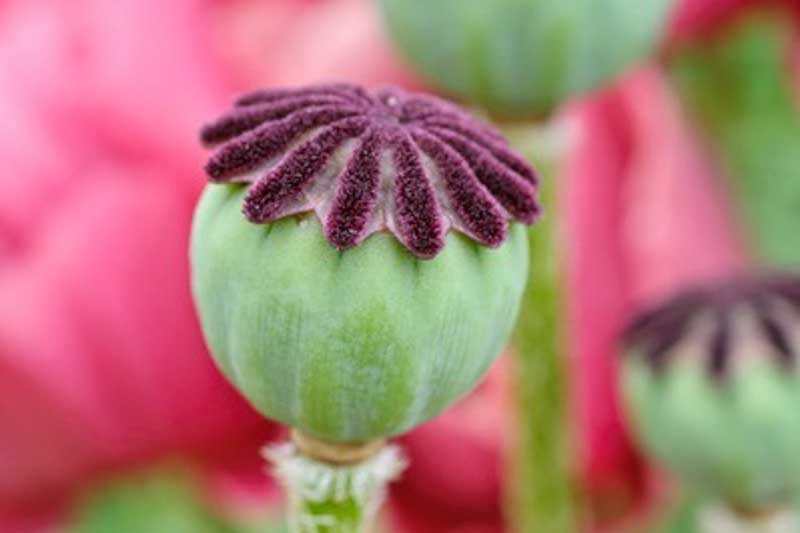
Collecting poppy seeds is one of the easiest forms of seed saving. A single ripe pod can hold dozens, sometimes hundreds, of tiny seeds. With just a few dried capsules, you can sow a new drift, refresh a cottage garden border, fill a gravel garden, share seeds with friends, or save your favorite color strain for next year.
Seed saving also lets you preserve the poppies that perform best in your own garden. If one plant stands taller, blooms earlier, produces richer color, resists flopping, or returns reliably, saving seed from that plant gently selects for poppies already adapted to your conditions. Over time, your garden may develop its own beautiful, locally adapted poppy mix.
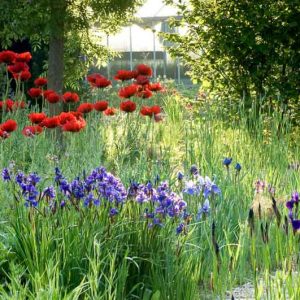
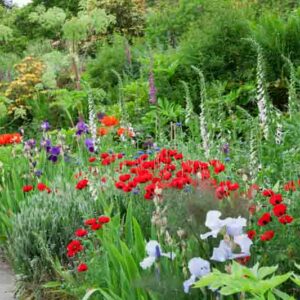
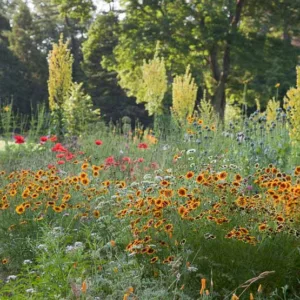
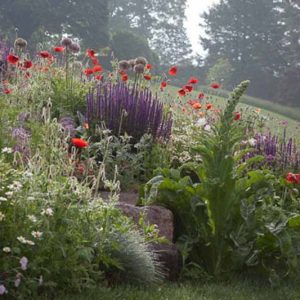
There is another benefit: self-sown poppies rarely look stiff. Because the seeds fall naturally, the plants appear in loose drifts, small clusters, and unexpected gaps between perennials. This is why poppies are so beloved in cottage gardens, meadow-style plantings, cutting gardens, gravel paths, and sunny borders where a relaxed, painterly effect is welcome.
Do not collect every seed pod. Save some seeds in envelopes, but leave several strong pods in the garden. The best poppy displays often come from a mix of gardener control and natural seed drop.
Not all poppies behave the same way. Some are enthusiastic annual self-sowers. Some are short-lived perennials that may seed around in cool climates. Others, especially Oriental poppies, are long-lived perennials that usually return from their roots rather than relying on seedlings.
| Poppy Type | Life Cycle | Self-Sowing | Best Use |
|---|---|---|---|
| Papaver rhoeas Corn Poppy, Flanders Poppy |
Annual | Excellent | Wildflower gardens, meadows, cottage borders |
| Shirley Poppy Forms of Papaver rhoeas |
Annual | Excellent | Soft pink, white, salmon, red, and bicolor displays |
| Papaver somniferum Breadseed Poppy, Opium Poppy |
Annual | Excellent where permitted | Ornamental flowers and decorative seed pods |
| Papaver nudicaule Iceland Poppy |
Biennial or short-lived perennial | Moderate in cool climates | Cool-season borders, containers, cutting gardens |
| Papaver orientale Oriental Poppy |
Perennial | Occasional, not always true to type | Long-lived perennial borders with dramatic late-spring flowers |
Annual poppies are usually the easiest to naturalize from seed. Flanders poppies and Shirley poppies grow quickly, flower generously, set seed, and often return wherever soil is open and sunny. Papaver somniferum is also a strong self-sower in many gardens, but it should be grown only where permitted and strictly as an ornamental.
Oriental poppies are different. They are hardy, long-lived perennials with spectacular late-spring to early-summer flowers. They may produce seed pods, but named cultivars may not come true from seed, and established plants usually return from their crowns and roots. Treat them as perennial showpieces, not as the main source of annual self-sown seedlings.
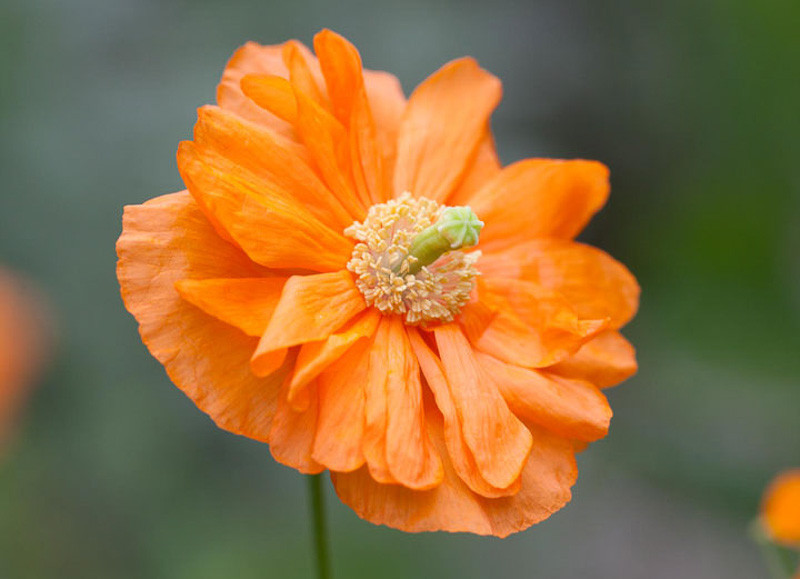 Papaver rupifragum ‘Flore Pleno’ – Spanish Poppy
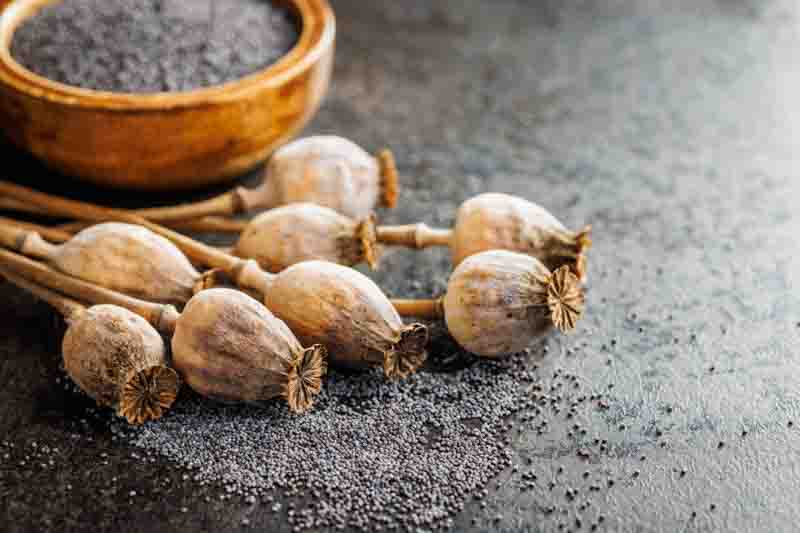
Poppy seeds are ready when the seed pod has matured and dried on the plant. After the petals fall, the center of the flower swells into a capsule. At first, this pod is green, fleshy, and full of immature seed. Do not harvest at this stage. Green pods may look tempting, but the seeds inside are usually not ready.
Wait until the pod turns tan, gray-brown, straw-colored, or papery. The stem often begins to dry too. The most reliable test is the rattle test: gently shake the pod. If you hear seeds moving inside, the pod is ready. Many poppy capsules also develop small openings beneath the flat top disc. When the wind moves the stem, seeds fall through these openings like pepper from a shaker.
| What You See | What It Means | What to Do |
|---|---|---|
| Green, soft pod | Seeds are immature | Leave it on the plant |
| Pod turning tan or gray-brown | Seeds are ripening | Check again in a few days |
| Dry pod with rattling sound | Seeds are mature | Harvest or leave for self-sowing |
| Open vents under the top disc | Seeds may already be shedding | Collect soon if you want to save seed |
Collecting poppy seeds is easy, but the seeds are tiny, so a little preparation prevents waste. Choose a dry day, bring a paper bag or bowl, and work gently.
Step 1: Choose the best plants. Save seeds from healthy poppies with the flower color, height, stem strength, and habit you want. Avoid saving from weak, diseased, badly distorted, or disappointing plants unless you are experimenting.
Step 2: Check for dryness. The pod should be dry, firm, and mature. Shake it gently. If it rattles, the seeds are ready. If it feels soft or green, wait longer.
Step 3: Cut the stem carefully. Hold the pod upright so the seeds do not spill. Cut the stem a few inches below the capsule and place it in a paper bag, envelope, or bowl.
Step 4: Shake out the seeds. Turn the dried capsule upside down and shake gently. Mature seeds will fall out through the natural openings. If they do not fall easily, place the pod in a paper bag for several more days and try again.
Step 5: Remove large debris. Pick out pieces of pod, stem, and chaff. The seed does not need to be perfectly clean for garden sowing, but too much plant debris can hold moisture in storage.
Step 6: Dry the seed again. Spread the seeds on a plate, paper towel, or shallow tray for several days in a dry, airy room away from direct sun. This final drying step helps prevent mold.
Step 7: Label immediately. Write the poppy name, flower color, date collected, and garden location on the envelope. Many poppy seeds look alike, so labeling saves confusion later.
Seed-saving tip: If you are collecting from a mixed planting, expect some surprises. Seedlings from hybrids, named cultivars, or mixed strains may not match the parent exactly.
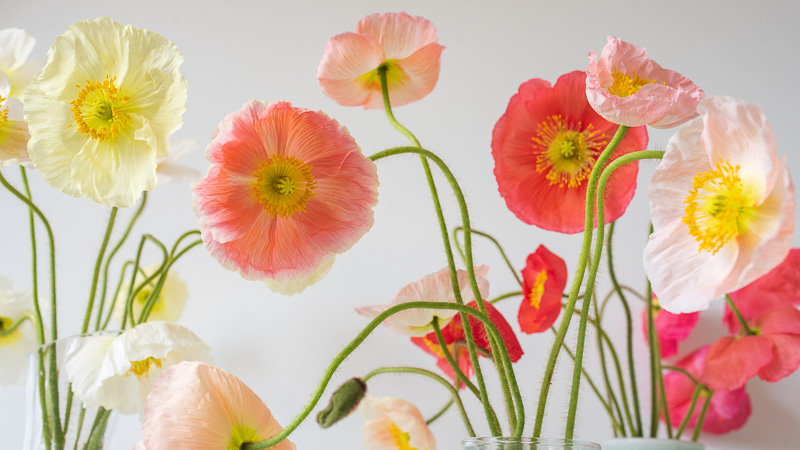 Papaver nudicaule – Iceland Poppy
Good storage starts with dry seed. Even if the pod was dry outdoors, give the seeds a few extra days indoors before sealing them away. Spread them thinly on paper in a dry room with good air movement. Do not place them in direct hot sun, and do not store them while they feel damp.
Once dry, place poppy seeds in labeled paper envelopes. Store the envelopes in a cool, dark, dry place. A tin, jar, or seed box can protect the envelopes from spills, but avoid trapping moisture inside sealed containers. If your climate is humid, make sure the seed is fully dry before closing it away.
Fresh poppy seed usually gives the most reliable germination, but well-stored seed can remain useful for several years. For best results, sow some seed the next season and keep a little as a backup.
Poppies are usually best direct sown where they are to flower. Their roots dislike disturbance, and annual poppies grow so quickly that transplanting often causes setbacks. Prepare the site, scatter the seed, press it into the surface, and let cool weather do much of the work.
Choose a sunny site with well-drained soil. Rake the surface so it is fine and crumbly. Remove weeds first because tiny poppy seedlings do not compete well. Scatter seeds thinly. If you have trouble spreading them evenly, mix the seeds with dry sand before sowing.
Do not bury the seeds deeply. Poppy seeds are very small and need light or very shallow coverage to germinate well. A light press into the soil surface is usually enough. If you cover them, use only a dusting of fine soil. Water with a gentle spray if conditions are dry, and keep the seedbed lightly moist until seedlings appear.
| Sowing Factor | Best Practice | Why It Matters |
|---|---|---|
| Light | Full sun | Produces stronger plants and better flowering |
| Soil | Well-drained, finely raked surface | Tiny seeds need close soil contact |
| Depth | Surface sow or cover very lightly | Deeply buried seeds may fail to germinate |
| Timing | Fall, late winter, or very early spring | Cool conditions favor many poppies |
| Spacing | Thin crowded seedlings | Improves air circulation and flower size |
Scatter poppy seeds on prepared soil, press them gently into the surface, and avoid deep covering. A buried poppy seed may not have enough light or energy to sprout successfully.
To encourage poppies to self-sow, think like a poppy seed. It wants light, open soil, seasonal moisture, and little competition. If the border is covered with thick mulch, packed with dense groundcovers, or weeded too aggressively, poppy seedlings may never get started.
Leave some seed pods standing. This is the easiest method. Let selected pods dry on the plant. As they open, wind will shake the seeds out naturally, scattering them around the parent plant.
Keep small pockets of bare soil. Poppy seedlings need contact with soil. Thick bark mulch, dense foliage, or heavy leaf litter can block germination. Leave small open patches where you want seedlings to appear.
Do not cultivate too deeply. A light scratch of the soil surface can help seeds settle in, but deep digging may bury them too far down. Poppies germinate best near the surface.
Delay cleanup until seeds drop. If you cut every spent flower immediately, you remove the future seed crop. Let the pods ripen first, then tidy the stems once seeds have fallen or after you have harvested what you need.
Learn to recognize seedlings. Young poppy seedlings are small and easy to weed out by mistake. Mark areas where pods dropped seed and wait before clearing every tiny plant.
Edit in spring. Natural does not mean unmanaged. Pull seedlings from paths, crowns of perennials, vegetable rows, or crowded clumps. Leave the best-positioned seedlings in loose groups.
Self-sowing poppies are charming when they appear in the right places. They can look messy when they seed too densely or crowd smaller plants. The goal is not to stop self-sowing but to guide it.
Start by leaving only your best plants to set seed. If a poppy is weak, badly colored, too tall, too floppy, or in the wrong place, remove it before the pod matures. Let your favorite flowers produce the next generation.
When seedlings appear, thin them early. Keep strong plants spaced well enough to develop good stems and flowers. Crowded poppies often produce smaller blooms and weaker growth. A few well-placed seedlings are more beautiful than hundreds of stressed ones.
If you grow color mixes, expect the population to shift over time. A Shirley poppy mix may gradually favor certain colors. If you want to maintain a specific color, save seed from that flower and remove unwanted colors before they ripen seed.
Leave seedheads where you want more poppies, and deadhead where you do not. This simple habit gives you natural-looking drifts without letting poppies take over every open space.
 Papaver rhoeas – Flanders Poppy
Understanding the difference between annual and perennial poppies prevents disappointment. Annual poppies complete their life cycle in one season. They germinate, flower, set seed, and die. Their return depends on seed. That makes seed collection and self-sowing especially important.
Perennial poppies, especially Oriental poppies, behave differently. They return from established roots and crowns. They can produce decorative seedheads, and you can save seed, but seedlings may vary from the parent. Named cultivars are not guaranteed to come true from seed.
Oriental poppies may also disappear after flowering as they enter summer dormancy. That does not mean they need to be replaced by seed every year. Mark their location and plant companions nearby to cover the gap. For more help with this behavior, see Gardenia’s guide to what to do after Oriental poppies bloom.
Poppies self-sow best where the soil is sunny, open, and not too wet. They are especially beautiful in informal plantings where a little movement from year to year feels natural.
| Garden Area | Why It Works | Watch Out For |
|---|---|---|
| Cottage borders | Poppies weave beautifully among perennials and bulbs | Thin seedlings so they do not smother smaller plants |
| Gravel gardens | Open, lean soil often favors poppy seedlings | Remove seedlings from paths if needed |
| Wildflower meadows | Annual poppies add early color and movement | Competition from grasses can reduce seedlings |
| Vegetable garden edges | Open soil makes germination easy | Keep seedlings out of crop rows |
| Cutting gardens | Seedlings can refresh the planting each year | Harvest flowers carefully and leave some pods for seed |
For planting inspiration, explore Garden Ideas with Poppies. You can also use the Gardenia Garden Design Tool to plan combinations that look good when poppies bloom and still look attractive after annual poppies set seed or perennial poppies fade.
Poppies are easy, but a few common mistakes can ruin germination or create a messy display.
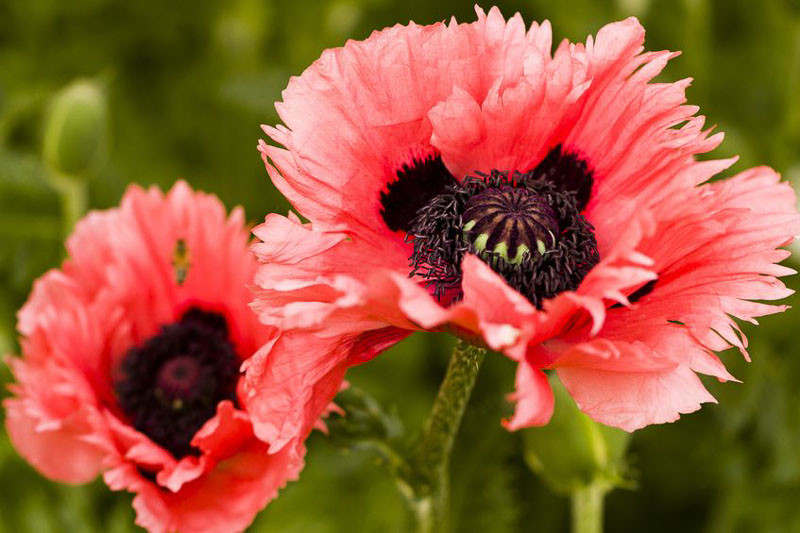 Papaver orientale ‘Turkenlouis’
Species poppies are more likely to resemble the parent plant, especially if they are not growing near related varieties that cross-pollinate. Mixed strains, hybrids, and named cultivars are less predictable. Seedlings may differ in color, height, flower form, or vigor.
This is not necessarily a problem. In fact, surprise is part of the charm of poppies. A soft pink Shirley poppy mix may produce white, salmon, rose, red, picotee, or streaked flowers the following year. A double-flowered type may produce some single seedlings. If you love a particular color, save seed from that plant and remove less desirable seedlings before they mature.
For named perennial Oriental poppies, seed is not the best way to create an exact copy. Division or root cuttings are more reliable, although Oriental poppies dislike unnecessary disturbance. For gardeners, the practical rule is simple: grow annual poppies from seed for self-sown abundance, and grow Oriental poppies as perennial garden stars.
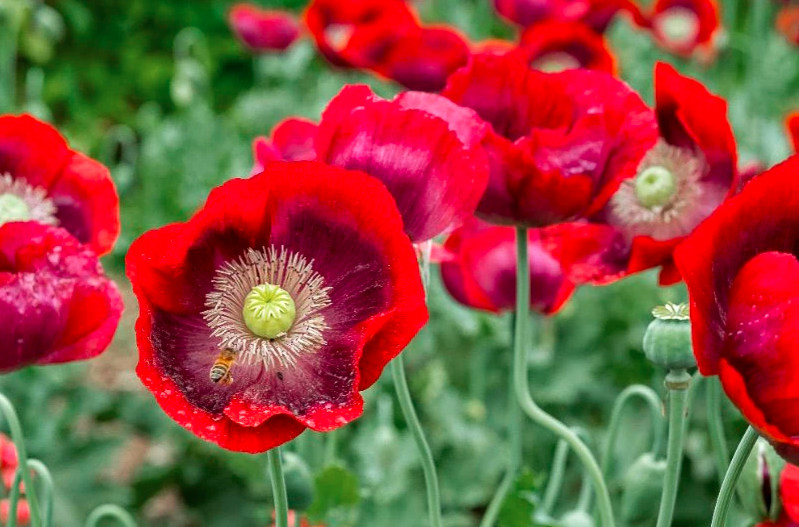 Papaver somniferum ‘Cherry Glow’ – Opium Poppy
Many poppies are grown as ornamentals, but some require extra care. Papaver somniferum, commonly known as breadseed poppy or opium poppy, is admired for its large flowers and decorative seed pods, but laws vary by location. Grow it only where permitted, use it strictly as an ornamental, and never score pods or collect latex.
Many poppies also contain compounds that can be toxic if ingested by people or pets. Do not assume garden-collected seed is suitable for culinary use. Keep seed packets, dried pods, and plant material away from children and pets, and label stored seed clearly.
For an overview of poppies, start with Gardenia’s Papaver poppy guide, compare plants with Compare All Papaver Plants, and browse 24 Types of Poppies You Need to Know.
For specific poppy profiles, see Papaver rhoeas, Papaver nudicaule, Papaver somniferum, and Papaver orientale.
For more inspiration, explore 44 Beautiful Poppy Flowers You Will Adore, browse Garden Ideas with Poppies, or use the Gardenia Plant Finder and Gardenia Garden Design Tool to plan a border with the right bloom times, heights, colors, and companion plants.
Collecting poppy seeds is simple: wait for dry, rattling pods, harvest on a dry day, shake the seeds into a paper bag or bowl, dry them thoroughly, and store them in labeled paper envelopes. To get poppies to self-sow naturally, leave some ripe pods standing, keep small patches of open soil, avoid heavy mulch where you want seedlings, and thin young plants before they become crowded.
The most beautiful poppy displays often come from a light touch. Save the seeds you want, let a few pods scatter naturally, and edit the seedlings next season. With sun, drainage, patience, and a little restraint, poppies can return year after year in glowing, natural-looking drifts.
Collect poppy seeds when the seed pods are fully dry, tan to brown, and the seeds rattle inside. If the pod is still green, soft, or fleshy, the seeds are probably immature. Harvest on a dry day after the morning dew has evaporated.
A ripe poppy seed pod feels dry and firm, often has small openings under the top disc, and makes a rattling sound when gently shaken. This means the seeds are mature, loose, and ready to collect or scatter naturally.
Cut dry poppy pods, shake the seeds into a paper bag or bowl, remove large pieces of chaff, and dry the seeds for several more days. Store them in labeled paper envelopes in a cool, dark, dry place until sowing time.
Poppy seeds should be surface sown or covered only very lightly. They are tiny and need light or very shallow coverage to germinate well. Press them gently onto prepared soil instead of burying them deeply.
Many annual poppies self-sow readily if seed pods are allowed to ripen and the soil remains open. Thick mulch, dense planting, heavy weeding, or soggy soil can reduce self-sowing. Self-sown seedlings are most reliable in sunny, well-drained sites.
Annual poppies such as corn poppies, Flanders poppies, Shirley poppies, and breadseed poppies are among the best self-sowers. Iceland poppies may self-sow in cool climates. Oriental poppies are perennials and usually return from their roots rather than depending on self-sown seedlings.
Yes, you can save seeds from Oriental poppies if the pods mature, but seedlings may not look exactly like the parent, especially if the plant is a named cultivar. Oriental poppies are usually grown as long-lived perennials rather than dependable annual self-sowers.
Common reasons include harvesting immature seed, burying seeds too deeply, sowing into thick mulch, letting the seedbed dry out completely, using poorly stored seed, or planting in too much shade or wet soil. Poppies usually germinate best when surface sown in open, well-drained soil.
Deadhead some poppies if you want fewer seedlings or a tidier border, but leave selected pods if you want to collect seed or encourage self-sowing. A balanced approach gives you both control and natural-looking poppy drifts.
Updated: July 2026
| Hardiness |
2 - 11 |
|---|---|
| Plant Type | Annuals, Perennials |
| Plant Family | Papaveraceae |
| Genus | Papaver |
| Hardiness |
2 - 11 |
|---|---|
| Plant Type | Annuals, Perennials |
| Plant Family | Papaveraceae |
| Genus | Papaver |
Create a membership account to save your garden designs and to view them on any device.
Becoming a contributing member of Gardenia is easy and can be done in just a few minutes. If you provide us with your name, email address and the payment of a modest $25 annual membership fee, you will become a full member, enabling you to design and save up to 25 of your garden design ideas.
Join now and start creating your dream garden!
Create a membership account to save your garden designs and to view them on any device.
Becoming a contributing member of Gardenia is easy and can be done in just a few minutes. If you provide us with your name, email address and the payment of a modest $25 annual membership fee, you will become a full member, enabling you to design and save up to 25 of your garden design ideas.
Join now and start creating your dream garden!