Should you grow annual or perennial poppies? Annual poppies bring fast, self-seeding color, while perennial poppies return from the same roots for years. This guide compares corn poppies, Iceland poppies, Oriental poppies, breadseed poppies, and California poppies so you can choose the best type for your garden.
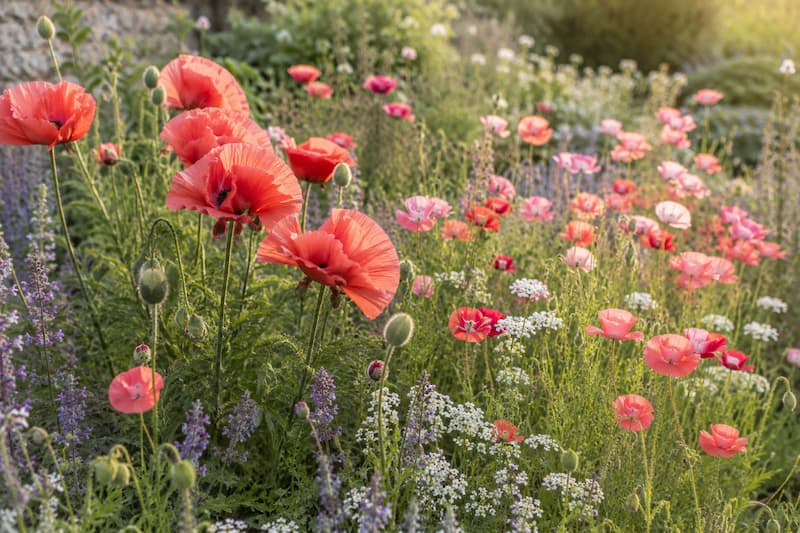


Annual vs perennial poppies – which should you grow? The answer depends on what you want from your garden. If you want quick color, easy sowing, and a natural meadow look, annual poppies are hard to beat. If you want dramatic flowers that return from the same plant year after year, perennial poppies are usually the better choice.
The confusion comes from the way poppies behave. Some poppies are true annuals: they germinate, bloom, set seed, and die in one season. Others are true perennials that return from a crown or root system. Some sit between the two, behaving as biennials or short-lived perennials depending on climate. Many also self-seed, so even annual poppies can look as if they “come back” every year.
This guide compares the main garden types, including Papaver rhoeas (Flanders Poppy), Papaver somniferum (Opium Poppy), Papaver nudicaule (Iceland Poppy), Papaver orientale (Oriental Poppy), and Eschscholzia californica (California Poppy).
If you already know you want poppies that return, see Do Poppies Come Back Every Year?; this guide focuses on choosing the right poppy type for your garden style.Fast answer: Grow annual poppies if you want fast flowers, self-seeding drifts, and a meadow or cottage-garden look. Grow perennial poppies if you want long-lived plants with large flowers that return from the same roots. Grow Iceland poppies as cool-season, short-lived plants, and California poppies for sunny, dry, low-maintenance gardens.
 Papaver rhoeas – Flanders Poppy
An annual poppy completes its life cycle in one season. It germinates, grows, flowers, sets seed, and dies. That sounds short-lived, but annual poppies are often the easiest and most generous poppies to grow because many self-seed freely when seedpods are allowed to ripen.
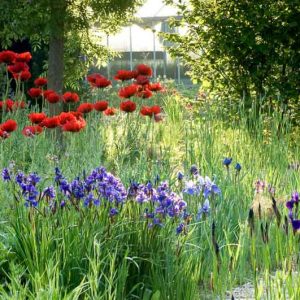
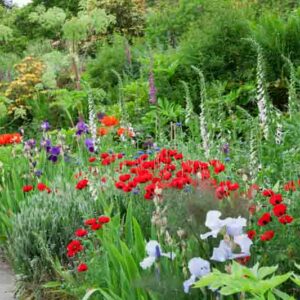
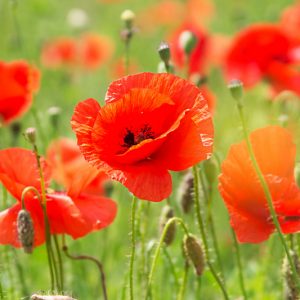
Papaver rhoeas, the Flanders poppy or corn poppy, is the classic annual poppy for meadows, cottage gardens, wildflower plantings, and naturalistic borders. It produces silky blooms, often in red but also in many cultivated shades, and can reappear year after year from seed.
Papaver somniferum, often called breadseed poppy or opium poppy, is also an annual. It is grown ornamentally for bold flowers and decorative seedpods, but cultivation rules vary by jurisdiction, so gardeners should check local regulations before planting or allowing it to self-seed.
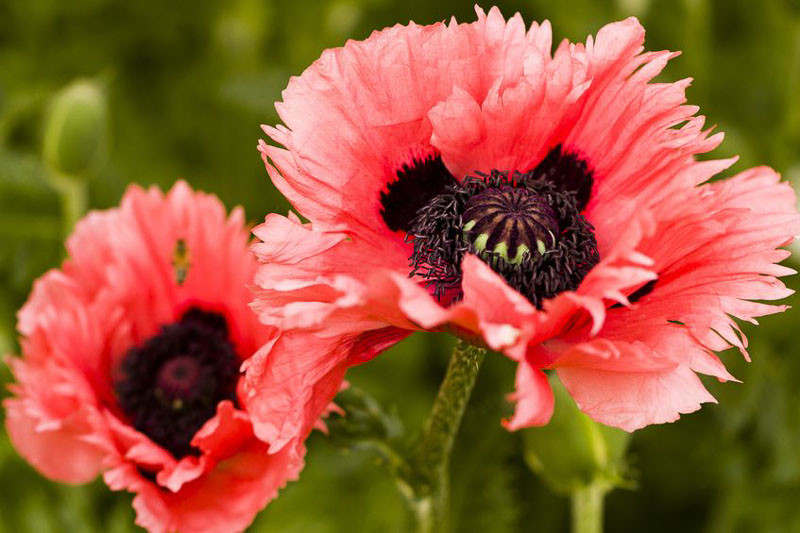 Papaver orientale ‘Turkenlouis’
A perennial poppy lives for more than one year and returns from the same crown or root system. One of the most popular garden perennial poppies is Papaver orientale, the Oriental poppy. It is prized for huge, crepe-paper flowers in vivid red, orange, salmon, pink, white, plum, and bicolor shades.
Oriental poppies are dramatic but seasonal. They bloom in late spring to early summer, then their foliage often yellows, collapses, or disappears as the plant enters summer dormancy. This is normal. The plant is usually resting underground and can return when conditions cool.
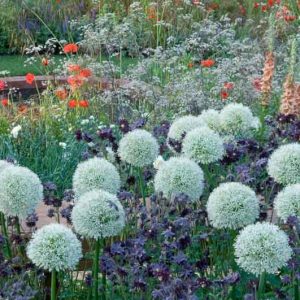
Because Oriental poppies leave a gap after flowering, they are best planted with companions that expand later, such as Allium, Iris germanica, Nepeta, Salvia, ornamental grasses, or other sun-loving perennials.
| Feature | Annual Poppies | Perennial Poppies |
|---|---|---|
| Lifespan | One season | Several years or longer |
| How they return | By self-seeding | From roots or crown |
| Best planting style | Drifts, meadows, cottage gardens | Perennial borders and focal points |
| Bloom size | Usually smaller to medium | Often very large and dramatic |
| Maintenance | Let pods ripen, thin seedlings | Protect crown, plan for dormancy gaps |
| Best for beginners | Excellent if direct-sown early | Excellent once established |
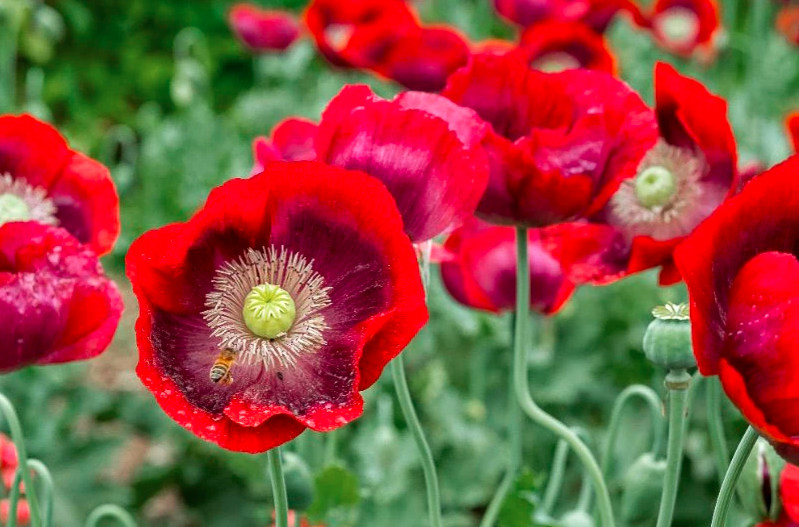 Papaver somniferum ‘Cherry Glow’ – Opium Poppy
The best annual poppies are easy to sow directly, quick to bloom, and generous with seed. They are ideal if you want a natural look or have space for poppies to move around slightly from year to year.
Papaver rhoeas is the top choice for wildflower gardens and informal borders. It is especially useful in open soil where seedlings can establish without heavy competition. Shirley poppies, selected forms of Papaver rhoeas, offer softer colors such as pink, salmon, white, lavender, and bicolors.
Papaver somniferum gives larger annual flowers and striking seedpods, where legally permitted. It works beautifully in cottage borders and cutting gardens but should be grown responsibly according to local laws.
Oriental poppies are the best-known perennial poppies for sunny borders. They bring a burst of color in late spring to early summer and combine well with other perennials that take over as poppy foliage fades.
Popular Oriental poppy cultivars include Papaver orientale ‘Royal Wedding’, a striking white selection, Papaver orientale ‘Turkenlouis’, with fringed red petals, and Papaver orientale ‘Helen Elizabeth’, with soft salmon-pink flowers.
Perennial poppies are not the best choice if you want continuous summer bloom. Their strength is impact, not duration. Use them as a seasonal highlight and surround them with plants that carry the border through summer.
Do not assume your Oriental poppy has died when its foliage disappears after flowering. Summer dormancy is normal. Mark the planting spot and avoid digging into the crown while the plant is resting.
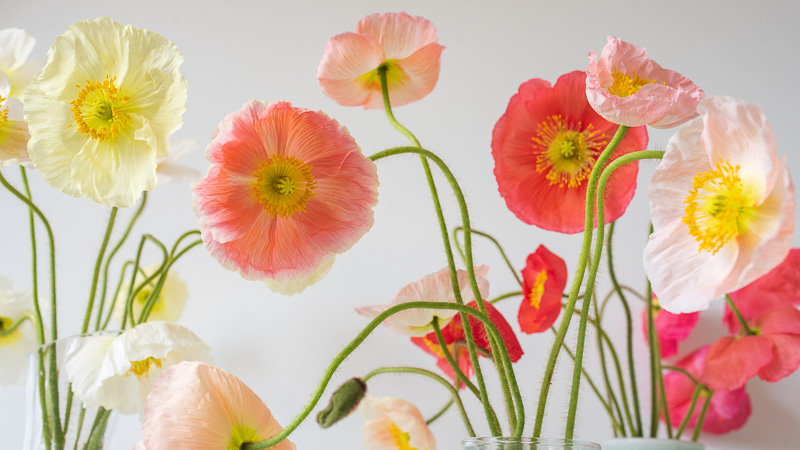 Papaver nudicaule – Iceland Poppy
Papaver nudicaule, the Iceland poppy, does not fit neatly into the annual-versus-perennial question. Gardenia describes it as a biennial or short-lived perennial. In cool climates, it may persist for more than one season. In hot or humid regions, gardeners often treat it as a cool-season annual.
Choose Iceland poppies if you want delicate, airy blooms in white, yellow, orange, salmon, rose, and pink. They are excellent for cool-season color, spring containers, and cut flowers. For compact plants, consider Papaver nudicaule ‘Garden Gnome’ or Papaver nudicaule Spring Fever Series.
Best use: Treat Iceland poppies as cool-season stars. In cool climates, enjoy them as short-lived perennials. In hot climates, grow them as seasonal color and replant or resow when conditions are right.
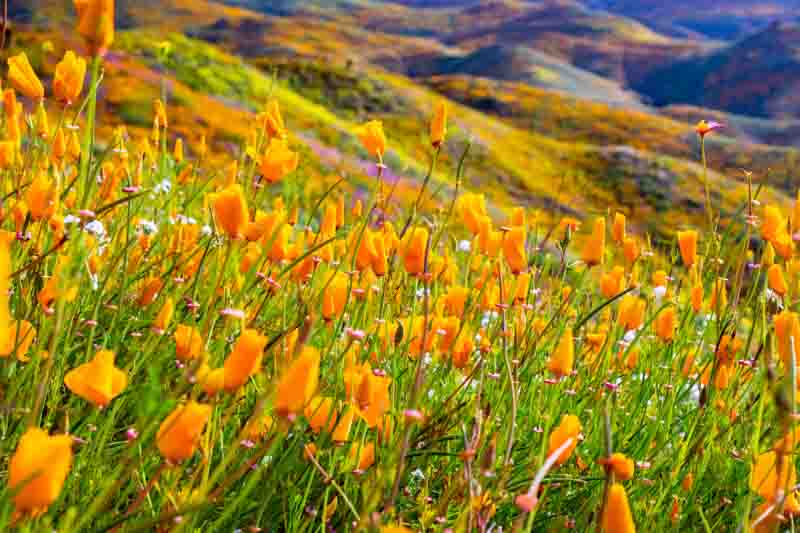
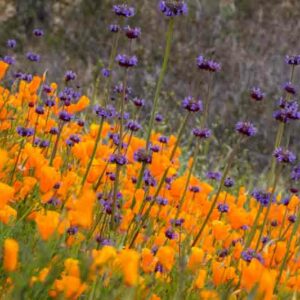
Eschscholzia californica, the California poppy, is not a true Papaver, but it belongs to the poppy family and is one of the most useful poppies for dry gardens. It is commonly grown as an annual, but in mild climates it may behave as a short-lived perennial.
California poppies are ideal for sunny, low-water landscapes. They thrive in lean, well-drained soil and often self-seed in open ground. Choose them for slopes, gravel gardens, wildflower plantings, drought-tolerant borders, and naturalistic designs.
The best poppy depends on your garden style, climate, and patience. Annual poppies are better for immediate impact and natural self-seeding. Perennial poppies are better for long-term structure and bold flowers in established borders. Iceland poppies are best where summers are cool or where they can be grown as cool-season annuals. California poppies are best for dry, sunny, low-water sites.
| Your Goal | Best Poppy Choice | Why |
|---|---|---|
| Fast flowers from seed | Papaver rhoeas | Quick annual color and easy self-seeding. |
| Huge flowers in a perennial border | Papaver orientale | Long-lived plants with dramatic late spring blooms. |
| Cool-season cut flowers | Papaver nudicaule | Delicate flowers in soft colors, best in cool conditions. |
| Dry garden or wildflower slope | Eschscholzia californica | Drought-tolerant, bright, and excellent for naturalizing. |
| Bold annual flowers and seedpods | Papaver somniferum | Showy blooms and decorative pods, where legally permitted. |
Annual poppies need early sowing, open soil, and room to self-seed. Sow them in fall, late winter, or early spring depending on climate. Thin seedlings early so plants do not crowd each other. Leave some seedpods to ripen if you want more flowers next year.
Perennial poppies need good drainage, full sun, and minimal disturbance once established. Avoid moving mature Oriental poppies unless necessary. After flowering, let the foliage fade naturally, then allow the plant to rest. Do not keep the crown wet during dormancy.
For timing details, read When to Plant Poppy Seeds: Fall vs Spring Sowing Explained. For seed-growing steps, see How to Grow Poppies from Seed.
The biggest mistake is choosing a poppy by flower photo alone. A spectacular Oriental poppy may not be the right choice for a hot, humid garden with poor drainage. A self-seeding annual poppy may not be ideal for a very formal border where volunteers are unwelcome. A California poppy may struggle in rich, wet soil, while Iceland poppies may fade quickly in summer heat.
Another mistake is expecting annual and perennial poppies to behave the same way. Annual poppies need seed renewal. Perennial poppies need crown protection and patience during dormancy. If you match the plant to the garden, poppies become much easier.
To compare poppies before planting, explore Gardenia’s Papaver poppy guide, use Compare All Papaver Plants, browse types of poppies to discover, and enjoy Gardenia’s guide to beautiful poppy flowers.
For planting design, browse Garden Ideas with Poppies or use the Gardenia Garden Design Tool. For broader context, read about the history and meaning of poppy flowers.
Choose annual poppies if you want fast, affordable, self-seeding color. Choose perennial Oriental poppies if you want long-lived plants with huge spring flowers. Choose Iceland poppies for cool-season beauty, and California poppies for dry, sunny, low-maintenance gardens.
The best poppy is not simply the prettiest one in a photo. It is the one that matches your climate, soil, garden style, and maintenance goals. Once you understand the difference between annual and perennial poppies, choosing the right one becomes easy – and your garden becomes much more floriferous.
Annual poppies live for one season, then die after setting seed. Perennial poppies live for several years and return from the same roots or crown. Many annual poppies self-seed, so they may reappear even though the original plant does not survive.
Papaver rhoeas, including corn poppies and Shirley poppies, is an annual. Papaver somniferum, often called breadseed poppy or opium poppy, is also an annual, though cultivation rules vary by jurisdiction.
Oriental poppies, or Papaver orientale, are classic long-lived perennial poppies. Iceland poppies, Papaver nudicaule, are usually biennial or short-lived perennial, while California poppies may behave as annuals or short-lived perennials depending on climate.
Annual poppies are often easier from seed because they can be direct-sown and allowed to self-seed. Perennial poppies are also easy once established, but they need good drainage and should not be moved frequently.
Annual poppies do not return from the same plant, but many come back by self-seeding. If seedpods ripen and drop seed, new seedlings may appear the following year.
Most perennial Oriental poppies do not bloom all summer. They usually flower in late spring to early summer, then their foliage may die back during summer dormancy. Pair them with later-growing companions to keep the border attractive.
Beginners often do well with Papaver rhoeas for easy annual color, Papaver orientale for long-lived perennial flowers, or Eschscholzia californica for dry, sunny gardens. Choose the type that matches your climate and soil.
Updated: July 2026 • Reviewed by Gardenia Editors
| Hardiness |
2 - 11 |
|---|---|
| Plant Type | Annuals, Perennials |
| Plant Family | Papaveraceae |
| Genus | Papaver |
| Hardiness |
2 - 11 |
|---|---|
| Plant Type | Annuals, Perennials |
| Plant Family | Papaveraceae |
| Genus | Papaver |
Create a membership account to save your garden designs and to view them on any device.
Becoming a contributing member of Gardenia is easy and can be done in just a few minutes. If you provide us with your name, email address and the payment of a modest $25 annual membership fee, you will become a full member, enabling you to design and save up to 25 of your garden design ideas.
Join now and start creating your dream garden!
Create a membership account to save your garden designs and to view them on any device.
Becoming a contributing member of Gardenia is easy and can be done in just a few minutes. If you provide us with your name, email address and the payment of a modest $25 annual membership fee, you will become a full member, enabling you to design and save up to 25 of your garden design ideas.
Join now and start creating your dream garden!