Do poppies come back every year? Some do, some do not, and many return by self-seeding rather than from the same plant. Learn the difference between annual poppies, perennial Oriental poppies, short-lived Iceland poppies, and self-sowing wild poppies - plus how to encourage more flowers next season.
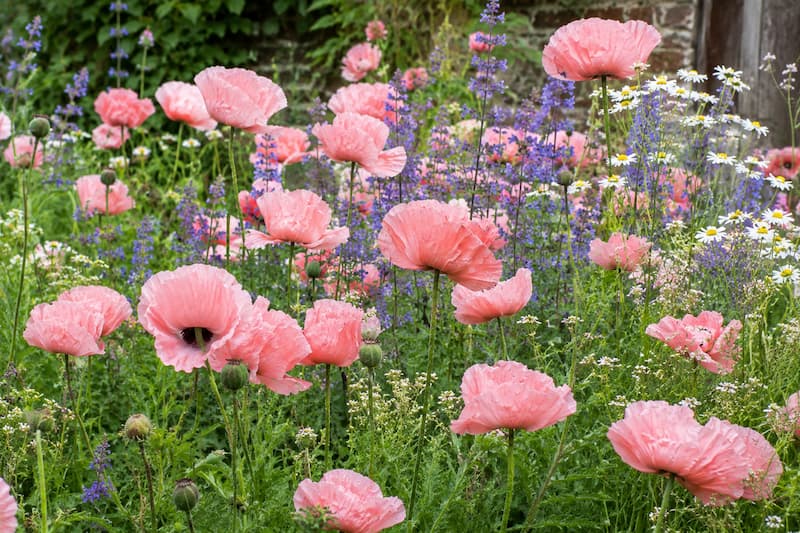


Do poppies come back every year? The answer depends on the kind of poppy you grow. Some poppies are true perennials that return from the same root system year after year. Others are annuals that live for one season, set seed, and die. Many of the most beloved garden poppies seem to “come back” because they self-seed, scattering new seedlings that bloom the following year.
This is why poppies can be confusing. A patch of Papaver rhoeas, the Flanders poppy or corn poppy, may reappear every spring, even though each individual plant is an annual. Meanwhile, Papaver orientale, the Oriental poppy, returns from a perennial crown, but its foliage may disappear after flowering, making gardeners wonder whether the plant has died.
The key is to understand whether your poppy returns from roots, seeds, or both. Once you know that, you can manage seedpods, deadheading, thinning, dormancy, and companion planting with confidence.
Fast answer: Some poppies come back every year as perennials, especially Oriental poppies. Annual poppies do not return from the same plant, but many self-seed so reliably that they appear year after year. Iceland poppies are often biennial or short-lived perennial, depending on climate.
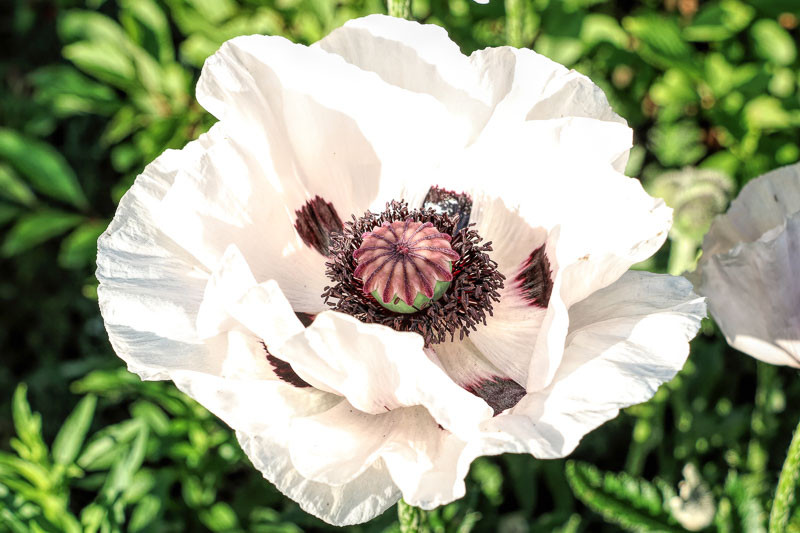 Papaver orientale ‘Royal Wedding’ – Oriental Poppy
An annual poppy completes its life cycle in one growing season. It germinates, grows, blooms, sets seed, and dies. If it returns the next year, it is usually because new seedlings grew from dropped seed, not because the original plant survived.
A perennial poppy lives for several years. It may die back after flowering or in winter, but the root system remains alive and sends up new growth when conditions are right. Oriental poppies are the classic example. They are long-lived, bold, and reliable in suitable gardens.
A self-seeding poppy is any poppy that drops viable seed and produces new plants. Many annual poppies are excellent self-seeders. This can be a blessing in cottage gardens, meadow plantings, gravel gardens, and wildlife-friendly borders, but it needs light management if seedlings appear where they are not wanted.
| Poppy Type | Lifespan | How It Returns | Best Garden Use |
|---|---|---|---|
| Papaver rhoeas | Annual | Self-seeds if pods ripen | Meadows, cottage gardens, naturalistic borders |
| Papaver somniferum | Annual | Often self-seeds where legally permitted | Bold flowers and ornamental seedpods |
| Papaver nudicaule | Biennial or short-lived perennial | May return briefly or self-seed in cool climates | Cool-season color and cut flowers |
| Papaver orientale | Long-lived perennial | Returns from crown and roots | Perennial borders, cottage gardens, bold spring displays |
| Eschscholzia californica | Annual or short-lived perennial, depending on climate | Self-seeds readily in suitable sites | Dry gardens, wildflower plantings, poor soils |
 Papaver rhoeas – Flanders Poppy
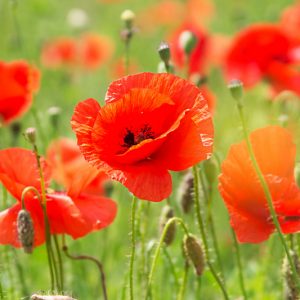
Annual poppies are one-season plants, but they can be wonderfully persistent in the garden. Papaver rhoeas is a classic example. Each plant dies after setting seed, yet the next generation may germinate naturally when soil is disturbed and weather is cool.
This is why corn poppies often look perennial in meadows or cottage gardens. They are not returning from the same roots. They are renewing themselves from seed. If you mulch heavily, deadhead every flower, or weed out tiny seedlings too early, the display may disappear the following year.
For sowing timing, see When to Plant Poppy Seeds: Fall vs Spring Sowing Explained.Papaver somniferum, often called breadseed poppy or opium poppy, is also an annual. It can produce beautiful flowers and dramatic seedpods, but legality varies by jurisdiction, so gardeners should check local rules before planting or allowing it to self-seed.
Annual poppies come back by seed, not by roots. Leave some seedpods to ripen if you want more flowers next year. Deadhead all flowers if you want to limit self-seeding.
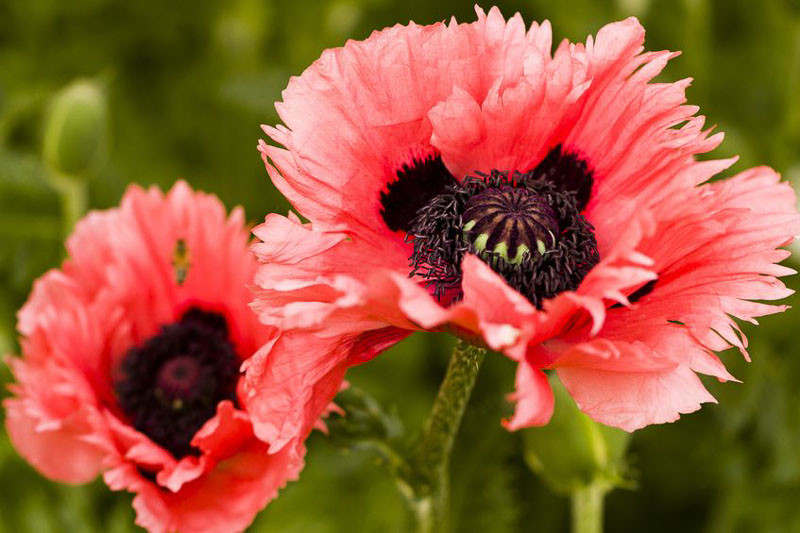 Papaver orientale ‘Turkenlouis’
Perennial poppies return from the same plant. The best-known garden example is Papaver orientale. Oriental poppies form clumps, produce bold flowers in late spring to early summer, and can live for many years in a sunny, well-drained border.
One thing surprises many gardeners: Oriental poppies often go dormant after flowering. Their leaves may yellow, collapse, or vanish in summer, especially in warm climates. This is normal. The plant is not necessarily dead. It is resting underground and will usually return when conditions cool.
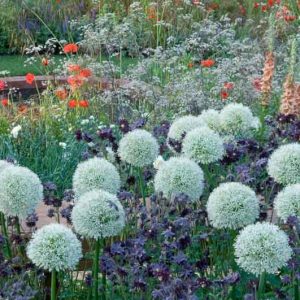
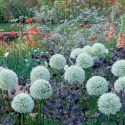
Because Oriental poppies leave a gap after bloom, pair them with plants that expand or flower later. Later-developing companions such as Baby’s Breath, Russian sage, Shasta daisy, Iris germanica, Allium, Nepeta, and Salvia can help fill the space left as Oriental poppy foliage fades. You can also use Iris germanica, Allium, Nepeta, and Salvia in sunny, well-drained borders.
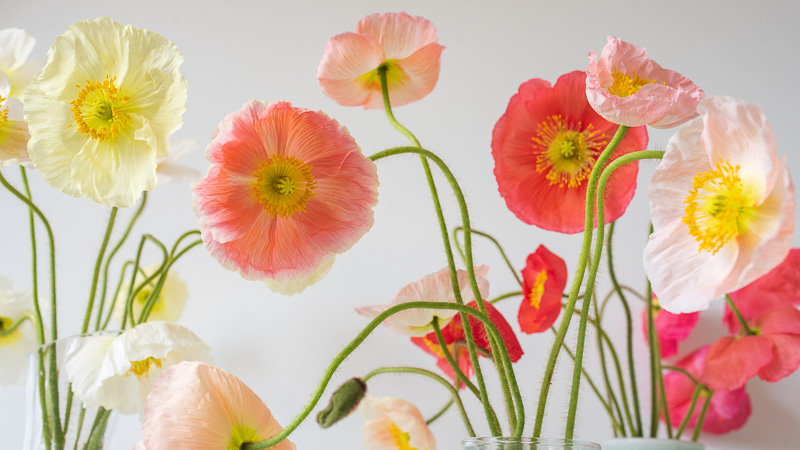 Papaver nudicaule – Iceland Poppy
Papaver nudicaule, the Iceland poppy, is usually treated as a biennial or short-lived perennial. In cool climates, plants may persist longer. In hot, humid climates, they often decline quickly after flowering and are best grown as cool-season annuals.
Iceland poppies are beloved for their delicate flowers in white, yellow, orange, salmon, rose, and pink. They bloom on slender stems above a low rosette of foliage and are excellent for spring color and cutting gardens. For compact choices, explore Papaver nudicaule ‘Garden Gnome’ or Papaver nudicaule Spring Fever Series.
If Iceland poppies disappear after bloom, that does not always mean you failed. They simply dislike heat and humidity. In warm regions, resow or replant them for the cool season rather than expecting them to behave like long-lived perennials.
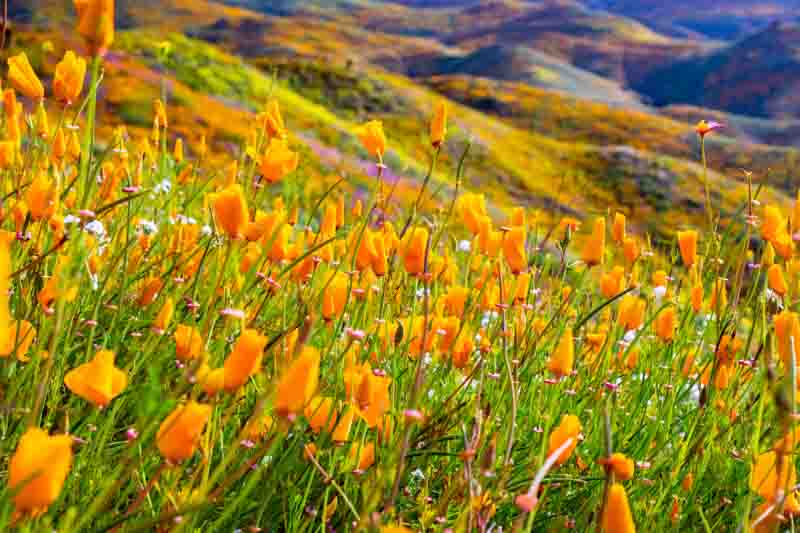
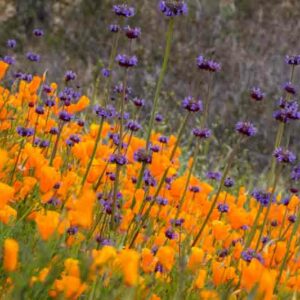
Eschscholzia californica, the California poppy, is not a true Papaver, but gardeners often ask about it when discussing poppies. It is commonly grown as an annual, though it may behave as a short-lived perennial in mild climates.
California poppies thrive in sunny, well-drained, sandy or rocky soils and do not need rich conditions. They often self-seed generously in open, lean soil, making them excellent for wildflower plantings, slopes, gravel gardens, and drought-tolerant landscapes.
Dry-garden tip: If California poppies disappear in summer but seedlings return after rain, they are behaving normally. Let some seed fall where you want next year’s display.
If poppies fail to return, the reason is usually not mysterious. Annual poppies may have been deadheaded before seed formed. Seedlings may have been removed during weeding. Heavy mulch may have blocked seed germination. Wet winter soil may have rotted plants or seed. In hot climates, cool-season poppies may simply have exhausted themselves after bloom.
Perennial poppies may fail if planted in poorly drained soil, buried too deeply, divided at the wrong time, or kept too wet during dormancy. Oriental poppies especially need good drainage and do not appreciate being moved once established.
To keep annual poppies returning, let some seedpods ripen. When pods turn dry and begin to rattle, seed is mature. You can leave pods to scatter naturally, shake seed over prepared soil, or collect seed for sowing in fall or early spring.
To keep perennial poppies returning, focus on drainage and restraint. Do not overwater during dormancy. Do not bury the crown under mulch. Do not dig in the area after foliage disappears. Mark the spot with a small label so you remember where the plant rests underground.
Deadheading is useful when you want a tidy garden, a longer bloom period from some types, or fewer volunteer seedlings. It is especially helpful if you do not want annual poppies spreading around the garden.
Letting seedpods ripen is useful when you want poppies to return naturally. A balanced approach works well: deadhead some spent flowers to keep the display tidy, but leave a few healthy pods to mature. This gives you future plants without letting self-seeding become overwhelming.
Species poppies, such as many forms of Papaver rhoeas, often produce seedlings that look similar to the parent. Named cultivars, hybrids, and mixed strains may vary. Seedlings can differ in flower color, height, bloom size, and petal form.
This variation can be delightful in informal gardens. However, if you want exact repeats of a named Oriental poppy or a specific cultivar, buy plants or fresh seed from a reliable source rather than relying entirely on garden-collected seed.
For broader poppy inspiration, explore Gardenia’s Papaver poppy guide, compare options with Compare All Papaver Plants, browse types of poppies to discover, and read about poppy flower history and garden uses.
To build a border that looks good after poppy bloom, browse Garden Ideas with Poppies, use the Gardenia Garden Design Tool, or pair poppies with sun-loving companions such as Allium, Bearded Iris, Nepeta, and Salvia.
Poppies can come back every year, but not always in the same way. Oriental poppies are true perennials that return from the same roots. Iceland poppies are often biennial or short-lived perennial, especially in cool climates. Corn poppies, breadseed poppies, and many annual poppies usually return only by self-seeding.
If you want poppies year after year, let some seedpods ripen, keep soil open enough for seedlings, thin young plants early, and protect perennial crowns from wet, poorly drained conditions. Once you understand how your poppy returns, you can turn a single season of flowers into a recurring garden tradition.
Some poppies come back every year as perennials, especially Oriental poppies. Annual poppies do not return from the same plant, but many self-seed and produce new seedlings the following year.
Poppies can be annuals, biennials, short-lived perennials, or long-lived perennials, depending on the species. Papaver rhoeas and Papaver somniferum are annuals, Papaver nudicaule is often biennial or short-lived perennial, and Papaver orientale is a long-lived perennial.
Yes. Many annual poppies self-seed readily if seedpods are allowed to ripen and drop seed. Corn poppies and breadseed poppies often reappear from seed in open, lightly disturbed soil.
Yes. Oriental poppies are long-lived perennials that return from the same roots or crown. Their foliage often dies back after flowering, especially in summer, but this dormancy is normal and does not usually mean the plant is dead.
Poppies may not come back if seedpods were removed before ripening, seedlings were weeded out, mulch blocked germination, soil stayed too wet, or perennial crowns rotted. Some cool-season poppies also decline quickly in hot, humid climates.
Leave some poppy seedpods if you want plants to self-seed or if you want to collect seed. Remove seedpods if you want to reduce spreading or keep the garden tidier.
Iceland poppies are usually biennial or short-lived perennial. They may return for a short time in cool climates, but in hot or humid regions they are often grown as cool-season annuals.
Updated: July 2026 • Reviewed by Gardenia Editors
| Hardiness |
2 - 11 |
|---|---|
| Plant Type | Annuals, Perennials |
| Plant Family | Papaveraceae |
| Genus | Papaver |
| Hardiness |
2 - 11 |
|---|---|
| Plant Type | Annuals, Perennials |
| Plant Family | Papaveraceae |
| Genus | Papaver |
Create a membership account to save your garden designs and to view them on any device.
Becoming a contributing member of Gardenia is easy and can be done in just a few minutes. If you provide us with your name, email address and the payment of a modest $25 annual membership fee, you will become a full member, enabling you to design and save up to 25 of your garden design ideas.
Join now and start creating your dream garden!
Create a membership account to save your garden designs and to view them on any device.
Becoming a contributing member of Gardenia is easy and can be done in just a few minutes. If you provide us with your name, email address and the payment of a modest $25 annual membership fee, you will become a full member, enabling you to design and save up to 25 of your garden design ideas.
Join now and start creating your dream garden!