Pinks, carnations, and Sweet William all belong to the Dianthus family, but they are not the same garden plant. This expert guide explains how to tell them apart, where each performs best, and how to choose the right Dianthus for borders, containers, cottage gardens, and cutting gardens.
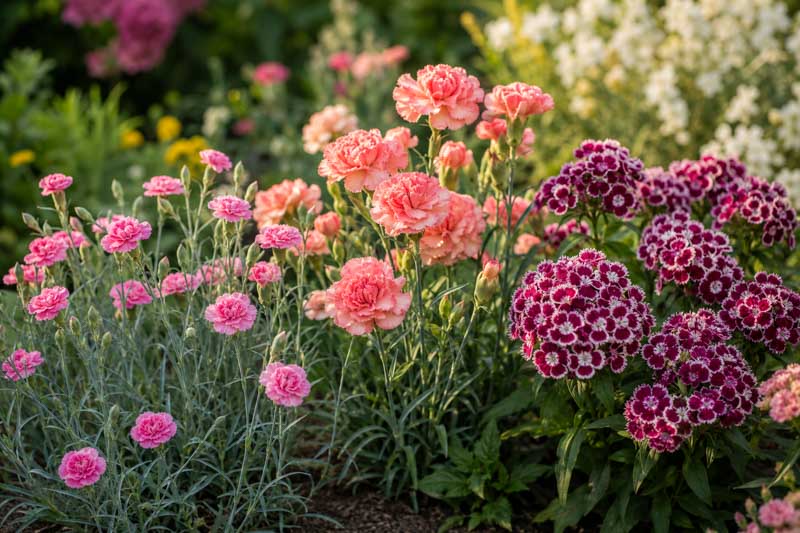


Pinks, carnations, and Sweet William are often sold side by side, praised for the same spicy clove fragrance, and grouped under one irresistible botanical name: Dianthus. No wonder gardeners get confused. A plant tag may say “pink,” the flower may be red, the scent may remind you of carnations, and the seed packet may promise Sweet William for the cottage garden. So what is the actual difference?
The short answer is this: all three are Dianthus, but they represent different species, habits, lifespans, garden uses, and flower forms. Pinks are usually low-growing, mat-forming or mound-forming perennials with fringed petals and blue-green foliage. Carnations are taller, often longer-stemmed plants famous as cut flowers. Sweet William is typically a biennial or short-lived perennial with dense, rounded clusters of small flowers in vivid colors.
Understanding the difference matters because each type behaves differently in the garden. Choose the wrong one, and you may end up with a short-lived plant where you wanted a permanent edging, a compact cushion where you expected bouquet stems, or a biennial that flowers beautifully once and then quietly disappears. Choose the right one, and Dianthus can give you fragrance, color, pollinator interest, edging structure, cut flowers, and old-fashioned charm for years.
This guide explains pinks vs carnations vs Sweet William in practical gardening terms. You will learn how they differ in height, bloom shape, scent, lifespan, flowering season, care needs, and best landscape uses, plus how to choose the best Dianthus for your climate and design style.
Fast answer: Pinks are usually compact perennial edging plants, carnations are taller cut-flower Dianthus, and Sweet William forms colorful flower clusters on biennial or short-lived perennial plants.
Choose pinks if you want:
Choose carnations if you want:
Choose Sweet William if you want:
| Feature | Pinks | Carnations | Sweet William |
|---|---|---|---|
| Typical habit | Low mound or mat | Upright stems | Upright clumps |
| Flowers | Fringed, often single or double | Larger, often double or ruffled | Small flowers in dense clusters |
| Common lifespan | Short-lived perennial | Perennial, annual, or florist crop | Biennial or short-lived perennial |
| Best garden role | Edging, rock gardens, containers | Cut flowers, borders, containers | Cottage gardens, bedding, mass color |
| Fragrance | Often strongly clove-scented | Often fragrant, especially older types | Variable, from fragrant to mild |
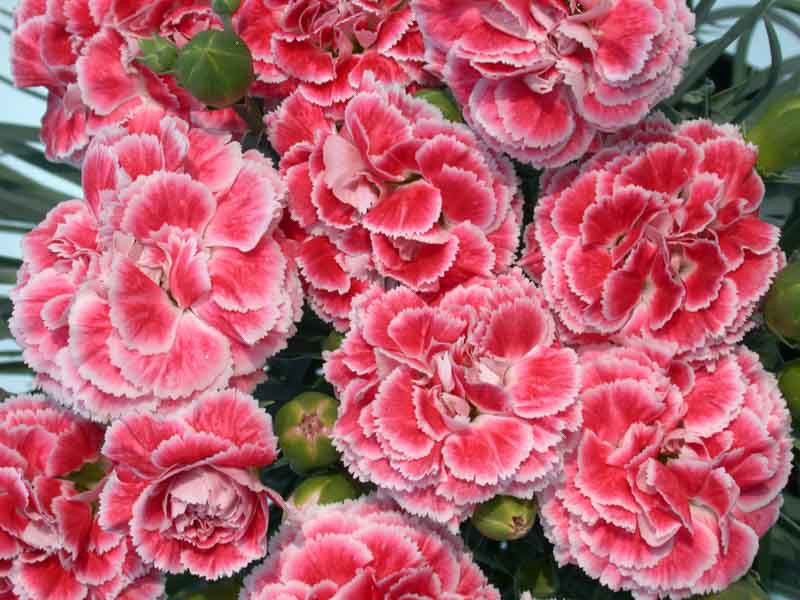
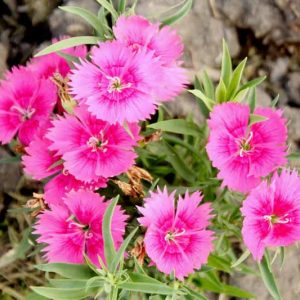
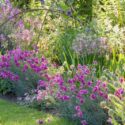
Pinks are the Dianthus most gardeners picture as low, silvery-blue or gray-green mounds topped with fringed, fragrant flowers. The name “pinks” does not simply mean the flowers are pink. It is often linked to the jagged, cut edges of the petals, which look as though they were trimmed with pinking shears. Many pinks do bloom in shades of rose, blush, magenta, and salmon, but they can also be white, red, lavender, bicolor, or patterned with eyes and rings.
Garden pinks are usually compact perennials or short-lived perennials. They work beautifully at the front of a border, along a path, in rock gardens, on sunny slopes, and in containers. Their foliage is part of the appeal. Even when not in bloom, many pinks form tidy cushions of narrow, often blue-green leaves that provide texture and contrast.
Several Dianthus species and hybrids may be called pinks. These include Dianthus plumarius (Clove pink), Dianthus gratianopolitanus (Cheddar pink), Dianthus deltoides (maiden pink), Dianthus alpinus (Alpine pink), and modern garden hybrids. Some are petite and mat-forming. Others are slightly taller and more floriferous. Many modern pinks have been bred for compact growth, repeat bloom, and container performance.
Pinks are ideal for gardeners who want a neat, fragrant, sun-loving plant that softens hard edges. Plant them near walkways, raised beds, or seating areas where you can enjoy the fragrance. They prefer sharp drainage and dislike wet crowns, especially in winter or humid summer weather.
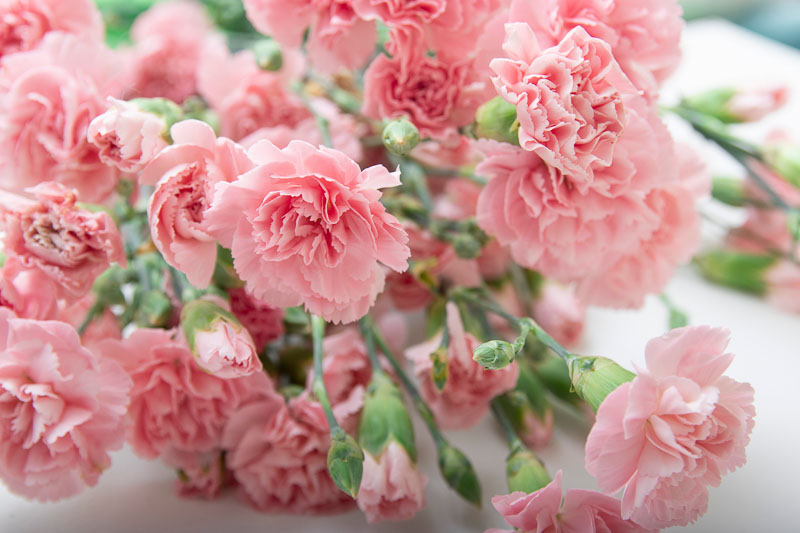
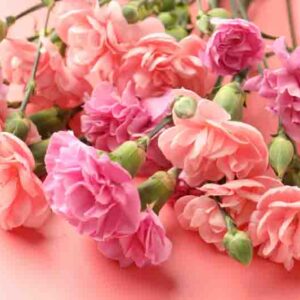
Carnations are also Dianthus, but they are most strongly associated with Dianthus caryophyllus and its many hybrids. Compared with most pinks, carnations are typically taller, more upright, and more closely linked to cut-flower production. Their blooms are often larger, fuller, ruffled, and carried on longer stems, which is why they are staples in bouquets, corsages, boutonnieres, and floral arrangements.
In the garden, carnations can be grown as perennials in suitable climates, as annuals in colder or hotter regions, or as container plants. Border carnations are often shorter and more garden-friendly than florist carnations, while florist types may be grown under controlled conditions for long, straight stems and large blooms.
Carnation flowers come in a wide range of colors, including white, cream, yellow, pink, red, burgundy, purple, green, and many bicolors. Some are strongly fragrant, especially older or heirloom forms. Others have been bred more for color, stem strength, flower size, or vase life than scent.
The main difference between carnations and pinks is not just flower size. It is the whole plant purpose. Pinks are usually designed by nature and breeding to sit low and beautify the garden edge. Carnations are often selected for upright stems and showy individual flowers. They can still be charming in beds and containers, but they often need more attention to staking, air circulation, and cutting than low-growing pinks.
Choose carnations when you want cut flowers, taller stems, a formal flower shape, or a traditional floral look. Give them full sun, excellent drainage, steady moisture without soggy soil, and good air movement around the stems.
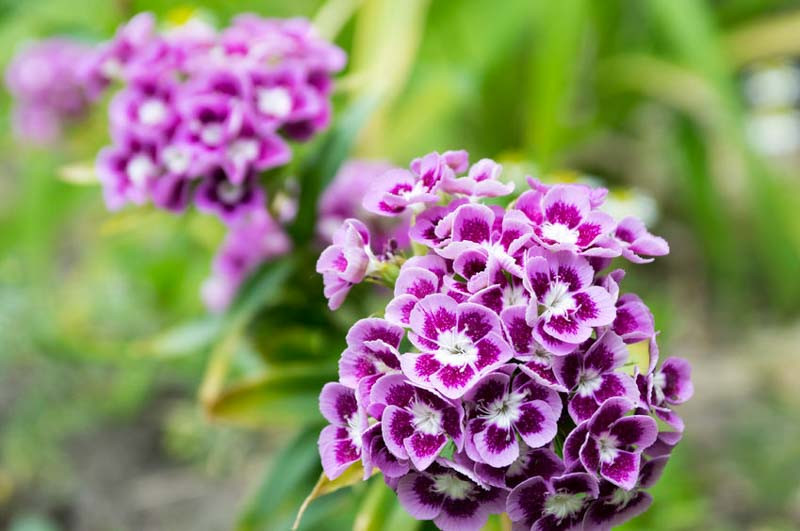
Sweet William usually refers to Dianthus barbatus. It looks quite different from the classic low-growing pink. Instead of single flowers scattered above a cushion, Sweet William produces dense, rounded or flat-topped clusters of many small flowers. The effect is bold, colorful, and wonderfully cottage-garden friendly.
Sweet William typically grows taller than many pinks, often around 12-24 inches depending on the variety. Its flowers may be red, pink, white, purple, maroon, bicolor, or patterned with contrasting eyes. Some forms are sweetly fragrant, while others are milder. The blooms attract pollinators and make cheerful cut flowers for informal arrangements.
The biggest practical difference is lifespan. Sweet William is often grown as a biennial. That means it may produce leafy growth in the first year, flower in the second year, set seed, and then decline. In favorable conditions, it may behave as a short-lived perennial or reseed enough to remain in the garden year after year. This is why older cottage gardens often seem to “keep” Sweet William without replanting, while tidier gardens may lose it if every spent flower is removed before seed ripens.
Use Sweet William for spring and early summer color, pollinator-friendly borders, cottage gardens, cutting patches, and bedding schemes. It looks especially beautiful in generous drifts rather than as a single lonely plant.
Dianthus is the genus that includes pinks, carnations, Sweet William, and many related species and hybrids. The name comes from Greek roots often interpreted as “divine flower” or “flower of the gods,” a fitting title for plants famous for fragrance, fringed petals, and centuries of garden use.
The shared family resemblance is easy to see once you know what to look for. Many Dianthus have narrow leaves, a spicy clove-like scent, five-petaled flowers or double forms derived from them, and petals with toothed, fringed, or serrated edges. They also tend to prefer sun, well-drained soil, and neutral to slightly alkaline conditions.
Still, common names can be messy. One nursery may label a compact hybrid as “Dianthus pink.” Another may call it “mini carnation.” A seed packet may use “Sweet William” for Dianthus barbatus, while a florist may use “carnation” for cut stems of Dianthus caryophyllus. The best way to avoid confusion is to check the botanical name, height, lifespan, and plant description.
Flower form is often the quickest visual clue. Pinks usually have individual flowers held above low foliage. Their petals are often fringed or toothed, sometimes with a contrasting eye or ring. Many are single, semi-double, or double, depending on the cultivar.
Carnations usually have larger, fuller flowers with a more ruffled, layered appearance. They often look like miniature formal bouquets on stems. Florist carnations are especially recognizable because of their dense, rounded, highly petaled blooms.
Sweet William is different because each “flower head” is really a cluster of many small flowers. From a distance, it may look like one broad bloom, but up close you can see the individual flowers packed together. This clustered habit is one of the easiest ways to identify Sweet William in a border.
Most pinks are low and spreading. Some form tight cushions only a few inches tall, while others reach 8-18 inches in bloom. Their role is usually horizontal: edging, carpeting, softening stone, spilling slightly over walls, or forming neat front-of-border mounds.
Carnations are more upright. Garden carnations and border carnations may be moderate in height, while florist types can be much taller. Their role is vertical: producing stems for cutting, adding upright color, or creating a more formal floral display.
Sweet William sits between the two in many gardens. It is usually taller than classic pinks but bushier and more cluster-flowered than carnations. It creates blocks of color rather than cushions or long-stemmed individual blooms.
This habit difference helps with design. Use pinks where you need a tidy edge. Use carnations where you want cut stems. Use Sweet William where you want a colorful, old-fashioned planting that fills space in late spring and early summer.
Many Dianthus are famous for a spicy, clove-like fragrance. Pinks are often the most rewarding for scent in the garden because their flowers sit at the perfect height along paths, patios, and raised beds. Older pinks and many classic varieties can perfume the air on warm days.
Carnations can also be richly fragrant, especially old-fashioned and heirloom types. However, some modern florist carnations have been bred more for durability, color, and vase life than perfume. This does not mean all modern carnations lack scent, but fragrance varies widely by cultivar.
Sweet William has a sweeter, sometimes lighter fragrance. Some varieties are noticeably scented, while others are grown mostly for color and clusters. If scent is your top priority, always check the cultivar description before buying.
This is one of the most important differences for gardeners. Many pinks are perennial, but often short-lived. They may look superb for several years, then become woody, open in the center, or decline. Regular renewal through cuttings, division of suitable clumps, or replacement keeps the planting fresh.
Carnations may be perennial in favorable climates, but they are also grown as annuals, greenhouse crops, or florist crops. Their long-term garden performance depends on the type, climate, and winter drainage. In humid or poorly drained gardens, carnations can struggle.
Sweet William is commonly biennial or short-lived perennial. Many gardeners sow or plant it one year for flowers the next. Letting some plants reseed can create a self-renewing colony, although seedlings may vary in color and quality.
If you want a permanent-looking edging, choose perennial pinks and plan to refresh them every few years. If you want cut flowers, choose carnations suited to your climate. If you want that abundant cottage-garden burst, choose Sweet William and manage it as a renewing biennial.
Pinks often bloom heavily in spring to early summer, and many modern cultivars rebloom with deadheading. Some continue in waves through summer if temperatures are moderate and the plant is not stressed. In hot climates, they may pause during summer heat and improve again in fall. Learn How to Keep your Pinks Blooming all Summer.
Carnations can have a long bloom season when grown well, especially modern garden types and greenhouse-grown plants. Cutting flowers regularly can encourage additional flowering, but plants still need sun, nutrition, drainage, and airflow.
Sweet William usually gives a generous late spring to early summer display. Some varieties may continue longer, but it is generally valued for a strong seasonal show rather than nonstop rebloom. Deadheading keeps plants tidy, but allowing some seed is useful if you want natural renewal.
For repeat flowers, match the plant to the job. Choose reblooming pinks for containers and edging, carnations for cutting, and Sweet William for a dramatic seasonal wave of color.
Despite their differences, pinks, carnations, and Sweet William share several core needs. All perform best in bright light, with most preferring full sun. In very hot regions, light afternoon shade can reduce stress, especially for containers and young plants.
Drainage is critical. Dianthus dislike sitting in wet soil, and soggy crowns can lead to root rot or crown rot. Raised beds, slopes, rock gardens, gravelly edges, and containers with drainage holes are often better than heavy clay or low wet spots.
Soil should be neutral to slightly alkaline for many types. This does not mean you should add lime blindly. A soil test is the smart way to understand pH before amending. Good drainage is usually more important than chasing a perfect number.
Deadheading helps many Dianthus keep blooming and stay tidy. For pinks and carnations, remove spent flowers before seed production drains energy. For Sweet William, decide whether your goal is neatness or reseeding. If you want seedlings, allow a few flower heads to mature.
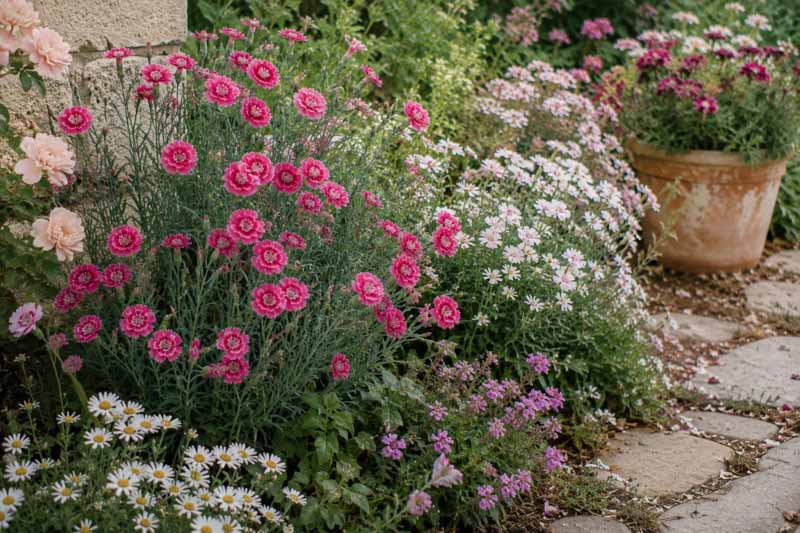
Pinks shine in edging, rock gardens, gravel gardens, wall tops, containers, and the front of sunny borders. Pair them with lavender, thyme, catmint, dwarf salvias, sedums, and ornamental grasses for a dry, fragrant, pollinator-friendly planting.
Carnations are best when you want cut flowers, upright color, or a more formal bloom. Grow them in a cutting garden with good spacing, or place compact varieties in containers where you can admire the flowers up close.
Sweet William belongs in cottage gardens, pollinator borders, meadow-style edges, and spring bedding displays. It looks wonderful with foxgloves, columbines, roses, campanulas, hardy geraniums, and early summer perennials.
Use pinks as the edge, carnations as the cut flower, and Sweet William as the cottage-garden color cloud.
Need help choosing? Use the Gardenia Plant Finder to filter Dianthus by hardiness zone, sun exposure, height, bloom time, flower color, water needs, and garden use. Then map combinations and spacing with the Gardenia Garden Design Tool.
Grow pinks if you want compact plants, fragrant edging, evergreen or semi-evergreen foliage, and a polished front-of-border look. They are the best choice for rock gardens, low containers, gravel gardens, and path edges.
Grow carnations if you want larger blooms, longer stems, and flowers for cutting. They are especially useful in cutting gardens, sunny borders, and containers where upright stems can be supported and harvested.
Grow Sweet William if you want bold clusters, cottage-garden charm, pollinator activity, and a nostalgic spring display. Treat it as a biennial or short-lived perennial, and allow reseeding if you want it to persist naturally.
For the strongest results, do not shop by common name alone. Look for the botanical name, mature height, bloom season, hardiness, fragrance notes, and whether the plant is annual, biennial, or perennial.
The first mistake is assuming “pink” means flower color. In Dianthus, pinks can be white, red, purple, bicolor, or patterned. The name often refers to petal edges, not color.
The second mistake is expecting Sweet William to behave like a permanent perennial. It may return for several years, but it is often best managed as a biennial or self-seeding short-lived perennial.
The third mistake is planting all Dianthus in rich, wet soil. These plants appreciate fertility, but they hate soggy crowns. Too much water, heavy mulch, and poor airflow can quickly turn a promising plant into a declining one.
The fourth mistake is buying carnations for edging or low pinks for cut flowers. Some compact carnations and taller pinks blur the lines, but plant habit still matters. Match the plant to the design role.
Pinks, carnations, and Sweet William are close relatives, but they are not interchangeable. Pinks are usually compact, fragrant, low-growing perennials for edging and rock gardens. Carnations are taller, showier Dianthus prized for cut flowers and ruffled blooms. Sweet William is a biennial or short-lived perennial with colorful clustered flowers and classic cottage-garden appeal.
All three love sun, drainage, and good airflow. All can bring fragrance, pollinators, and old-fashioned romance to the garden. The secret is choosing the right Dianthus for the right purpose. Once you understand the differences, the names stop feeling confusing and start becoming useful design tools.
Choose pinks for low edging, fragrance, containers, rock gardens, and neat blue-green foliage.
Choose carnations for larger flowers, longer stems, bouquets, cutting gardens, and classic floral arrangements.
Choose Sweet William for cottage borders, biennial color, pollinator-friendly clusters, and bold spring-to-early-summer displays.
Yes. Pinks, carnations, and Sweet William all belong to the genus Dianthus. They are related, but they differ in plant habit, flower form, height, lifespan, and garden use.
Pinks are usually compact, low-growing garden perennials with fringed flowers and blue-green foliage. Carnations are usually taller Dianthus with larger, often ruffled flowers on longer stems, making them better for cutting.
No. Sweet William is usually Dianthus barbatus, while carnations are usually Dianthus caryophyllus and related hybrids. Sweet William produces clusters of many small flowers, while carnations usually produce larger individual blooms.
The name pinks is often linked to the fringed or serrated petal edges, which look as though they were cut with pinking shears. It does not only refer to flower color.
Carnations are usually the best Dianthus for cut flowers because they produce larger blooms on longer stems. Sweet William also makes charming informal cut flowers, especially for cottage-style arrangements.
Pinks are usually the best choice for edging because they form compact mounds or mats, often with attractive blue-green foliage and fragrant flowers.
Sweet William is often grown as a biennial or short-lived perennial. It may return for a few years or reseed in favorable conditions, but it is not always a long-lived perennial.
They share similar needs: full sun, well-drained soil, good airflow, and moderate watering. However, pinks are usually grown as edging perennials, carnations often need support for cutting stems, and Sweet William is commonly managed as a biennial.
Updated: June 2026 • Reviewed by Gardenia Editors
| Hardiness |
5 - 9 |
|---|---|
| Plant Type | Perennials |
| Plant Family | Caryophyllaceae |
| Genus | Dianthus |
| Exposure | Full Sun |
| Maintenance | Low |
| Soil Type | Chalk, Loam, Sand |
| Soil pH | Alkaline, Neutral |
| Soil Drainage | Well-Drained |
| Characteristics | Fragrant |
| Tolerances | Drought, Deer, Rabbit, Dry Soil |
| Attracts | Bees, Butterflies, Hummingbirds |
| Garden Styles | City and Courtyard, Coastal Garden, Cutting Garden, Gravel and Rock Garden, Informal and Cottage, Mediterranean Garden |
| Hardiness |
5 - 9 |
|---|---|
| Plant Type | Perennials |
| Plant Family | Caryophyllaceae |
| Genus | Dianthus |
| Exposure | Full Sun |
| Maintenance | Low |
| Soil Type | Chalk, Loam, Sand |
| Soil pH | Alkaline, Neutral |
| Soil Drainage | Well-Drained |
| Characteristics | Fragrant |
| Tolerances | Drought, Deer, Rabbit, Dry Soil |
| Attracts | Bees, Butterflies, Hummingbirds |
| Garden Styles | City and Courtyard, Coastal Garden, Cutting Garden, Gravel and Rock Garden, Informal and Cottage, Mediterranean Garden |
Create a membership account to save your garden designs and to view them on any device.
Becoming a contributing member of Gardenia is easy and can be done in just a few minutes. If you provide us with your name, email address and the payment of a modest $25 annual membership fee, you will become a full member, enabling you to design and save up to 25 of your garden design ideas.
Join now and start creating your dream garden!
Create a membership account to save your garden designs and to view them on any device.
Becoming a contributing member of Gardenia is easy and can be done in just a few minutes. If you provide us with your name, email address and the payment of a modest $25 annual membership fee, you will become a full member, enabling you to design and save up to 25 of your garden design ideas.
Join now and start creating your dream garden!