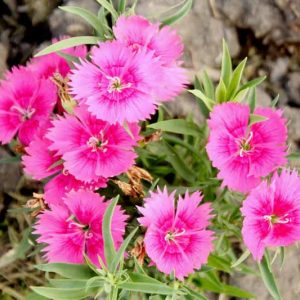
When pinks refuse to flower, they are usually sending a clear message: something is off. Dianthus may stop blooming because of too little sun, wet soil, heat stress, missed deadheading, excess fertilizer, or aging crowns. Decode the problem, fix the growing conditions, and those spicy, fringed blooms can return.



If your pinks are growing leaves but refusing to flower, the plant is not being difficult for no reason. Dianthus usually stop blooming when one or more growing conditions are slightly off. Too little sun, wet soil, skipped deadheading, summer heat, excess fertilizer, aging crowns, or the wrong variety for your climate can all turn a promising plant into a neat green mound with few blooms.
The encouraging part is that most dianthus flowering problems are fixable. Pinks are naturally generous plants when they get what they like: bright light, sharp drainage, good air movement, modest feeding, and regular removal of faded flowers. When those basics line up, many varieties reward you with fringed petals, spicy clove fragrance, and months of color in borders, containers, rock gardens, and cottage gardens.
This guide explains why pinks are not flowering, how to read the symptoms, and what to do next. Instead of guessing, you can match what you see – leafy growth, bud drop, weak stems, center die-out, or a one-time bloom – with the most likely cause and the best fix.
Important plant note: “Pinks” usually refers to low-growing or mound-forming Dianthus, but the genus also includes Sweet William, carnations, maiden pinks, and many modern hybrids. They share many care needs, but bloom season, lifespan, heat tolerance, and reblooming ability vary by type.
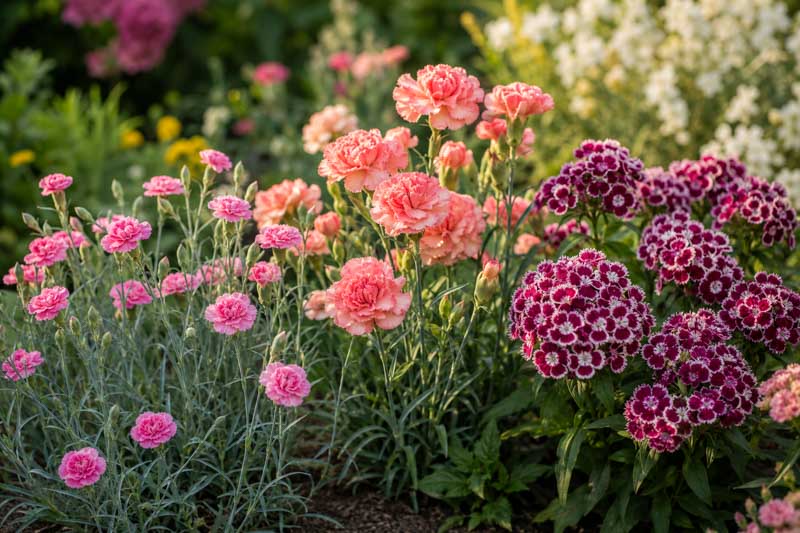
Fast answer: If your dianthus has leaves but no flowers, check sunlight, drainage, deadheading, and crown health first. Those four issues explain many pinks that grow but refuse to bloom.
| What You See | Likely Cause | Best First Fix |
|---|---|---|
| Lots of leaves, few flowers | Too little sun or too much nitrogen | Move to brighter light and reduce feeding |
| Buds form but dry up | Heat, drought, or root stress | Water deeply and protect from extreme afternoon heat |
| Blooms once, then stops | No deadheading or a naturally one-flush type | Remove spent flowers and check cultivar habit |
| Center turns brown or collapses | Crown rot, poor drainage, age, or humidity | Improve drainage and keep mulch off the crown |
| Weak, floppy stems | Low light, rich soil, crowding, or overfeeding | Increase sun, space plants, and feed lightly |
| Spots, rust, sticky leaves, or distorted buds | Pests, fungal disease, or poor airflow | Inspect closely, remove diseased growth, and water at soil level |
Low light is one of the most common reasons dianthus are not blooming. Pinks may survive in partial shade, but they usually flower best when they receive strong sun for much of the day. In too much shade, they often stretch, lean, produce soft stems, and make fewer buds.
In cool or mild climates, full sun is usually ideal. In hot summer regions, morning sun with light afternoon shade can be better than harsh all-day exposure, especially in containers. The key is balance: enough direct light to fuel flowering, but not so much intense heat that the plant shuts down in midsummer.
You can often diagnose low light by the plant’s shape. Compact, blue-green foliage with sturdy stems usually means light is adequate. Long, loose, floppy growth suggests the plant is reaching. If flowers appear only on the sunny side of the clump, shade is limiting bloom.
What to do: Move container-grown pinks to a brighter position. In garden beds, trim nearby plants that cast shade. If the site receives fewer than four hours of useful sun, consider relocating the dianthus in early spring or early fall.
If dianthus had one non-negotiable demand, it would be drainage. Wet soil is a major cause of weak flowering, yellowing foliage, crown rot, root rot, and sudden collapse. Pinks dislike heavy, airless soil, especially during cool weather or humid summers.
This matters because flower production depends on healthy roots and a healthy crown. When the root zone stays soggy, the plant struggles to move water and nutrients efficiently. Instead of producing buds, it slows down, yellows, opens in the center, or begins to rot at the base.
Pinks are excellent choices for raised beds, gravel gardens, rock gardens, slopes, edging, and containers with a gritty, free-draining mix. They are much less happy in compacted clay, low pockets where rain collects, or beds where heavy mulch is piled against the stems.
What to do: Improve drainage before planting by raising the bed, loosening compacted soil, and avoiding low, soggy areas. In containers, use a free-draining potting mix and make sure drainage holes are open. Keep mulch away from the crown so the base of the plant can dry between watering and rain.
Dianthus are fairly adaptable, but they generally prefer neutral to slightly alkaline soil. If your soil is very acidic, the plant may still live, but growth can be weaker and flowering less impressive. This issue is easy to overlook because pH problems rarely announce themselves as clearly as drought or rot.
Soil pH affects how nutrients become available to plant roots. When pH is outside the preferred range, a plant may struggle even when fertilizer has been applied. If your pinks look weak, pale, or slow despite good sun and drainage, testing the soil is more useful than guessing.
This does not mean you should add lime automatically. Many garden soils are already neutral or alkaline. The professional approach is simple: test first, amend only if needed, and avoid sudden, heavy corrections.
What to do: Use a soil test if plants are consistently weak or flower poorly despite good care. If soil is too acidic, adjust gradually according to test recommendations. Do not add lime near acid-loving plants, and do not amend without knowing your starting pH.
Many dianthus varieties bloom beautifully, then slow down once faded flowers remain on the plant. That is because the plant begins shifting from flowering to seed production. Once seed-making takes priority, fewer fresh buds follow.
This is especially important with repeat-blooming modern pinks. They often need regular deadheading or light shearing to keep the show going. If your plant flowered well in late spring and then quit, old flower stems may be the reason.
However, not every dianthus reblooms equally. Some varieties are naturally strongest in one main flush, while others are bred to repeat over a longer season. Deadheading helps both types look cleaner, but it will not turn every one-time bloomer into a nonstop flowering machine.
After the first heavy bloom, shear lightly rather than cutting into old woody stems. Remove spent flower stalks and tidy the mound without scalping the plant.
What to do: Snip individual faded flowers or shear lightly after a flush. Cut spent stems down to a healthy set of leaves. Water if the soil is dry, then give the plant time to push fresh growth. For more rebloom guidance, see how to keep pinks blooming all summer.
Dianthus are not heavy feeders. Rich soil and repeated high-nitrogen fertilizer can create lush foliage with disappointing flowers. Nitrogen supports leafy growth, but too much can reduce bud production and make stems soft, floppy, and vulnerable to weather damage.
This problem often happens when pinks are planted near lawns that receive lawn fertilizer, tucked into very rich compost-heavy beds, or fed frequently with all-purpose liquid fertilizers. The plant may look green and vigorous, but that vigor is not always flowering strength.
Overfed dianthus can also struggle more in humid conditions. Soft growth holds moisture, crowds the crown, and is more likely to collapse after rain or heat. Pinks usually bloom best with moderate fertility and sharp drainage, not constant pampering.
What to do: Stop high-nitrogen feeding. Use compost sparingly or apply a light, balanced slow-release fertilizer in spring if growth is weak. If the plant is already lush, focus on sun, drainage, and deadheading rather than more food.
Dianthus love bright light, but many types dislike hot, humid, stagnant conditions. This is why pinks often look spectacular in spring, then struggle in midsummer. When nights stay warm, air circulation is poor, and soil remains damp, flowering can slow or stop.
Heat stress does not always look dramatic. You may see fewer buds, smaller flowers, faded color, brown tips, or stems that stop elongating. In containers, the problem can intensify because pots heat up quickly and dry unevenly.
The solution is not deep shade. Too much shade creates weak growth and fewer flowers. Instead, aim for bright morning sun, excellent drainage, room around each plant, and some relief from the hottest afternoon exposure where summers are intense.
What to do: Provide morning sun and light afternoon shade in hot zones. Space plants so air can move through the foliage. Avoid overhead watering late in the day, and remove wet debris from the crown. Use the Gardenia Plant Finder to compare Dianthus varieties by zone, sun exposure, size, color, and bloom season.
Some gardeners expect perennial dianthus to behave like long-lived peonies. Most do not. Many pinks are short-lived perennials. They may perform beautifully for several years, then become woody, open in the center, and less floriferous.
Older plants often produce fewer fresh shoots from the base. The crown may become congested, the center may die out, and flowers may appear mostly around the edges. The plant is not necessarily sick, but it no longer has the dense, vigorous growth needed for a strong display.
Sweet William adds another layer because many forms are biennial or short-lived perennials. They may grow foliage the first year, flower the next, then decline after seed set. If you remove every seedling and never replant, the display can fade from the garden.
Dianthus are often best managed as renewing plants. Take cuttings, divide suitable clumps, allow a few seedlings, or replace tired plants before the border has obvious gaps.
What to do: Refresh old plantings every few years. Divide suitable clumps in spring, take non-flowering cuttings from healthy shoots, or replace woody plants with vigorous young ones. For Sweet William, allow some seed or replant regularly for continuous color.
Pests do not always stop flowering completely, but they can reduce bloom by weakening tender growth. Aphids gather on stems and buds. Thrips may distort flowers. Slugs and snails chew young growth in damp conditions. Spider mites can become a problem in hot, dry spots, especially on stressed plants.
Disease is often more damaging than pests. Crown rot, root rot, rust, leaf spot, and wilt diseases are more likely when plants are crowded, wet, or growing in poorly drained soil. A diseased dianthus may produce fewer buds, smaller flowers, or no flowers at all.
Look closely before treating. Sticky residue, curled shoots, distorted buds, orange-brown pustules, spotted leaves, webbing, chewed stems, or a rotting crown each point to a different problem. Accurate diagnosis prevents unnecessary spraying and helps you fix the real cause.
What to do: Remove badly diseased foliage, improve airflow, water at soil level, and avoid wet crowns. Wash off light aphid infestations or use insecticidal soap when appropriate. If crown rot is advanced, replacement may be more realistic than rescue.
Dianthus benefit from trimming, but timing and depth matter. Light shearing after flowering can encourage fresh growth and rebloom. Hard cutting into old woody stems, however, can set the plant back, expose bare crowns, or remove growth that would have carried flowers.
This mistake is common after a plant looks messy. A gardener cuts it hard to “start over,” then waits for flowers that never arrive. Some dianthus recover well from a light haircut, but many resent being cut into old, leafless wood.
Plant choice matters just as much. A compact alpine pink, a bedding dianthus, a florist carnation, and Sweet William may all be sold under the Dianthus umbrella, but they do not perform the same way. Some are naturally short-lived. Some bloom mainly once. Some rebloom well. Some tolerate heat better than others.
If you want months of repeat bloom in a patio pot, choose a modern reblooming cultivar bred for containers. If you want old-fashioned fragrance in a cottage border, classic perennial pinks may be perfect. If you want tall clusters for a biennial display, Sweet William is a better fit. If you garden in a hot, humid climate, heat tolerance and drainage become critical.
What to do: Deadhead during bloom. After the main flush, shear lightly by about one-third if the plant is leafy and vigorous. Remove dead, diseased, or collapsed stems anytime. Avoid heavy pruning during heat waves or drought stress. Before buying new plants, compare choices on the Dianthus comparison page and use the Plant Finder to narrow options by hardiness zone, sun exposure, water needs, size, bloom season, and color.
Once you identify the likely cause, recovery is usually straightforward. The key is to fix the main problem rather than changing everything at once. A stressed dianthus rarely needs a dramatic rescue routine. It needs brighter light, better drainage, cleaner deadheading, cooler conditions, renewed growth, or a better cultivar match.
For planning, use the Gardenia Plant Finder to select Dianthus suited to your conditions, then organize spacing, combinations, and seasonal color in the Gardenia Garden Design Tool.
If your pinks are not flowering, start with the essentials: sun, drainage, deadheading, soil pH, and plant age. Dianthus bloom best when their crowns stay dry, their roots breathe, faded flowers are removed before seed set, and the variety suits the climate. Fix those conditions, and most healthy pinks will reward you with the spicy fragrance, fringed petals, and cheerful color that make them cottage garden classics.
The most common reasons are too little sun, too much nitrogen, poor drainage, lack of deadheading, or an old woody plant. Start by checking light and soil moisture because those two issues often explain leafy growth with few blooms.
Most dianthus flower best in full sun. In very hot climates, morning sun with light afternoon shade may be better, but deep shade usually leads to fewer flowers and weaker growth.
Yes. Deadheading removes spent blooms before they set seed, which helps many dianthus varieties produce more flowers. After a heavy flush, a light shear can also tidy the plant and encourage fresh growth.
Yes. Wet soil and soggy crowns can stress roots, encourage crown rot, and reduce flower production. Dianthus need well-drained soil and should not sit in waterlogged conditions.
The plant may have started setting seed, entered heat stress, or finished the natural bloom cycle for that variety. Deadhead spent flowers, keep the soil evenly moist but well drained, and wait for cooler conditions if summer heat has slowed growth.
Many perennial dianthus are short-lived perennials. They may perform beautifully for several years, then become woody or open in the center. Refreshing plants with cuttings, division, seedlings, or replacement keeps the display vigorous.
Dianthus usually prefer neutral to slightly alkaline soil. If plants are weak despite good sun and drainage, a soil test can show whether pH is part of the problem.
Updated: June 2026 • Reviewed by Gardenia Editors
| Hardiness |
5 - 9 |
|---|---|
| Plant Type | Perennials |
| Plant Family | Caryophyllaceae |
| Genus | Dianthus |
| Exposure | Full Sun |
| Maintenance | Low |
| Soil Type | Chalk, Loam, Sand |
| Soil pH | Alkaline, Neutral |
| Soil Drainage | Well-Drained |
| Characteristics | Fragrant |
| Tolerances | Drought, Deer, Rabbit, Dry Soil |
| Attracts | Bees, Butterflies, Hummingbirds |
| Garden Styles | City and Courtyard, Coastal Garden, Cutting Garden, Gravel and Rock Garden, Informal and Cottage, Mediterranean Garden |
| Hardiness |
5 - 9 |
|---|---|
| Plant Type | Perennials |
| Plant Family | Caryophyllaceae |
| Genus | Dianthus |
| Exposure | Full Sun |
| Maintenance | Low |
| Soil Type | Chalk, Loam, Sand |
| Soil pH | Alkaline, Neutral |
| Soil Drainage | Well-Drained |
| Characteristics | Fragrant |
| Tolerances | Drought, Deer, Rabbit, Dry Soil |
| Attracts | Bees, Butterflies, Hummingbirds |
| Garden Styles | City and Courtyard, Coastal Garden, Cutting Garden, Gravel and Rock Garden, Informal and Cottage, Mediterranean Garden |
Create a membership account to save your garden designs and to view them on any device.
Becoming a contributing member of Gardenia is easy and can be done in just a few minutes. If you provide us with your name, email address and the payment of a modest $25 annual membership fee, you will become a full member, enabling you to design and save up to 25 of your garden design ideas.
Join now and start creating your dream garden!
Create a membership account to save your garden designs and to view them on any device.
Becoming a contributing member of Gardenia is easy and can be done in just a few minutes. If you provide us with your name, email address and the payment of a modest $25 annual membership fee, you will become a full member, enabling you to design and save up to 25 of your garden design ideas.
Join now and start creating your dream garden!