Pinks, or Dianthus, are charming, fragrant perennials loved for spicy clove-scented flowers, fringed petals, and neat blue-green foliage. Compact and colorful, they shine in borders, rock gardens, cottage gardens, containers, and edging. With sun, sharp drainage, and timely deadheading, many varieties rebloom beautifully through summer.
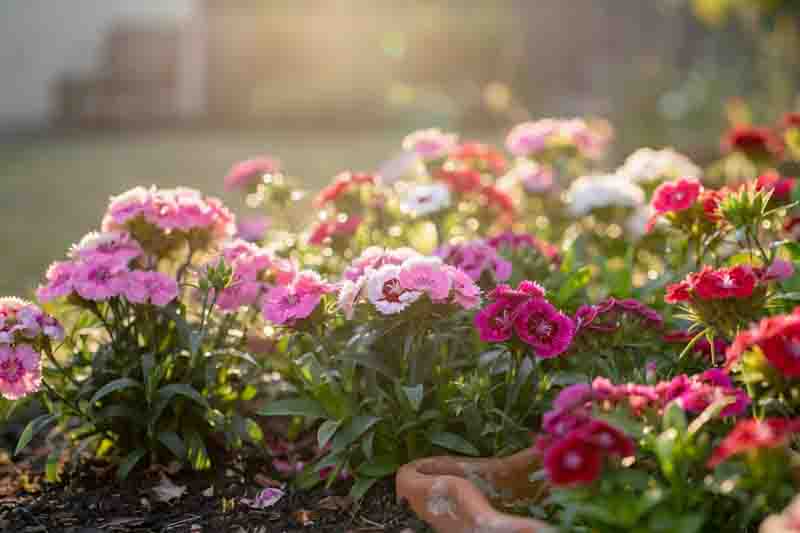


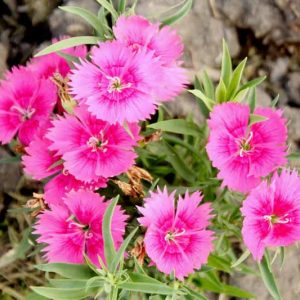
Pinks, also known as Dianthus, may be small, but they bring serious flower power to sunny gardens. Their frilled petals, spicy clove fragrance, silvery-blue foliage, and tidy mounding habit make them favorites for cottage gardens, rock gardens, containers, edging, gravel gardens, and border fronts.
They are especially lovely where you can enjoy them up close. Plant them beside a path, near a patio, around a seating area, or in a pot by the door, and their fragrance becomes part of the garden experience. Few compact perennials offer such a satisfying combination of scent, color, texture, and neatness.
But here is the truth gardeners need to know: pinks do not bloom all summer by accident. Most perennial Dianthus produce their strongest flush in late spring to early summer. After that, they need the right care to keep flowering, reblooming, or producing scattered waves of color through the warmer months.
To keep pinks blooming as long as possible, focus on five essentials: sun, sharp drainage, deadheading, light shearing, and low-stress summer care. Think of Dianthus as a bright, breezy, well-drained plant rather than a thirsty bedding annual. Give it the conditions it prefers, and many varieties will reward you with weeks, and sometimes months, of fragrant bloom.
This guide explains how to keep pinks blooming all summer, why they stop flowering, which Dianthus series and cultivars offer the best chance of rebloom, and how to use them in a longer-lasting planting design. For more choices, explore the Gardenia Plant Finder, and when you are ready to plan your border, try the Gardenia Design Tool.
Quick answer
To keep pinks blooming all summer, grow them in full sun, plant them in sharply drained soil, deadhead faded flowers before seed pods form, shear lightly after the first big flush, avoid soggy roots, feed lightly, and choose reblooming or long-flowering Dianthus varieties.
The golden rule
Pinks bloom longest when they are bright, airy, and never waterlogged. Sun on the flowers and air around the crown are two of the best bloom boosters you can give them.
| Feature | Details |
|---|---|
| Botanical name | Dianthus species and hybrids |
| Common names | Pinks, garden pinks, cheddar pinks, maiden pinks, carnations, Sweet William |
| Plant type | Annuals, biennials, evergreen perennials, or short-lived perennials, depending on type |
| Best light | Full sun; light afternoon shade in very hot climates |
| Best soil | Well-drained, neutral to slightly alkaline soil |
| Main bloom season | Late spring to summer, with rebloom possible on many varieties |
| Key care for rebloom | Deadheading, light shearing, sharp drainage, steady but moderate moisture |
If your pinks bloom beautifully in spring and then suddenly slow down, do not panic. The plant may not be sick. It may simply be following the natural rhythm of many Dianthus: flower heavily, begin setting seed, then pause as heat increases.
The most common reasons pinks stop blooming include:
Think like the plant
Once a pink starts making seed, it thinks its job is done. Deadheading tells the plant, “Not yet – keep making flowers.”
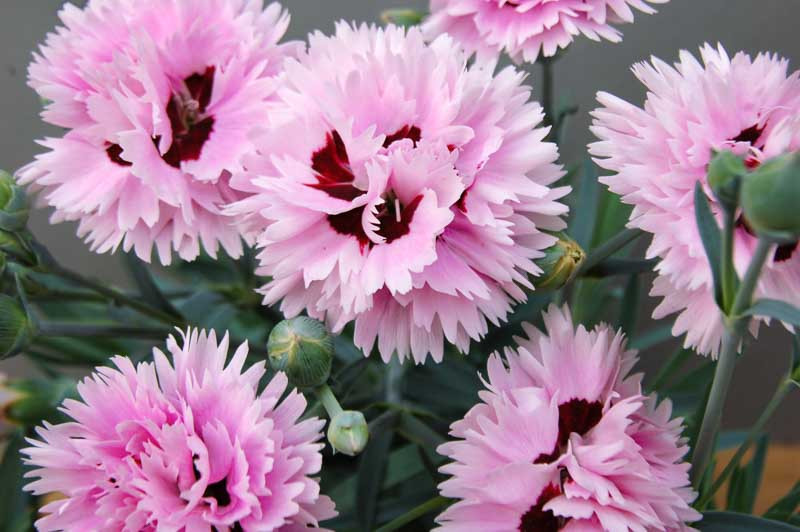
Not all Dianthus bloom the same way. Some pinks produce one spectacular late-spring display, while others continue into summer or bloom again after deadheading and light shearing. If your goal is the longest practical season, look for varieties described as free-flowering, long-blooming, reblooming, or late spring through summer bloomers.
Be realistic, though. Even good reblooming pinks may not flower nonstop every day of summer. Many bloom in waves: a strong first flush, a quieter pause, then scattered rebloom or a second show when the plant is deadheaded, trimmed, and grown in the right conditions.
Best buying rule
For the most reliable display, choose named Dianthus series known for long bloom or rebloom, then select cultivars with a listed bloom season that reaches into summer.
For repeat color, start with modern Dianthus series bred or selected for a longer bloom window, compact growth, and strong garden performance. These are often the best choices for gardeners who want pinks to look good beyond the first spring flush.
EverLast Series: This is one of the clearest series to recommend when extended bloom is the priority. EverLast pinks are valued for producing color in spring, continuing late into summer, and flowering again in fall under suitable conditions. Good examples include Dianthus ‘EverLast Lilac Eye’ and Dianthus ‘EverLast Burgundy Blush’. Use these where you want a compact, fragrant, long-season pink for sunny borders, edging, containers, or rock gardens.
Paint the Town Series: This modern landscape series is useful for vivid color, tidy growth, heat tolerance, and repeat performance. Dianthus ‘Paint the Town Magenta’ is a strong example, with brilliant magenta flowers over blue-green foliage. It is best described as a compact repeat-color or reblooming selection rather than a guaranteed nonstop summer bloomer.
Fruit Punch Series: This series is useful where gardeners want rich colors, compact plants, and double or semi-double flowers. Dianthus ‘Cranberry Cocktail’ is a good example for edging, containers, and small sunny spaces. Like many modern pinks, it performs best when spent flowers are removed and the plant is lightly trimmed after its first flush.
Frosty Fire and similar compact rebloomers: Dianthus ‘Frosty Fire’ is best framed as an early-summer and early-fall bloomer rather than a continuous summer bloomer. It is still valuable because its red flowers and icy blue-green foliage create strong contrast, especially in rock gardens, edging, and containers.
If fragrance is just as important as color, look for scented garden pinks from series celebrated for spicy perfume, compact growth, and long bloom seasons. These are especially useful near paths, patios, seating areas, and doorways where their clove-like scent can be enjoyed up close.
Scent First Series: This series is known for fragrant, compact garden pinks with a long bloom season when deadheaded regularly. Good examples include Dianthus ‘Memories’, a white-flowered, strongly scented pink; Dianthus ‘Sugar Plum’, with richly colored double flowers; Dianthus ‘Candy Floss’, with soft pink, fragrant blooms; and Dianthus ‘Coconut Surprise’, a compact, free-flowering selection with scented white flowers marked by a red eye.
Other fragrant garden pinks: Dianthus ‘Rosy Cheeks’ is a compact, ruffled selection best described as blooming from late spring to mid-summer, or later with regular deadheading. Dianthus ‘Pink Fizz’ and Dianthus ‘Fizzy’ are also useful fragrant options where you want compact plants, decorative flowers, and a bloom season that can stretch with regular care.
Fragrance tip
Plant scented pinks where people pass by slowly – along a front walk, beside a bench, near a patio edge, or close to a kitchen door. Their spicy perfume is one of the best reasons to grow them.
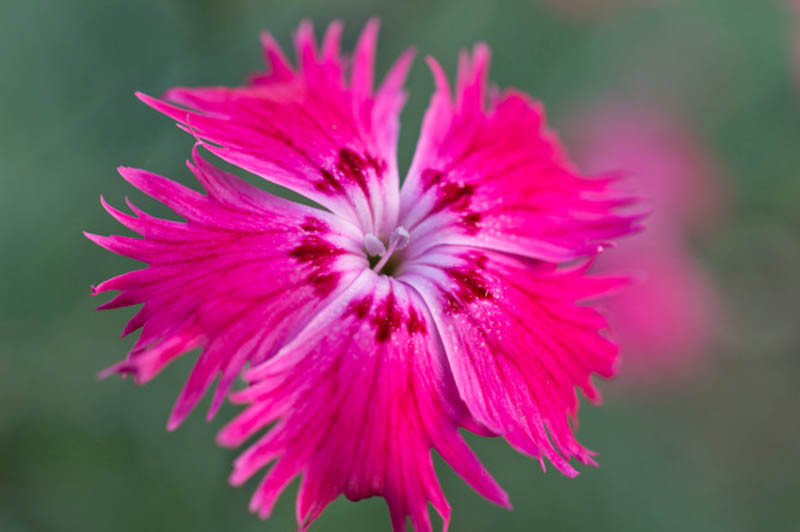
Species and species-type pinks are excellent garden plants, but they should be described honestly. They are superb for edging, gravel gardens, rock gardens, sunny slopes, walls, and naturalistic plantings, but they may not rebloom as heavily as modern reblooming cultivars.
Dianthus gratianopolitanus, often called cheddar pink, forms low mats of fragrant flowers and blue-green foliage. It usually gives its strongest show in late spring, with some sporadic summer rebloom possible if deadheaded regularly. It is especially valuable for rock gardens, dry slopes, walls, gravel gardens, and sunny edging.
Dianthus deltoides, or maiden pink, is a low, spreading perennial that works beautifully as a groundcover, edging plant, or rock garden flower. It can flower from late spring into summer and is especially useful where you want a low, informal carpet of color in well-drained soil.
Best overall strategy
For the longest practical Dianthus display, combine modern reblooming series for repeat color, fragrant garden pinks for scent, and species pinks for tough, low edging. Then deadhead consistently and shear lightly after the first flush.
Smart shopping tip
Use the Gardenia Plant Finder to filter Dianthus by hardiness zone, sun exposure, bloom season, height, flower color, fragrance, and garden use before you choose varieties.
For the strongest bloom, pinks need full sun. In most climates, that means at least six hours of direct sunlight per day. Morning sun is especially valuable because it dries dew from the foliage and helps reduce disease pressure.
When pinks receive too much shade, they usually tell you quickly. They may stretch, flop, flower less, or lose their tight, silvery mound shape. The foliage may still look attractive, but the flower show will be weaker.
Use this quick light check:
Hot climate note
In very hot regions, pinks may appreciate protection from brutal afternoon sun. Morning sun with light afternoon shade can keep plants fresher and extend flowering.
Drainage is the foundation of Dianthus success. Pinks hate sitting in wet soil, especially around the crown. If the soil stays soggy after rain or irrigation, the plant may rot, decline, yellow, or fail to rebloom.
The best soil for pinks is loose, gritty, and well-drained. Neutral to slightly alkaline soil is often preferred. If your soil is heavy clay, improve drainage before planting or move pinks into a raised bed, slope, trough, gravel garden, rock garden, or container.
To plant pinks correctly:
Drainage test
After a heavy rain, check the planting area. If water lingers for hours around your pinks, move them to a raised bed, slope, trough, container, or rock garden where the roots can breathe.
Deadheading is the single most important task if you want pinks to bloom longer. Do not just pull off the petals. Remove the spent flower head and its developing seed pod by cutting the stem back to a leaf joint, side shoot, or tidy point above the foliage mound.
For a few plants, use small snips and work through the plant once or twice a week. For larger drifts, wait until the first flush has faded and shear lightly. The goal is to remove old flowering stems without cutting into bare woody growth or scalping the plant.
Deadheading works because it redirects energy. Instead of ripening seed, the plant can produce fresh shoots and, with the right variety and conditions, more buds.
Deadheading shortcut
If you have a whole edging of pinks, do not deadhead flower by flower forever. After the main flush fades, shear the whole planting lightly for a quick reset.
Once the first heavy bloom has finished, many pinks benefit from a light haircut. This is not hard renovation pruning. Think of it as tidying the plant, removing seed-heavy stems, and encouraging fresh growth.
Use clean shears to trim back faded flowering stems and lightly shape the foliage mound. In many cases, removing about one-third of the top growth is enough. Water afterward if the soil is dry, then give the plant time to produce fresh shoots.
A midsummer shear is especially useful when pinks look:
Do not overcut
Never shear pinks down to bare woody stems. Leave healthy leafy growth so the plant can recover quickly and produce new buds.
Pinks need water, especially when newly planted, but they do not like wet feet. The best approach is deep, occasional watering rather than constant shallow sprinkling. Let the top layer of soil dry slightly before watering again.
In the ground, established pinks usually prefer moderate moisture and excellent drainage. In containers, they dry faster and need more frequent checking, especially during hot weather. The key is balance: do not let pots become bone-dry for long periods, but never leave them sitting in water.
Use this simple watering guide:
Morning is best
Water pinks in the morning so foliage dries quickly. Wet leaves plus humid nights can invite fungal problems and reduce plant vigor.
Pinks are not heavy feeders. Too much fertilizer, especially high-nitrogen fertilizer, can create soft leafy growth with fewer flowers. It can also make plants more vulnerable to flopping, crown problems, and disease.
In garden beds, a light application of compost or a balanced slow-release fertilizer in spring is usually enough. In containers, nutrients wash out faster, so a diluted balanced fertilizer during the growing season can help maintain steady growth.
If your pinks are producing lush leaves but few flowers, pause before adding more fertilizer. The problem is often too much shade, too much nitrogen, or too much moisture.
Fertilizer rule
Feed pinks like a tidy perennial, not a hungry tomato. Light, balanced nutrition supports bloom. Heavy feeding can backfire.
Mulch can help keep soil temperatures steadier and reduce weeds, but it must be used carefully around pinks. Thick, moisture-holding mulch piled against the crown can cause rot.
The safest approach is to keep mulch thin and pull it back from the center of the plant. Gravel, grit, or small stone mulch often suits Dianthus beautifully because it supports dry, well-drained conditions and highlights the blue-green foliage.
Good mulch choices for pinks include:
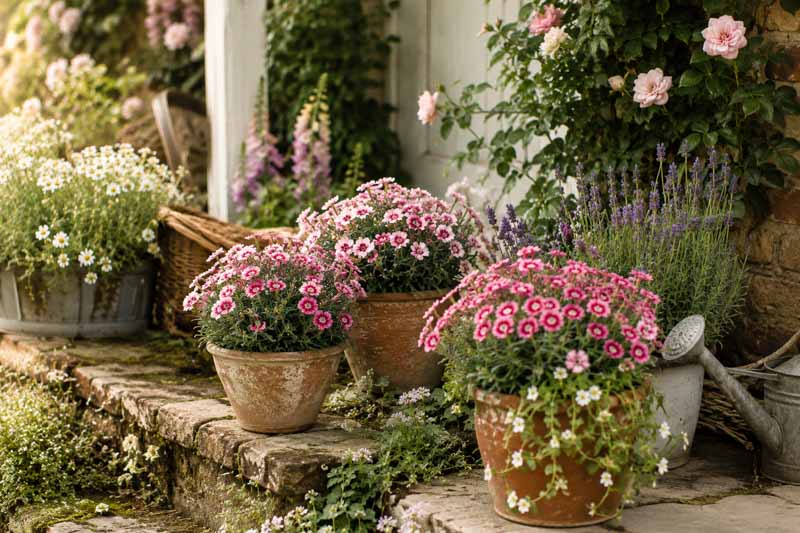
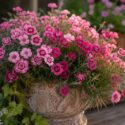
Containers are excellent for pinks because you can control drainage, soil mix, and placement. Choose a pot with drainage holes and use a free-draining potting mix. Terra-cotta pots are especially useful because they dry more quickly than plastic.
Place containers where flowers can be enjoyed up close. Pinks are fragrant, and their clove scent is best appreciated near patios, steps, doorways, benches, balconies, and paths.
For the best container display:
Container tip
Container pinks need sharper drainage and more frequent checking than in-ground plants. If the pot drains freely and the crown stays dry, you are much more likely to keep the plant blooming and healthy.
Even with excellent care, pinks are best used as part of a layered planting rather than the only source of summer color. Pair them with flowers that peak at different times so the border never depends on one plant.
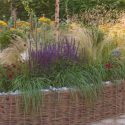
For a romantic cottage garden, combine pinks with roses, catmint, salvia, lavender, hardy geraniums, and ornamental grasses. These plants share a sunny, well-drained style and create a long season of texture and bloom.
For rock gardens and dry edges, pair cheddar pinks with creeping thyme, sedum, armeria, dwarf iris, and small ornamental grasses. For containers, combine pinks with trailing thyme, compact lavender, calibrachoa, or silver foliage plants.
Easy pairing formula
Use pinks as the fragrant front edge, add catmint or lavender for soft texture, include salvia for vertical bloom, and finish with roses or ornamental grasses for height.
When pinks stop blooming early, the cause is usually cultural rather than mysterious. These are the mistakes to avoid:
Fast fix
If your pinks look tired after the first bloom, deadhead or shear lightly, check drainage, water deeply if dry, and give them time. Many will respond with fresh growth and scattered rebloom.
| Season | What to Do |
|---|---|
| Spring | Plant in full sun and well-drained soil. Feed lightly. Remove winter-damaged growth. |
| Late spring | Enjoy the main bloom. Begin deadheading as flowers fade. |
| Early summer | Shear lightly after the first flush. Water deeply if dry. |
| Midsummer | Watch for heat stress. Keep deadheading. Avoid overwatering and heavy feeding. |
| Late summer | Trim lightly if plants look tired. Let some flowers remain only if you want seed. |
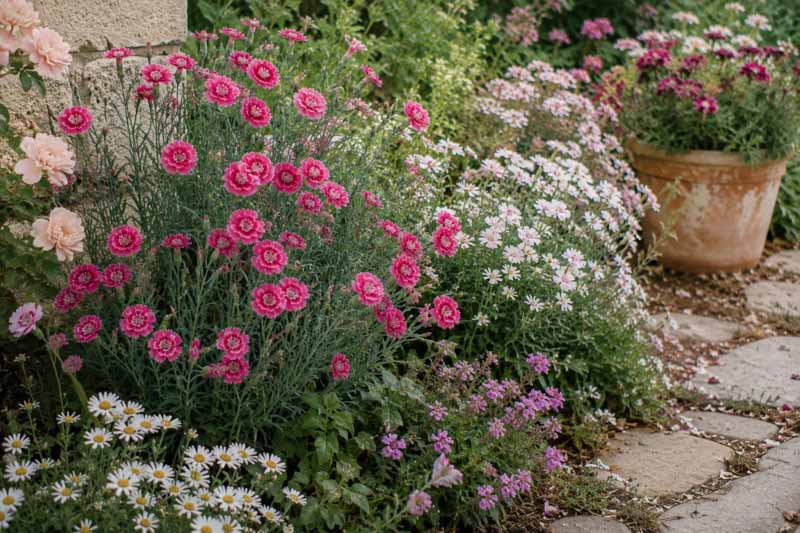
Pinks are perfect for the front of sunny borders because they stay compact and create a neat edge. Their blue-green foliage remains attractive even when plants are between bloom cycles.
They are also excellent in rock gardens, gravel gardens, raised beds, troughs, walls, and containers. Anywhere drainage is sharp and fragrance can be enjoyed up close is a good place for Dianthus.
Use pinks in these high-impact spots:
If your pinks are healthy but not reblooming, start with light. Are they receiving at least six hours of sun? If not, move them to a brighter site.
Next, check the old flower stems. If seed pods are forming, deadhead more thoroughly. Cut back to a leaf joint rather than removing only the faded petals.
Then check the soil. If it is wet, heavy, or compacted, the roots may be stressed. Improve drainage or move the plant to a raised location. If the plant is in a container, make sure the pot drains freely.
Finally, consider the variety and climate. Some pinks rebloom strongly, while others offer only scattered summer flowers after the first flush. In hot, humid regions, flowering may slow during the worst heat and resume when temperatures ease.
Realistic expectation
The goal is not to force every pink to bloom nonstop. The goal is to extend the main show, encourage rebloom, and keep plants healthy enough to flower in waves through summer.
Keeping pinks blooming all summer starts with understanding what they love: sun, drainage, airflow, and light but consistent care. These are not plants that want rich, soggy soil or constant pampering. They reward gardeners who give them a bright position, remove spent flowers, trim after the first flush, and avoid overwatering.
Choose reblooming varieties, plant them where their fragrance can be enjoyed, and combine them with other long-season flowers for a border that keeps performing even when one plant rests. With the right approach, Dianthus pinks can bring months of color, perfume, and charm to your garden.
To find the best Dianthus varieties for your climate and design style, visit the Gardenia Dianthus guide, explore options with the Gardenia Plant Finder, and build a beautiful planting collection with the Gardenia Design Tool.
Many pinks bloom heavily in late spring to early summer and can rebloom or continue flowering sporadically through summer with regular deadheading, light shearing, full sun, and well-drained soil. Some varieties are better rebloomers than others, so choose long-flowering Dianthus cultivars for the best summer display.
Deadhead pinks by cutting each faded flower stem back to a leaf joint, side shoot, or neat point above the foliage. Do not remove only the petals, because the seed pod may remain. After the main flush, lightly shear the plant to remove spent stems and encourage fresh growth.
Yes. After the first big flush of flowers, cut back or lightly shear pinks to remove spent flowering stems and tidy the mound. Avoid cutting into bare woody growth. Leave healthy foliage so the plant can recover and, depending on the variety, produce more blooms.
Pinks may stop flowering if they receive too much shade, sit in wet soil, are not deadheaded, are overfed with nitrogen, or are stressed by heat and humidity. They bloom best in full sun, well-drained soil, and open conditions with good airflow.
Pinks flower best in full sun, usually at least six hours of direct light per day. In very hot climates, they may appreciate light afternoon shade, but too much shade reduces flowering and can make plants weak and open.
Pinks grow best in well-drained soil that is neutral to slightly alkaline. They dislike heavy, soggy soil, especially around the crown. Raised beds, gravel gardens, rock gardens, and containers are excellent options where drainage is a challenge.
Yes. Pinks grow very well in containers if the pot has drainage holes and the potting mix drains freely. Place containers in full sun, water when the soil begins to dry, and deadhead regularly to encourage more flowers.
Use a light application of balanced fertilizer in spring or a diluted balanced feed for container-grown pinks during the growing season. Avoid heavy nitrogen feeding, which can encourage leafy growth at the expense of flowers.
Updated: June 2026 • Reviewed by Gardenia Editors
| Hardiness |
5 - 9 |
|---|---|
| Plant Type | Perennials |
| Plant Family | Caryophyllaceae |
| Genus | Dianthus |
| Exposure | Full Sun |
| Maintenance | Low |
| Soil Type | Chalk, Loam, Sand |
| Soil pH | Alkaline, Neutral |
| Soil Drainage | Well-Drained |
| Characteristics | Fragrant |
| Tolerances | Drought, Deer, Rabbit, Dry Soil |
| Attracts | Bees, Butterflies, Hummingbirds |
| Garden Styles | City and Courtyard, Coastal Garden, Cutting Garden, Gravel and Rock Garden, Informal and Cottage, Mediterranean Garden |
| Hardiness |
5 - 9 |
|---|---|
| Plant Type | Perennials |
| Plant Family | Caryophyllaceae |
| Genus | Dianthus |
| Exposure | Full Sun |
| Maintenance | Low |
| Soil Type | Chalk, Loam, Sand |
| Soil pH | Alkaline, Neutral |
| Soil Drainage | Well-Drained |
| Characteristics | Fragrant |
| Tolerances | Drought, Deer, Rabbit, Dry Soil |
| Attracts | Bees, Butterflies, Hummingbirds |
| Garden Styles | City and Courtyard, Coastal Garden, Cutting Garden, Gravel and Rock Garden, Informal and Cottage, Mediterranean Garden |
Create a membership account to save your garden designs and to view them on any device.
Becoming a contributing member of Gardenia is easy and can be done in just a few minutes. If you provide us with your name, email address and the payment of a modest $25 annual membership fee, you will become a full member, enabling you to design and save up to 25 of your garden design ideas.
Join now and start creating your dream garden!
Create a membership account to save your garden designs and to view them on any device.
Becoming a contributing member of Gardenia is easy and can be done in just a few minutes. If you provide us with your name, email address and the payment of a modest $25 annual membership fee, you will become a full member, enabling you to design and save up to 25 of your garden design ideas.
Join now and start creating your dream garden!