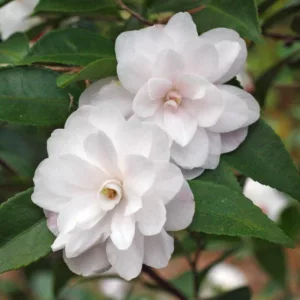
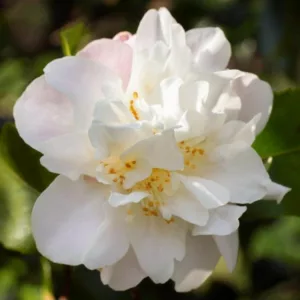
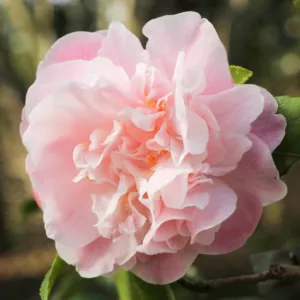
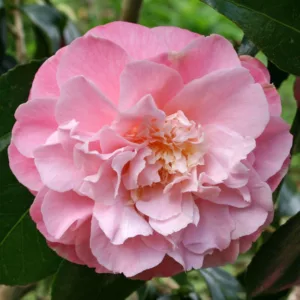
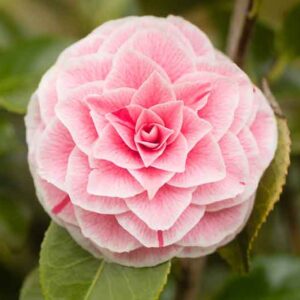
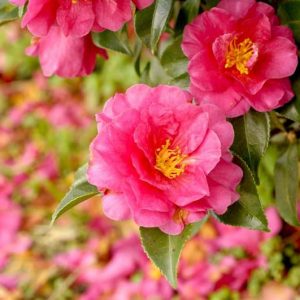
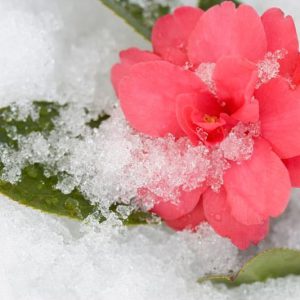
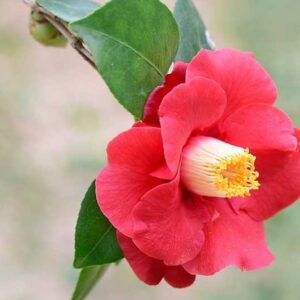
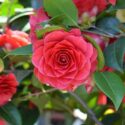
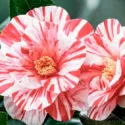
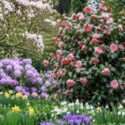
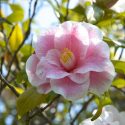
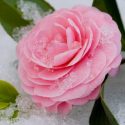
Spring-blooming camellias fill the garden with exquisite white, pink, striped, and red flowers above glossy evergreen foliage. Compare 15 outstanding japonicas and hybrids by bloom season, size, fragrance, hardiness, and flower form, then discover how to place, grow, protect, and combine them for spectacular color throughout the entire spring season.
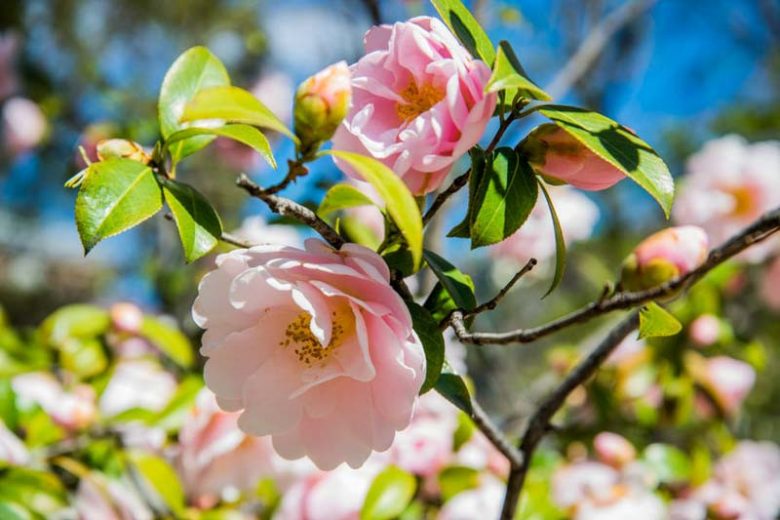


Spring-blooming camellias fill the garden with white, blush, pink, striped, crimson, and deep red flowers as winter gives way to spring. Their polished evergreen foliage provides year-round structure, while their late flowers overlap beautifully with hellebores, spring bulbs, azaleas, rhododendrons, magnolias, and flowering trees.
Most spring camellias are Camellia japonica cultivars or hybrids involving Japanese camellias. The group also includes fragrant hybrids and Camellia × williamsii selections, which are valued for vigorous growth, abundant flowers, and a long winter-to-spring display.
Not every cultivar featured here begins in spring. Several are long-season camellias that start in fall or winter and continue into mid or late spring.
Others, including ‘April Rose’, ‘Korean Fire’, and ‘Lady Campbell’, are true spring-starting cultivars whose recorded flowering begins in early spring and continues into late spring.
This guide compares 15 outstanding Gardenia cultivars by bloom start, bloom end, mature height, spread, hardiness, flower character, and garden use. Use it to distinguish true spring starters from winter camellias that remain in flower through spring, then select the right plant for your climate and available space.
Spring-blooming does not always mean spring-starting. A cultivar may be included because it remains spectacular in spring even though its flowering began during fall or winter.
Gardenia records camellia flowering with seasonal stages such as late fall, midwinter, early spring, mid spring, and late spring. These categories are more useful than one rigid calendar date because climate can shift flowering by several weeks.
The featured collection falls into four practical groups:
| Flowering Group | Bloom Start | Bloom End | Representative Cultivars |
|---|---|---|---|
| True late-season spring camellias | Early spring | Late spring | ‘April Rose’, ‘Korean Fire’, ‘Lady Campbell’ |
| Fall-to-spring cultivars | Late fall | Mid spring | ‘Cinnamon Cindy’, ‘Annie Wylam’, ‘Carter’s Sunburst’ |
| Midwinter-to-late-spring bloomers | Midwinter | Late spring | ‘Scentuous’, ‘Sweet Emily Kate’, ‘Drama Girl’, ‘Hagoromo’, ‘Lavinia Maggi’, ‘Pink Perfection’, ‘E.G. Waterhouse’ |
| Exceptionally long early-to-late bloomer | Mid fall | Late spring | ‘April Remembered’ |
| Classic winter-to-early-spring cultivar | Midwinter | Early spring | ‘Ballet Dancer’ |
Climate note: These are Gardenia’s recorded seasonal ranges. Mild climates may flower earlier, while cool, elevated, or exposed gardens may bloom several weeks later.
The table below uses Gardenia’s cultivar records for bloom start, bloom end, mature height, spread, and USDA hardiness. Flower descriptions summarize the distinguishing appearance of each cultivar.
| Cultivar | Flower Character | Bloom Start | Bloom End | Height | Spread | USDA |
|---|---|---|---|---|---|---|
| ‘Cinnamon Cindy’ | Small white peony-form flowers delicately tinged with pink; mildly fragrant | Late fall | Mid spring | 8-10 ft. | 3-6 ft. | 7-9 |
| ‘Scentuous’ | Small white semi-double to loose peony-form flowers flushed pink; mildly fragrant | Midwinter | Late spring | 4-6 ft. | 3-4 ft. | 7-9 |
| ‘Sweet Emily Kate’ | Blush-pink peony-form flowers; mildly fragrant | Midwinter | Late spring | 6-8 ft. | 6-8 ft. | 7-9 |
| ‘Annie Wylam’ | Bright pink peony- to rose-form flowers paling toward the center | Late fall | Mid spring | 8-10 ft. | 6-7 ft. | 7-9 |
| ‘April Remembered’ | Large semi-double creamy-pink flowers with deeper pink edges and golden stamens | Mid fall | Late spring | 8-10 ft. | 6-8 ft. | 6-10 |
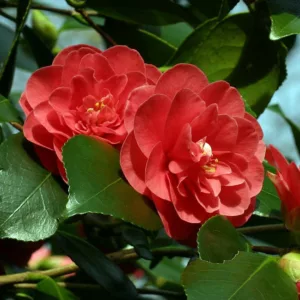
| ‘April Rose’ | Deep rose-red, rose-form double flowers; mildly fragrant | Early spring | Late spring | 5-8 ft. | 3-5 ft. | 6-9 |
| ‘Ballet Dancer’ | Creamy-pink peony-form flowers with vivid coral-pink accents | Midwinter | Early spring | 6-12 ft. | 6-10 ft. | 7-9 |
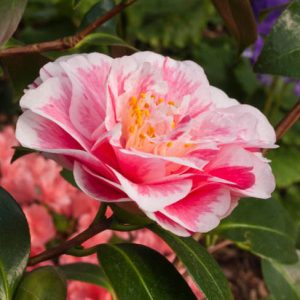
| ‘Carter’s Sunburst’ | Large semi-double pink flowers striped and splashed deeper pink | Late fall | Mid spring | 6-8 ft. | 6-8 ft. | 7-9 |
| ‘Drama Girl’ | Enormous salmon-rose semi-double flowers streaked lighter pink | Midwinter | Late spring | 4-10 ft. | 6-10 ft. | 7-9 |
| ‘Hagoromo’ | Pale blush-pink semi-double flowers with narrow, recurving petals | Midwinter | Late spring | 6-8 ft. | 4-5 ft. | 7-9 |
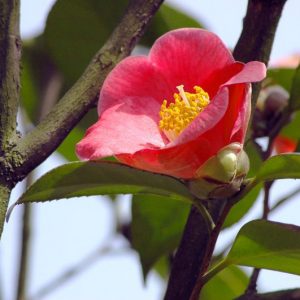
| ‘Korean Fire’ | Single deep-red flowers with conspicuous golden-yellow stamens | Early spring | Late spring | 10-15 ft. | 5-8 ft. | 6-9 |
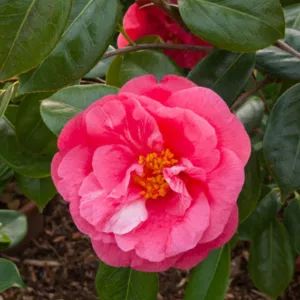
| ‘Lady Campbell’ | Bright red, rose-form double flowers on a compact, bushy shrub | Early spring | Late spring | 6-7 ft. | 6-7 ft. | 7-9 |
| ‘Lavinia Maggi’ | Large white formal-double flowers attractively striped cerise pink | Midwinter | Late spring | 8-10 ft. | 6-8 ft. | 7-9 |
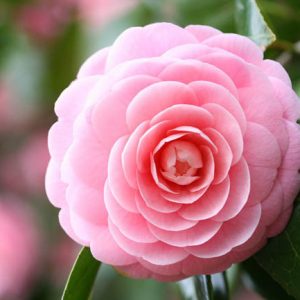
| ‘Pink Perfection’ | Perfectly arranged shell-pink formal-double flowers | Midwinter | Late spring | 8-10 ft. | 6-8 ft. | 7-9 |
| ‘E.G. Waterhouse’ | Rich fuchsia-pink formal-double flowers on an upright shrub | Midwinter | Late spring | 8-15 ft. | 6-15 ft. | 7-8 |
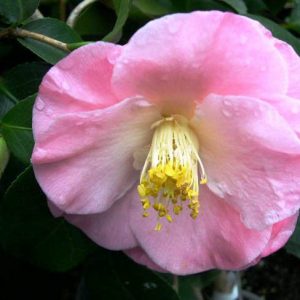
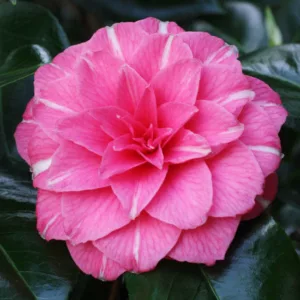
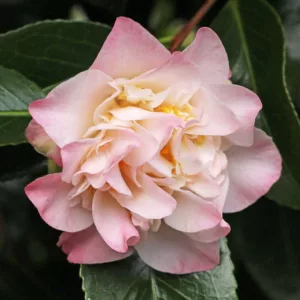
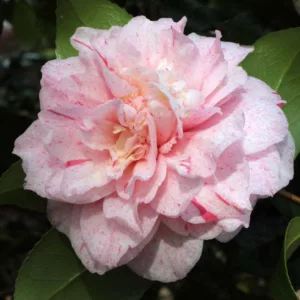
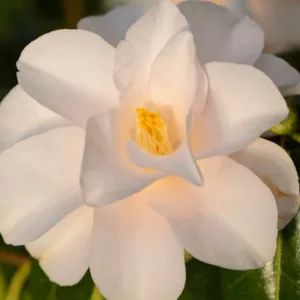
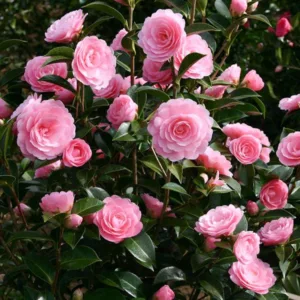
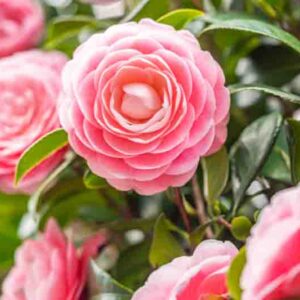
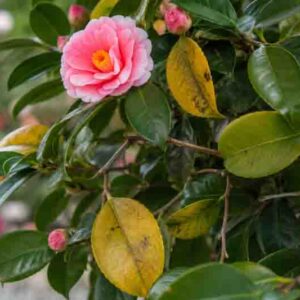
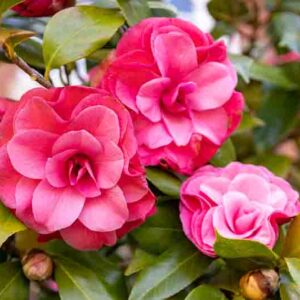
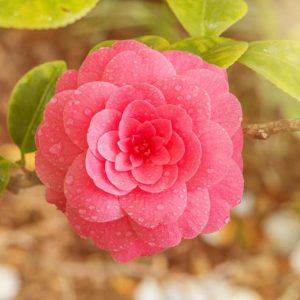
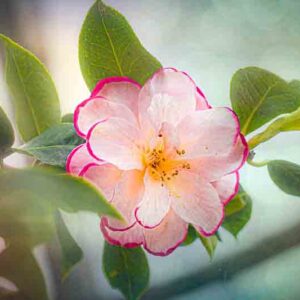
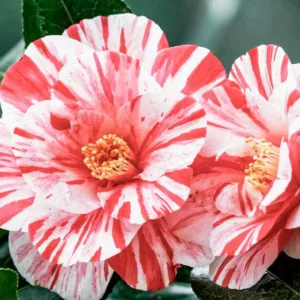
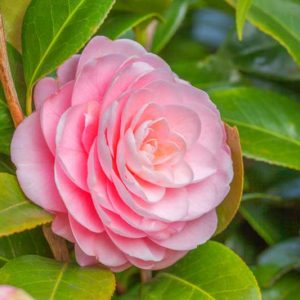
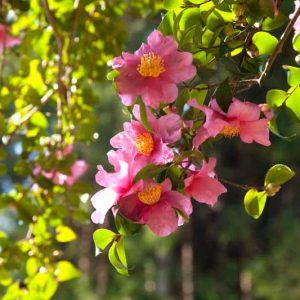
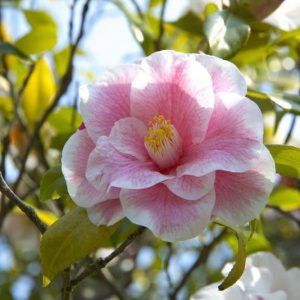
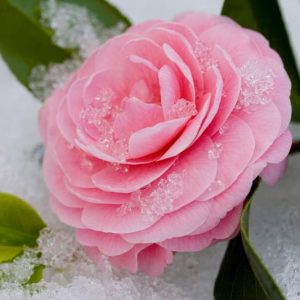
Browse the photographs below to compare flower colors, forms, foliage, and overall plant character. Select any cultivar to open its complete Gardenia profile, including detailed descriptions, care requirements, landscape uses, and additional images.
| Hardiness |
6 - 9 |
|---|---|
| Heat Zones |
7 - 8 |
| Climate Zones | 4, 5, 6, 7, 8, 9, 12, 14, 15, 16, 17, 18, 19, 20, 21, 22, 23, 24 |
| Plant Type | Shrubs |
| Plant Family | Theaceae |
| Genus | Camellia |
| Exposure | Full Sun, Partial Sun, Shade |
| Season of Interest | Spring (Early, Mid, Late) |
| Water Needs | Average |
| Soil Type | Clay, Loam, Sand |
| Soil pH | Acid, Neutral |
| Soil Drainage | Moist but Well-Drained, Well-Drained |
| Characteristics | Cut Flowers, Plant of Merit, Showy |
| Landscaping Ideas | Beds And Borders, Hedges And Screens, Patio And Containers, Wall-Side Borders, Walls And Fences |
| Garden Styles | City and Courtyard, Informal and Cottage, Japanese Garden, Traditional Garden |
‘April Rose’, ‘Korean Fire’, and ‘Lady Campbell’ begin in early spring and continue into late spring, making them the clearest choices for a distinctly late display.
‘April Remembered’, ‘April Rose’, and ‘Korean Fire’ extend spring camellia culture into protected Zone 6 gardens. ‘April Remembered’ has the broadest listed range, from Zones 6-10.
‘Scentuous’ is the narrowest featured cultivar at approximately 4-6 feet tall and 3-4 feet wide. ‘April Rose’ remains relatively compact at 5-8 feet tall and 3-5 feet wide.
‘Cinnamon Cindy’, ‘Scentuous’, ‘Sweet Emily Kate’, and ‘April Rose’ are recorded as mildly fragrant.
‘Carter’s Sunburst’, ‘Drama Girl’, and ‘Lavinia Maggi’ produce especially striking striped, streaked, or splashed flowers.
‘April Remembered’ begins in mid fall and continues into late spring. ‘Cinnamon Cindy’, ‘Annie Wylam’, and ‘Carter’s Sunburst’ also begin before winter and remain in flower through mid spring.
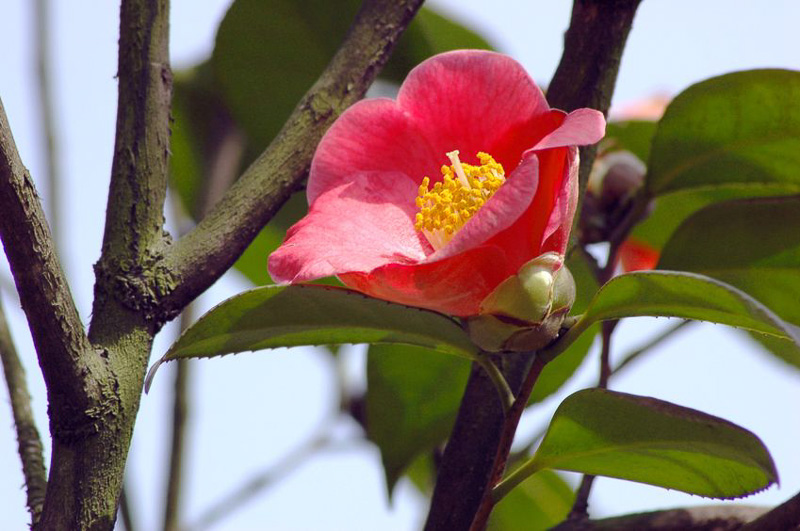
Camellia japonica supplies most of the classic spring cultivars. It offers the widest range of flower forms, including singles with conspicuous golden stamens, loose semi-doubles, lavish peony forms, rose-form doubles, and perfectly ordered formal doubles.
Japanese camellias generally develop dense, glossy evergreen foliage and rounded or upright habits. Mature size varies widely: compact ‘April Rose’ remains comparatively narrow, while ‘Korean Fire’ can eventually reach 10-15 feet.
Camellia × williamsii hybrids originated primarily from crosses between Camellia japonica and Camellia saluenensis. They are often vigorous, free-flowering, and well adapted to cool, temperate gardens.
Many williamsii hybrids shed fading flowers more cleanly than densely petaled japonicas. ‘E.G. Waterhouse’ is the featured example, producing rich pink formal-double flowers from midwinter into late spring.
Strong fragrance is unusual among camellias, but breeders have used fragrant species such as Camellia lutchuensis to introduce scent into garden hybrids.
‘Cinnamon Cindy’, ‘Scentuous’, and ‘Sweet Emily Kate’ combine mild fragrance with long flowering seasons. Their relatively small flowers are often produced profusely and can be especially effective near paths, entrances, patios, and frequently used seating areas.
The April Series was developed to improve cold tolerance and extend camellia growing into colder regions. ‘April Remembered’ and ‘April Rose’ are represented here.
‘April Remembered’ is unusual because it begins in mid fall and continues into late spring, while ‘April Rose’ is a true late-season cultivar flowering from early to late spring.
| Growing Region | Likely Flowering Pattern | Best Strategy |
|---|---|---|
| Mild coastal or warm-winter climate | Long-season cultivars may begin early and true late cultivars may open before their names suggest. | Combine spring starters with late-finishing hybrids to preserve color as temperatures rise. |
| Cool coastal or temperate climate | Flowering often begins later but may proceed slowly and steadily through spring. | Select cultivars by early-, mid-, and late-season classification rather than exact months. |
| Cold inland or Zone 6 garden | Spring bloomers may avoid some autumn and midwinter flower damage, although late freezes can still injure open flowers. | Favor ‘April Remembered’, ‘April Rose’, and ‘Korean Fire’ in sheltered locations. |
| Hot-summer region | Rising spring temperatures may accelerate bud opening and shorten individual flower life. | Provide afternoon shade, mulch, and consistent moisture to protect roots and foliage. |
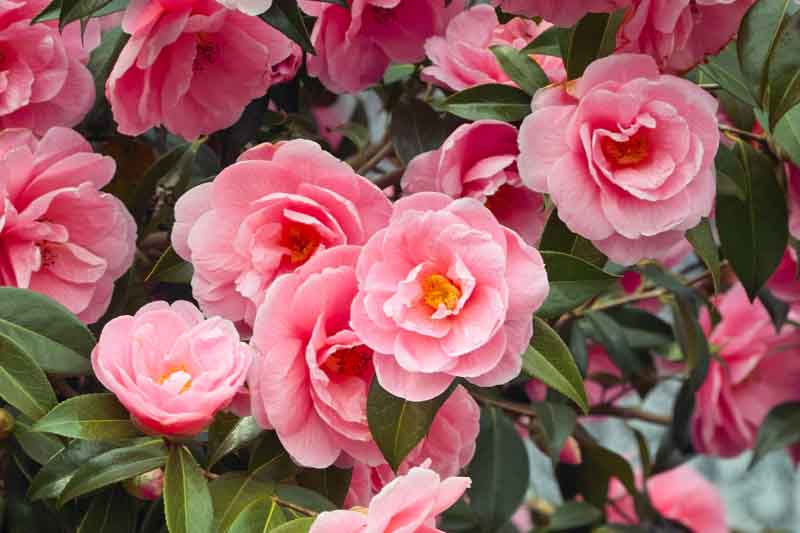
Spring camellias provide evergreen structure and substantial flowers behind bulbs, hellebores, epimediums, ferns, and shade-tolerant perennials. Their glossy leaves create a strong backdrop after flowering ends.
Place tall cultivars such as ‘Korean Fire’ or ‘E.G. Waterhouse’ toward the rear of a border. Use narrower plants such as ‘Scentuous’, ‘April Rose’, and ‘Hagoromo’ where space is more limited.
Bright woodland shade provides one of the best settings for camellias. Plant them beneath high tree canopies or along woodland edges where they receive filtered light without intense afternoon heat.
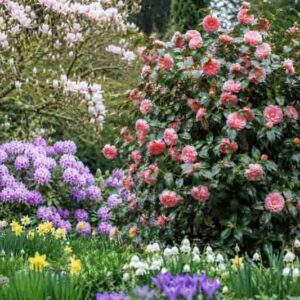
Good companions include azaleas, rhododendrons, pieris, ferns, hellebores, spring bulbs, sarcococca, hydrangeas, and shade-tolerant groundcovers that enjoy similar acidic, humus-rich soil.
Spring camellias deserve locations where their flowers can be seen from indoors or along frequently used paths. Place an intricately striped, fragrant, or formal-double cultivar near an entrance, patio, courtyard, or window.
‘Scentuous’, ‘Sweet Emily Kate’, and ‘Cinnamon Cindy’ are especially attractive near paths where their mild fragrance can be noticed.
Vigorous japonicas and williamsii hybrids can form handsome informal screens. Their dense evergreen foliage offers year-round privacy, while their flowers create a major seasonal display.
Space plants according to their mature spread. Avoid one universal spacing recommendation because featured cultivars range from 3-4 feet to 15 feet wide.
Compact and relatively narrow cultivars may be grown in substantial containers filled with an acidic, freely draining potting mix. ‘Scentuous’ is the clearest long-term container choice among the featured plants.
‘April Rose’ and ‘Hagoromo’ may also suit large containers, although eventual size, irrigation needs, and root protection must be considered. Never allow a container-grown camellia to dry completely while buds are developing.
A sheltered wall can protect flowers from drying wind and provide a favorable microclimate. Upright or flexible cultivars may also be trained against wires where garden width is restricted.
Use Gardenia’s camellia espalier guide for training, support, and pruning instructions.
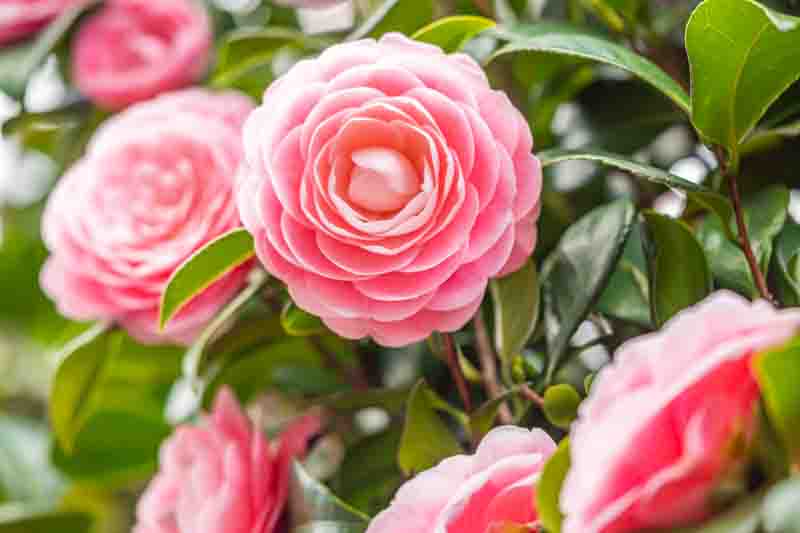
Partial shade, filtered light, or bright shade suits most spring-blooming japonicas and hybrids. Morning sun followed by afternoon shade is often effective, especially in warm climates.
Deep shade may reduce flowering, while intense afternoon sun can scorch leaves, fade flowers, and dry the shallow root system.
Grow camellias in acidic to neutral soil that is rich in organic matter, consistently moist, and well-drained. They dislike prolonged waterlogging and may develop yellow foliage in strongly alkaline soil.
Where native soil is unsuitable, improve drainage, use a raised bed, or grow a manageable cultivar in ericaceous potting mix.
Maintain consistent moisture during establishment and throughout dry periods. Late-summer watering is especially important because the following season’s flower buds are forming and enlarging.
Water deeply at the root zone rather than applying frequent shallow irrigation. Avoid keeping the soil continuously saturated.
Apply approximately 2-3 inches (5-7 cm) of leaf mold, shredded bark, pine bark, or another organic mulch over the root zone. Keep mulch away from direct contact with the trunk and main stems.
Healthy established camellias in fertile soil may need little supplemental fertilizer. Where growth is weak or a nutrient deficiency is confirmed, feed lightly after flowering with a fertilizer formulated for acid-loving plants.
Avoid excessive nitrogen and late feeding, which can encourage soft growth and interfere with normal flower-bud development.
Spring-blooming camellias generally need little routine pruning. Remove dead, diseased, broken, crossing, or badly positioned branches, and shorten disproportionately long shoots when necessary.
Complete the main pruning immediately after flowering. Late pruning can remove shoots carrying the following season’s flower buds.
| Symptom | Possible Cause | What to Do |
|---|---|---|
| No flowers in early spring | The cultivar flowers later, or cool weather has delayed opening | Check its recorded bloom start and allow time for warmer conditions. |
| Few or no flower buds | Deep shade, late pruning, excessive nitrogen, drought, or poor establishment | Improve light where practical, water consistently, and prune only after flowering. |
| Buds fall before opening | Drought, waterlogged roots, frost, transplant stress, or natural bud thinning | Maintain even moisture, correct drainage, and shelter plants from harsh exposure. |
| Open flowers turn brown suddenly | Late frost or cold, drying wind | Choose a sheltered site and wait for unopened buds to continue the display. |
| Brown patches spread across petals | Petal blight or Botrytis gray mold | Inspect the symptoms carefully and remove fallen diseased flowers. |
| Leaves become yellow | Alkaline soil, poor drainage, root damage, or nutrient deficiency | Check soil pH, drainage, irrigation, and root health before fertilizing. |
A collection containing fall, winter, and spring cultivars can provide a much longer flowering sequence than one shrub alone.
Explore Gardenia’s related guides:
A beautiful flower is only one part of the decision. Before choosing a spring camellia, compare its actual bloom start, bloom end, mature size, hardiness, habit, and intended landscape use.
Select true spring starters for a concentrated late display, long-season cultivars for continuity, compact plants for pots and smaller borders, tall shrubs for screening, fragrant hybrids for paths, and Zone 6 cultivars where winter cold limits traditional japonicas.
Spring-blooming camellias include both genuine late-season cultivars and long-flowering plants that began blooming months earlier. Recognizing that distinction makes it easier to plan a reliable display.
‘April Rose’, ‘Korean Fire’, and ‘Lady Campbell’ begin in early spring. ‘Scentuous’, ‘Drama Girl’, ‘Hagoromo’, ‘Lavinia Maggi’, ‘Pink Perfection’, and ‘E.G. Waterhouse’ begin in midwinter and continue into late spring. ‘April Remembered’ has the longest recorded span, extending from mid fall to late spring.
Use the comparison table to match bloom period, height, spread, and hardiness to your garden. Then browse the 15 image profiles to compare flower form, color, foliage, and habit before making a final choice.
The featured cultivars have varied seasons. True late-season camellias begin in early spring and finish in late spring, while long-season cultivars may start in fall or winter and remain in flower through spring.
‘April Rose’, ‘Korean Fire’, and ‘Lady Campbell’ are the featured cultivars recorded as beginning in early spring and continuing into late spring.
‘April Remembered’ has the broadest recorded flowering span, beginning in mid fall and continuing into late spring. Several other cultivars begin in late fall or midwinter and remain in flower through spring.
‘April Remembered’, ‘April Rose’, and ‘Korean Fire’ are listed for Zone 6. ‘April Remembered’ has the broadest range at USDA Zones 6-10.
‘Cinnamon Cindy’, ‘Scentuous’, ‘Sweet Emily Kate’, and ‘April Rose’ are recorded as mildly fragrant. Camellia fragrance is generally delicate rather than powerful.
‘Scentuous’ is the narrowest featured cultivar at approximately 4-6 feet tall and 3-4 feet wide. ‘April Rose’ is another comparatively compact choice at 5-8 feet tall and 3-5 feet wide.
Yes. Choose a relatively compact cultivar such as ‘Scentuous’ or ‘April Rose’ and use a large container filled with acidic, freely draining potting mix. Maintain consistent moisture and protect roots from severe freezing.
Complete routine pruning immediately after the main flowering display ends. Pruning later may remove shoots carrying the flower buds for the following season.
Updated: July 2026 • Cultivar data derived from Gardenia plant records • Reviewed by Gardenia Editors
Picture courtesy of: / 123RF Stock Photo
| Hardiness |
6 - 9 |
|---|---|
| Heat Zones |
7 - 8 |
| Climate Zones | 4, 5, 6, 7, 8, 9, 12, 14, 15, 16, 17, 18, 19, 20, 21, 22, 23, 24 |
| Plant Type | Shrubs |
| Plant Family | Theaceae |
| Genus | Camellia |
| Exposure | Full Sun, Partial Sun, Shade |
| Season of Interest | Spring (Early, Mid, Late) |
| Water Needs | Average |
| Soil Type | Clay, Loam, Sand |
| Soil pH | Acid, Neutral |
| Soil Drainage | Moist but Well-Drained, Well-Drained |
| Characteristics | Cut Flowers, Plant of Merit, Showy |
| Landscaping Ideas | Beds And Borders, Hedges And Screens, Patio And Containers, Wall-Side Borders, Walls And Fences |
| Garden Styles | City and Courtyard, Informal and Cottage, Japanese Garden, Traditional Garden |
Create a membership account to save your garden designs and to view them on any device.
Becoming a contributing member of Gardenia is easy and can be done in just a few minutes. If you provide us with your name, email address and the payment of a modest $25 annual membership fee, you will become a full member, enabling you to design and save up to 25 of your garden design ideas.
Join now and start creating your dream garden!
Create a membership account to save your garden designs and to view them on any device.
Becoming a contributing member of Gardenia is easy and can be done in just a few minutes. If you provide us with your name, email address and the payment of a modest $25 annual membership fee, you will become a full member, enabling you to design and save up to 25 of your garden design ideas.
Join now and start creating your dream garden!