Green, twisted, or deformed coneflowers can be alarming, but the clues are in the leaves, stems, and cones. Learn how to tell aster yellows from coneflower rosette mites, when to remove the whole plant, and how to protect your Echinacea from future damage.
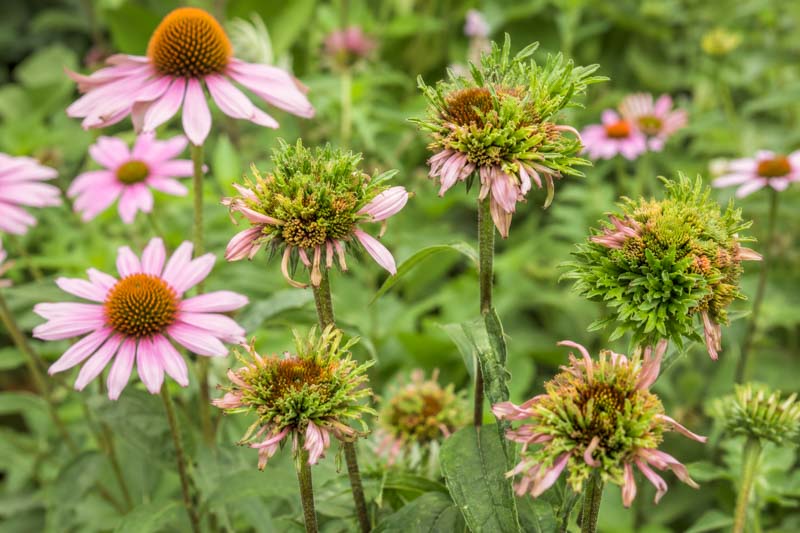


If your coneflowers suddenly look green, twisted, spiky, leafy, or strangely misshapen, it can be alarming. You planted Echinacea for bold daisy-like blooms, raised cones, butterflies, bees, and easy summer color – not flowers that look like tiny green monsters sprouting from the middle of the plant.
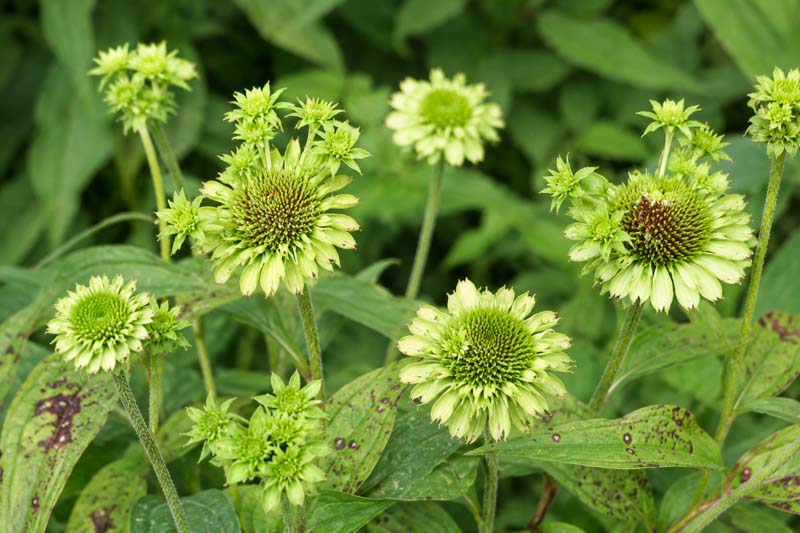
The good news is that not every odd-looking coneflower is diseased. Young buds often start green before coloring up. Some Echinacea varieties naturally bloom in lime, cream, white, chartreuse, or soft green tones. Older flowers may also fade, dry, twist, or leave behind unusual-looking seed heads as they age.
The bad news is that truly green, twisted, leafy, or deformed coneflowers can point to two very different problems: aster yellows disease or coneflower rosette mites. Both can make flowers look bizarre, but they are not the same problem – and the correct response is very different.
Aster yellows is a systemic phytoplasma disease spread mainly by leafhoppers. Once a plant is infected, it cannot be cured. Coneflower rosette mite damage, by contrast, is caused by tiny eriophyid mites feeding inside developing flower heads. Mite damage often affects the cone while the rest of the plant looks fairly healthy.
Quick answer
Coneflowers usually become green, twisted, or deformed because of aster yellows disease, coneflower rosette mites, herbicide drift, fasciation, pest damage, weather stress, or normal flower aging. If the whole plant is stunted, yellowing, curled, and producing green leafy flowers, remove the entire plant. If only the cones have green or reddish tufts while the leaves look normal, coneflower rosette mites are more likely.
Before you panic, look at the whole plant. A green bud on an otherwise healthy coneflower is usually normal. A naturally green Echinacea cultivar is also normal. A faded bloom with drooping petals and a rough brown cone may simply be aging into a seed head.
The warning signs are more dramatic. Be concerned when mature flowers stay green, petals become narrow or spoon-shaped, cones sprout leafy tufts, stems look stunted, leaves curl or yellow, or the plant produces clusters of strange secondary flower heads from the main cone.
One strange flower does not always mean disaster. But a plant with multiple green, leafy, twisted flowers plus abnormal foliage should be taken seriously. That pattern is much more consistent with aster yellows than with ordinary flower aging.
Garden detective tip
Do not diagnose from one flower alone. Look at the leaves, stems, neighboring plants, and the pattern of damage. Aster yellows usually affects the whole plant. Coneflower rosette mites usually distort the flower heads while foliage remains fairly normal.
| What You See | Most Likely Cause | Best Action |
|---|---|---|
| Green leafy flowers, stunted stems, yellow or curled foliage | Aster yellows disease | Remove the entire plant, including the crown and roots. |
| Green or reddish tufts rising from cones, leaves look healthy | Coneflower rosette mites | Cut off affected flower heads and discard them carefully. |
| Twisted, cupped, or narrowed leaves on one side of the plant | Herbicide drift or chemical injury | Avoid further exposure and monitor new growth. |
| One flattened stem or one bizarre fused flower | Fasciation | Prune it out or leave it as a curiosity. |
| Chewed petals, ragged blooms, brown cones, missing flower parts | Insects, animals, weather, or old flowers | Inspect for pests and compare old blooms with new buds. |
Aster yellows is the most serious reason coneflowers become green, twisted, or deformed. It is caused by a phytoplasma – a bacteria-like organism that lives in the plant’s phloem, the tissue that moves nutrients through the plant. Once a coneflower is infected, the disease moves systemically through the plant.
On coneflowers, aster yellows may cause green petals, pale or yellow foliage, curled leaves, stunted stems, weak growth, misshapen cones, tiny green spoon-like petals, or clusters of abnormal growth from the flower center. Instead of a single strong bloom, the plant may produce strange green leafy structures or miniature distorted flower heads.
This is why aster yellows can fool gardeners. At first, the flowers may look fascinating – almost ornamental in a strange way. But a plant with aster yellows is not producing a harmless novelty bloom. It is infected, and it can serve as a source of disease for other susceptible plants.
Important
If you strongly suspect aster yellows, remove the whole coneflower. Cutting off only the deformed flowers will not cure the plant because the infection is systemic.
Aster yellows is spread mainly by aster leafhoppers. These small, wedge-shaped insects feed on infected plants, pick up the phytoplasma, and later transmit it to healthy plants as they feed. The disease can also persist in weeds and other plant hosts, which is why it can appear even in well-kept flower gardens.
Coneflowers are not the only plants at risk. Aster yellows can affect many ornamentals, vegetables, and weeds, including coneflowers, asters, sunflowers, marigolds, zinnias, chrysanthemums, vegetables such as carrots, lettuce, tomatoes, celery, and many other ornamentals and edibles.
Because the host range is broad, early removal matters. A single infected coneflower can become a disease reservoir in a mixed border, especially when leafhoppers are active.
No. Coneflowers infected with aster yellows do not recover. Fungicides will not help because aster yellows is not a fungal disease. Insecticides are not a practical cure either, because they cannot remove the phytoplasma once it is inside the plant.
The best management is sanitation. Dig out the entire plant, including the crown and root system. Remove it from the garden promptly. Do not leave the plant sitting exposed near the bed, where leafhoppers may continue feeding before the plant dies.
For disposal, the most conservative home-garden advice is to bag and discard infected material. Some extension guidance notes that the aster yellows pathogen does not survive in dead plant tissue, but infected plants should never be left exposed or casually tossed into open compost where insects can still reach them. If composting is allowed in your area, the plant material must be completely buried or covered so insects cannot feed on it.
Coneflower rosette mites can look similar to aster yellows, but the cause and management are different. These tiny eriophyid mites feed inside developing flower buds. Their feeding can create green, reddish-green, or spiky tufts rising from the cone. The flower may look fuzzy, bristly, or like it has a little green crown.
The key clue is plant-wide health. With rosette mites, the damage is usually concentrated in the flower head. The leaves often remain green and normal, the stems may be full height, and the plant may otherwise look vigorous. With aster yellows, the entire plant often looks wrong: stunted, yellowed, curled, distorted, or unusually weak.
This distinction is critical. Removing an entire healthy coneflower because of mites may be unnecessary. Leaving an aster yellows-infected plant in place, however, can increase the risk to nearby susceptible plants.
Aster yellows or mites?
Healthy foliage with a few tufted cones points toward coneflower rosette mites. Green leafy flowers plus yellow, curled, or stunted growth points toward aster yellows.
If coneflower rosette mites are the likely cause, remove affected flower heads as soon as you see them. Hold a bag or container beneath the distorted bloom, cut the stem below the flower head, and discard the material. This helps avoid shaking mites onto nearby flowers.
If rosette mites have been a recurring problem, clean up affected seed heads at the end of the season. Coneflower seed heads are valuable for birds, especially goldfinches, so this is a judgment call. In a lightly affected garden, you may choose to remove only the strange blooms. In a heavily affected planting, sanitation may be more important.
Avoid broad-spectrum insecticides. They may harm pollinators and beneficial insects while offering little control over mites hidden inside developing flower heads. Physical removal of affected blooms is usually the most practical response for home gardeners.
Herbicide drift is another possible cause of twisted coneflower leaves and flowers. Lawn weed killers, brush killers, and nonselective herbicides can move as fine droplets, vapor, contaminated mulch, or residue in a sprayer. Coneflowers are broadleaf plants, so they can show distorted growth after exposure.
Suspect herbicide injury if several nearby plants show twisting, cupping, narrowing, or strap-like leaves at the same time. Tomatoes, beans, roses, hydrangeas, asters, and other broadleaf ornamentals may show similar damage. The pattern is often strongest on the side facing the spray source.
Unlike aster yellows, herbicide damage does not spread from plant to plant. Mildly affected coneflowers may outgrow the injury. Severely damaged plants may remain unattractive for the season. Water normally, avoid heavy fertilizer, and protect the plant from further stress while you watch new growth.
Sometimes a coneflower produces one flattened stem, fused flower, oversized bloom, or bizarre shape while the rest of the plant looks perfectly normal. This may be fasciation, a growth abnormality caused by genetic mutation, physical injury, environmental stress, or hormonal disruption.
Fasciation usually affects one stem or one flower rather than the whole clump. It does not automatically mean the plant is diseased. If the odd growth bothers you, cut it off. If you enjoy unusual plant forms, you can leave it and watch how it develops.
Coneflowers are tough perennials, but drought, extreme heat, poor drainage, compacted soil, transplant shock, root competition, or repeated browsing can produce weak or disappointing flowers. Insects such as Japanese beetles, caterpillars, and sunflower head-clipping weevils may also damage petals, cones, or flower stems.
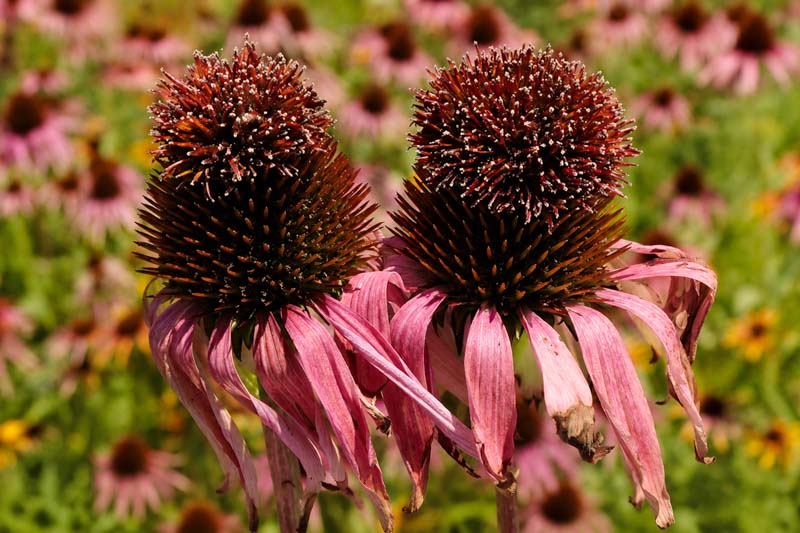
Old coneflower blooms can look strange as they fade. Petals may droop, dry, pale, twist, or fall away. The cone may become larger and rougher as seed develops. This is normal aging, not disease. Always compare older flowers with fresh buds. If new blooms open normally and foliage looks healthy, the plant is probably fine.
If you are unsure, take clear photos of the whole plant, close-ups of the flowers, and nearby foliage. Your local extension office or plant diagnostic clinic can often help distinguish aster yellows from mite damage, herbicide injury, or environmental stress.
You cannot prevent every case of aster yellows or coneflower rosette mites, but you can reduce risk. Start with healthy plants from reputable nurseries. Avoid buying coneflowers that already show green leafy flowers, distorted cones, stunted growth, or suspicious twisting.
Keep weeds under control around the garden, especially broadleaf weeds that may host leafhoppers or aster yellows. Remove infected plants promptly. Space coneflowers for good air movement, water at the base during dry periods, and avoid pushing plants with excessive fertilizer.
Encourage a diverse, pollinator-friendly garden. Beneficial insects will not guarantee protection from leafhoppers or mites, but a balanced garden with minimal pesticide disruption is generally more resilient than a stressed monoculture.
Prevention shortcut
Walk your coneflower patch once a week during bloom season. Early diagnosis is everything. One suspicious plant or flower head is much easier to manage than a whole border of distorted blooms.
Green, twisted, or deformed coneflowers deserve a closer look. The most important question is whether you are seeing aster yellows disease or coneflower rosette mites. Aster yellows affects the whole plant, cannot be cured, and requires complete plant removal. Coneflower rosette mites usually deform the flower cones while the foliage remains healthy, and removing affected blooms may reduce the problem.
When in doubt, study the foliage. Healthy leaves with a few strange cones point toward mites, aging flowers, or isolated damage. Yellow, curled, stunted leaves with green leafy flowers point toward aster yellows. Acting early protects nearby coneflowers, asters, zinnias, marigolds, vegetables, and other susceptible plants.
Coneflowers remain some of the best perennials for sunny gardens, pollinators, birds, seed heads, and long-lasting summer color. A few strange blooms do not mean you should stop growing them. They simply mean your garden is asking you to observe carefully, diagnose accurately, and respond with confidence.
Coneflowers may turn green because of young buds, naturally green cultivars, aging flowers, aster yellows disease, or coneflower rosette mites. If mature blooms become green, leafy, twisted, and deformed, inspect the entire plant for stunting, yellowing, or curled foliage.
The most common causes are aster yellows disease and coneflower rosette mites. Other possibilities include herbicide drift, fasciation, pest feeding, weather stress, drought, poor growing conditions, or normal flower aging.
Aster yellows usually affects the whole plant, causing green leafy flowers, stunted stems, yellowing, curled leaves, and general distortion. Coneflower rosette mites usually deform the cones while the leaves and stems remain fairly normal.
No. Coneflowers infected with aster yellows do not recover because the disease is systemic. Remove the entire plant, including the crown and roots, to reduce the risk of spread to nearby susceptible plants.
Yes, if the problem appears limited to a few distorted cones and the foliage looks healthy. Cut off and discard affected blooms. If the whole plant is stunted, yellowing, curled, and producing green leafy flowers, remove the entire plant instead.
Yes. Aster leafhoppers spread the aster yellows phytoplasma as they feed. They can pick up the pathogen from infected plants or weeds and transmit it to healthy coneflowers and other susceptible plants.
Yes. Herbicide drift can twist, cup, narrow, or distort coneflower leaves and flowers. Suspect herbicide injury if nearby broadleaf plants show similar symptoms after lawn treatment, weed spraying, or windy-day herbicide use.
The safest home-garden approach is to bag and discard infected plants. The aster yellows pathogen does not persist in dead plant tissue, but infected plants should not be left exposed where leafhoppers can continue feeding before the plant dies. If composting is allowed locally, bury or fully cover the material.
Yes. Aster yellows can affect many ornamentals, vegetables, and weeds, including coneflowers, asters, zinnias, marigolds, chrysanthemums, lettuce, carrots, and celery. Prompt removal of infected plants helps reduce spread.
Updated: June 2026 • Reviewed by Gardenia Editors
| Hardiness |
3 - 9 |
|---|---|
| Heat Zones |
1 - 9 |
| Climate Zones | 1, 1A, 1B, 2, 2A, 2B, 3, 3A, 3B, 4, 5, 6, 7, 8, 9, 10, 11, 12, 13, 14, 15, 16, 17, 18, 19, 20, 21, 22, 23, 24, A2, A3 |
| Plant Type | Perennials |
| Plant Family | Asteraceae |
| Genus | Echinacea |
| Exposure | Full Sun |
| Season of Interest | Spring (Late), Summer (Early, Mid, Late), Fall |
| Maintenance | Low |
| Water Needs | Low, Average |
| Soil Type | Clay, Loam, Sand |
| Soil pH | Acid, Alkaline, Neutral |
| Soil Drainage | Well-Drained |
| Characteristics | Dried Arrangements, Cut Flowers, Showy |
| Tolerance | Drought, Dry Soil, Clay Soil, Deer, Rocky Soil |
| Attracts | Bees, Birds, Butterflies, Hummingbirds |
| Landscaping Ideas | Beds And Borders, Patio And Containers |
| Garden Styles | City and Courtyard, Informal and Cottage, Prairie and Meadow |
| Hardiness |
3 - 9 |
|---|---|
| Heat Zones |
1 - 9 |
| Climate Zones | 1, 1A, 1B, 2, 2A, 2B, 3, 3A, 3B, 4, 5, 6, 7, 8, 9, 10, 11, 12, 13, 14, 15, 16, 17, 18, 19, 20, 21, 22, 23, 24, A2, A3 |
| Plant Type | Perennials |
| Plant Family | Asteraceae |
| Genus | Echinacea |
| Exposure | Full Sun |
| Season of Interest | Spring (Late), Summer (Early, Mid, Late), Fall |
| Maintenance | Low |
| Water Needs | Low, Average |
| Soil Type | Clay, Loam, Sand |
| Soil pH | Acid, Alkaline, Neutral |
| Soil Drainage | Well-Drained |
| Characteristics | Dried Arrangements, Cut Flowers, Showy |
| Tolerance | Drought, Dry Soil, Clay Soil, Deer, Rocky Soil |
| Attracts | Bees, Birds, Butterflies, Hummingbirds |
| Landscaping Ideas | Beds And Borders, Patio And Containers |
| Garden Styles | City and Courtyard, Informal and Cottage, Prairie and Meadow |
Create a membership account to save your garden designs and to view them on any device.
Becoming a contributing member of Gardenia is easy and can be done in just a few minutes. If you provide us with your name, email address and the payment of a modest $25 annual membership fee, you will become a full member, enabling you to design and save up to 25 of your garden design ideas.
Join now and start creating your dream garden!
Create a membership account to save your garden designs and to view them on any device.
Becoming a contributing member of Gardenia is easy and can be done in just a few minutes. If you provide us with your name, email address and the payment of a modest $25 annual membership fee, you will become a full member, enabling you to design and save up to 25 of your garden design ideas.
Join now and start creating your dream garden!