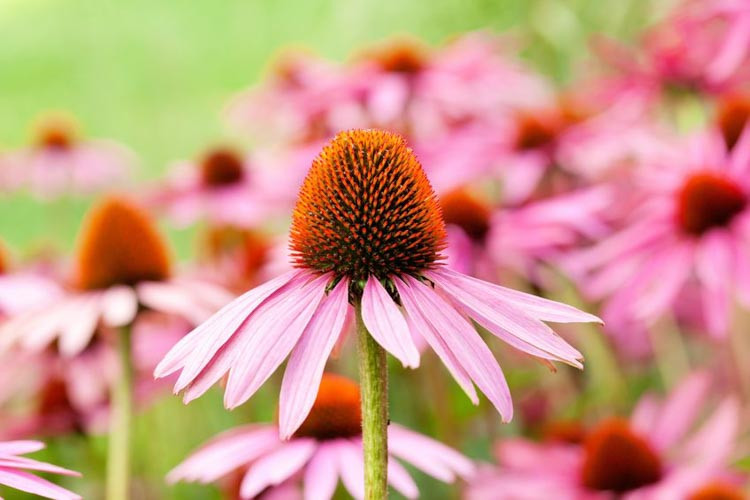
Echinacea (Coneflowers) - Guides
Echinacea (Coneflower) is one of the smartest perennials to grow if you want bold color, pollinator activity, drought tolerance, and a garden that feels alive from summer into fall. With daisy-like blooms, raised cone centers, sturdy stems, and seed heads birds love, Echinacea brings beauty and ecological value without demanding constant attention.
The key is to treat coneflowers like prairie plants, not thirsty bedding plants. Give them sun, drainage, space, and time to establish, and they can become long-lasting anchors in sunny borders, native gardens, wildlife plantings, cottage gardens, and low-water landscapes.
Best Garden Conditions
Echinacea grows best in full sun and well-drained soil. Once established, many coneflowers handle heat and dry spells well, making them excellent for drought-tolerant gardens, native gardens, and pollinator gardens.
Choosing Reliable Varieties
Not every coneflower returns equally well. For stronger results, choose vigorous, trial-backed, or garden-proven varieties. Start with this guide to coneflower varieties that actually come back, especially if you have lost modern hybrids before.
Care and Troubleshooting
Water young plants regularly, then reduce irrigation once roots establish. Avoid soggy winter crowns, heavy mulch against the base, and overly rich soil. If blooms turn strange, green, or distorted, use this guide to green or deformed coneflowers to spot possible problems early.
Design Ideas
Use Echinacea with grasses, bee balm, salvia, yarrow, rudbeckia, and native wildflowers. Compare Echinacea vs Rudbeckia, explore wildflowers for sun, and discover more best perennial flowers for long-lasting combinations.
For gardeners building resilient, wildlife-friendly landscapes, Echinacea is a top choice. It supports biodiversity, fits beautifully into native plant gardens, and delivers the kind of color that makes sunny borders unforgettable.