A grapevine with lots of leaves but no fruit usually points to poor pruning, too much shade, excess nitrogen, frost damage, vine immaturity, or weak flowering conditions. Grapes fruit on shoots from one-year-old wood, so correcting structure, sunlight, and balance is the key to getting clusters instead of foliage.
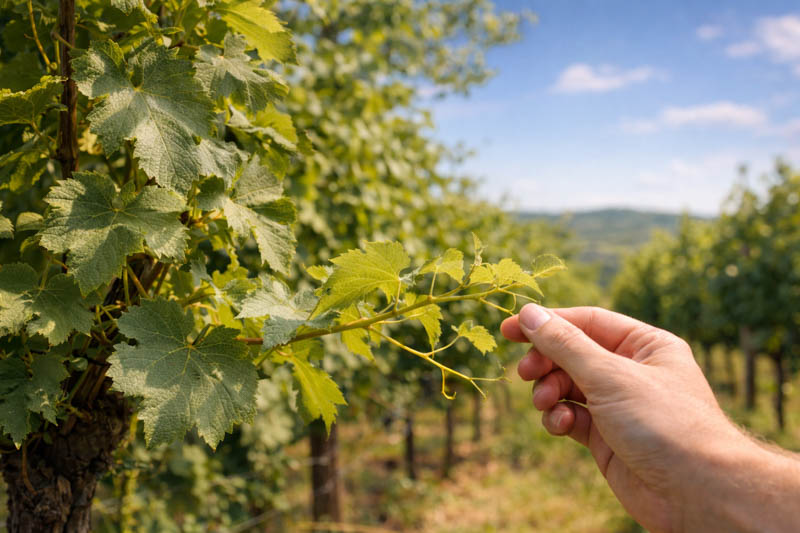


A grapevine covered in strong green leaves can look healthy, vigorous, and ready to produce. That is exactly why a fruitless vine is so frustrating. It looks like success from a distance, yet harvest never comes. In most cases, the vine is not failing because of one mysterious problem. It is failing because the conditions for fruiting are different from the conditions for leafy growth.
Grapevines can produce a huge amount of foliage even when fruiting is poor. Leaves alone do not prove the vine is balanced, mature, correctly pruned, properly pollinated, or well adapted to the site. Grapes are highly responsive plants. When sunlight, pruning, wood age, training, nutrition, climate fit, and spring weather all work together, they crop well. When one or more of those pieces are off, the vine often responds by making more vegetative growth instead of fruit.
That is why “my grapevine has leaves but no fruit” is one of the most common grape-growing complaints. The good news is that the problem is usually diagnosable. Better still, it is often fixable. The key is to stop guessing and identify whether the vine is too young, too shaded, overfed, pruned incorrectly, frost-damaged, poorly pollinated, weakened by disease or root stress, or simply planted in the wrong climate for its type.
Jump to: Main Reasons Your Grapevine Has Leaves but No Fruit | How to Diagnose the Problem Fast | Too Young to Bear | Pruning Mistakes | Too Much Shade | Too Much Nitrogen | Flowering and Pollination Problems | Late Frost and Winter Bud Damage | Wrong Variety for Your Climate | Disease, Drainage, and Root Stress | What to Do This Season and Next Dormant Season | FAQ
Before you change anything, determine which of these three situations you actually have. They point to different causes and different fixes.
| What you see | Most likely causes | Best next step |
|---|---|---|
| No flowers at all | Youth, incorrect pruning, shade, excessive nitrogen, winter bud injury | Review age, pruning method, light exposure, and feeding |
| Flowers appear, but little fruit forms | Poor bloom weather, stress, muscadine pollination issue, weak vine condition | Check bloom timing, weather, cultivar type, and vine health |
| Fruit begins, then stays sparse or drops | Stress, disease, overcropping, drought, root problems, poor canopy balance | Improve water, airflow, sanitation, and canopy management |
This is the first thing to rule out because it is also the most normal explanation. Newly planted grapevines are supposed to spend their early years building roots, a trunk, permanent arms, and strong wood. That structural phase matters. A vine that is pushed to crop heavily too early often develops more slowly and becomes harder to train properly later.
Most home grapevines produce their first meaningful crop around the third year after planting, although a few clusters may appear sooner under good conditions. If your vine is still in year one or year two, leaves without fruit may be exactly what should be happening. The right question is not “Why is it not fruiting yet?” but “Is it building the framework that will support future fruiting?”
How Long Grapevines Take to Produce Fruit
For mature vines, pruning is usually the first place to look. Grapes bear fruit on current-season shoots that arise from one-year-old wood. That is the central fact that explains why leafy vines can remain fruitless. If the vine is left unpruned, it becomes a tangled mass of old wood, shaded buds, and weak fruiting potential. If it is pruned randomly, the fruiting wood may be removed altogether.
Many home gardeners either prune far too lightly or make hard cuts without understanding which canes should remain. Both mistakes can reduce or eliminate the crop. A vine may still look vigorous because grapes are naturally strong growers, but that growth may be going into nonproductive shoots instead of fruitful renewal wood.
The most useful question is not whether the vine was pruned, but whether it was pruned correctly for the training system and cultivar. Some grapes are managed best with cane pruning. Others do well with spur pruning. Either way, the goal is the same: renew the right wood, control canopy density, and preserve fruitful buds for the coming season.
How to Prune Grapevines for Bigger Harvests: Cane Pruning vs Spur Pruning
Grapes need genuine full sun. A bright yard is not always enough. A vine growing beside a building, beneath trees, on the shaded side of a fence, or inside a crowded pergola can make plenty of leaves while forming weak fruiting buds. Shade also slows cane maturity, reduces flowering, and encourages a denser canopy that makes the light problem worse.
This is one of the most deceptive grape problems because the vine still looks alive and active. Leaves are easy for a grapevine to produce. Fruit is much more demanding. Fruiting depends on light reaching the canopy, the buds, and the fruiting zone. Even partial shade can noticeably reduce the crop, especially when combined with excess vigor or poor pruning.
For best performance, grapes need an open exposure, all-day sun if possible, and a canopy that is regularly thinned and trained so light can penetrate the fruiting wood.
Do Grapes Need Full Sun for Better Harvests?
Few things create a lush but unproductive grapevine faster than excess nitrogen. Overfeeding leads to long, whippy shoots, oversized leaves, and fast vegetative growth. It can also delay wood maturity, reduce flower bud formation, and push the vine out of balance. The result is a grapevine that looks impressive but crops poorly.
This often happens when vines are planted near lawns that are fed regularly, or when gardeners apply general-purpose fertilizer without checking whether the vine actually needs it. Grapes usually require less fertilizer than people expect. A vigorous dark green vine is often telling you not to feed more.
The goal is not maximum growth. The goal is balanced growth. Productive grapevines should be strong enough to carry fruit, but not so overcharged that they turn into a wall of foliage.
Most bunch grapes are self-fruitful, so one vine can usually set fruit without a second plant. That is why true pollinator absence is not the first explanation for most backyard grapes. More often, the problem is poor bloom weather or vine stress during flowering. Rain, cold snaps, heat spikes, drought, nutrient imbalance, or general weakness can all interfere with fruit set.
Sometimes the vine did flower, but the flowers were small enough to go unnoticed. Later, the gardener sees few berries and assumes no bloom occurred. In reality, bloom happened, but fruit set was weak.
Muscadines are the important exception. Some muscadine cultivars are self-fertile, but some are female and need a compatible self-fertile muscadine nearby. If you planted a female muscadine alone, a leafy vine with little or no fruit is entirely predictable.
Muscadine grapes deserve a label check before you assume the problem is nutrition or pruning.
Not all fruit loss happens during summer. Grapes can lose their crop much earlier. After bud break, tender young shoots may be damaged by a late spring frost. When that happens, the vine often pushes secondary growth and still leafs out, but the primary fruiting shoots may already be gone. Later in the season, the vine looks leafy and alive, but the crop is missing.
Winter injury can also matter. In colder climates, primary buds may be damaged by cold even when the vine itself survives. The plant may still grow, but if fruitful buds were injured, production can be greatly reduced for the season. This is one reason some vines look healthy yet fruit poorly after a hard winter.
If your vine leafs out but has little bloom after a severe winter or a late frost event, bud injury is a strong possibility.
A grapevine can survive and even grow vigorously in the wrong climate. That does not mean it will fruit well there. A cultivar that dislikes your winter lows, summer humidity, disease pressure, or season length may keep producing foliage while failing to crop consistently.
European grapes often do best in warm, dry regions with long seasons. American grapes and many hybrids are often more dependable in colder or more humid areas. In the hot, humid Southeast, muscadines are frequently the most reliable option. A climate mismatch does not always kill the vine. Often, it just turns the plant into a beautiful underperformer.
That is why local adaptation matters more than a catalog description or a favorite flavor profile. A locally proven grape that fruits every year is better than a glamorous cultivar that struggles to set or ripen fruit where you live.
Some fruitless vines are not suffering from one dramatic mistake but from chronic stress. Poor drainage is a major example. Grapes tolerate average soil better than wet soil. If roots stay too wet, the vine may lose vigor, develop nutrient imbalances, and fruit poorly even while still making leaves.
Disease can also reduce fruitfulness. Severe mildew, black rot pressure, cane disease, trunk injury, or repeated foliage loss weakens the vine and lowers the quality of its wood and buds. Over time, the vine may remain alive but become less capable of carrying a crop. Root competition from turf or nearby trees can add even more stress.
Dense, overcrowded canopies make this worse. When too many shoots are left, airflow drops, humidity rises, and light penetration falls. That combination weakens both current fruiting and next year’s bud quality.
The best recovery plan depends on timing. During the growing season, observe rather than overreact. Note whether the vine flowers at all, whether shoots are excessively vigorous, whether the canopy is shaded, and whether the site stays wet after rain. Reduce obvious problems now by stopping nitrogen-heavy feeding, improving airflow, tying shoots into better position, and preventing the vine from turning into a dense mass.
During the next dormant season, make the structural corrections that matter most. Prune according to the correct system. Remove excess wood. Preserve healthy one-year-old canes or properly spaced spurs. Rebuild a manageable framework on a strong support. If the vine is badly overcrowded, restore order gradually but decisively.
If the problem is shade, the answer may be relocation, tree thinning, or accepting that the site is ornamental rather than productive. If the problem is a wrong variety choice, replacement may be more realistic than trying to force an unsuitable vine to perform for years.
How to Grow Grapes in the Home Garden
A productive grapevine needs more than life and leaves. It needs mature wood, well-exposed buds, controlled vigor, a training system that renews fruitful canes or spurs, and a site that gives it full sun, good drainage, and enough season length to ripen both wood and fruit. In other words, productive grapes come from balance.
That is why grape care is not about constant intervention. It is about making a few critical decisions correctly and repeating them every year. Once the structure, pruning, light, and site are right, a grapevine can become one of the most dependable and rewarding plants in the garden. Until then, it may keep telling the same frustrating story: plenty of leaves, no grapes.
The most common causes are youth, shade, incorrect pruning, too much nitrogen, late frost or winter bud damage, poor flowering conditions, root stress, or a poorly adapted variety. Grapes bear fruit on current-season shoots that arise from one-year-old wood, so a lush vine can still be unproductive.
Most grapevines produce their first meaningful crop around the third year after planting, although a few clusters may appear earlier under good conditions. In the first years, the vine usually focuses on roots, trunk development, and framework.
Yes. Too much nitrogen often causes vigorous leafy growth at the expense of flowers and fruit. This is especially common when grapevines are planted near fertilized lawns or are fed heavily without a soil-based need.
Most bunch grapes are self-fruitful and do not need a second vine for pollination. Some muscadine grapes are female, however, and need a self-fertile muscadine nearby.
A grapevine may grow in partial shade, but fruit production usually suffers. Grapes need full sun for stronger bud formation, better flowering, and more reliable ripening.
Grapes are produced on current-season shoots that grow from one-year-old wood. Old, tangled growth may carry plenty of leaves but little fruit if the vine is not pruned correctly.
Yes. Late spring frost can kill tender new shoots and flower clusters after bud break. The vine may leaf out again later, but the main crop may already be lost.
Yes. Poor drainage and chronic root stress can weaken grapevines, reduce bud quality, and lower fruiting even when the plant still produces leaves. Grapes tolerate average soil far better than wet soil.
If your grapevine has leaves but no fruit, the answer is usually not mysterious. It is usually structural. The vine may be too young, too shaded, overfed, pruned the wrong way, stressed by wet soil, injured by frost, or simply mismatched to the climate. Once you identify which of those is happening, the path forward becomes much clearer.
Grapes reward precision. Give them full sun, correct pruning, moderate feeding, good drainage, strong training, and a cultivar that truly suits your region. Do that consistently, and a fruitless vine can often become a productive one. Ignore those fundamentals, and even a beautiful grapevine may remain little more than a curtain of leaves.
Updated: March 2026 • Reviewed for home garden accuracy
| Hardiness |
3 - 10 |
|---|---|
| Plant Type | Climbers, Fruits |
| Plant Family | Vitaceae |
| Genus | Vitis |
| Exposure | Full Sun |
| Maintenance | High |
| Water Needs | Average |
| Soil Type | Chalk, Loam, Sand |
| Soil pH | Alkaline, Neutral |
| Soil Drainage | Well-Drained, Moist but Well-Drained |
| Attracts | Bees, Birds |
| Hardiness |
3 - 10 |
|---|---|
| Plant Type | Climbers, Fruits |
| Plant Family | Vitaceae |
| Genus | Vitis |
| Exposure | Full Sun |
| Maintenance | High |
| Water Needs | Average |
| Soil Type | Chalk, Loam, Sand |
| Soil pH | Alkaline, Neutral |
| Soil Drainage | Well-Drained, Moist but Well-Drained |
| Attracts | Bees, Birds |
Create a membership account to save your garden designs and to view them on any device.
Becoming a contributing member of Gardenia is easy and can be done in just a few minutes. If you provide us with your name, email address and the payment of a modest $25 annual membership fee, you will become a full member, enabling you to design and save up to 25 of your garden design ideas.
Join now and start creating your dream garden!
Create a membership account to save your garden designs and to view them on any device.
Becoming a contributing member of Gardenia is easy and can be done in just a few minutes. If you provide us with your name, email address and the payment of a modest $25 annual membership fee, you will become a full member, enabling you to design and save up to 25 of your garden design ideas.
Join now and start creating your dream garden!