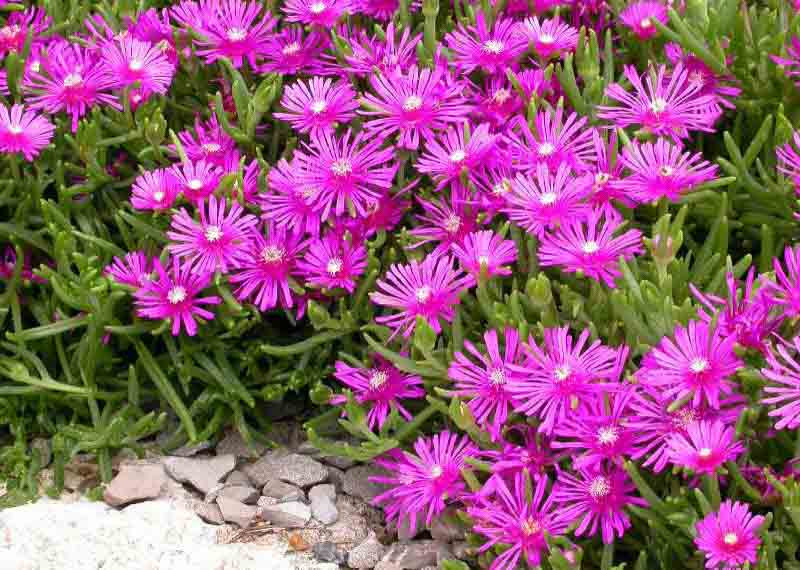
Flowering Slope Design & Planting Guides
Dreaming of a hillside covered in beautiful flowers but unsure how to plant a slope successfully? A flowering bank can be one of the loveliest features in a garden, but sloping ground brings challenges you won’t encounter in an ordinary flower bed. Water can run downhill, soil may wash away before plants establish, and maintenance can be difficult on a steep incline. Our flowering slope gardening guides will help you choose suitable plants, create beautiful layered designs, and establish a hillside planting that lasts. Learn how to plant flowers on a slope, reduce surface erosion, space groundcovers and shrubs, manage watering, and create low-maintenance flowering banks filled with color from spring through fall.
Learn How to Design a Flowering Slope with Beautiful Plant Layers and Seasonal Color
A flowering hillside looks most beautiful when the plants follow the shape of the land. Instead of arranging every flower in straight rows, allow shrubs, perennials, and groundcovers to create generous, overlapping drifts that sweep across the slope.
But before choosing colors, understand the growing conditions and the condition of the bank itself.
Six steps to planning a beautiful flowering slope:
- Assess the hillside: Consider the steepness, soil stability, drainage, exposure, and how safely the slope can be accessed. A gentle garden bank is much easier to plant and maintain than a steep, eroding incline.
- Observe the sunlight: Note which areas receive full sun, partial shade, or deep shade. In the Northern Hemisphere, south-facing banks often experience greater heat and drying than cooler north-facing slopes.
- Identify the soil conditions: Check soil texture and drainage, and look for compacted areas, runoff channels, and places where water collects. The upper and lower sections may behave differently.
- Choose the structural plants: On broad slopes, suitable flowering shrubs, grasses, and spreading woody plants can establish the main framework. Use smaller flowering perennials to fill the spaces between them.
- Plan a succession of flowers: Combine spring-flowering groundcovers with summer perennials and later-flowering shrubs or grasses, selecting species that share compatible growing conditions.
- Repeat plants for a natural effect: Use broad, staggered groups rather than one of every variety. Repeating flower colors and textures across the slope makes the planting appear connected.
How should flowers be arranged on a slope? Place larger shrubs where their mature height and spread suit the view, then repeat lower-growing perennials across the bank. Consider visibility from below as well as above. Tall plants near the front of a small slope may hide the rest of the display.
What colors work beautifully together? Pink and lavender-blue create a romantic cottage effect. Purple, yellow, and pink offer a vibrant prairie-inspired display. White flowers and silver-green foliage can make a sunny Mediterranean-style bank feel calmer and more elegant.
How can you extend flowering from spring to fall? Begin with suitable creeping phlox, rock cress, or other spring-flowering groundcovers. Follow with catmint, roses, yarrow, and summer perennials. Add late-season asters, California fuchsia in appropriate regions, or other locally suited plants to maintain interest as autumn approaches.
Should you plant the entire hillside with one species? A single groundcover can create visual unity, but a mixture of compatible plant types may provide a more varied display and a wider range of rooting habits. The most appropriate choice depends on the soil, slope, drainage, and maintenance requirements.
Design tip: Imagine the hillside when nothing is blooming. Evergreen shrubs, attractive foliage, grasses, and woody structure should still make the planting feel deliberate rather than bare.
For more inspiration, explore Gardenia’s Best Plants for Slopes and Erosion Control, Drought-Tolerant Garden Design Guide, and beautiful hillside planting combinations.
Discover How to Plant Flowers on a Slope, Improve Establishment, and Manage Runoff
The most important moment in the life of a flowering slope is often the first growing season. Before roots are established, a heavy storm can dislodge soil around newly planted perennials, while hot weather can dry out plants before they have a chance to spread.
Good preparation helps, but it’s important to address any serious drainage or stability problems before planting.
Seven practical steps to establishing a flowering hillside:
- Check the slope’s stability: Look for active erosion, deep cracks, soil movement, or damaged retaining walls. Where these problems exist, seek qualified drainage or geotechnical advice rather than relying on plants alone.
- Control concentrated runoff: Check whether water from downspouts, roofs, paths, or neighboring areas pours directly onto the bank. Correcting an inappropriate flow path may be more important than adding plants.
- Remove weeds carefully: Clear persistent weeds without unnecessarily stripping the entire slope of vegetation. Exposed soil may become more vulnerable to erosion during heavy rainfall.
- Choose appropriate planting times: Spring and fall are often favorable for establishing hardy perennials and shrubs, depending on climate. Avoid severe heat, frozen ground, and other stressful conditions whenever possible.
- Prepare secure planting pockets: Where the slope can be worked safely, plant so that the root ball is stable and firmly surrounded by soil. Avoid creating loose soil channels that encourage water to flow downhill.
- Protect vulnerable bare soil: Suitable biodegradable erosion-control blankets or other temporary protective measures may be helpful on erosion-prone slopes. The correct material and installation depend on the site.
- Water and inspect: Newly planted flowers and shrubs need appropriate moisture until their roots develop. Inspect after heavy rainfall for exposed roots, soil movement, or displaced plants.
How far apart should plants be spaced? Use each variety’s mature width and growth habit. Compact flowering phlox, spreading roses, catmint, and larger shrubs need different distances. Overcrowding may create problems later, while widely spaced young plants leave more exposed soil during establishment.
How do you calculate the planting area? For a slope, measure or estimate the actual ground surface rather than just the horizontal footprint. The steeper the incline, the larger its surface area relative to the flat projection. Use that area and species-specific spacing to calculate plant quantities.
Should flowers be planted in straight rows? Staggered groupings often create a more natural appearance, and they can avoid long planting gaps that visually run downhill. However, no ornamental layout alone prevents runoff or guarantees erosion control.
What’s the best way to water a flowering slope? Apply water slowly enough to soak into the root zone rather than running down the surface. Drip irrigation may be useful when properly designed for changes in elevation. Check the upper, middle, and lower planting areas separately, because moisture can vary considerably.
Can you mulch a steep bank? Loose mulch may slide or wash downhill. The appropriate approach depends on slope steepness, soil, rainfall, and existing vegetation. On erosion-prone banks, temporary soil protection may be more effective than ordinary loose mulch alone.
How long before a flowering slope fills in? Some perennials establish relatively quickly, while woody shrubs and slower-spreading groundcovers may take several seasons. Root growth, flowering performance, and soil coverage do not necessarily progress at the same rate.
Why might flowers fail on a slope? Common reasons include insufficient moisture, poor drainage, exposed roots, soil movement, inadequate sunlight, and unsuitable plant selection. Investigate repeated failures before replacing plants with the same varieties.
Read Gardenia’s slope planting and erosion-control guide, best plants for sandy soil and drought, and drought-tolerant groundcovers.
Learn How to Maintain a Low-Care Flowering Bank and Support Pollinators
A flowering hillside should be a pleasure to enjoy, not a constant maintenance challenge. Choosing naturally well-shaped plants, providing good growing conditions, and avoiding varieties that need frequent attention can make an enormous difference over time.
Five ways to reduce hillside maintenance:
- Choose plants that suit the site: Favor resilient perennials, shrubs, and grasses adapted to your sunlight, drainage, rainfall, and climate. Plants struggling in unsuitable conditions generally need more care.
- Reduce unnecessary pruning: Choose compact or naturally spreading varieties that fit the available space. Avoid plants requiring repeated shaping in difficult-to-reach locations.
- Control weeds early: Remove invasive weeds before they spread among the flowers. Take care not to expose large areas of vulnerable soil during maintenance.
- Inspect after storms: Check for soil movement, runoff channels, exposed roots, and displaced plants, especially during the establishment period.
- Maintain safe access: Make sure necessary inspection and care can be performed without working on an unsafe, slippery, or unstable incline.
Should you deadhead flowers on a slope? It depends on the species. Some catmints and other perennials may produce additional flowers after trimming, while others bloom once and then provide attractive seedheads. On inaccessible banks, favor varieties that remain appealing without constant grooming.
Do flowering slopes need fertilizer? Not automatically. Many drought-adapted perennials thrive in relatively lean soils. Excess nitrogen may encourage leafy, weak growth rather than flowers and can increase maintenance needs. Fertilize only when plant requirements and soil conditions justify it.
What about winter? Evergreen shrubs can maintain structure, while ornamental grasses and suitable seedheads may add texture. Avoid unnecessary disturbance of the soil during wet or frozen conditions, and remove diseased material when appropriate.
How can a flowering slope help pollinators? Include flowers with different shapes and overlapping bloom times. In suitable regions, coneflowers, native buckwheats, California fuchsia, asters, and other locally adapted plants can provide important seasonal resources for visiting insects and birds.
Should you use native plants? Regionally native species often provide valuable habitat and may be well adapted to local climate and soil. However, a plant native to California is not automatically suitable for every North American garden, and a native plant still needs appropriate conditions.
Are low-maintenance flowering slopes drought-proof? No. Even drought-tolerant plants usually need adequate irrigation during establishment, and some may need supplemental water during prolonged extreme drought.
When should you call a professional? If soil is actively moving, deep gullies are forming, a retaining wall is failing, or water is emerging from the hillside, obtain qualified advice. Plant roots can help protect upper soil layers but cannot correct serious structural instability.
Gardenia’s recommendation: Plan a planting that looks attractive from a distance and can be maintained without constantly climbing the slope. Repeat reliable flowering groups, use grasses and shrubs for structure, and leave room for plants to mature naturally.
Explore Gardenia’s water-wise garden design and care guide, best plants for butterflies and hummingbirds, and deer-resistant groundcovers.