Perennial Flower Border Guides
A beautiful perennial flower border doesn’t happen by accident, but creating one is easier than you might think. Whether you’re starting a new flower bed, refreshing a tired garden border, or dreaming of colorful flowers from spring through fall, our perennial flower border guides will help you every step of the way. Learn how to design a perennial border, choose flowers that thrive together, arrange plants for a natural, abundant look, and keep your garden flourishing year after year. From romantic cottage gardens to low-maintenance, pollinator-friendly plantings, discover practical advice, inspiring combinations, and proven gardening techniques to create a border you’ll love.
Design a Beautiful Perennial Border with Flowers from Spring to Fall
Learn How to Design a Beautiful Perennial Flower Border
Have you ever admired a flower border that seems effortlessly beautiful, with tall flowers rising above soft mounds of foliage and colorful blooms weaving naturally together? The secret usually isn’t an enormous plant collection. It’s a thoughtful layout, well-chosen plants, and a little repetition.
Whether you have a narrow flower bed along a fence or a generous border surrounding your lawn, a successful perennial garden starts with understanding the space.
Six essential steps to designing a perennial flower border:
- Study your growing conditions: Before choosing a single flower, check how much sunlight your border receives, whether the soil drains well, and how much moisture is available. A sunny, dry border needs a very different planting plan from a cool, partially shaded flower bed.
- Decide how you want the border to look: Do you love the soft abundance of an English cottage garden, the restrained elegance of a modern border, or the natural movement of a prairie-inspired planting? Your preferred garden style will guide your plant choices, colors, and arrangement.
- Create layers of height: In a border viewed from one side, position taller perennials toward the back, medium-height flowers through the middle, and lower-growing plants near the front. Avoid rigid rows, allowing a few taller flowers to rise naturally through the planting.
- Repeat plants for a harmonious design: Rather than using a different perennial every few feet, repeat a smaller selection in generous, irregular groups. This gives your garden a stronger sense of rhythm and makes the planting feel intentional.
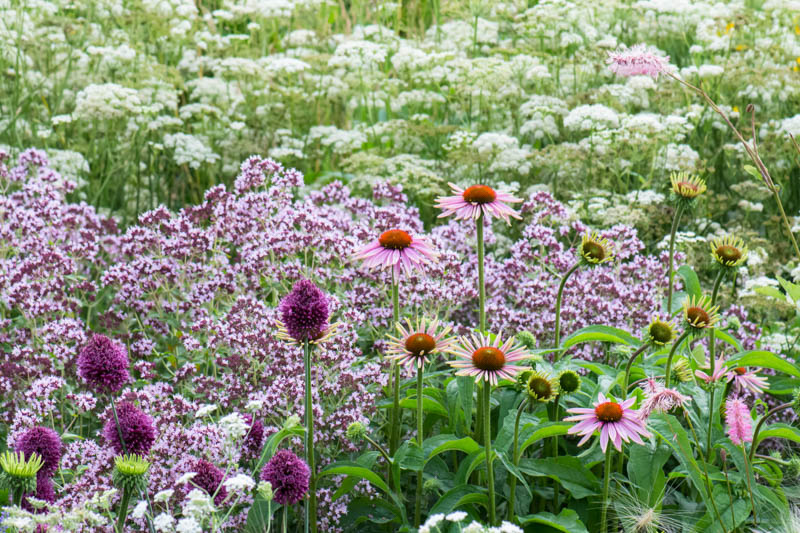
- Combine contrasting shapes and textures: Upright salvias, rounded coneflowers, airy ornamental grasses, and softly spreading hardy geraniums create more visual interest together than plants with similar forms. Attractive foliage is just as important as beautiful flowers.
- Plan for mature size: A newly planted border may look surprisingly empty. Resist the temptation to crowd the plants. Check their mature widths, allow room for growth, and use their expected spread to estimate planting quantities.
How wide should a perennial border be? Even a border approximately 3 ft. (90 cm) deep can support a lovely display of compact perennials. A deeper border, around 5-8 ft. (1.5-2.4 m), provides more flexibility for layering tall and short plants, creating generous drifts, and adding seasonal structure. These are design starting points, not fixed requirements.
A useful design trick: Imagine your flower border without any flowers. Would the different leaf shapes, heights, and textures still look attractive? If the answer is yes, you’ve already created a strong foundation for a beautiful garden.
For detailed layouts, planting quantities, spacing recommendations, and real plant combinations, read Gardenia’s How to Design a Perennial Flower Border. If you’re working with limited space, our guide to small perennials for borders and edging will help you choose plants that won’t overwhelm the garden.
Plan a Perennial Border That Blooms from Spring to Fall
One of the biggest challenges in perennial gardening is keeping the flowers coming. You may have a spectacular display of peonies in late spring, followed by several weeks when very little seems to happen. Or perhaps your summer border looks glorious in July but has lost most of its color by September.
The solution is succession planting: combining perennials with different, overlapping flowering periods so that each season brings something new.
Build a seasonal flowering plan:
- Early to late spring: Hellebores, lungwort, creeping phlox, columbines, and peonies provide the first highlights, depending on your climate and growing conditions. Spring-flowering bulbs can extend the display before many herbaceous perennials emerge.
- Late spring to early summer: Salvias, catmint, baptisias, irises, and hardy geraniums begin to fill the border with stronger color. Choose plants with different flower shapes to create a varied display.
- Midsummer: Coneflowers, rudbeckias, daylilies, yarrows, and suitable garden phlox provide a succession of summer flowers. Some varieties bloom over an extended period, while others produce shorter but impressive displays.
- Late summer to fall: Perennial asters, goldenrods, upright stonecrops, and later-flowering heleniums can maintain color after many early-summer favorites have finished.
- Winter: Although many herbaceous perennials die back, ornamental grasses, sturdy seedheads, and thoughtfully chosen evergreen companions can keep the border interesting during the dormant season.
Can a perennial border bloom continuously? Yes, it can provide a succession of flowers from spring through fall, but that doesn’t mean every plant will flower for months. Most perennials have a particular main blooming period, and their flowering dates vary with climate, weather, and cultivar.
Gardenia’s bloom-gap test: Make a list of the plants you’ve selected and identify their expected flowering periods. Look for weeks when little is blooming, particularly between spring and summer or at the end of the season. Then choose compatible perennials that flower during those quieter periods.
Don’t rely on occasional rebloom to fill an important gap. Some salvias, catmints, and hardy geraniums may produce additional flowers after trimming, but repeat flowering depends on the cultivar and growing conditions.
Our Perennial Bloom Calendar: Flowers from Spring to Fall provides seasonal plant recommendations and practical ways to build a continuous display. You can also explore How to Find Plants That Bloom When Yours Don’t or discover plants that bloom all summer.
Choose the Best Perennials for Sun, Shade, Easy Care, and Pollinators
Choose the Best Perennials for Sun, Shade, and Difficult Growing Conditions
It’s tempting to choose perennial flowers purely for their colors, but beautiful combinations only work when the plants can thrive in the same conditions. The most important part of planning a successful flower border is matching your selections to the garden you actually have.
For sunny perennial borders: Look for plants that enjoy at least six hours of direct sunlight and match your soil’s drainage and moisture levels. Salvias, catmints, coneflowers, yarrows, and upright stonecrops are popular choices, although each has its own preferences.
For a border exposed to intense afternoon heat, consider how reflected heat, dry soil, and prolonged summer temperatures may affect your plants. A perennial that thrives in full sun in a cool climate may struggle in a hotter region without adequate moisture.
Explore Gardenia’s Best Perennials for Hot Afternoon Sun for practical recommendations.
For partially shaded flower borders: Choose perennials that tolerate morning sun, filtered light, or afternoon shade. Astilbes, hostas, brunneras, lungworts, and certain hardy geraniums can create beautiful combinations in suitable conditions.
Don’t overlook soil moisture. Many woodland perennials prefer humus-rich soil with dependable moisture, whereas a border beneath established trees may experience considerable root competition and dry soil.
Our Best Flowering Perennials for Partial Shade guide explains how to select plants that provide flowers and attractive foliage in gardens with limited direct sunlight.
For dry, sunny borders: Consider perennials adapted to freely draining soil and periods of limited rainfall. Suitable species of yarrow, catmint, salvia, and other drought-tolerant perennials can produce a beautiful display with less supplemental irrigation once established.
Remember that drought tolerance does not mean a plant needs no water. Newly planted perennials generally require regular attention until their roots are established, and even mature plants may need supplemental moisture during severe drought.
Discover 48 Drought-Tolerant Perennials for Color That Lasts or explore Gardenia’s best plants for sandy soil and drought.
What about heavy clay soil? Not all perennials dislike clay. Some thrive in moisture-retentive conditions, while others are vulnerable to winter root rot if drainage is poor. Before planting, determine whether your soil is simply heavy or genuinely waterlogged. Choose plants adapted to those conditions rather than trying to force dry-garden species into persistently wet ground.
Gardenia’s golden rule: Select plants for hardiness, sunlight, soil, drainage, and available moisture first. Then create beautiful combinations from the plants that meet those requirements.
Discover Low-Maintenance and Pollinator-Friendly Perennial Borders
A flower border doesn’t have to demand hours of attention every weekend. With the right plants and a little advance planning, you can create a colorful, wildlife-friendly garden that becomes easier to care for as it matures.
The first step is choosing reliable perennials that suit your growing conditions. A plant that loves your soil and climate will generally need less attention than one struggling to survive in the wrong location.
Five principles for an easy-care perennial border:
- Choose dependable plants: Catmint, selected hardy geraniums, coneflowers, upright stonecrops, and other resilient perennials can form the foundation of an attractive, manageable border when matched to suitable conditions.
- Give plants enough room: Check mature height and spread before planting. Crowded borders can become difficult to maintain, encourage some disease problems, and require more frequent thinning or division.
- Group plants with similar needs: Avoid placing moisture-loving astilbes beside dry-soil specialists such as lavender or certain yarrows unless you can provide appropriately different growing conditions.
- Reduce weed competition: Mulch around young plants where appropriate, maintain healthy soil, and gradually allow suitable perennials to fill their allotted spaces.
- Avoid unnecessary maintenance: Not every faded flower needs immediate removal, and not every perennial requires annual division. Choose the level of tidiness that suits your gardening style and the plants you’re growing.
For dependable plant recommendations and practical maintenance advice, read Low-Maintenance Perennials That Come Back Every Year.
Want your flower border to attract butterflies and bees? A perennial border can be much more than a beautiful display. It can provide nectar, pollen, seedheads, and shelter for wildlife, particularly when you include suitable native plants and flowers that bloom at different times.
Try combining several flower forms. Coneflowers offer prominent central discs, salvias provide tubular blossoms, and goldenrods produce clusters of small flowers. Plant in generous groups so visiting pollinators can locate the flowers easily.
Choose regionally appropriate species, avoid invasive plants, minimize pesticide use, and consider leaving selected stems and seedheads standing through winter to provide habitat.
A common misconception: A garden filled with colorful flowers is not automatically a good pollinator garden. Flower accessibility, nectar and pollen availability, local plant suitability, and habitat all matter. Some highly modified ornamental flowers offer fewer resources than simpler forms.
Explore How to Design a Pollinator Garden That Never Stops Blooming and Gardenia’s comprehensive Pollinator Garden Guide for more planting ideas and wildlife-friendly gardening advice.
Learn How to Plant, Maintain, and Improve Your Perennial Border
One of the pleasures of growing perennial flowers is watching the garden change and mature over time. A newly planted border may look modest in its first season, but many perennials become fuller and more impressive as their root systems develop.
Good preparation and a few simple maintenance habits can make a remarkable difference to their long-term performance.
Before planting your perennial flower border:
- Prepare the soil: Remove persistent weeds and loosen compacted ground where appropriate. Improve soil according to its condition and the needs of the selected plants. Not every perennial benefits from rich, heavily amended soil.
- Choose the right planting season: Spring and fall are often excellent times to establish hardy container-grown perennials, provided the soil is workable and weather conditions are suitable. In cold climates, allow sufficient time for fall plantings to root before severe freezing. In hot climates, avoid establishing plants during extreme summer heat when possible.
- Arrange the plants before digging: Place pots around the border to check the spacing, overall balance, and position of taller plants. Remember to account for mature spread, not just the size of the plants at purchase.
- Plant at the correct depth: Most container-grown perennials should be installed with the root-ball surface level with the surrounding soil. Some plants, including peonies, have more specific planting-depth requirements.
- Water during establishment: Even drought-tolerant perennials need appropriate moisture while roots develop. Water deeply when required and monitor the soil rather than following a rigid schedule.
How often should you divide perennials? It depends on the plant. Some vigorous clumping perennials benefit from division every few years, while others are best left undisturbed for much longer. Consider division when a clump becomes overcrowded, develops a weak center, flowers less abundantly, or outgrows its space.
Should you deadhead perennial flowers? Removing spent flowers can encourage repeat blooming in some plants, improve their appearance, or limit unwanted self-seeding. However, not all perennials rebloom after deadheading. Leaving some seedheads can also provide food for birds and attractive winter structure.
What should you do in fall? Resist the urge to cut every plant down as soon as flowering finishes. Healthy ornamental grasses, coneflower seedheads, and sturdy perennial stems may add winter interest and offer valuable wildlife habitat. Remove diseased material when needed and complete remaining cleanup at a suitable time in late winter or spring.
How do you refresh an established flower border? Start by identifying what already grows well. Retain healthy, well-placed perennials, divide overcrowded plants where appropriate, remove poorly performing varieties, and look for seasonal gaps. Sometimes adding a few carefully selected late-flowering perennials can transform an entire border without starting again.
If you’re new to perennial gardening, explore Gardenia’s Guide to Choosing the Best Perennial Plants and discover 42 of the Best Perennial Flowers and Plants for additional growing and care advice.
Looking for beautiful examples to inspire your next planting project? Browse Gardenia’s flower bed and garden border ideas, or explore a perennial border designed for spring-to-fall color.