Roses & Flowering Shrub Guides
Wondering how to grow beautiful roses, keep hydrangeas blooming, or prune flowering shrubs without sacrificing next year’s flowers? You’re in the right place. Our rose and flowering shrub gardening guides take the guesswork out of choosing, planting, growing, and caring for these wonderful garden favorites. Discover practical advice on rose care, shrub pruning, hydrangea growing, flowering seasons, disease prevention, and garden design. Whether you’re new to gardening or looking to improve an established border, learn how to grow healthy, vigorous shrubs that fill your garden with color, fragrance, and lasting beauty.
Learn How to Choose, Plant, and Grow Healthy Roses and Flowering Shrubs
Beautiful flowering shrubs begin with the right choices. A rose that flourishes in a sunny border may struggle in a shady courtyard, while a moisture-loving hydrangea can suffer in a hot, dry position. Understanding what each plant needs will save you time, money, and disappointment.
Start with five essential growing conditions:
- Hardiness zone: Choose roses and shrubs that tolerate the winter temperatures in your region. Also consider late frosts, summer heat, and whether a plant needs sufficient winter chilling to flower reliably.
- Sunlight: Most roses bloom best with at least six hours of direct sunlight, although some tolerate a little less. Many panicle hydrangeas enjoy sun when adequately watered, while bigleaf hydrangeas often appreciate morning sun and afternoon shade in warm climates.
- Soil and drainage: Most roses need well-drained soil with sufficient moisture and nutrients. Many hydrangeas prefer moisture-retentive conditions, but few flowering shrubs tolerate persistently waterlogged roots.
- Mature dimensions: Check both height and width. A small nursery shrub can become a substantial plant, so allow adequate space around paths, windows, walls, and neighboring plants.
- Maintenance needs: Some roses need regular pruning and deadheading, while selected landscape roses and flowering shrubs require considerably less intervention.
How should you plant a rose bush? Choose an appropriate location, prepare a planting hole wide enough for the root system, and ensure the soil is suitable for healthy root growth. Planting depth varies according to whether the rose is grafted or own-root and according to local winter conditions. Check the requirements of your particular rose before planting.
When is the best time to plant flowering shrubs? Spring and fall are often excellent planting seasons, provided the soil is workable and temperatures are favorable. In colder regions, fall-planted shrubs need enough time to establish roots before severe winter weather. Avoid planting during extreme heat or drought whenever possible.
How much water do new shrubs need? Regular, deep watering during establishment is essential. The precise amount depends on rainfall, soil type, temperature, and plant size. Check the soil around the root zone and adjust watering rather than following a rigid calendar.
Should you fertilize flowering shrubs? Not automatically. Good soil and appropriate plant selection often matter more than repeated feeding. Excess nitrogen can encourage leafy growth at the expense of flowers, and overfertilizing may damage roots. Follow plant-specific guidance and consider soil testing when growth problems persist.
Begin with Gardenia’s Rose Bush Care: How to Grow Roses That Thrive All Season and our Hydrangea Growing and Care Guide.
Still deciding which varieties to grow? Explore the main rose types, compare different types of hydrangeas, or find compact flowering shrubs for small gardens.
Master Rose Pruning, Hydrangea Care, and Common Flowering Shrub Problems
Few gardening tasks create as much uncertainty as pruning flowering shrubs. Should you cut back roses in fall? Why didn’t your hydrangea bloom this year? And will pruning a lilac in winter remove all its spring flowers?
The answer depends on the species, its flowering habits, and your climate. The most useful rule is to learn whether your shrub flowers on growth produced this season or on stems formed the previous year.
Understand how different shrubs produce their flowers:
- Repeat-flowering bush roses: Many modern roses benefit from pruning in late winter or early spring, when severe freezing has passed and new growth is beginning. Remove dead, damaged, or diseased canes and shape the plant according to its growth habit. Once-flowering roses, climbers, and ramblers may require different timing and techniques.
- Panicle and smooth hydrangeas: Hydrangea paniculata and Hydrangea arborescens generally flower on new growth, so appropriate pruning in late winter or early spring can be carried out without removing previously formed flower buds. The amount of pruning should reflect the plant’s age, vigor, and desired shape.
- Bigleaf and mountain hydrangeas: Many traditional varieties flower primarily on old wood. Heavy pruning in fall or spring can remove developing flower buds. Reblooming varieties may behave differently, so identify your cultivar first.
- Lilacs and other spring-flowering shrubs: Traditional lilacs form flower buds on older growth, making pruning shortly after flowering preferable when you want to preserve the following spring’s display. Severe rejuvenation pruning may temporarily reduce flowering.
- Other flowering shrubs: Spireas, weigelas, azaleas, and rhododendrons vary in their flowering habits. Avoid applying one universal pruning schedule to every shrub in your garden.
Why isn’t my rose flowering well? Common reasons include insufficient sunlight, unsuitable pruning, excess nitrogen fertilizer, immature plants, or stress from drought and poor growing conditions. Some roses naturally bloom only once each year, while others repeat throughout the season.
What causes yellow leaves or black spots on roses? Yellowing foliage can result from several problems, including moisture stress, nutrient issues, and disease. Black spot is a common fungal disease that produces dark leaf lesions and may lead to premature leaf drop. Choose disease-resistant varieties, maintain good airflow, remove infected fallen leaves, and use locally appropriate management methods.
Why didn’t my hydrangea flower? Late frost damage, incorrect pruning, too much shade, or unsuitable growing conditions may be responsible. Before cutting the shrub back, identify its hydrangea type and whether it flowers on old or new wood.
Should you deadhead roses? Removing spent blooms can encourage further flowering in some repeat-blooming varieties and improve the appearance of the plant. However, allow selected roses to develop hips if you want decorative fruit or wildlife value. Once-flowering roses will not necessarily bloom again after deadheading.
For more detailed advice, explore Gardenia’s How and When to Prune Roses, Hydrangea Pruning Guide, and When to Prune Lilacs Without Losing Next Year’s Flowers.
If your roses look unhealthy, our Rose Problems: Yellow Leaves, Black Spots, and More guide can help you investigate the likely causes.
Design Beautiful Rose Borders, Flowering Shrub Combinations, and Seasonal Gardens
Growing healthy shrubs is only part of the pleasure. The real magic happens when you combine them thoughtfully, allowing flowers, foliage, fragrance, and structure to complement one another.
Whether you love romantic rose gardens or relaxed, naturalistic shrub borders, a little planning can create a much more beautiful display.
Start with the structure of your garden:
- Back of the border: Taller hydrangeas, lilacs, or other suitable flowering shrubs provide height and seasonal interest. Allow enough space for their mature size.
- Middle of the border: Shrub roses, compact flowering shrubs, and medium-height perennials create the main display.
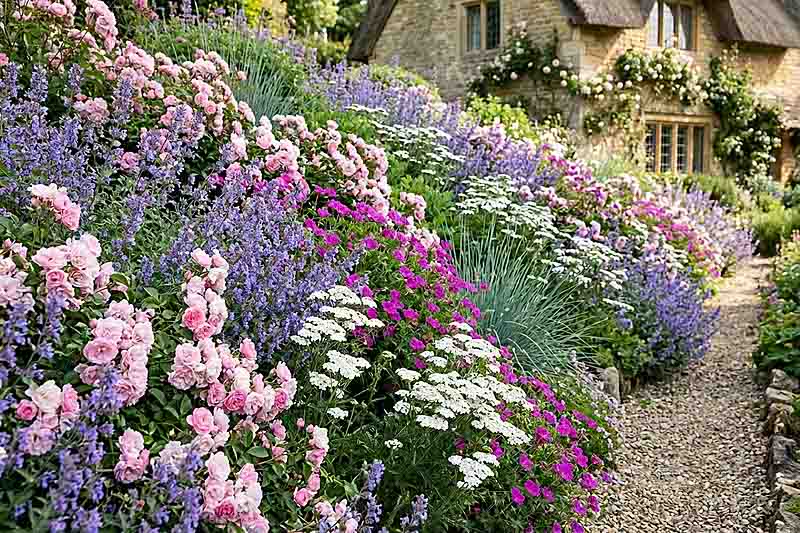
- Front of the border: Hardy geraniums, catmint, salvias, and other compatible lower-growing plants soften the transition to lawns or pathways.
Which plants grow well with roses? Some of the most beautiful rose companions include salvias, nepeta, hardy geraniums, penstemons, and campanulas. Choose combinations that share compatible sunlight, moisture, drainage, and maintenance needs.
Lavender can also look lovely beside roses, but it prefers leaner, drier, more freely draining soil than many roses. Plant it where its drainage needs can be met rather than assuming both plants should receive identical watering.
For proven design ideas, explore Gardenia’s Best English Roses for Mixed Borders and Combining Roses and Clematis.
How do you create flowers from spring to fall? Choose shrubs with complementary flowering periods. Spring lilacs and azaleas can be followed by roses and summer hydrangeas, while certain late-flowering shrubs and colorful foliage extend the display into autumn.
Remember that a rose producing new blooms over several months is different from a hydrangea whose existing flower clusters remain decorative as they age. Both provide valuable summer interest, but they do so in different ways.
For small gardens: Choose compact varieties rather than repeatedly pruning large shrubs to fit limited spaces. A compact rose or dwarf panicle hydrangea may provide all the flower power you need without overwhelming a narrow border.
For a flowering hedge: Consider height, width, density, flowering season, and winter appearance. Deciduous flowering shrubs may provide wonderful seasonal privacy but lose their screening effect after leaf fall.
For pollinator-friendly planting: Include shrubs with accessible flowers, choose regionally native species where appropriate, and mix early-, mid-, and late-season bloomers. Avoid invasive plants and minimize pesticide use.
Gardenia’s design tip: Repeat your main flowering shrubs along the border, then weave a smaller selection of companion plants between them. A beautiful garden usually has a recognizable rhythm rather than a different shrub in every available space.
Find more inspiration in Gardenia’s Beginner’s Guide to Creating a Rose Garden, discover Flowering Shrubs That Bloom All Summer, or explore our complete shrub-growing guides.