Mixed Border Design & Gardening Guides
Wondering how to create a mixed garden border that looks beautifully designed rather than simply crowded with plants? Combining flowering shrubs, roses, perennials, ornamental grasses, and bulbs can produce a garden filled with color, texture, and seasonal interest – but knowing what to plant where makes all the difference. Our mixed border design and gardening guides will help you plan an attractive layout, select compatible plants, organize heights and flowering seasons, calculate spacing, and keep your border flourishing. Whether you’re designing a new flower bed, refreshing a tired shrub border, or creating a romantic cottage garden, discover practical advice to help bring your vision to life.
Learn How to Design and Layer a Beautiful Mixed Garden Border
Have you ever admired a garden border where roses, flowering shrubs, perennials, and ornamental grasses seem to flow naturally together? The effect may look effortless, but it’s usually the result of thoughtful plant placement, repetition, and an understanding of how plants grow.
What is a mixed border? A mixed border combines woody shrubs and herbaceous plants, often including ornamental grasses, spring bulbs, and evergreen accents. Unlike a perennial-only border, its woody framework can provide height, structure, and winter interest even when many flowers have disappeared.
Six steps to designing a beautiful mixed border:
- Understand your space: Measure the border’s length and depth, check sunlight throughout the day, and assess soil texture, drainage, and available moisture. A sunny border along a fence requires different plants from a narrow bed beneath trees.
- Choose your structural plants first: Roses, hydrangeas, compact evergreen shrubs, and other woody plants establish the framework. Position them according to their mature size, not how small they look when purchased.
- Build layers of height: In a one-sided border, taller shrubs generally belong toward the back, medium-height perennials through the middle, and low-growing plants near the front. In an island bed viewed from all sides, taller plants can be positioned toward the center.
- Repeat plants for rhythm: A mixed border often looks more cohesive when several varieties appear in recurring groups. Repeating the same salvia or ornamental grass through the border connects different shrubs visually.
- Combine contrasting textures: Pair rounded hydrangea flowerheads with slender grasses, broad hosta leaves with fine-textured foliage, or generous rose blossoms with upright perennial flower spikes.
- Plan for all seasons: Choose a succession of flowering plants and include foliage, evergreens, decorative stems, and seedheads so the border remains attractive outside peak summer flowering.
How deep should a mixed border be? A narrow border approximately 3 ft. (90 cm) deep can work with compact shrubs and low-growing perennials, but it offers limited room for extensive layering. A border around 5-8 ft. (1.5-2.4 m) deep provides greater flexibility, while larger naturalistic borders may need considerably more space. These are practical starting points, not universal rules.
Should every plant be visible? Not necessarily. A beautiful mixed border uses overlapping foliage and gently interlocking groups. The aim is to hide bare ground and create a generous appearance without overcrowding plants or restricting airflow.
Gardenia’s design trick: Imagine the border with all the flowers removed. Does the arrangement of shrubs, foliage, and grasses still look interesting? If it does, you’ve created a strong foundation.
Explore Gardenia’s step-by-step flower border design guide, small plants for narrow borders, and English roses for mixed borders.
Choose Compatible Plant Combinations, Colors, and Seasonal Flowers
One of the pleasures of designing a mixed border is combining plants that bring out the best in one another. A soft pink rose becomes even more beautiful beside violet-blue salvia, while pale hydrangeas look wonderfully fresh against dark foliage and graceful green grasses.
But a successful planting combination needs more than attractive colors. Plants must also share compatible growing conditions.
Start by matching five essentials:
- Sunlight: Group plants that thrive in similar light conditions, whether full sun, partial sun, or shade.
- Water: Avoid planting drought-loving perennials directly among shrubs that need consistently moist soil unless the site allows different watering arrangements.
- Drainage: Plants adapted to dry, freely draining soil may struggle in heavy, persistently wet ground.
- Hardiness: Check the winter cold tolerance of every plant, especially roses, evergreen shrubs, and ornamental grasses.
- Mature size: Consider eventual height, spread, root competition, and whether neighboring plants will shade or overwhelm one another.
Three inspiring mixed border color schemes:
- Romantic cottage border: Apricot or soft pink roses, violet salvias, lavender-blue catmint, white bellflowers, and graceful grasses create a relaxed and fragrant display.
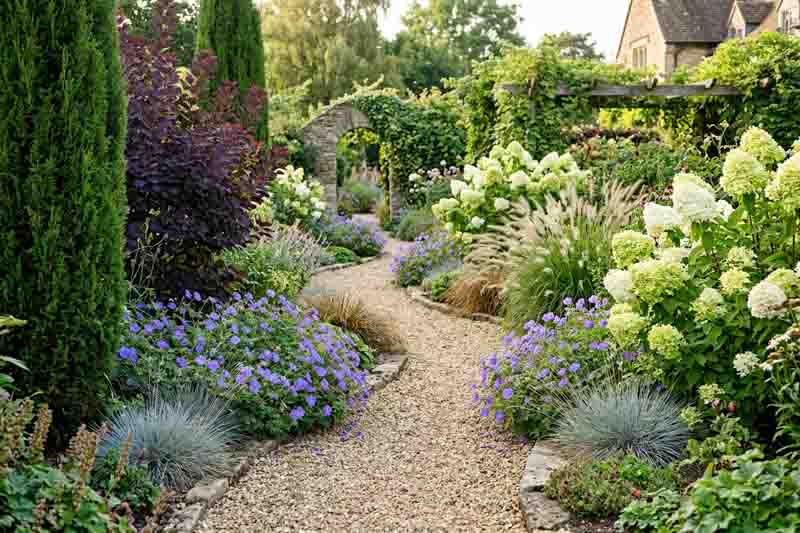
- Elegant contemporary border: Creamy white hydrangeas, dark-leaved shrubs, purple-blue hardy geraniums, and fine-textured ornamental grasses offer striking contrasts without excessive color.
- Naturalistic summer border: Purple coneflowers, golden yarrow, airy verbena, late-season asters, and ornamental grasses create movement and attract visiting pollinators.
How do you prevent flowering gaps? Don’t rely on plants that all reach their peak in June. Combine spring-flowering bulbs and shrubs with early-summer roses and salvias, midsummer hydrangeas and coneflowers, and late-flowering asters and stonecrops.
Flowering times depend on local climate and cultivar, so use bloom seasons as a guide rather than expecting exact calendar dates.
What about shade gardens? Mixed borders can be just as beautiful in partial shade. Hydrangeas, hostas, heucheras, Japanese forest grass, and suitable woodland perennials provide contrasting foliage and seasonal flowers. Pay close attention to soil moisture, particularly beneath established trees.
Don’t forget pollinators. Incorporate regionally appropriate plants with accessible flowers and overlapping blooming periods. Early spring flowers, summer perennials, and late-season nectar sources can make a mixed border more valuable to bees and butterflies.
Gardenia’s planting principle: Choose the structural shrubs first, then select flowers and foliage plants that share their conditions. Repeat the same companion plants throughout the border, changing the emphasis as the seasons progress.
For more ideas, explore the best hydrangea companion plants, hosta companion plants for shade, and Gardenia’s perennial bloom calendar.
If your garden loses color halfway through summer, read How to Find Plants That Bloom When Yours Don’t.
Learn How to Plant, Space, and Maintain a Mixed Border
A mixed border should grow more beautiful as it matures. The trick is allowing enough space for shrubs to develop while keeping the planting full of flowers and attractive foliage. Good preparation and sensible maintenance make that balance easier to achieve.
Before planting your mixed border:
- Prepare the soil: Remove persistent weeds and address compaction or drainage problems. Improve the soil according to its existing condition and the requirements of your plants. Not every species prefers rich soil.
- Position shrubs before perennials: Arrange the largest plants first, allowing for their mature spread and access for pruning. Then place smaller perennials and grasses around them.
- Check planting distances: A shrub that eventually reaches 5 ft. wide needs considerably more space than a compact salvia. Avoid applying the same spacing rule to every plant.
- Choose a suitable planting season: Spring and fall are often excellent for establishing container-grown plants, depending on climate. Avoid severe heat, frozen soil, and periods of significant drought.
- Water during establishment: New shrubs and perennials require appropriate moisture until their root systems develop, even if they will become relatively drought-tolerant later.
How many plants do you need? Start with the dimensions of your border, then account for the mature spread of each species. Large shrubs take up more room than their nursery pots suggest. Calculate quantities by plant type and desired coverage rather than relying on one plants-per-square-foot rule.
How do you keep a mixed border low-maintenance? Choose healthy, disease-resistant varieties appropriate to your climate, repeat manageable plants, mulch where suitable, and leave enough room for growth. Avoid planting vigorous species where constant pruning or division will be required.
Should you prune everything at the same time? No. Different shrubs bloom on different ages of wood. Many spring-flowering shrubs are pruned after flowering, while panicle hydrangeas and certain other summer-flowering shrubs can be pruned during dormancy. Roses also vary according to their type. Identify each plant before pruning.
What about deadheading and dividing? Some perennials rebloom after spent flowers are removed, while others produce decorative seedheads worth keeping. Divide overcrowded clumps when appropriate, but leave long-lived plants such as established baptisias undisturbed whenever possible.
How do you refresh an older mixed border? Begin by identifying its strongest plants. Keep healthy structural shrubs, remove unsuitable or overcrowded specimens, divide selected perennials, and introduce new plants to fill seasonal gaps. Often a few carefully chosen additions can transform the entire planting.
For a more wildlife-friendly approach: Leave selected seedheads and stems through winter, minimize pesticide use, and include suitable native plants. Remove diseased material when necessary rather than treating all winter cleanup the same way.
Gardenia’s final advice: Plan for the garden you want in three to five years, not just how it will look immediately after planting. Give shrubs room to develop, let suitable perennials gradually fill the spaces, and keep access for occasional maintenance.
Learn more in Gardenia’s low-maintenance perennial guide, explore spacing and plant selection for small borders, or discover more practical advice in our shade garden design and care guide.
A successful mixed border is never quite static. Shrubs mature, perennials spread, and the balance of colors and textures evolves with the seasons. With the right plants and a thoughtful layout, your border can become more beautiful and rewarding every year.