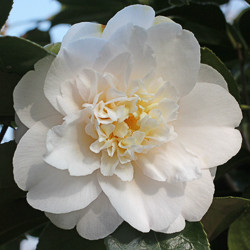
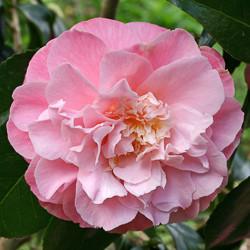
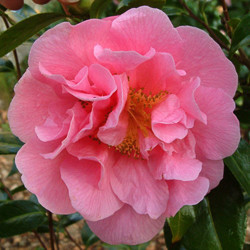
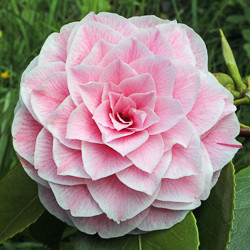
How to Choose Camellias, How to Grow Camellias, How to Care for Camellias, Landscaping with Camellias
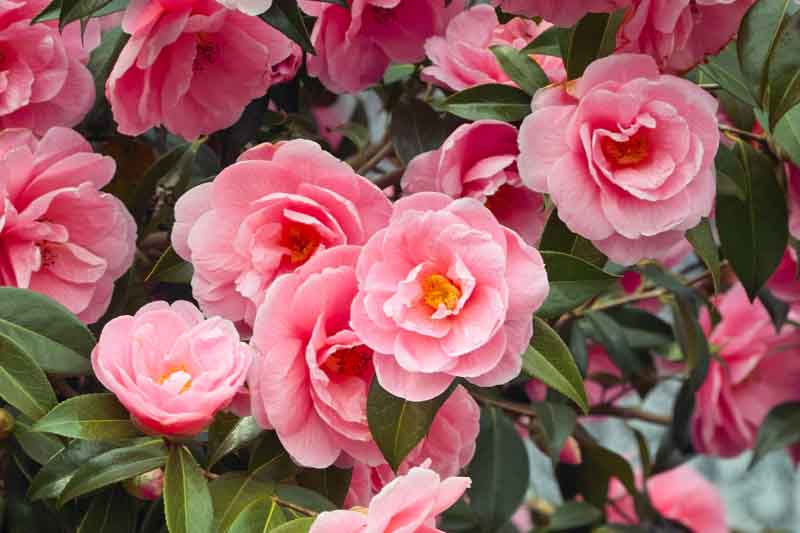
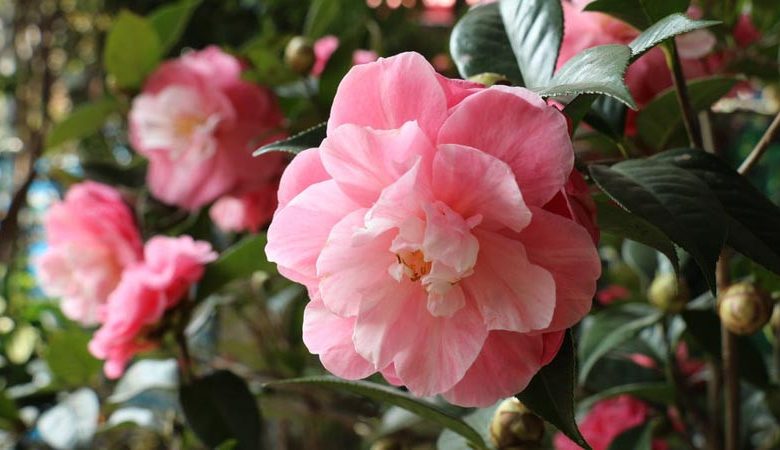


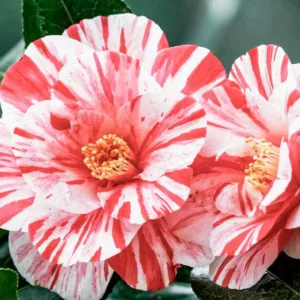
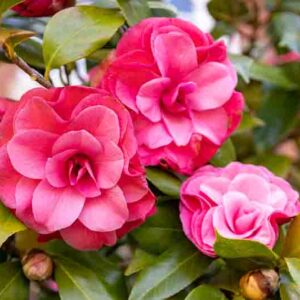
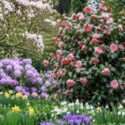
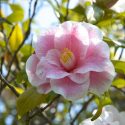
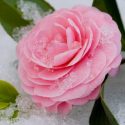
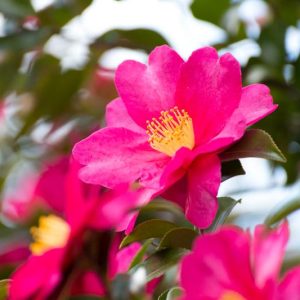
Few evergreen shrubs rival the elegance of a camellia in bloom. Their polished foliage provides structure throughout the year, while exquisite white, pink, red, striped, and variegated flowers brighten the garden from fall through spring, depending on the species, cultivar, and climate.
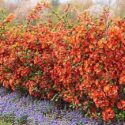
Camellias are often associated with formal Southern gardens, woodland estates, and Japanese landscapes, but their uses are far broader. The right cultivar can become a flowering hedge, foundation shrub, espalier, container specimen, courtyard focal point, woodland accent, or small evergreen tree.
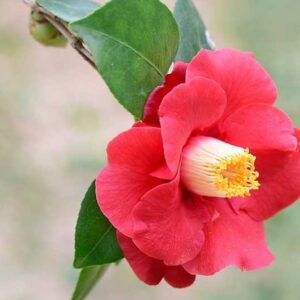
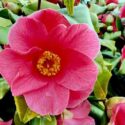
They are also more diverse than many gardeners realize. Some camellias flower in fall, others in winter or spring. Some tolerate considerable sun, while others need filtered shade. Flowers range from simple singles with exposed golden stamens to perfectly symmetrical formal doubles. Mature plants may remain compact or eventually exceed 15 feet in height.
This guide explains the major camellia types, flower forms, bloom seasons, growing requirements, landscape uses, common problems, and selection criteria you need to choose a camellia that will thrive in your garden.
Do not choose a camellia by flower color alone. Hardiness, bloom season, mature size, growth habit, sun exposure, and landscape use determine whether the plant will perform well over the long term.
Camellia is an accepted genus in the tea family, Theaceae, native primarily to tropical and subtropical parts of Asia.
Kew’s Plants of the World Online currently recognizes 241 accepted species of Camellia, although only a relatively small number are widely grown as ornamental garden plants.
Camellias are evergreen shrubs or small trees with leathery, usually glossy leaves. Their flowers may be small and simple or large and densely petaled. Individual species and cultivars differ considerably in mature size, growth rate, flowering season, cold tolerance, fragrance, and light requirements.
The most familiar ornamental species are Camellia sasanqua and Camellia japonica. Gardeners also grow Williamsii hybrids, Hiemalis and Vernalis camellias, Reticulata hybrids, fragrant species hybrids, and cold-hardy introductions.
Another important species, Camellia sinensis, supplies the young leaves and buds used to make white, green, oolong, and black tea. The differences among these teas result largely from cultivar, growing conditions, harvest timing, and processing rather than from entirely different plant species.
| Camellia Group | Typical Bloom Season | Main Characteristics | Best Uses |
|---|---|---|---|
| Japanese camellia Camellia japonica |
Winter through spring | Large, often formal flowers; broad glossy leaves; dense, substantial growth; usually prefers partial shade | Specimens, woodland gardens, foundations, courtyards, and containers |
| Sasanqua camellia Camellia sasanqua |
Fall through early winter | Smaller leaves and flowers; abundant bloom; graceful growth; often faster and more sun-tolerant | Hedges, screens, espaliers, slopes, walls, and mixed borders |
| Williamsii hybrids Camellia × williamsii |
Midwinter through spring | Generous flowering, graceful growth, attractive evergreen foliage, and often good garden performance | Specimens, borders, informal gardens, and large containers |
| Hiemalis and Vernalis horticultural groups | Fall through winter | Often intermediate between sasanquas and japonicas in flower, foliage, and bloom timing | Hedges, screens, early-season specimens, and mixed borders |
| Reticulata and Reticulata hybrids | Mid- to late season | Exceptionally large, dramatic flowers; relatively open growth; often best in mild climates | Collectors’ gardens and dramatic specimens |
| Fragrant species hybrids | Varies by parentage | Often smaller flowers and finer foliage, with perfume inherited from species such as Camellia lutchuensis | Paths, entrances, patios, courtyards, and close-up viewing |
Camellia japonica is the classic camellia of historic gardens. It generally develops into a dense, upright evergreen shrub or small tree with broad, lustrous leaves.
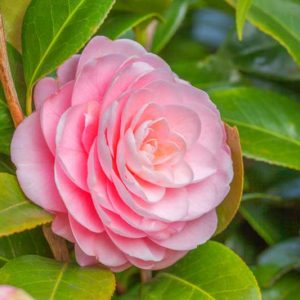
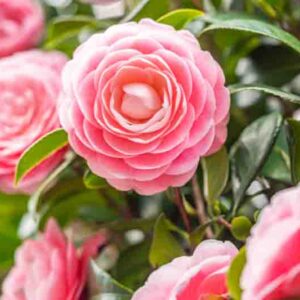
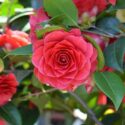
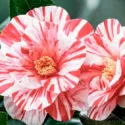
Japonicas are especially prized for their large flowers and astonishing variety of forms. Cultivars may have simple single flowers, loose peony blooms, rose-like doubles, or perfectly symmetrical formal doubles. Colors range from pure white and shell pink to rose, crimson, and deep red, with many striped, edged, mottled, or variegated selections.
Most japonicas flower during winter and spring. They generally perform best in partial shade or bright woodland light, with protection from intense afternoon sun, cold winds, and sudden temperature changes.
Camellia sasanqua usually opens the ornamental camellia season, often flowering from fall into early winter.
Sasanquas generally have smaller leaves, lighter flowers, and a more open or graceful habit than japonicas. Their individual flowers may be less imposing, but they are often produced in remarkable abundance.
Many sasanquas grow relatively quickly and tolerate more direct sunlight once established, provided their roots remain cool and evenly moist. Their flexible branches make them particularly suitable for flowering hedges, privacy screens, espaliers, wall training, and informal borders.
Williamsii camellias originated from crosses between Camellia japonica and Camellia saluenensis. They combine attractive evergreen foliage with generous flower production and often display a graceful, less rigid habit than traditional japonicas.
They generally flower from midwinter into spring. Some cultivars shed faded flowers more cleanly than japonicas, which can help the plant maintain a tidy appearance during a long flowering season.
| Hardiness |
6 - 9 |
|---|---|
| Heat Zones |
7 - 8 |
| Climate Zones | 4, 5, 6, 7, 8, 9, 12, 14, 15, 16, 17, 18, 19, 20, 21, 22, 23, 24 |
| Plant Type | Shrubs |
| Genus | Camellia |
| Exposure | Partial Sun, Shade |
| Season of Interest | Spring, Fall, Winter |
| Height | 2' - 20' (60cm - 6.1m) |
| Spread | 2' - 10' (60cm - 3m) |
| Maintenance | Low |
| Water Needs | Average |
| Soil Type | Clay, Loam, Sand |
| Soil pH | Acid, Neutral |
| Soil Drainage | Moist but Well-Drained, Well-Drained |
| Characteristics | Cut Flowers, Fragrant, Showy |
| Landscaping Ideas | Beds And Borders, Hedges And Screens, Patio And Containers, Wall-Side Borders, Walls And Fences |
| Garden Styles | City and Courtyard, Informal and Cottage, Japanese Garden, Traditional Garden |
For a more detailed comparison, see Types of Camellias: Japonica, Sasanqua and More.
The flower may attract your attention, but the plant’s long-term performance depends on characteristics that are less obvious in a nursery photograph.
Choose a sasanqua, Hiemalis-type camellia, or an early Vernalis cultivar.
Choose a japonica, Williamsii hybrid, or another documented mid- to late-season cultivar.
Choose an upright, vigorous sasanqua or another cultivar documented for dense landscape growth.
Choose a japonica or Reticulata hybrid with the flower form and climate tolerance you prefer.
Choose a cultivar specifically documented as fragrant, often one bred from Camellia lutchuensis.
Choose a naturally compact cultivar rather than relying on repeated hard pruning to restrain a large plant.
Before purchasing, compare:
Explore the detailed guide Which Camellia Is Right for My Garden?, or compare individual cultivars with the Camellia Comparison Tool.
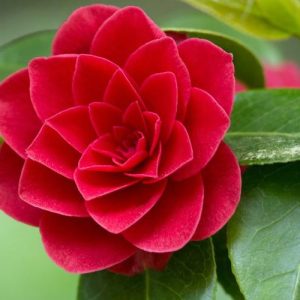
Camellias are commonly grouped into six principal flower forms according to the arrangement of their petals, petaloids, and stamens. The peony category may be subdivided into loose and full peony forms in cultivar registration and exhibition terminology.
|
Single |
Semi-Double |
Anemone Form |
|
Peony Form |
Rose-Form Double |
Formal Double |
Design consideration: Single and semi-double flowers have a natural appearance and display their stamens prominently. Peony and anemone forms look lush and informal, while rose-form and formal doubles create a more refined or traditional effect.
Camellia flowers range from miniature blooms measuring approximately 2.5 inches or less to exceptionally large flowers exceeding 5 inches across. Flower size should be considered alongside plant habit and exposure.
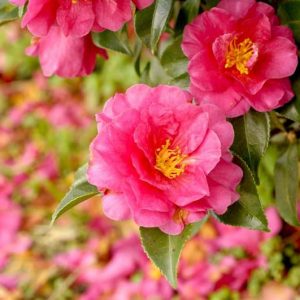
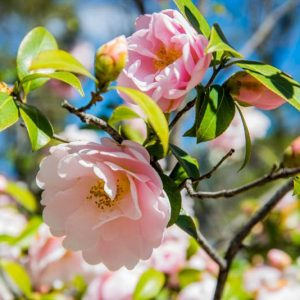
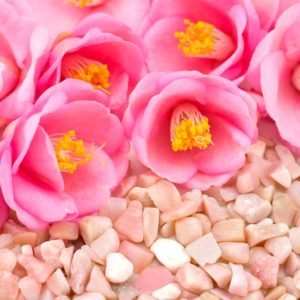
Colors include pure white, ivory, blush, shell pink, rose, coral pink, lavender pink, crimson, scarlet, and deep red. Some cultivars display darker streaks, white margins, contrasting petal edges, mottling, or irregular variegation.
Color may vary slightly with climate, flower age, light exposure, and seasonal temperatures. A cultivar should therefore be chosen for its total garden performance rather than for one close-up photograph.
Most traditional ornamental camellias have little or no noticeable scent. Fragrance is more common among certain sasanquas, selected japonicas, and hybrids bred using fragrant species such as Camellia lutchuensis.
Even fragrant camellias usually offer a refined close-range perfume rather than a scent that fills an entire garden. Temperature, wind, rain, flower age, and individual perception all affect how strongly the fragrance is noticed.
Explore Most Fragrant Camellias for documented scented selections.
Camellias are classified as early-, mid-, or late-season bloomers relative to other camellias. These classifications are more reliable than assigning every cultivar to fixed calendar months because flowering shifts with latitude, elevation, exposure, winter temperatures, and seasonal weather.
| Season | Approximate Northern Hemisphere Timing | Common Camellia Groups |
|---|---|---|
| Early season | Fall through early winter | Sasanquas, Hiemalis types, early Vernalis cultivars, and selected hybrids |
| Midseason | Winter into early spring | Vernalis hybrids, early japonicas, Williamsii hybrids, and other species hybrids |
| Late season | Late winter through spring | Many japonicas, Williamsii hybrids, and Reticulata cultivars |
In suitable climates, combining carefully selected early-, mid-, and late-season cultivars can provide flowers from approximately October into May. The sequence may contain occasional gaps, and colder climates usually have a shorter season.
Most japonicas and many garden hybrids grow best in partial shade or bright, filtered light. A position with morning light and protection from intense afternoon sun is ideal in many climates.
Established sasanquas tolerate more direct sun than typical japonicas, provided their soil remains evenly moist and their roots are protected with organic mulch.
Deep shade can reduce flowering, while excessive afternoon sun may scorch foliage, fade flowers, and increase drought stress.
Camellias are ericaceous plants and perform best in acidic, organically rich soil. A pH of approximately 5.5-6.5 is generally favorable.
The soil should retain enough moisture to prevent drought stress while draining freely after rain. Waterlogged ground can deprive roots of oxygen and encourage destructive root diseases.
Where native soil is alkaline, camellias are usually easier to grow in containers filled with a peat-free ericaceous potting mix than by repeatedly attempting to acidify a large garden bed.
Never plant a camellia deeply. Position the upper surface of the root ball level with or slightly above the surrounding soil, particularly in heavy ground.
Deep planting can reduce root aeration, weaken the plant, and increase the likelihood of crown and root problems.
Keep newly planted camellias consistently moist while their root systems establish. Mature plants also benefit from deep watering during prolonged dry periods.
Summer moisture is particularly important because camellias are developing the flower buds that will produce the following fall, winter, or spring display. Summer drought can contribute to weak bud development and premature bud drop.
Apply 2-3 inches (5-7 cm) of leaf mold, pine bark, composted bark, or another organic mulch over the root zone.
Keep mulch away from the trunk and crown. Camellias have shallow roots, so avoid aggressive digging, hoeing, or cultivation around their base.
Healthy camellias growing in fertile soil may require little supplemental feeding. Where growth is weak or a nutrient deficiency is confirmed, apply a fertilizer formulated for acid-loving plants after flowering or in spring, following label instructions.
Avoid excessive nitrogen and late-season feeding. Too much fertilizer can produce soft growth, increase stress, and interfere with flower-bud development.
Camellias naturally develop attractive frameworks and generally need little routine pruning. Remove dead, diseased, broken, crossing, crowded, or badly positioned branches as required.
Prune after flowering so the plant has time to develop new shoots and flower buds for the following season. Late pruning can remove the buds responsible for the next display.
See When and How to Prune Camellias for timing, renovation, size reduction, hedge pruning, and espalier training.
Camellias grow well in containers and are particularly useful where garden soil is alkaline, poorly drained, or unavailable.
Container-grown camellias dry more quickly than plants in the ground and therefore need closer attention during summer.
A well-shaped japonica, Williamsii hybrid, or Reticulata hybrid can become a dramatic focal point in a lawn, courtyard, woodland opening, or foundation planting.
Upright sasanquas are especially useful for flowering hedges and privacy screens because they tend to grow relatively quickly, tolerate more sun, and respond well to selective pruning.
Japonicas and Williamsii hybrids combine naturally with Japanese maples, rhododendrons, azaleas, pieris, ferns, epimedium, hellebores where soil pH permits, and woodland bulbs.
Explore Best Companion Plants for Camellias for compatible trees, shrubs, perennials, grasses, ferns, and bulbs.
Flexible sasanqua branches can be trained against walls, fences, and trellises. Select a cultivar with an appropriate mature size and growth habit, and provide a support structure that allows air circulation behind the plant.
Compact cultivars bring evergreen structure and cool-season flowers to patios, terraces, balconies, entrances, and enclosed gardens.
Camellia blooms can be displayed individually in shallow bowls or floated on water. Flowers used for indoor display are best cut shortly after opening and handled carefully to avoid bruising.
Many familiar garden camellias are best suited to USDA Zones 7-9, but breeding and selection have produced cultivars capable of growing in protected Zone 6 gardens.
Cold hardiness is influenced by more than the minimum temperature listed on a label. Establishment, drainage, summer growth, wind exposure, sudden temperature changes, and the condition of flower buds all affect winter performance.
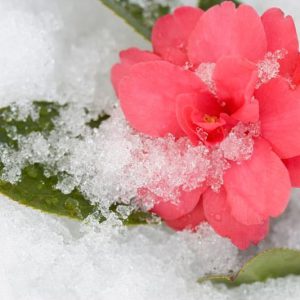
A shrub may survive cold weather even when exposed buds or open flowers are damaged. In regions with frequent late freezes, later-blooming cultivars may provide a more dependable display than plants opening during midwinter thaws.
See Cold-Hardy Camellias for cultivar recommendations and winter-protection guidance.
Correct siting prevents many camellia problems. Poor drainage, alkaline soil, deep planting, summer drought, excessive fertilizer, and badly timed pruning are frequent causes of poor growth or flowering.
| Symptom | Possible Causes | First Checks |
|---|---|---|
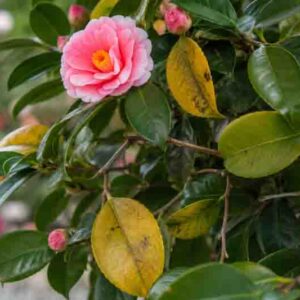
| Yellow leaves | Alkaline soil, iron chlorosis, nutrient deficiency, root stress, pests, or natural leaf aging | Examine the yellowing pattern, soil pH, drainage, roots, and leaf undersides |
| Bud drop or failure to flower | Summer drought, frost, incorrect pruning, transplant stress, excessive feeding, or natural thinning | Review summer watering, pruning dates, exposure, and recent weather |
| Brown or rotting flowers | Frost, rain damage, Botrytis, or camellia petal blight | Look for rapid browning, fallen petals, fungal structures, and the timing of symptoms |
| Black coating on leaves | Sooty mold growing on honeydew from scale insects, aphids, or other sap-feeding pests | Inspect stems and leaf undersides for insects or scale coverings |
| Dieback or sudden decline | Canker, root rot, damaged roots, poor drainage, deep planting, or severe environmental stress | Check stem lesions, root condition, planting depth, drainage, and soil moisture |
Use Gardenia’s diagnostic resources:
Camellias provide evergreen structure and exquisite flowers during seasons when relatively few shrubs are in bloom. Japonicas supply large winter and spring flowers, while sasanquas open the season in fall and adapt particularly well to hedges, screens, walls, and brighter exposures. Williamsii, Vernalis, Hiemalis, Reticulata, fragrant, and cold-hardy hybrids expand the possibilities further.
The best camellia is not necessarily the one with the most dramatic flower. It is the cultivar whose hardiness, mature dimensions, growth habit, flowering season, sun tolerance, and landscape role fit your garden.
Plant it shallowly in acidic, organically rich, well-drained soil; provide consistent summer moisture; protect the shallow roots; and prune after flowering only when necessary. With the right site and cultivar, a camellia can remain one of the most beautiful and enduring plants in the garden for decades.
Camellias are generally low-maintenance once correctly sited. They need acidic, organically rich, well-drained soil, partial shade or suitable filtered light, consistent moisture, shallow planting, and protection from severe environmental stress.
Camellia japonica generally has larger flowers, broader leaves, denser growth, and a winter-to-spring flowering season. Camellia sasanqua usually blooms earlier, grows more quickly, has smaller leaves and flowers, and tolerates more direct sun once established.
Depending on the species, cultivar, and climate, camellias may bloom from fall through spring. Sasanquas usually flower first, followed by Vernalis and Hiemalis types, japonicas, Williamsii hybrids, and later cultivars.
Established Camellia sasanqua cultivars can tolerate considerable sun in many climates when their roots remain cool and evenly moist. Most japonicas and many hybrids prefer partial shade and protection from intense afternoon sun.
Camellias need acidic, organically rich, moisture-retentive but well-drained soil. A pH of approximately 5.5-6.5 is generally favorable. On alkaline soil, growing camellias in containers filled with ericaceous potting mix is often easier.
Camellias develop many of the flower buds responsible for the following season during summer. Prolonged drought can weaken growth, interfere with bud development, and contribute to premature bud drop.
Prune camellias after flowering and before substantial new flower-bud development. Routine pruning is rarely necessary beyond removing dead, damaged, crossing, crowded, or badly positioned branches.
Yes. Choose a compact cultivar, a container with excellent drainage, and peat-free ericaceous potting mix. Keep the roots consistently moist, protect the pot from extreme temperatures, and use rainwater where tap water is highly alkaline.
Updated: July 2026 • Reviewed by Gardenia Editors
| Hardiness |
6 - 9 |
|---|---|
| Heat Zones |
7 - 8 |
| Climate Zones | 4, 5, 6, 7, 8, 9, 12, 14, 15, 16, 17, 18, 19, 20, 21, 22, 23, 24 |
| Plant Type | Shrubs |
| Genus | Camellia |
| Exposure | Partial Sun, Shade |
| Season of Interest | Spring, Fall, Winter |
| Height | 2' - 20' (60cm - 6.1m) |
| Spread | 2' - 10' (60cm - 3m) |
| Maintenance | Low |
| Water Needs | Average |
| Soil Type | Clay, Loam, Sand |
| Soil pH | Acid, Neutral |
| Soil Drainage | Moist but Well-Drained, Well-Drained |
| Characteristics | Cut Flowers, Fragrant, Showy |
| Landscaping Ideas | Beds And Borders, Hedges And Screens, Patio And Containers, Wall-Side Borders, Walls And Fences |
| Garden Styles | City and Courtyard, Informal and Cottage, Japanese Garden, Traditional Garden |
Create a membership account to save your garden designs and to view them on any device.
Becoming a contributing member of Gardenia is easy and can be done in just a few minutes. If you provide us with your name, email address and the payment of a modest $25 annual membership fee, you will become a full member, enabling you to design and save up to 25 of your garden design ideas.
Join now and start creating your dream garden!
Create a membership account to save your garden designs and to view them on any device.
Becoming a contributing member of Gardenia is easy and can be done in just a few minutes. If you provide us with your name, email address and the payment of a modest $25 annual membership fee, you will become a full member, enabling you to design and save up to 25 of your garden design ideas.
Join now and start creating your dream garden!

Optimized.webp)
Optimized.webp)