Fragrant Delight Heliotrope, Garden Heliotrope, Heliotrope, Cherry Pie Plant, Turnsole
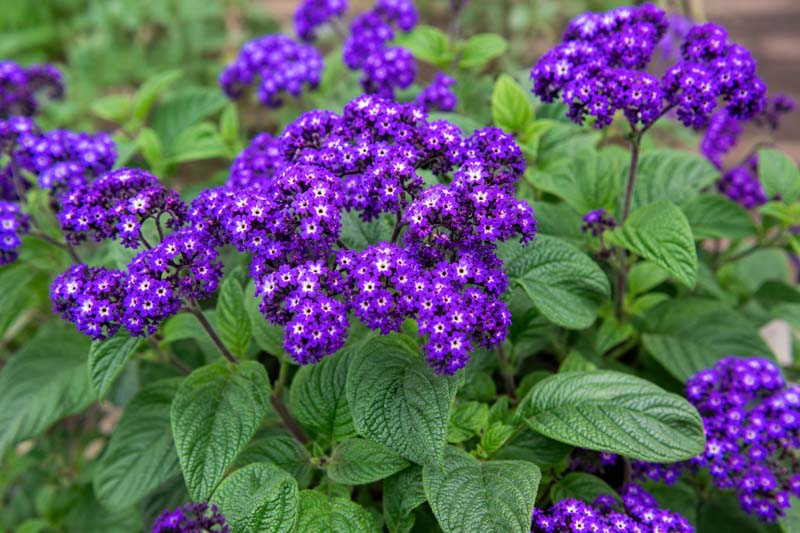


Heliotropium arborescens ‘Fragrant Delight’ is a richly scented garden heliotrope loved for deep purple flower clusters, dark veined foliage, and a sweet fragrance often compared to vanilla, almond, or cherry pie. This tender perennial is usually grown as a summer annual in colder climates, where it shines in patio containers, fragrant borders, window boxes, cottage gardens, and pollinator plantings. Blooming from summer into fall, Fragrant Delight heliotrope brings old-fashioned perfume and saturated color to places where people can enjoy it up close – beside doors, paths, terraces, benches, and outdoor dining areas.
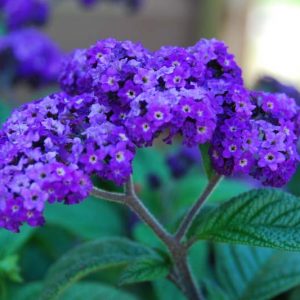
Tender garden heliotrope with large, deep purple, highly fragrant flower clusters above dark green, prominently veined leaves.
Use: Excellent for fragrant gardens, patio containers, summer bedding, cottage gardens, pollinator gardens, window boxes, and entryway plantings.
Highlight: A classic cherry pie flower with sweet perfume, rich violet-purple color, and a long warm-season display.
| Botanical Name | Heliotropium arborescens ‘Fragrant Delight’ |
|---|---|
| Family | Boraginaceae |
| Common Names | Fragrant Delight heliotrope, garden heliotrope, cherry pie flower, Peruvian heliotrope, vanilla flower |
| Plant Type and Habit | Tender evergreen perennial shrub; commonly grown as a warm-season annual; bushy and compact |
| Hardiness | Usually hardy in USDA Zones 9 to 11; grown as an annual in colder regions |
| Size | Typically 15 to 24 inches tall and 15 to 18 inches wide |
| Sun and Exposure | Full sun to partial sun; light afternoon shade helps in hot climates |
| Soil | Fertile, organically rich, moist but well-drained soil |
| Bloom Time | Summer to fall, often until frost with good care |
| Flower Color | Deep purple to violet-purple |
| Fragrance | Sweet, vanilla-like, almond-like, or cherry pie scented |
| Wildlife Value | Attracts bees, butterflies, and other pollinators |
Grow it close to people. ‘Fragrant Delight’ is most valuable where its perfume can be noticed – near patios, steps, seating, and doorways.
Small pots dry quickly. If heliotrope wilts repeatedly, flowering slows and lower leaves may yellow or drop.
Think of ‘Fragrant Delight’ as a living perfume accent. Its best position is not hidden in the border, but close enough to brush past.
Heliotropium arborescens ‘Fragrant Delight’ is a fragrant selection of garden heliotrope, an old-fashioned ornamental native to Peru. It produces rounded clusters of tiny purple flowers held above dark green, oval, deeply veined leaves. The plant has a compact, shrubby look and a refined texture that makes it useful in containers as well as bedding displays.
‘Fragrant Delight’ usually forms a bushy mound about 15 to 24 inches tall and 15 to 18 inches wide. In cool and temperate climates, it is grown as an annual. In mild frost-free regions, it may persist as a tender perennial shrub. Pinching early growth helps create a fuller plant with more flowering stems.
The flowers are small individually but impressive in clusters. Their deep violet-purple color gives containers and borders a rich, velvety look from summer into fall. The fragrance is strongest in warm, bright conditions and is the main reason gardeners place heliotrope near paths, porches, and seating areas.
The foliage is dark green, oval, and prominently veined, creating a quilted backdrop for the flowers. This texture gives the plant substance even when it is between bloom flushes. In mixed containers, heliotrope works well as the fragrant middle layer between upright accents and trailing plants.
‘Fragrant Delight’ is frost tender. Outdoors, it performs best in warm weather with bright light, steady moisture, and good drainage. In hot summer regions, a little afternoon shade can reduce stress. In colder climates, treat it as a summer annual or overwinter a container plant indoors before frost.
‘Fragrant Delight’ attracts bees, butterflies, and other beneficial insects. Its long bloom season helps extend nectar availability through summer. For stronger wildlife value and a better visual effect, plant several heliotropes together rather than scattering single plants.
Heliotrope is often described as deer-resistant, but no ornamental plant is deer-proof. Browsing may occur where deer or rabbits are hungry, especially on young growth. Protect new transplants if browsing pressure is high.
‘Fragrant Delight’ prefers average to regular moisture and is not a true drought plant. Established plants can tolerate brief dry spells, but prolonged dryness reduces flowering and weakens foliage. Containers need the closest attention during heat and wind.
Heliotrope contains toxic pyrrolizidine alkaloids and should not be ingested. It is especially concerning for horses and grazing animals. Grow it as an ornamental only, keep it away from livestock areas, and do not use it in teas, edible decorations, herbal remedies, or animal forage.
Heliotropium arborescens ‘Fragrant Delight’ is not generally treated as invasive in temperate gardens. In cold climates, frost ends the season. In mild regions, deadheading helps keep plants tidy and reduces unwanted seedlings.
Grow ‘Fragrant Delight’ in full sun to partial sun. At least 6 hours of sun supports stronger flowering and better plant shape. In very hot climates, morning sun with light afternoon shade helps prevent wilting and keeps foliage fresher.
Plant in fertile, moist but well-drained soil. Compost-enriched loam or high-quality potting mix is ideal. Heavy soil should be improved so roots do not sit wet, while sandy soil benefits from organic matter to hold moisture.
Water regularly during active growth. In containers, water when the top inch of potting mix begins to dry, then water deeply until excess drains away. Avoid leaving pots standing in saucers of water.
Feed container plants about once a month with a balanced fertilizer, or use a slow-release product at planting. Avoid excessive nitrogen, which can encourage leafy growth at the expense of flowers.
Plant outdoors after all danger of frost has passed. Space plants 12 to 15 inches apart for airflow and room to mound. Set the root ball at the same depth it grew in the nursery pot, firm the soil gently, and water well.
Pinch young plants once or twice to encourage branching. Remove faded flower clusters to keep plants neat and productive. If growth becomes leggy in midsummer, trim lightly, water deeply, and resume gentle feeding.
In cold climates, bring potted heliotrope indoors before frost. Place it in the brightest window available, preferably in a cool room with good airflow. Water sparingly in winter, keeping the root ball slightly moist but not wet.
Named cultivars such as ‘Fragrant Delight’ are best propagated from cuttings if you want plants that match the parent. Take softwood cuttings in warm weather and root them in a moist, well-drained medium.
‘Fragrant Delight’ is generally easy to grow when light, water, and drainage are balanced. Most problems are linked to drought stress, soggy roots, indoor overwintering, or poor airflow.
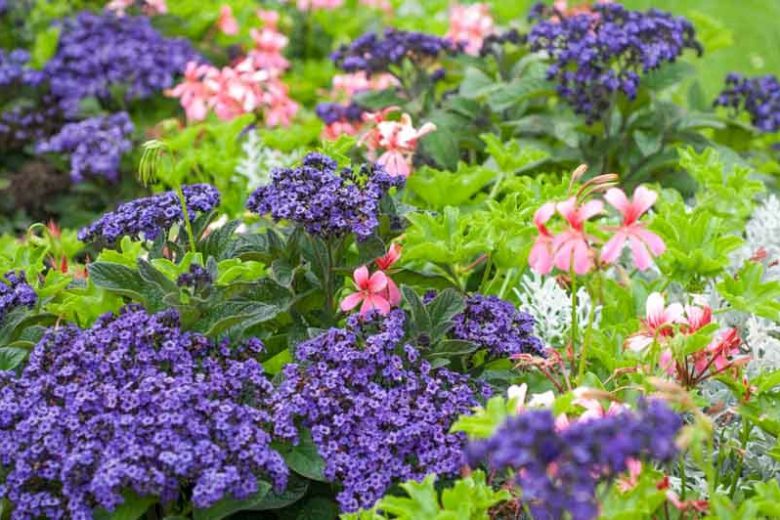
‘Fragrant Delight’ pairs best with plants that enjoy full sun to partial sun, well-drained soil, and average to regular moisture. Its deep purple flowers look especially good with silver foliage, white blooms, lavender-blue spikes, pink geraniums, and trailing annuals.
For an elegant container, combine purple heliotrope with silver foliage and white or pale lavender trailing flowers.
Heliotropium arborescens ‘Fragrant Delight’ is a fragrant garden heliotrope with deep purple flower clusters, dark green veined foliage, and a sweet vanilla-cherry scent. It is a tender perennial usually grown as a summer annual in colder climates.
Fragrant Delight heliotrope typically grows 15 to 24 inches tall and 15 to 18 inches wide, depending on light, moisture, feeding, and container size.
Yes. Fragrant Delight heliotrope is a tender perennial in warm climates, usually USDA Zones 10 to 12. In colder regions, it is commonly grown as an annual or overwintered indoors.
Fragrant Delight heliotrope has a sweet fragrance often compared to vanilla, cherry pie, almond, or warm sugar. The scent is most noticeable in warm, bright conditions.
Fragrant Delight heliotrope performs best with at least 6 hours of sun. In hot climates, morning sun and light afternoon shade can help reduce stress.
Yes. Fragrant Delight heliotrope is excellent in containers. Use a pot with drainage holes, fertile potting mix, regular watering, and monthly feeding during active growth.
Yes. Heliotrope contains toxic pyrrolizidine alkaloids and should not be ingested. It is especially concerning for horses and grazing animals.
Gardenia – Heliotropium arborescens: https://www.gardenia.net/plant/heliotropium-arborescens
Ball Seed – Heliotrope Fragrant Delight: https://www.ballseed.com/PlantInfo/?phid=032300001001949
Ball Seed – Fragrant Delight Bench Card: https://info.ballseed.com/utility/benchcardpdf.aspx?imgid=20926&phid=032300001001949
Gardenia – Heliotropium: https://www.gardenia.net/plants/genera/heliotropium-heliotrope
MSD Veterinary Manual – Pyrrolizidine Alkaloidosis in Animals: https://www.msdvetmanual.com/toxicology/pyrrolizidine-alkaloidosis/pyrrolizidine-alkaloidosis-in-animals
Updated: June 2026 • Reviewed by Gardenia Editors
| Hardiness |
9 - 11 |
|---|---|
| Heat Zones |
9 - 11 |
| Climate Zones | 15, 16, 17, 23, 24, H1, H2 |
| Plant Type | Houseplants, Shrubs |
| Plant Family | Boraginaceae |
| Genus | Heliotropium |
| Common names | Heliotrope |
| Exposure | Full Sun, Partial Sun |
| Season of Interest | Summer (Early, Mid, Late), Fall |
| Height | 1' - 2' (30cm - 60cm) |
| Spread | 1' - 2' (30cm - 60cm) |
| Spacing | 12" - 15" (30cm - 40cm) |
| Maintenance | Low |
| Water Needs | Average |
| Soil Type | Loam, Sand |
| Soil pH | Acid, Alkaline, Neutral |
| Soil Drainage | Moist but Well-Drained |
| Characteristics | Fragrant, Showy, Evergreen |
| Tolerances | Deer, Heat |
| Garden Uses | Beds And Borders, Patio And Containers |
| Garden Styles | City and Courtyard, Coastal Garden, Informal and Cottage |
| Toxic to Humans | Medium severity |
| Toxic to Cats | Not toxic |
| Toxic to Dogs | Not toxic |
| Toxic to Horses | Toxic |


| Hardiness |
9 - 11 |
|---|---|
| Heat Zones |
9 - 11 |
| Climate Zones | 15, 16, 17, 23, 24, H1, H2 |
| Plant Type | Houseplants, Shrubs |
| Plant Family | Boraginaceae |
| Genus | Heliotropium |
| Common names | Heliotrope |
| Exposure | Full Sun, Partial Sun |
| Season of Interest | Summer (Early, Mid, Late), Fall |
| Height | 1' - 2' (30cm - 60cm) |
| Spread | 1' - 2' (30cm - 60cm) |
| Spacing | 12" - 15" (30cm - 40cm) |
| Maintenance | Low |
| Water Needs | Average |
| Soil Type | Loam, Sand |
| Soil pH | Acid, Alkaline, Neutral |
| Soil Drainage | Moist but Well-Drained |
| Characteristics | Fragrant, Showy, Evergreen |
| Tolerances | Deer, Heat |
| Garden Uses | Beds And Borders, Patio And Containers |
| Garden Styles | City and Courtyard, Coastal Garden, Informal and Cottage |
| Toxic to Humans | Medium severity |
| Toxic to Cats | Not toxic |
| Toxic to Dogs | Not toxic |
| Toxic to Horses | Toxic |
How many Heliotropium arborescens ‘Fragrant Delight’ (Heliotrope) do I need for my garden?
| Plant | Quantity | |
|---|---|---|
| Heliotropium arborescens ‘Fragrant Delight’ (Heliotrope) | N/A | Buy Plants |
Create a membership account to save your garden designs and to view them on any device.
Becoming a contributing member of Gardenia is easy and can be done in just a few minutes. If you provide us with your name, email address and the payment of a modest $25 annual membership fee, you will become a full member, enabling you to design and save up to 25 of your garden design ideas.
Join now and start creating your dream garden!
Create a membership account to save your garden designs and to view them on any device.
Becoming a contributing member of Gardenia is easy and can be done in just a few minutes. If you provide us with your name, email address and the payment of a modest $25 annual membership fee, you will become a full member, enabling you to design and save up to 25 of your garden design ideas.
Join now and start creating your dream garden!