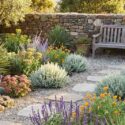
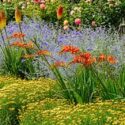
Tall staked tomatoes rise above basil, chives, lettuce, calendula, and sweet alyssum in this elegant formal potager. Clipped edging and gravel paths bring structure, while herbs, salad greens, and pollinator-friendly flowers soften the beds. The result is productive, colorful, beautifully ordered, and full of life all summer long.
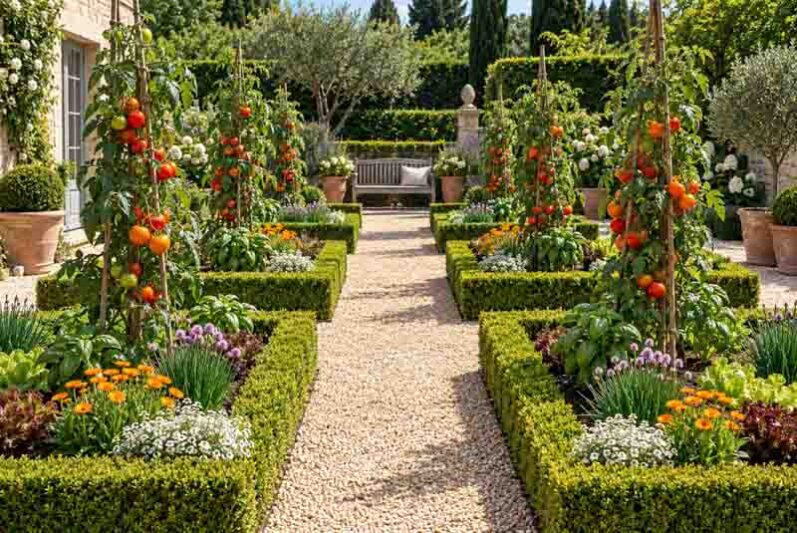


This formal potager brings together tall staked tomatoes, kitchen herbs, salad greens, and flowers within crisp clipped beds. Gravel paths provide the structure, while basil, chives, lettuce, calendula, and sweet alyssum soften the planting around each tomato.
The design is intentionally spacious. Each bed contains one tomato plant as its vertical anchor, leaving room around it for airflow, tying, watering, harvesting, and a lighter layer of companion plants. In a four-bed garden like this one, you can grow a different tomato in each bed or repeat a favorite.
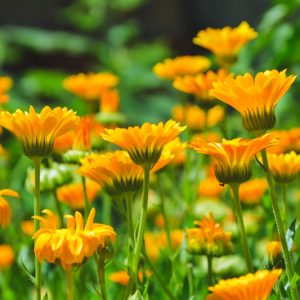
The contrast is what makes the garden work. The paths and edging are formal, but the planting inside is allowed to loosen as the season progresses. Basil broadens, lettuce fills the lower edge, chives rise in neat grassy clumps, and calendula and sweet alyssum bring orange, gold, and white among the vegetables.
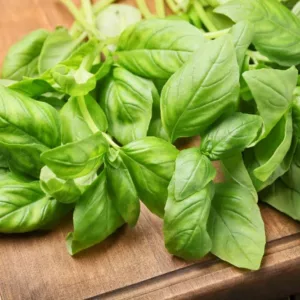
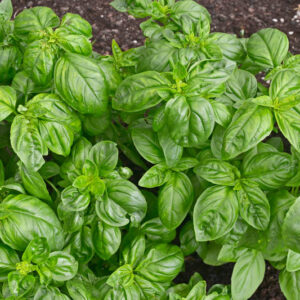
Main plants used: Tomato – one plant per bed, Genovese Basil (Ocimum basilicum), Chives (Allium schoenoprasum), Leaf Lettuce (Lactuca sativa), Calendula (Calendula officinalis), and Sweet Alyssum (Lobularia maritima).
The clipped edges, gravel paths, and repeated tomato stakes provide the formal framework. The planting inside can therefore be much more relaxed.
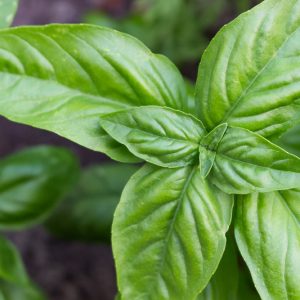
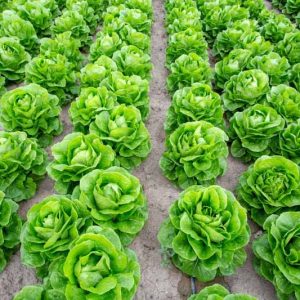
One tomato per bed creates a strong vertical focal point without turning the potager into a wall of foliage. Basil gives the middle of the bed a lush edible layer, while lettuce makes good use of lower space early in the season.
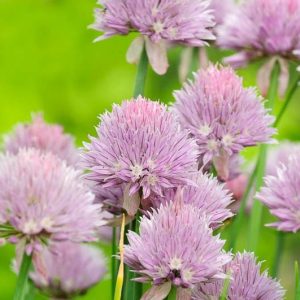
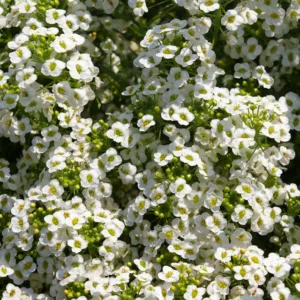
Chives bring fine upright foliage and purple flowers, calendula contributes orange and gold, and sweet alyssum forms low white cushions around selected edges.
The flowers also support a more active garden. Chive flowers, calendula, sweet alyssum, and flowering basil can provide nectar or pollen for bees, hoverflies, and other visiting insects.
Give each bed one tomato as its main vertical feature, then add a restrained mix of herbs, lettuce, and flowers below. Keep the tomato easy to reach from the surrounding path and resist the temptation to fill every gap.
Planted allocation: 70%. The remaining 30% is deliberately left open for airflow, mulch, access, watering, and room for the plants to expand.
Gardenia quantity note: The quantities below apply to one individual bed. To recreate the four-bed potager shown here, multiply the companion-plant quantities by four and use one tomato plant in each bed. The tomato varieties can be the same or different.
These are practical starting quantities for a single bed. They favor an open, workable planting rather than maximum capacity.
| Bed Size | Tomato | Basil | Lettuce | Chives | Calendula | Alyssum |
|---|---|---|---|---|---|---|
| 4 × 4 ft | 1 | 2 | 2 | 2 | 1 | 1 |
| 2 × 6 ft | 1 | 1-2 | 1-2 | 1 | 1 | 1 |
| 3 × 6 ft | 1 | 2 | 2 | 2 | 1 | 1-2 |
| 4 × 6 ft | 1 | 3 | 3 | 3 | 1 | 2 |
These quantities are per bed. A four-bed potager with 4 × 6 ft beds would therefore use four tomato plants, with the companion quantities multiplied by four.
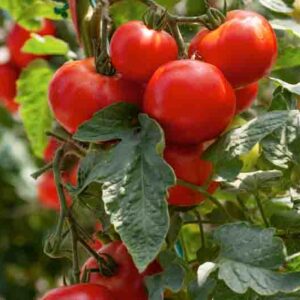
Use one tomato plant per bed. In a four-bed potager, that gives you four opportunities to vary the harvest without crowding the planting.
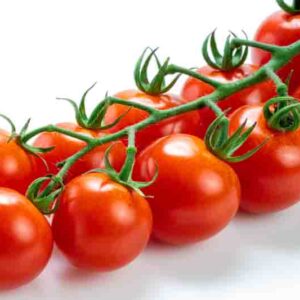
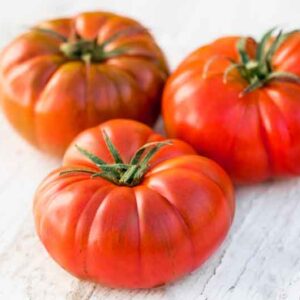
A particularly attractive combination would be ‘Early Girl’ for classic red fruit, ‘Sungold’ for golden-orange cherries, and ‘Black Cherry’ for deep mahogany-red fruit. Repeat whichever you like most in the fourth bed.
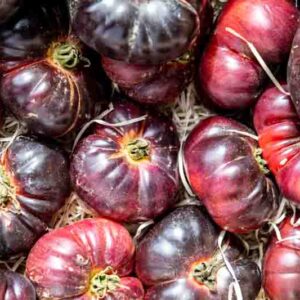
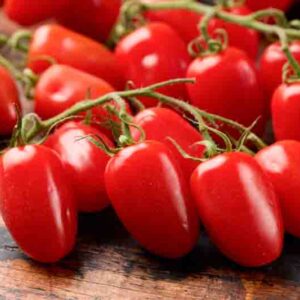
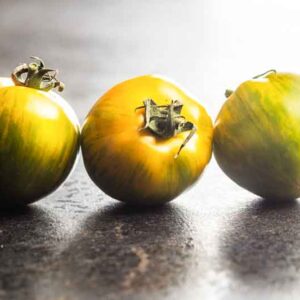
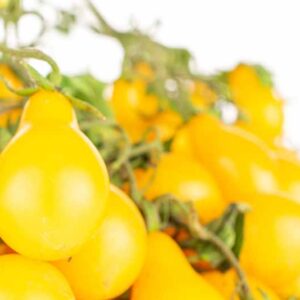
You can also give all four beds different tomatoes. Other good choices include ‘Super Sweet 100’, ‘Brandywine’, ‘Cherokee Purple’, ‘Green Zebra’, ‘Yellow Pear’, ‘Better Boy’, ‘Big Boy’, ‘San Marzano’, and ‘Sweet Million’. Choose cultivars that can be supported securely and give vigorous varieties plenty of room.
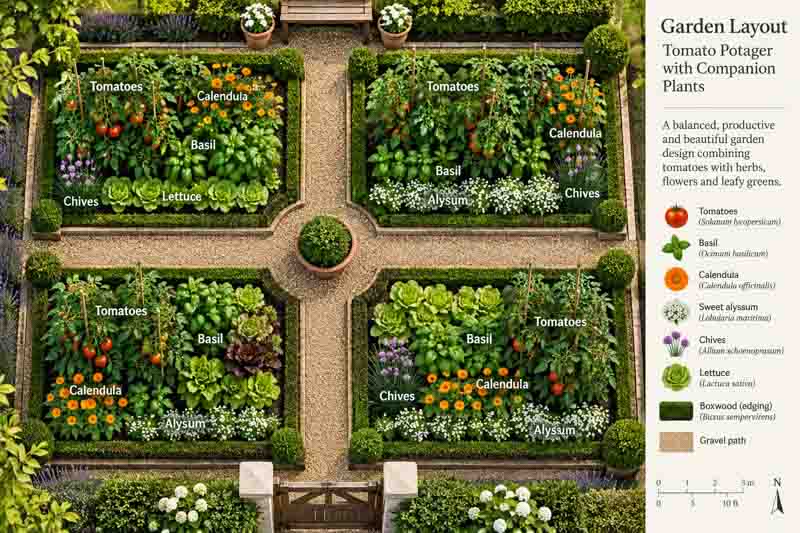
Install the tomato stake or support first, then place the tomato toward the center or slightly toward the rear of the bed. This gives the roots room to spread and keeps the plant accessible from the path.
Add basil in a loose group nearby, but keep the immediate base of the tomato open. Lettuce belongs closer to the edge, where it is easy to harvest and can be removed once summer heat arrives.
Use chives in a few upright clumps, then add calendula and sweet alyssum sparingly. One or two small flowering pockets are enough. They should soften the bed rather than form a solid border around it.
Design note: Do not judge the planting in spring. A bed with visible mulch or soil around a young tomato may look sparse at first, but that open space becomes valuable once the tomato and basil reach summer size.
In late spring, lettuce, chives, and alyssum give the beds an immediate finished look while the tomato and basil are still small.
By midsummer, the tomato becomes the clear focal point. Basil has filled out underneath, calendula adds bright flowers, and some of the lettuce may already have been harvested.
Later, ripe tomatoes provide most of the color above the beds. The paths and clipped edging remain precise while the planting becomes softer and more abundant – exactly the balance that makes a traditional potager so appealing.
| Hardiness |
3 - 11 |
|---|---|
| Climate Zones | 1, 1A, 1B, 2, 2A, 2B, 3, 3A, 3B, 4, 5, 6, 7, 8, 9, 10, 11, 12, 13, 14, 15, 16, 17, 18, 19, 20, 21, 22, 23, 24 |
| Exposure | Full Sun |
| Season of Interest | Summer (Early, Mid, Late), Fall |
| Maintenance | High |
| Water Needs | Average |
| Soil Type | Loam, Sand |
| Soil pH | Acid, Neutral |
| Soil Drainage | Moist but Well-Drained |
| Attracts | Bees, Butterflies |
| Landscaping Ideas | Beds And Borders |
| Garden Styles | City and Courtyard, Informal and Cottage, Pollinator Garden |

| Hardiness |
3 - 11 |
|---|---|
| Climate Zones | 1, 1A, 1B, 2, 2A, 2B, 3, 3A, 3B, 4, 5, 6, 7, 8, 9, 10, 11, 12, 13, 14, 15, 16, 17, 18, 19, 20, 21, 22, 23, 24 |
| Exposure | Full Sun |
| Season of Interest | Summer (Early, Mid, Late), Fall |
| Maintenance | High |
| Water Needs | Average |
| Soil Type | Loam, Sand |
| Soil pH | Acid, Neutral |
| Soil Drainage | Moist but Well-Drained |
| Attracts | Bees, Butterflies |
| Landscaping Ideas | Beds And Borders |
| Garden Styles | City and Courtyard, Informal and Cottage, Pollinator Garden |
Recreate this garden. Specify the percentages you would like to have of each plant and input the dimensions of your garden space.We'll give you a shopping list so you know how many plants you need.
| Plant | Quantity | |
|---|---|---|
| Calendula officinalis (Pot Marigold) | N/A | Buy Plants |
| Ocimum basilicum 'Genovese' (Sweet Basil) | N/A | Buy Plants |
| Allium schoenoprasum (Chives) | N/A | Buy Plants |
| Solanum lycopersicum 'Early Girl' (Tomato) | N/A | Buy Plants |
| Lobularia 'Snow Princess' (Sweet Alyssum) | N/A | Buy Plants |
| Lactuca sativa (Lettuce) | N/A | Buy Plants |
Create a membership account to save your garden designs and to view them on any device.
Becoming a contributing member of Gardenia is easy and can be done in just a few minutes. If you provide us with your name, email address and the payment of a modest $25 annual membership fee, you will become a full member, enabling you to design and save up to 25 of your garden design ideas.
Join now and start creating your dream garden!
Create a membership account to save your garden designs and to view them on any device.
Becoming a contributing member of Gardenia is easy and can be done in just a few minutes. If you provide us with your name, email address and the payment of a modest $25 annual membership fee, you will become a full member, enabling you to design and save up to 25 of your garden design ideas.
Join now and start creating your dream garden!