New England Blazing Star, Northern Blazing Star, Liatris scariosa var. novae-angliae, Lacinaria scariosa var. novae-angliae
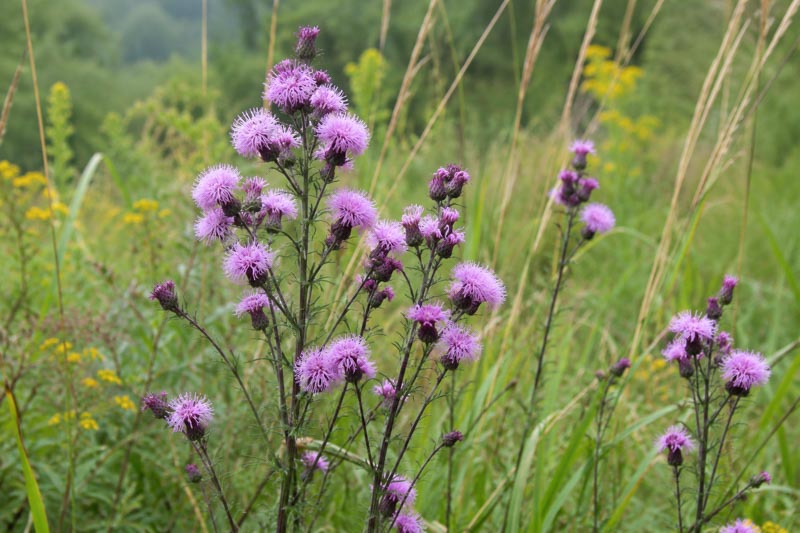
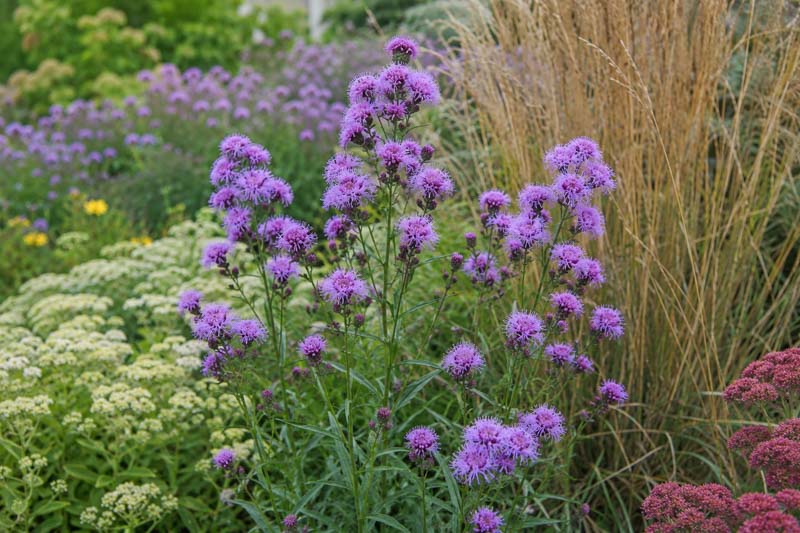


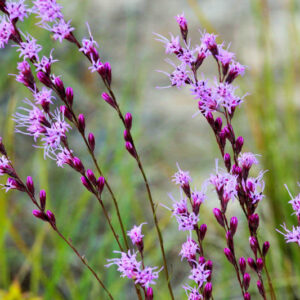
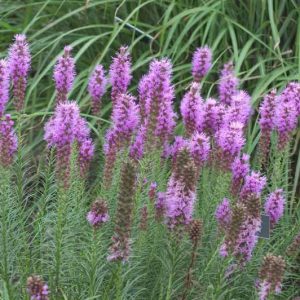
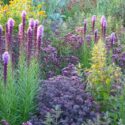
Liatris novae-angliae, commonly called New England blazing star or northern blazing star, is one of the most distinctive and conservation-worthy blazing stars of the northeastern United States. Upright stems rise from narrow, grass-like foliage and carry fuzzy, purple, button-like flower heads spaced along the upper stem. The effect is airy, wild, and wonderfully elegant, especially in dry meadows, sandy borders, rock gardens, and pollinator plantings.
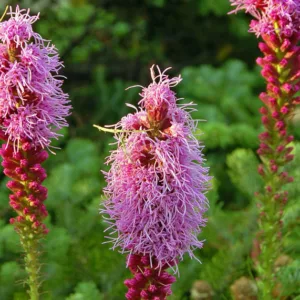
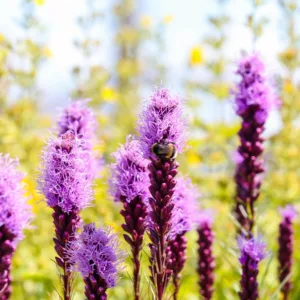
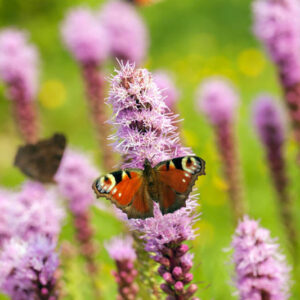
Unlike the dense bottlebrush spikes of Liatris spicata, New England blazing star has separate rounded flower heads that alternate up the spike. Each purple flower head is rich in nectar and attracts bees, butterflies, and other beneficial insects during late summer and early fall, when dry native gardens need fresh color and pollinator food.
This is a plant for gardeners who love naturalistic beauty with a sense of place. It is rare and protected in parts of its range, so it should always be grown from nursery-propagated plants or responsibly sourced seed. In the right site – full sun, lean soil, and excellent drainage – Liatris novae-angliae brings a rare regional native into the garden without looking fussy or formal.
Summary: Rare northeastern herbaceous perennial wildflower with upright stems, narrow leaves, and purple, button-like flower heads spaced along the spike in late summer to early fall.
Use: Excellent for dry meadows, sandy borders, pollinator gardens, rock gardens, native plantings, conservation gardens, and sunny low-water landscapes.
Highlight: One of the only blazing stars truly native to New England, valued for butterflies, bees, songbirds, and dry-site native garden design.
Note: Use only nursery-propagated plants or responsibly sourced seed. Do not dig wild plants, as this species is rare and protected in parts of its range.
| Botanical Name | Liatris novae-angliae; also listed as Liatris scariosa var. novae-angliae |
|---|---|
| Family | Asteraceae (aster or daisy family) |
| Common Names | New England blazing star, northern blazing star, New England gayfeather, blazing star |
| Native Range | Northeastern United States; associated with dry, sandy, open habitats such as sandplain grasslands, coastal heathlands, dry barrens, clearings, and disturbed sandy soils. |
| Plant Type and Habit | Herbaceous perennial forming upright clumps from corm-like roots, with narrow foliage and open purple flower spikes. |
| Hardiness (USDA) | Typically hardy in USDA Zones 3 to 8. |
| Size | Grows about 12 to 42 in tall and 10 to 14 in wide; often 2 to 3 ft tall in gardens. |
| Sun and Exposure | Full sun is best for strong stems and abundant flowers; part shade may reduce bloom and vigor. |
| Soil | Prefers dry to average, sandy, gravelly, low-fertility, or well-drained soil. Avoid heavy, wet soil where corms may rot. |
| Seasonal Interest | Purple flowers in late summer to early fall, followed by seedheads that add texture and may feed birds. |
| Primary Uses | Excellent for dry meadows, native plant gardens, pollinator gardens, sandplain-style plantings, rock gardens, sunny borders, conservation gardens, and cut flowers. |
Liatris novae-angliae is a clump-forming herbaceous perennial wildflower that grows from corm-like underground structures. Narrow green leaves form along upright stems, while the upper stem carries a loose sequence of rounded purple flower heads. Each head contains many disk florets and looks like a fuzzy purple button.
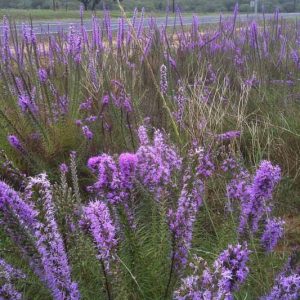
The open spacing of the flowers gives this species a different look from the dense, formal spikes of Liatris spicata. New England blazing star feels more relaxed, more regional, and better suited to dry native meadow designs. It has a refined wildness that looks especially good with grasses, milkweeds, asters, goldenrods, and bee balms.
New England blazing star is endemic to the northeastern United States. It occurs in dry, open habitats such as sandplain grasslands, coastal heathlands, dry barrens, woods openings, and disturbed sandy soils. It is rare and protected in much of New England, where loss of open sandy habitat has reduced many populations.
This native heritage makes it a valuable choice for ecologically minded gardens, especially regional native plantings. However, its rarity also means gardeners should source it carefully. Use reputable native plant nurseries and avoid wild collection.
Liatris novae-angliae has a moderate growth rate. In the first season, seed-grown plants may focus on roots and foliage. Established plants send up stronger stems and more flower heads in later years.
The flowers and seedheads provide late-season interest.
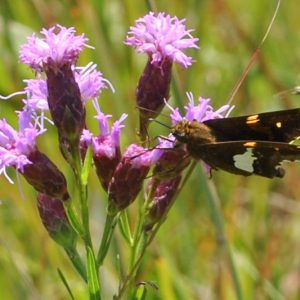
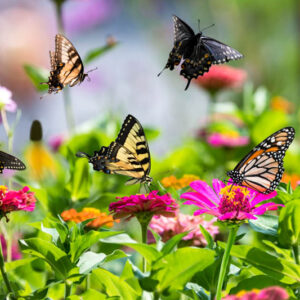
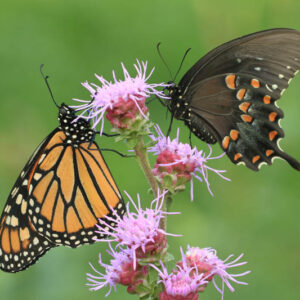
The nectar-rich flowers are excellent in pollinator gardens. You may see butterflies, bees, wasps, flies, and other beneficial insects visiting the purple heads on warm late-summer days.
Liatris novae-angliae is a cold-hardy perennial generally suited to USDA Zones 3 to 8. It handles northeastern winters best when the soil is well drained. Cold is less of a concern than wet, compacted, poorly drained soil around the crown and corm-like roots.
Liatris novae-angliae is a high-value plant for late-season wildlife gardens.
New England blazing star is generally regarded as deer-resistant, though hungry deer may browse almost any plant. Young shoots can also be nibbled by rabbits or other herbivores. In diverse meadow plantings, established plants usually tolerate light browsing.
Once established, Liatris novae-angliae is drought tolerant and well suited to low-water native plantings.
Liatris is not commonly listed as highly toxic, but like many ornamental plants it is best treated as non-edible. Discourage pets and children from chewing the foliage, flowers, seedheads, or corm-like roots.
New England blazing star is not invasive. It forms modest clumps and may self-seed lightly where open soil is available, but it does not spread aggressively by runners. The greater concern is conservation: wild populations should be protected, not collected.
Liatris species are upright North American perennials with purple, pink, or white flower heads that attract pollinators and add vertical accents. Choose New England blazing star for dry, sandy northeastern native plantings; choose dense blazing star for more conventional perennial borders with average to moist soil.
Choose Liatris novae-angliae when you want a rare, dry-site, northeastern native with open button-like flowers. Choose Liatris spicata when you want dense, formal flower spikes for average to moist garden soil.
Successful New England blazing star care comes down to sun, drainage, lean soil, and modest competition.
Liatris novae-angliae is generally a low-maintenance perennial in the right site. Most problems come from wet soil, shade, crowding, or overly rich conditions.
Liatris novae-angliae, or New England blazing star, is a rare northeastern native perennial wildflower with upright stems and purple, button-like flower heads spaced along the spike. It is also listed as Liatris scariosa var. novae-angliae.
Liatris novae-angliae usually grows about 12 to 42 inches tall and about 10 to 14 inches wide. In garden settings, it often reaches 2 to 3 feet tall, depending on soil, moisture, competition, and sun.
Yes. Liatris novae-angliae is one of the blazing stars truly native to New England and is associated with dry, sandy, open habitats such as sandplain grasslands, coastal heathlands, clearings, and disturbed sandy soils.
Full sun is best for Liatris novae-angliae. Part shade may be tolerated, but too much shade can reduce flowering, weaken stems, and allow neighboring plants to outcompete it.
Liatris novae-angliae blooms from late summer into early fall. Depending on region and weather, flowers may appear from July through October, with purple button-like heads opening along upright stems.
Yes. Once established, Liatris novae-angliae is drought tolerant and well suited to dry, sandy, low-fertility sites. Water during establishment, then keep plants on the dry side and avoid wet winter soil.
Yes. Liatris novae-angliae is excellent for pollinators. Its nectar-rich purple flowers attract bees, butterflies, and beneficial insects, and the seedheads can support songbirds later in the season.
Yes. Liatris novae-angliae is rare across much of its northeastern range and legally protected in some states. Gardeners should buy nursery-propagated plants or seed and never dig wild plants.
Liatris novae-angliae has separate, rounded, button-like flower heads spaced along the stem, while Liatris spicata usually has denser, bottlebrush-like spikes. Liatris novae-angliae also prefers dry, sandy sites, while Liatris spicata often grows best in average to moist soils.
Liatris novae-angliae can be grown in a deep, well-drained container, but it is usually better in the ground, especially in dry meadow or native plant settings. Container plants need careful winter drainage to prevent corm rot.
Native Plant Trust – Plant Finder: https://plantfinder.nativeplanttrust.org/plant/Liatris-novae-angliae
Go Botany – Native Plant Trust: https://gobotany.nativeplanttrust.org/species/liatris/novae-angliae/
USDA PLANTS Database: https://plants.sc.egov.usda.gov/plant-profile/LISCN2
Maine Natural Areas Program: https://www.maine.gov/dacf/mnap/features/lianov.html
Updated: June 2026 • Reviewed by Gardenia Editors
| Hardiness |
3 - 8 |
|---|---|
| Plant Type | Perennials |
| Plant Family | Compositae |
| Genus | Liatris |
| Common names | Blazing Star, Gayfeather |
| Exposure | Full Sun |
| Season of Interest | Summer (Late), Fall |
| Height | 1' - 4' (30cm - 120cm) |
| Spread | 10" - 2' (25cm - 60cm) |
| Spacing | 12" - 15" (30cm - 40cm) |
| Maintenance | Low |
| Water Needs | Low |
| Soil Type | Chalk, Clay, Loam, Sand |
| Soil pH | Acid, Alkaline, Neutral |
| Soil Drainage | Well-Drained |
| Characteristics | Dried Arrangements, Cut Flowers, Showy |
| Native Plants | United States, Pennsylvania, Rhode Island, Connecticut, Maine, Massachusetts, New Hampshire, New Jersey, New York, Northeast |
| Tolerance | Drought, Clay Soil, Deer, Dry Soil, Rocky Soil |
| Attracts | Bees, Birds, Butterflies |
| Garden Uses | Beds And Borders |
| Garden Styles | City and Courtyard, Gravel and Rock Garden, Informal and Cottage, Prairie and Meadow |


| Hardiness |
3 - 8 |
|---|---|
| Plant Type | Perennials |
| Plant Family | Compositae |
| Genus | Liatris |
| Common names | Blazing Star, Gayfeather |
| Exposure | Full Sun |
| Season of Interest | Summer (Late), Fall |
| Height | 1' - 4' (30cm - 120cm) |
| Spread | 10" - 2' (25cm - 60cm) |
| Spacing | 12" - 15" (30cm - 40cm) |
| Maintenance | Low |
| Water Needs | Low |
| Soil Type | Chalk, Clay, Loam, Sand |
| Soil pH | Acid, Alkaline, Neutral |
| Soil Drainage | Well-Drained |
| Characteristics | Dried Arrangements, Cut Flowers, Showy |
| Native Plants | United States, Pennsylvania, Rhode Island, Connecticut, Maine, Massachusetts, New Hampshire, New Jersey, New York, Northeast |
| Tolerance | Drought, Clay Soil, Deer, Dry Soil, Rocky Soil |
| Attracts | Bees, Birds, Butterflies |
| Garden Uses | Beds And Borders |
| Garden Styles | City and Courtyard, Gravel and Rock Garden, Informal and Cottage, Prairie and Meadow |
How many Liatris novae-angliae (New England Blazing Star) do I need for my garden?
| Plant | Quantity | |
|---|---|---|
| Liatris novae-angliae (New England Blazing Star) | N/A | Buy Plants |
Create a membership account to save your garden designs and to view them on any device.
Becoming a contributing member of Gardenia is easy and can be done in just a few minutes. If you provide us with your name, email address and the payment of a modest $25 annual membership fee, you will become a full member, enabling you to design and save up to 25 of your garden design ideas.
Join now and start creating your dream garden!
Create a membership account to save your garden designs and to view them on any device.
Becoming a contributing member of Gardenia is easy and can be done in just a few minutes. If you provide us with your name, email address and the payment of a modest $25 annual membership fee, you will become a full member, enabling you to design and save up to 25 of your garden design ideas.
Join now and start creating your dream garden!