Red Feather Clover, Red Feathers, Ruddy Clover, Ornamental Clover, Red Feather Ornamental Clover, Ornamental Red Clover, Nobel Clover, Red Trefoil, Red Feather Sand Clover, Trifolium Eriocaulon, Triphylloides Rubens, Lagopus Glaber
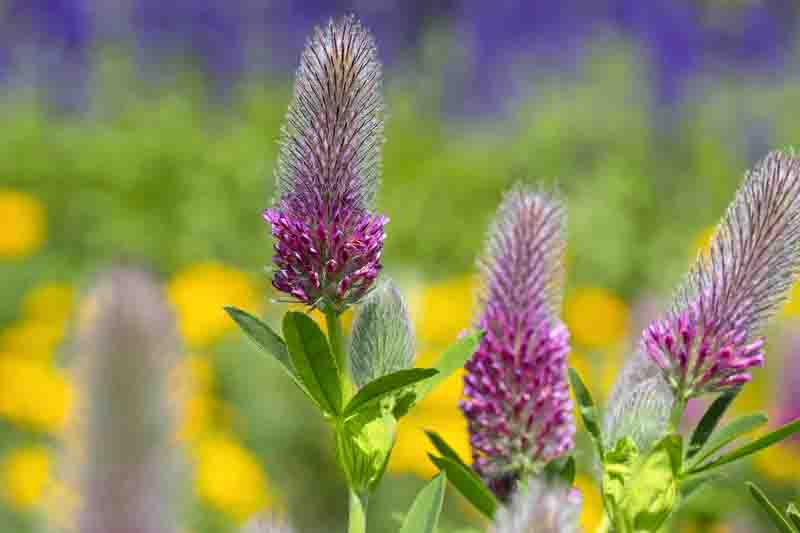
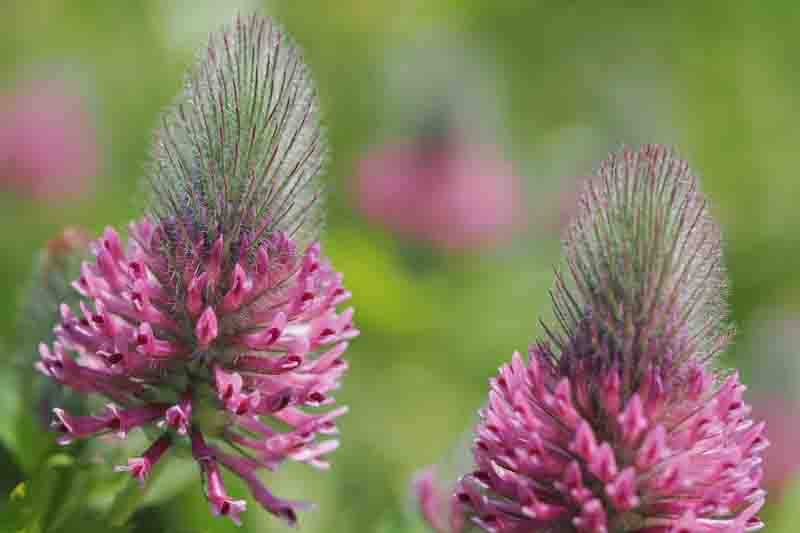


Trifolium rubens is a clump-forming herbaceous perennial grown for its tall, feathery, crimson to dark red-purple flower spikes, elegant trifoliate foliage, and strong ecological value. Plant it in full sun or light shade in well-drained, poor to moderately fertile soil, avoid wet winter conditions and heavy feeding, and use it where pollinator appeal, texture, and meadow-style beauty matter.
Use: Excellent for pollinator gardens, perennial borders, meadow plantings, cottage gardens, prairie-style designs, and gravel gardens.
Highlight: Upright spikes of rich crimson to dark rose-red flowers with a soft, feathery look.
Design note: This is not a lawn clover. It is an ornamental perennial clover grown for vertical flower impact, texture, and ecological value.
| Botanical Name | Trifolium rubens |
|---|---|
| Family | Pea family (Fabaceae) |
| Common Names | Red Feather Clover, Ruddy Clover |
| Native Range | Central and southern Europe to Ukraine |
| Plant Type | Herbaceous perennial, clump-forming ornamental clover |
| Hardiness (approx. USDA) | Generally grown in USDA Zones 5-8, sometimes 9 with suitable drainage |
| Height | 18-24 in. (45-60 cm), sometimes taller in bloom |
| Spread | 18-24 in. (45-60 cm) |
| Sun Exposure | Full sun to part shade |
| Soil | Well-drained, poor to moderately fertile soil |
| Bloom Time | Late spring through summer |
| Flower Color | Crimson, dark rose-red, red-purple |
| Wildlife Value | Excellent nectar plant; clovers are also used as larval host plants by some butterflies and moths |
| Foliage | Blue-green to green trifoliate leaves in tidy clumps |
Red Feather Clover is one of the most ornamental members of the clover genus. Its accepted botanical name is Trifolium rubens, and unlike the low, lawn-like clovers many gardeners already know, this species forms a tidy clump and sends up pointed, velvety flower spikes that look almost brushed or feathered. It has the ecological usefulness of a legume, but the visual presence of a deliberately chosen perennial border plant.
Good to know: Trifolium rubens is an ornamental perennial clover prized for vertical crimson bloom, pollinator value, larval-host relevance at the genus level, and a clean clump-forming habit rather than for use as turf or pasture.
This is a clump-forming, bushy perennial with blue-green leaves made up of narrow lance-like leaflets. Flower clusters are held above the foliage on upright stems and can look surprisingly plush, tapered, and architectural. The blooms open from lower florets upward, giving each spike a layered, textured look that reads as both wild and refined. It is exactly the kind of plant that makes a designer planting feel more intelligent and less generic.
Trifolium rubens is native to central and southern Europe to Ukraine. That origin matters because it explains the plant’s preference for open, sunny, well-drained conditions and helps clarify that this is a non-native ornamental in the United States rather than a native American clover.
The main flowering season runs from late spring through summer. In cooler climates, peak bloom may sit more squarely in early to midsummer, while in warm, open sites the display can begin earlier and feel more prolonged. The flower spikes remain attractive as they mature, and faded heads can still contribute texture if left standing.
The plant forms a rounded to upright clump rather than a mat. That distinction is important. Red Feather Clover does not behave like a creeping lawn clover. Instead, it builds a clearly defined mound of foliage and then rises into bloom, making it useful in borders, meadow-style plantings, and gravel gardens where form matters as much as color.
The pointed flower clusters can reach several inches long and usually open in rich tones of crimson to dark red-purple. Leaves are trifoliate and slightly cool-toned, often with a blue-green cast that helps the red blooms stand out. Stems are typically sturdy when the plant is grown in lean, sunny conditions, but can become softer if the soil is too rich.
A mature plant is usually about 18 to 24 inches tall and about as wide, though flowering stems can give it a slightly taller look. In design terms, that makes it a medium-sized perennial: bold enough to read clearly, but compact enough to use in repeated drifts, smaller borders, and front-to-middle placement.
Red Feather Clover is generally grown in USDA Zones 5 to 8, with some success into Zone 9 where drainage and seasonal conditions are suitable. Cold itself is often not the biggest problem. Winter wet is. If the crown sits in stagnant soil through cold weather, longevity drops fast.
Pro grower tip: If you want stronger stems, sharper color, and a longer-lived clump, give Trifolium rubens a leaner site than your instincts might suggest.
Takeaway: Trifolium rubens is one of the most garden-worthy clovers for people who want ornamental beauty, ecological relevance, and a perennial that looks designed rather than accidental.
This is where Red Feather Clover becomes especially interesting. Its flowers are rich in nectar and attract bees, butterflies, and other pollinators very effectively. But the ecological value does not stop there. Clovers (Trifolium species) are also used as larval host plants by some butterflies and moths, including Clouded Sulphur, Gray Hairstreak, and Eastern Tailed-Blue. Like other legumes, it also contributes to soil health through nitrogen fixation.
Red Feather Clover may show some practical deer resistance in mixed planting schemes, but it is not reliably deer-proof. Local browsing pressure always matters more than broad resistance labels.
Once established, Red Feather Clover handles short dry spells reasonably well, especially in well-drained soil. Still, it is best thought of as moderately drought tolerant, not extreme-drought adapted. Repeated hard drought can shorten bloom and reduce visual quality.
Red Feather Clover performs best with moderate moisture, sharp drainage, and poor to moderately fertile soil. Rich feeding and winter wet are usually more damaging than occasional summer dryness.
No major ornamental warning is usually attached to Trifolium rubens in garden use, but it should not be treated as an edible crop simply because it belongs to a familiar genus. Ornamental use and edible use are not the same thing.
Trifolium rubens is non-native in the United States, but it is not generally known as an aggressively invasive ornamental species. It forms clumps rather than spreading by stolons like White Clover, though gardeners should still watch for self-seeding and check local or state guidance before planting near natural areas.
Feed lightly, if at all. A small top-dressing of compost in spring is usually enough. High-nitrogen fertilizer tends to encourage softer growth and weaker stems instead of better flowering.
Use mulch sparingly. A thin, breathable layer is fine, but a heavy mulch packed around the crown can trap moisture in exactly the wrong place. This plant prefers a cleaner, drier base.
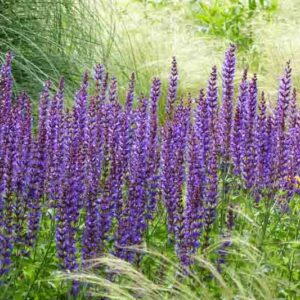
Design tip: The red flower spikes look especially rich when framed by silver foliage, airy grasses, or blue-violet companions such as salvias and nepeta.
There is no elaborate pruning routine. Deadhead spent stems if you want a tidier look or want to reduce volunteer seedlings. Leave some faded heads if you like late-season texture. Cut the old growth down after the season ends or in late winter before fresh growth appears.
Maintenance tip: The best care strategy for Trifolium rubens is disciplined simplicity: sun, drainage, modest moisture, and no urge to over-improve the soil.
| Task | Best Time |
|---|---|
| Planting | Spring or early fall. |
| Sowing Seed | Spring, lightly covering seed. |
| Feeding | Very light feeding in spring, if needed. |
| Main Bloom | Late spring through summer. |
| Deadheading | After flowers fade. |
| Cleanup | Late winter or early spring. |
Red Feather Clover is usually propagated from seed. Sow in spring and cover the seed lightly rather than burying it deeply. This suits the species well and aligns with standard seed guidance for Trifolium rubens. Division is possible in some perennial clumps, but seed is the cleaner and more dependable method for most growers.
Usually because the plant has grown too lushly in rich soil, too much shade, or after unnecessary feeding. This species looks best and stands best when grown on the lean side.
Fast diagnostic: Weak flowering usually points to shade or excess fertility. Decline usually points to poor drainage, especially through winter.
Trifolium rubens is not usually a problem-prone perennial when the site is right. Aphids may appear on fresh growth, but they are rarely the main issue. Far more often, decline comes from cultural stress, especially wet soil around the crown, excessive fertility, or crowding. In a sunny, airy, well-drained setting, it is generally easygoing.
Trifolium rubens differs sharply from the clovers most gardeners already know. Compared with White Clover (Trifolium repens), Red Feather Clover is upright and clump-forming, while White Clover is prostrate, stoloniferous, and mat-forming, with creeping stems that root at the nodes. Compared with Red Clover (Trifolium pratense), which is widely grown as a forage crop, cover crop, and soil improver, Red Feather Clover is more architectural, more ornamental, and better suited to display planting. Compared with Crimson Clover (Trifolium incarnatum), a familiar annual or short-lived cover-crop clover with vivid spikes, Trifolium rubens is a longer-lived perennial with a tidier clump and a more border-friendly, refined presence. Those distinctions are why Red Feather Clover belongs in ornamental planting plans rather than being treated like generic clover.
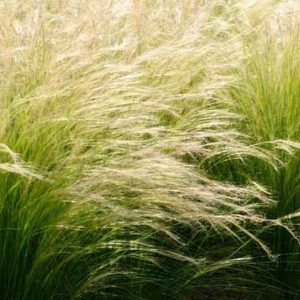
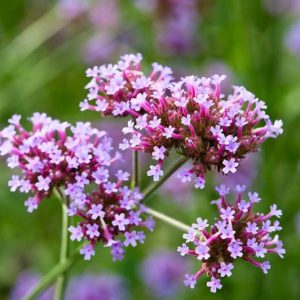
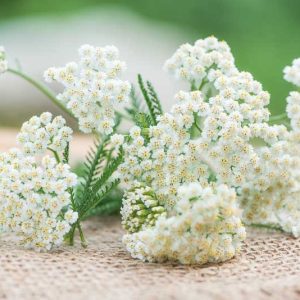
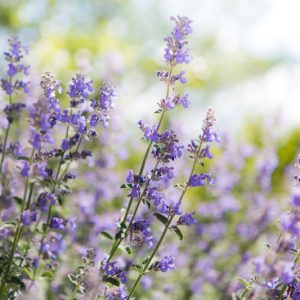
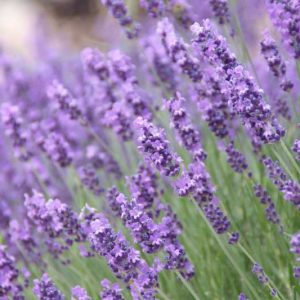
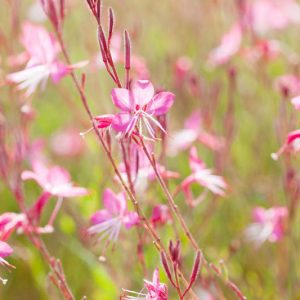
Choose companions that enjoy full sun, good drainage, and a natural but controlled look. The strongest partners either echo its wildlife value or contrast with its plush red spikes. Excellent companions include echinacea, salvia, nepeta, achillea, scabiosa, verbena bonariensis, gaura, coreopsis, lavender, and ornamental grasses. Blue, violet, white, and soft yellow flowers are especially effective because they make the crimson blooms look deeper and more luminous.
Trifolium rubens, commonly called Red Feather Clover or Ruddy Clover, is a clump-forming herbaceous perennial in the pea family grown for its tall crimson to dark red-purple flower spikes, trifoliate foliage, and pollinator value.
Yes. Red Feather Clover is an herbaceous perennial that returns year after year when grown in full sun or light shade with well-drained soil.
Yes. Its nectar-rich flowers attract bees, butterflies, and other pollinators, making it a strong choice for pollinator gardens and naturalistic planting schemes.
The most careful answer is that Trifolium rubens belongs to a genus used as larval host plants by some butterflies and moths. Species-level host records are much better documented for some other clovers, but clovers broadly do have larval-host relevance.
It typically grows about 18 to 24 inches tall and wide, with pointed flower clusters rising above the foliage.
Plant it in full sun or light shade in well-drained, poor to moderately fertile soil. It performs especially well in perennial borders, meadow plantings, gravel gardens, and pollinator-focused designs.
Trifolium rubens is non-native in the United States, but it is not generally regarded as an aggressively invasive ornamental species. It is still wise to check local or state guidance before planting it near natural areas.
No. Trifolium rubens is native to central and southern Europe to Ukraine and is not native to any U.S. state.
Sow seed in spring and cover it lightly. Do not bury it deeply, and keep conditions evenly moist while germination begins.
Updated: April 2026 • Reviewed by Gardenia Editors
| Hardiness |
5 - 9 |
|---|---|
| Plant Type | Perennials |
| Plant Family | Leguminosae |
| Common names | Clover |
| Exposure | Full Sun, Partial Sun |
| Season of Interest | Spring (Late), Summer (Early, Mid, Late) |
| Height | 1' - 2' (30cm - 60cm) |
| Spread | 1' - 2' (30cm - 60cm) |
| Spacing | 18" - 24" (50cm - 60cm) |
| Maintenance | Low |
| Water Needs | Average |
| Soil Type | Chalk, Clay, Loam, Sand |
| Soil pH | Acid, Neutral, Alkaline |
| Soil Drainage | Moist but Well-Drained, Well-Drained |
| Characteristics | Showy, Cut Flowers |
| Tolerances | Drought, Dry Soil, Clay Soil, Poor Soil, Fire |
| Attracts | Butterflies, Birds |
| Garden Uses | Beds And Borders |
| Garden Styles | Butterfly Garden, Informal and Cottage, Pollinator Garden, Prairie and Meadow |
| Toxic to Humans | No known toxicity |
| Toxic to Cats | No known toxicity |
| Toxic to Dogs | No known toxicity |
| Toxic to Horses | No known toxicity |


| Hardiness |
5 - 9 |
|---|---|
| Plant Type | Perennials |
| Plant Family | Leguminosae |
| Common names | Clover |
| Exposure | Full Sun, Partial Sun |
| Season of Interest | Spring (Late), Summer (Early, Mid, Late) |
| Height | 1' - 2' (30cm - 60cm) |
| Spread | 1' - 2' (30cm - 60cm) |
| Spacing | 18" - 24" (50cm - 60cm) |
| Maintenance | Low |
| Water Needs | Average |
| Soil Type | Chalk, Clay, Loam, Sand |
| Soil pH | Acid, Neutral, Alkaline |
| Soil Drainage | Moist but Well-Drained, Well-Drained |
| Characteristics | Showy, Cut Flowers |
| Tolerances | Drought, Dry Soil, Clay Soil, Poor Soil, Fire |
| Attracts | Butterflies, Birds |
| Garden Uses | Beds And Borders |
| Garden Styles | Butterfly Garden, Informal and Cottage, Pollinator Garden, Prairie and Meadow |
| Toxic to Humans | No known toxicity |
| Toxic to Cats | No known toxicity |
| Toxic to Dogs | No known toxicity |
| Toxic to Horses | No known toxicity |
How many Trifolium rubens (Red Feather Clover) do I need for my garden?
| Plant | Quantity | |
|---|---|---|
| Trifolium rubens (Red Feather Clover) | N/A | Buy Plants |
Create a membership account to save your garden designs and to view them on any device.
Becoming a contributing member of Gardenia is easy and can be done in just a few minutes. If you provide us with your name, email address and the payment of a modest $25 annual membership fee, you will become a full member, enabling you to design and save up to 25 of your garden design ideas.
Join now and start creating your dream garden!
Create a membership account to save your garden designs and to view them on any device.
Becoming a contributing member of Gardenia is easy and can be done in just a few minutes. If you provide us with your name, email address and the payment of a modest $25 annual membership fee, you will become a full member, enabling you to design and save up to 25 of your garden design ideas.
Join now and start creating your dream garden!