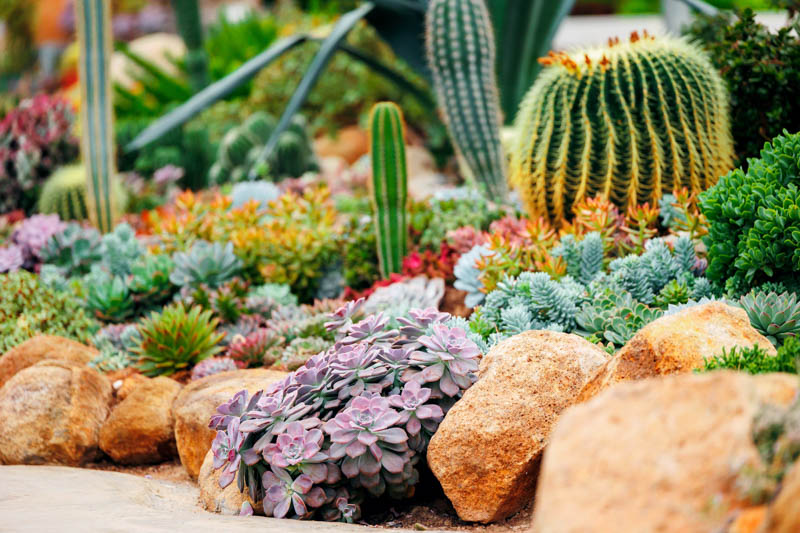
Stunning Desert Garden Ideas
Imagine a sun-drenched garden where sculptural blue agaves contrast with soft pink grasses, tall yuccas create elegant silhouettes, and coral-red flowers attract hummingbirds. Warm gravel and natural stone provide a beautiful setting, while silver foliage and colorful desert shrubs bring interest through the seasons. A desert garden can be one of the most spectacular and distinctive landscapes you create, and it doesn’t require a vast property or endless rows of cacti. With the right combination of plants, a small residential front yard, sunny courtyard, or exposed garden border can become an inviting, water-wise retreat. Discover inspiring desert garden ideas with architectural succulents, flowering shrubs, native grasses, and carefully chosen plant combinations that create beauty without excessive irrigation.
Explore Spectacular Southwestern Desert Gardens with Blue Agaves, Yuccas, and Pink Muhly Grass
Some of the most beautiful desert designs combine bold architectural foliage with delicate grasses. The contrast between rigid blue agave rosettes, graceful yucca crowns, and soft pink ornamental grass plumes creates an unforgettable landscape.
How do you create a spectacular Southwestern gravel garden? Combine Yucca rostrata (Beaked Yucca) with Agave parryi (Artichoke Agave) and Muhlenbergia capillaris (Pink Muhly Grass). The yucca adds height, agaves provide sculptural blue rosettes, and muhly grass delivers clouds of pink autumn color.
What makes blue agaves look particularly beautiful? Their pale, sculptural foliage stands out against warm gravel, darker shrubs, and fine grass textures. Use a few generously spaced agaves rather than planting them in an overly regular grid.
How do you add softness to a cactus or succulent garden? Use compatible ornamental grasses and airy flowering perennials. Pink Muhly Grass can bring movement and seasonal color, while appropriately selected sages introduce natural flowering shapes.
What is a beautiful desert combination for a small front yard? One compact agave as the principal focal point, repeated flowering perennials, and a modest ornamental grass can create a striking composition. Avoid large tree yuccas or desert spoon where mature size will overwhelm the available space.
Can a desert garden feature pink flowers? Absolutely. Pink Muhly Grass produces beautiful autumn plumes, while selected autumn sages can provide pink or coral flowers. Their softer color contrasts wonderfully with blue-gray architectural plants.
How do you create a desert planting that looks natural? Arrange plants in irregular, balanced groups with enough open space for their mature silhouettes. Use a limited palette and avoid filling every gap with a new species.
Should desert gardens include boulders? Natural stone can create an attractive setting where appropriate, but it should complement the planting rather than overwhelm it. The plants should remain the main feature of a residential garden.
How do you design around a beaked yucca? Position it where its elegant foliage crown is clearly visible, with sufficient clearance for future height and width. Low agaves and smaller compatible flowering plants can create a beautiful foreground without obscuring the trunk or crown.
Can architectural plants provide year-round interest? Yes. Many agaves and yuccas retain their foliage through winter in suitable climates, while warm-season grasses and flowering perennials contribute seasonal changes.
Gardenia’s Southwestern design tip: Create one strong architectural focal point and surround it with a restrained combination of complementary foliage and flowers. Contrast, space, and natural proportions create the most memorable desert gardens.
Explore Gardenia’s Southwestern Gravel Garden with Yucca, Agave and Pink Muhly, Succulent Garden Design Ideas, and Gravel and Rock Garden Inspiration.
Discover Colorful Desert Dry Creek Gardens with Red Yucca, Texas Sage, Desert Spoon, and Agaves
Desert landscapes can be incredibly colorful, particularly when architectural plants are complemented by drought-adapted flowering shrubs. Coral-red flowers, soft lavender tones, and silver foliage create a rich planting that remains beautiful without conventional lawn grass.
How do you create a colorful desert dry creek garden? Combine Agave parryi, Hesperaloe parviflora, Dasylirion wheeleri, and suitable flowering shrubs. Their contrasting leaf shapes create year-round interest, while flowers add vibrant seasonal color.
What plants create a beautiful silver-and-purple desert garden? Leucophyllum frutescens (Texas Sage) combines silver-gray foliage with purple-pink flowers. Pair it with compatible blue-gray agaves and fine grasses for a sophisticated color palette.
How do you add coral-red flowers to a desert landscape? Use Salvia greggii (Autumn Sage) or Red Yucca where climate and soil conditions are suitable. Repeat the flowering plants in natural groups rather than scattering individual specimens.
Can desert gardens attract hummingbirds? Yes. Red Yucca and Autumn Sage are particularly appealing choices for suitable regions, with tubular flowers that can attract hummingbirds. Include different flowering periods for a longer seasonal display.
What is a desert dry creek bed? It is a landscape feature using stone and gravel to evoke a naturally dry watercourse. Where properly designed, it can also contribute to surface-water management, but decorative dry creek beds should not be assumed to function as drainage systems without suitable grading and engineering.
How do you create a natural dry creek planting? Use appropriately sized stones and arrange drought-adapted plants around the edges. Place larger architectural plants where they can develop fully, with flowering shrubs and grasses softening transitions.
Can desert landscaping work without a dry creek or gravel bed? Absolutely. The planting itself can create the character of a desert garden. Architectural plants, warm-season grasses, and flowering shrubs can be arranged in conventional soil beds where conditions are appropriate.
How do you create a desert garden that isn’t sparse? Use a few larger shrubs and grasses to connect the planting visually, while leaving deliberate space around architectural agaves or yuccas. Lushness in a desert landscape comes from healthy, well-proportioned plants rather than crowding every inch.
Which desert plants provide winter interest? Evergreen agaves, yuccas, desert spoon, and certain silver-leaved shrubs can retain structure through winter in suitable climates. Their precise appearance depends on local temperatures and winter moisture.
Gardenia’s dry creek design advice: Use stone to support the composition, not dominate it. The strongest designs feature beautifully grown plants with contrasting textures and colors, framed by a simple, believable landscape.
Discover Gardenia’s Desert Dry Creek Garden with Agave and Red Yucca, Best Desert Shrubs for Low-Water Gardens, and Colorful Desert Flowering Plants.
Explore Small Desert Courtyards, Modern Xeriscaping, Pollinator Gardens, and Cold-Climate Desert Ideas
A desert garden can suit many residential settings, from a sun-drenched courtyard to a suburban front yard. The most successful designs respond to the actual climate and garden size rather than simply recreating the appearance of a famous desert landscape.
How do you create a small desert courtyard? Choose one compact architectural plant and surround it with a few compatible flowering or foliage species. Allow sufficient space for mature growth and safe movement, particularly where agaves or cacti have sharp leaves and spines.
What is a beautiful modern desert garden? A simple composition of one sculptural yucca or agave, a few repeated grasses, and low flowering plants can create a striking contemporary landscape. Limit the palette and let natural plant forms provide architectural interest.
How do you transform a thirsty front lawn into a desert garden? Begin by evaluating sunlight, drainage, and the intended use of the space. Replace unsuitable turf with appropriately spaced drought-adapted shrubs, succulents, and grasses, retaining clear access routes and realistic irrigation during establishment.
Can a desert garden be colorful without demanding much water? Yes. Suitable flowering sages, penstemons, agastaches, and desert shrubs can provide beautiful seasonal flowers with relatively low irrigation once established in favorable conditions.
How do you create a desert pollinator garden? Combine regionally appropriate flowering plants with structural foliage. Penstemon eatonii (Firecracker Penstemon), Red Yucca, and Autumn Sage can bring vivid flowers and pollinator interest where their climate requirements align.
What is a good desert garden for a hot sunny slope? Use species adapted to intense sunlight, dry soil, and suitable drainage. Agaves, dryland grasses, and appropriate flowering perennials may create effective coverage, though steep or unstable slopes need additional erosion-management consideration.
Can desert gardens work in cold climates? A desert-inspired garden can work when plants are selected for both cold temperatures and winter moisture. Cold-hardy agaves, suitable yuccas, hardy cacti, and drought-tolerant perennials are possibilities, but local soil and winter rainfall remain critical.
What if winters are cold and rainy? Use species proven to tolerate those conditions, build appropriately drained planting areas where practical, and reserve frost-tender or moisture-sensitive succulents for movable containers. A desert appearance should never come at the expense of plant survival.
How do you create a garden that feels lush but water-wise? Use enough medium-sized shrubs and ornamental grasses to create visual continuity, with taller architectural plants as focal points. Repeat flowers in generous groups and avoid relying on very sparse individual specimens.
Should you mix Mediterranean plants with true desert species? Only when their hardiness, moisture, and drainage requirements match. Lavender or rosemary may suit some dry landscapes, but a Mediterranean garden and a desert ecosystem have different climatic and ecological characteristics.
Can a desert garden provide year-round beauty? Yes, with suitable evergreen architecture, attractive seasonal flowers, and grasses that contribute texture. But winter appearance varies, particularly where deciduous perennials or cold-sensitive species are used.
How do you avoid a desert garden looking artificial? Use believable residential proportions, natural irregular groupings, regionally appropriate plants, and enough space for mature growth. Resist excessively symmetrical designs and decorative stone arrangements that overpower the planting.
What is the biggest mistake in desert landscape design? Choosing plants solely for their appearance without considering winter conditions, mature dimensions, and water requirements. A beautiful composition needs to survive and improve with age.
Gardenia’s final desert garden advice: Build the design around a few outstanding, climate-appropriate architectural plants, then use flowering shrubs and grasses to create movement and seasonal color. A thoughtful desert garden can be dramatic, welcoming, and wonderfully alive without excessive watering.
Explore Gardenia’s Desert Pollinator Garden with Agave and Sage, Drought-Tolerant Garden Design Guide, and Gravel and Rock Garden Inspiration.