True lilies and daylilies can cause life-threatening kidney injury in cats, even after small exposures. Learn which lilies are most dangerous, why pollen and vase water matter, symptoms of lily poisoning, what to do after suspected exposure, how veterinarians treat affected cats, and how to keep cats safe.
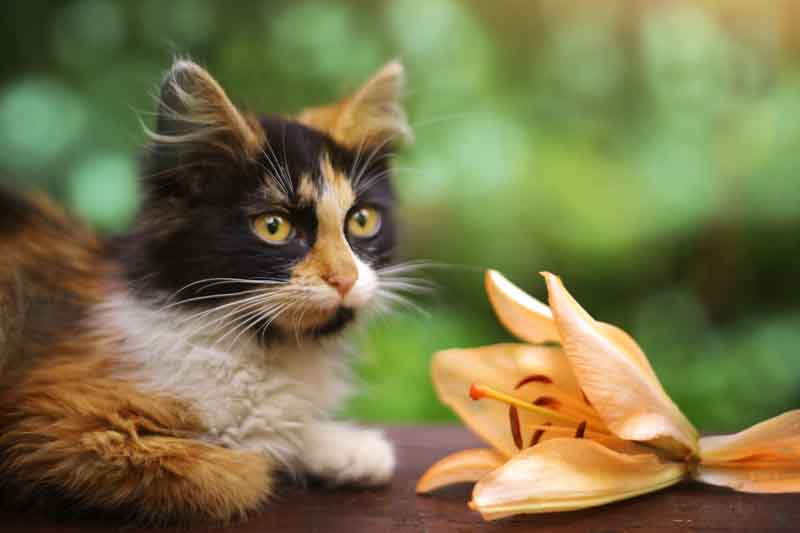


If you live with a cat, lilies are one group of flowers you need to take seriously. True lilies (Lilium) are among the most dangerous ornamental plants for cats, and even a very small exposure can cause severe, potentially fatal kidney injury.
The danger is not limited to a cat chewing an entire leaf. Flowers, leaves, stems, pollen, and even water from a vase containing true lilies can be hazardous. A cat that brushes against pollen and later licks it from its coat may also swallow enough material to become seriously ill.
Daylilies (Hemerocallis) pose the same kidney risk, even though they are botanically different from true lilies. If you believe your cat has chewed, licked, or otherwise been exposed to a true lily or daylily, contact a veterinarian or veterinary emergency service immediately.
This is a veterinary emergency: If a cat may have eaten part of a lily, licked pollen from its fur, or drunk lily vase water, contact a veterinarian immediately. Early treatment offers the best chance of preventing irreversible kidney damage.
The greatest concern is with plants in the genus Lilium – true lilies and the genus Hemerocallis – daylilies. Both groups can cause severe acute kidney injury in cats.
Common dangerous lilies include:
Stargazer and Casa Blanca lilies are both Oriental lilies and should be treated with the same urgency as other true Lilium. ASPCA specifically lists these popular florist lilies among those dangerous to cats.
Do not assume that a cultivated hybrid is safer because it has a familiar cultivar name. Asiatic, Oriental, Trumpet, and other true Lilium hybrids should be considered dangerous to cats.
Common names can be misleading: Some plants called “lilies” are not true lilies, while dangerous true lilies may be sold mainly under cultivar or florist names. When cat safety is involved, identify the botanical genus whenever possible.
With true lilies and daylilies, there is no safe part for a cat to chew or lick. The stem, leaves, flowers, and pollen are all hazardous, and water from a vase holding cut lilies can also cause poisoning.
Pollen deserves particular attention. Mature lily flowers can shed large amounts of yellow, orange, or brown pollen. A cat does not have to deliberately bite the flower to be exposed – pollen may settle on the coat or paws and then be swallowed during normal grooming.
Vase water is another easily overlooked route. Removing the flowers from a bouquet does not make the remaining water safe if lilies were standing in it.
Even small pollen exposures matter. A cat with lily pollen on its face, chest, paws, or fur should be considered potentially exposed. Do not assume the risk is low simply because you did not see the cat bite the plant.
The exact toxic substance responsible for lily-induced kidney injury has not been identified. What is well established is that cats are uniquely susceptible. Exposure to Lilium or Hemerocallis can damage the renal tubular cells responsible for vital kidney functions.
As kidney injury progresses, the cat loses the ability to regulate water and waste products normally. Without prompt treatment, acute kidney injury can progress to kidney failure and death.
Dogs do not develop the characteristic kidney failure associated with lily exposure in cats, although they may experience mild gastrointestinal upset after eating true lilies.
One reason lily poisoning is so dangerous is that a cat may initially look relatively normal. Serious kidney damage can begin before an owner realizes how severe the exposure has become.
Early signs can appear within hours and may initially resemble an ordinary stomach upset. Known or suspected lily exposure should therefore trigger veterinary care before symptoms become severe.
| Approximate Stage | Possible Signs |
|---|---|
| 0-12 hours | Vomiting, drooling, loss of appetite, decreased activity, and lethargy |
| 12-24 hours | Signs of kidney injury may emerge, including dehydration and increased urination |
| 24-72 hours | Acute kidney failure may develop. Urination may eventually decrease or stop as kidney function worsens, and untreated cats can become critically ill. |
FDA guidance places the first gastrointestinal and behavioral signs within roughly 0-12 hours, signs of kidney damage around 12-24 hours, and kidney failure within approximately 24-72 hours if poisoning progresses.
Early vomiting may also subside temporarily. That apparent improvement does not prove that the cat is out of danger, because kidney injury may continue to develop.
If exposure to a true lily or daylily is possible, treat the situation as an emergency even if your cat appears completely normal.
Do not induce vomiting or give home remedies unless a veterinarian specifically instructs you to do so. Rapid professional assessment is the priority.
Treatment depends on how recently the exposure occurred, how much contact may have taken place, and whether kidney injury has already begun. Cats presented early may receive decontamination to reduce further absorption, intravenous fluids, and close monitoring of kidney function, hydration, electrolytes, and urine production.
Blood and urine tests may be repeated during hospitalization to detect changes in kidney function. Cats that already show acute kidney injury may require more intensive supportive care.
Timing is critical: FDA guidance warns that delaying treatment by about 18 hours or more after ingestion is associated with a very high risk of irreversible kidney failure. A cat that still appears normal after lily exposure therefore still needs urgent veterinary assessment.
The prognosis is best when treatment begins soon after exposure and before significant kidney damage develops. Once severe acute kidney failure is established, treatment becomes more difficult and the outlook is much poorer.
The common name “lily” creates considerable confusion because it is used for several unrelated plants with very different toxic effects.
| Plant | Cat Risk | Main Concern |
|---|---|---|
| True lilies – Lilium | Extreme – emergency | Acute kidney injury and potentially fatal kidney failure |
| Daylilies – Hemerocallis | Extreme – emergency | Acute kidney injury and potentially fatal kidney failure |
| Peace lily – Spathiphyllum | Toxic, but generally less severe | Painful oral and gastrointestinal irritation from insoluble calcium oxalate crystals |
| Calla lily – Zantedeschia | Toxic, but does not cause the characteristic lily-induced acute kidney failure associated with Lilium and Hemerocallis | Oral and gastrointestinal irritation from calcium oxalate crystals |
| Lily of the valley – Convallaria | Potentially serious | Cardiac glycosides can cause gastrointestinal signs and dangerous heart rhythm abnormalities |
Peace lilies and calla lilies therefore should not be described as safe for cats. Their toxicity, however, is fundamentally different from the potentially fatal kidney toxicity associated with Lilium and Hemerocallis. FDA and ASPCA distinguish these calcium-oxalate plants from kidney-toxic true lilies and daylilies.
Yes. A cat does not need to sit down and chew a flower to be at risk. Pollen can fall from mature blooms onto furniture, floors, or the cat itself. It may then be swallowed when the cat washes its coat or paws.
Drinking water from a vase of cut lilies is another recognized exposure route. Fallen petals and leaves remain dangerous even after they have detached from the plant.
This is why placing a bouquet on a high shelf is not a dependable safety strategy. Cats are accomplished climbers, and pollen, petals, and leaves can fall beyond the immediate area around the vase.
For homes with cats, the safest strategy is simple: do not bring true lilies or daylilies indoors.
The safest rule for cat households: Choose flowers other than true lilies and daylilies. Complete avoidance removes the risk from chewing, pollen, fallen petals, and contaminated vase water.
No. Plants called “lilies” belong to several unrelated botanical groups and cause different forms of poisoning. The plants of greatest concern for acute kidney failure are true lilies in the genus Lilium and daylilies in the genus Hemerocallis. Peace lilies, calla lilies, and lily of the valley are also toxic but contain different toxins.
There is no amount of true lily or daylily exposure that should be considered safe. Very small exposures can cause severe poisoning. A cat that chews plant material, licks lily pollen from its coat, or drinks vase water should receive immediate veterinary attention.
Yes. Pollen from true lilies can cause serious poisoning if swallowed. A cat may brush against a flower, collect pollen on its coat or paws, and then ingest it while grooming. Visible lily pollen on a cat should therefore be treated as a potential exposure.
Yes. Water from a vase containing true lilies or daylilies can pose a poisoning risk. Cats should never be allowed to drink from lily arrangements, and the vase water should not be considered safe after the flowers are removed.
Early signs such as vomiting, drooling, lethargy, and loss of appetite may begin within 0-12 hours. Signs of kidney injury may develop around 12-24 hours, with acute kidney failure possible within 24-72 hours. Veterinary treatment should begin before symptoms appear whenever exposure is suspected.
Yes, especially when veterinary treatment begins very soon after exposure and before substantial kidney injury develops. The prognosis worsens sharply once severe acute kidney failure is established, which is why suspected exposure should be treated as an emergency even when the cat still appears well.
Yes. Easter lily (Lilium longiflorum) is a true lily and is extremely dangerous to cats. Its flowers, leaves, stems, pollen, and vase water can all pose a serious risk.
Yes. Stargazer lilies are Oriental Lilium hybrids and can cause severe acute kidney injury in cats. Even small exposures to plant material or pollen require immediate veterinary attention.
Yes. Tiger lily (Lilium lancifolium) belongs to the genus Lilium and can cause severe acute kidney injury in cats. Any suspected exposure requires immediate veterinary care.
Yes. Daylilies belong to the genus Hemerocallis rather than Lilium, but they can cause the same type of severe kidney injury in cats and should be treated with the same urgency.
No. Dogs that eat true lilies may develop gastrointestinal upset, but they do not appear to develop the characteristic acute kidney failure seen in cats. Other plants called “lilies” contain different toxins, so correct plant identification still matters.
True lilies are beautiful garden and cut flowers, but for cats the risk is unusually severe. Lilium species and Hemerocallis daylilies can cause acute kidney injury after surprisingly small exposures, and the danger extends beyond chewing leaves or flowers to pollen and vase water.
If a cat may have encountered one of these plants, seek veterinary care immediately rather than waiting for vomiting, lethargy, or changes in urination. Rapid treatment gives the cat the best chance of avoiding irreversible kidney damage.
For cat-owning households, prevention is far easier than trying to make lilies inaccessible. Choose lily-free bouquets, check mixed floral arrangements carefully, learn the botanical names Lilium and Hemerocallis, and keep these plants out of homes and gardens that cats can access.
Updated: August 2026 • Reviewed by Gardenia Editors
| Hardiness |
3 - 9 |
|---|---|
| Plant Type | Bulbs, Perennials |
| Genus | Hemerocallis, Lilium |
| Common names | Peace Lily |
| Exposure | Full Sun, Partial Sun |
| Season of Interest | Spring (Late), Summer (Early, Mid, Late), Fall |
| Maintenance | Low |
| Water Needs | Average |
| Soil Drainage | Moist but Well-Drained |
| Characteristics | Showy, Fragrant |
| Attracts | Bees, Butterflies, Hummingbirds |
| Landscaping Ideas | Beds And Borders, Patio And Containers |
| Garden Styles | City and Courtyard, Cutting Garden, Informal and Cottage |
| Hardiness |
3 - 9 |
|---|---|
| Plant Type | Bulbs, Perennials |
| Genus | Hemerocallis, Lilium |
| Common names | Peace Lily |
| Exposure | Full Sun, Partial Sun |
| Season of Interest | Spring (Late), Summer (Early, Mid, Late), Fall |
| Maintenance | Low |
| Water Needs | Average |
| Soil Drainage | Moist but Well-Drained |
| Characteristics | Showy, Fragrant |
| Attracts | Bees, Butterflies, Hummingbirds |
| Landscaping Ideas | Beds And Borders, Patio And Containers |
| Garden Styles | City and Courtyard, Cutting Garden, Informal and Cottage |
Create a membership account to save your garden designs and to view them on any device.
Becoming a contributing member of Gardenia is easy and can be done in just a few minutes. If you provide us with your name, email address and the payment of a modest $25 annual membership fee, you will become a full member, enabling you to design and save up to 25 of your garden design ideas.
Join now and start creating your dream garden!
Create a membership account to save your garden designs and to view them on any device.
Becoming a contributing member of Gardenia is easy and can be done in just a few minutes. If you provide us with your name, email address and the payment of a modest $25 annual membership fee, you will become a full member, enabling you to design and save up to 25 of your garden design ideas.
Join now and start creating your dream garden!