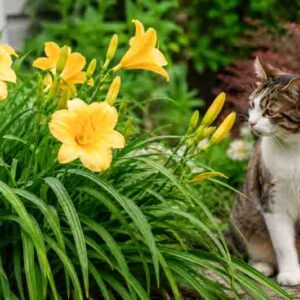
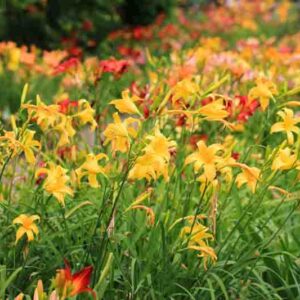
Do deer eat daylilies? Yes - foliage, scapes, buds, and blooms can all be browsed. Learn whether damaged plants recover or rebloom, when protection matters most, how to keep deer away from developing flowers, and which lower-browse perennials can replace daylilies when repeated damage becomes too frustrating.
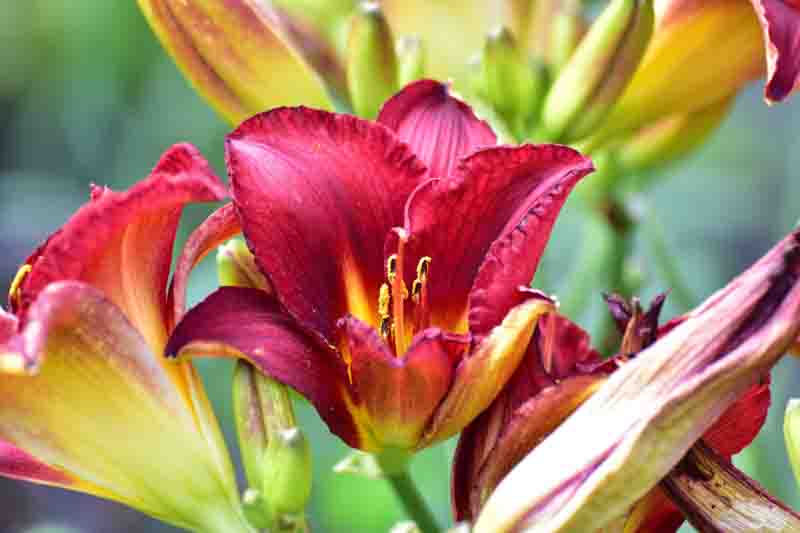


Yes. Deer eat daylilies, including foliage, flower scapes, buds, and blooms. Rutgers rates daylilies C – Occasionally Severely Damaged and specifically notes that deer may eat the buds, while NC State describes them as frequently damaged by deer. Established clumps usually survive moderate browsing, but flowers already eaten are lost. Protect daylilies as scapes and buds develop, or replace repeatedly browsed plants with lower-browse perennials that perform the same garden role.
Daylilies should not be treated as reliably deer resistant.
Rutgers rates Hemerocallis as C – Occasionally Severely Damaged and specifically notes that deer may eat the buds. NC State describes daylilies as frequently damaged by deer, and Iowa State includes daylily among plants deer favor.
That does not mean every daylily will be eaten every year. Deer browsing varies with local deer populations, season, weather, available food, and surrounding vegetation.
One garden may experience occasional leaf browsing and still enjoy plenty of flowers. Another may lose nearly every budded scape just before bloom.
The practical conclusion is straightforward: where deer regularly enter the garden, daylilies carry enough browsing risk that valuable flower displays may need protection.
Deer may browse several parts of a daylily:
The greatest ornamental loss usually occurs when deer browse the flower scapes and buds.
Daylily flowers grow on leafless stalks called scapes. Each scape can carry numerous buds that open in succession. Individual flowers last only one day, but a healthy plant can flower for weeks because additional buds continue to open.
If a deer takes one open flower, other buds may still bloom. If it bites off part or all of a budded scape, several future flowers can disappear at once.
Survival and flowering are two different outcomes. An established daylily can remain healthy after moderate browsing while deer remove the flower display you planted it to enjoy.
It depends on how much of the flowering structure remains.
If deer eat a few individual buds, buds remaining on the scape can still open.
If they remove part or all of a scape, several unopened flowers may be lost together.
Some daylily cultivars produce additional scapes or rebloom later in the season, so another flush may still occur. Reblooming does not make a daylily deer resistant, however, and later scapes can be browsed too.
Foliage generally has a better chance of recovery. Established daylilies are vigorous, clump-forming perennials and can replace some leaf growth after moderate browsing.
After deer damage, continue normal care and leave healthy foliage in place to support the roots and crown.
Deer browsing often looks like healthy plant material has suddenly disappeared.
Look for:
Not every damaged daylily bud is caused by deer.
Thrips can feed on developing buds and flowers, causing scarring, discoloration, distortion, or flowers that fail to open properly. Other insects and diseases may also damage foliage or flowers while leaving the affected tissue attached.
Gardenia’s Daylily Damage Check: missing buds, flowers, or sections of scape with rough ends suggest browsing. Buds that remain attached but are scarred, distorted, discolored, or failing to open point more toward insects or another plant problem.
There is not strong evidence for a dependable deer-resistance ranking among daylily cultivars.
Daylilies differ enormously in flower color, height, bloom season, fragrance, flower size, bud count, dormancy, and reblooming ability, but those characteristics do not establish that one cultivar is reliably less attractive to deer.
A dwarf, fragrant, evergreen, dormant, tetraploid, or reblooming cultivar should therefore not be considered deer resistant simply because of those traits.
Choose daylilies for documented horticultural qualities instead, then assess deer pressure separately.
If you still want daylilies, use Gardenia’s Daylily Comparisons to compare varieties by flowering season, height, spread, hardiness, sun, water needs, and garden role rather than searching for an unsupported “deer-proof daylily.”
If protecting daylilies throughout the growing season is impractical, concentrate your effort when browsing would cost the most flowers.
That period begins when flower scapes rise above the foliage and becomes especially important as the buds enlarge.
A little foliage browsing may leave an established clump looking rough temporarily. A bite through a budded scape can eliminate several future flowers at once.
Physical exclusion is the most dependable protection. Iowa State identifies fencing and other barriers as the most effective way to prevent deer damage. For entire gardens, conventional passive perimeter fencing generally needs to be about 8 feet tall.
For smaller plantings, temporary barriers or individual enclosures may be more practical, particularly from scape emergence through flowering.
Repellents may help under light or moderate pressure, but effectiveness varies. Follow label directions and maintain coverage as new growth develops or weather reduces protection.
Location can also reduce risk. Iowa State recommends growing deer favorites such as daylilies where they are easier to protect or in places deer are less likely to frequent, including areas closer to the home or regular human activity.
Do not rely on deer-resistant companion plants as a barrier. Catmint, salvia, lavender, or other lower-browse plants may themselves be less attractive to deer, but deer can still reach daylily buds growing among them.
If deer remove your daylily flowers year after year, replacing at least part of the planting may be more practical than protecting every scape.
The goal is not to find a perennial that looks exactly like a daylily. Instead, ask what role the daylily was meant to play in the border and choose a lower-browse plant that performs that job.
Rutgers rates daylilies C – Occasionally Severely Damaged. Several useful sunny-border alternatives have stronger resistance ratings, including threadleaf Coreopsis and Nepeta in the Rarely Damaged category, and yarrow, purple coneflower, and meadow sage among plants rated Seldom Severely Damaged.
| If You Grow Daylilies For… | Consider… | Why It Works |
|---|---|---|
| Long summer color | Threadleaf Coreopsis (Coreopsis verticillata) | Masses of bright summer flowers, fine-textured foliage, heat and drought tolerance, and a strong deer-resistance rating |
| Upright flower accents | Meadow Sage (Salvia nemorosa) | Vertical flower spikes, aromatic foliage, pollinator value, and lower browse risk than daylilies |
| Low, spreading color along a border | Nepeta (Catmint) | Long flowering season, aromatic foliage, soft spreading habit, and a particularly strong deer-resistance record |
| Heat, drought tolerance, and summer flowers | Yarrow (Achillea millefolium) | Flat summer flower clusters, aromatic foliage, low water needs once established, and lower browse risk |
| Bold summer flowers and pollinator value | Purple Coneflower (Echinacea purpurea) | Large upright flowers, excellent pollinator value, seed heads that can feed birds, and lower browse risk than daylilies |
These are lower-browse alternatives, not deer-proof plants. Hungry deer may sample almost any vegetation, and each replacement still needs to suit your garden’s hardiness, light, soil, drainage, moisture, and available space.
They are not interchangeable either. Catmint is much lower and softer in habit than a tall daylily. Yarrow thrives in conditions that may be too dry for some plants. Purple coneflower creates a very different visual effect.
The best substitute is the lower-browse perennial that replaces the garden function of the daylily while also fitting the site.
A daylily that is occasionally sampled may still produce a beautiful display. A bed that loses most of its budded scapes every summer is a different problem.
The decision depends on how often browsing occurs, how much you value the flowers, and whether protecting the plants during their flowering period is realistic.
Gardenia’s Deer-Smart Daylily Strategy: think in terms of browse pressure + value of the flowers + practicality of protection. Protect favorite daylilies where that is manageable. Where budded scapes disappear repeatedly, replace some or all of the planting according to the garden role the daylilies were meant to perform.
If you keep them, use Gardenia’s Daylily Comparisons to compare varieties by flowering season, height, spread, hardiness, sun, water needs, and other garden characteristics, or browse Gardenia’s Daylily Collection.
If you want alternatives, use the Gardenia Plant Finder to combine deer resistance with hardiness, sun, soil, drainage, water needs, mature size, flower color, bloom season, pollinator value, and garden style.
Then use the Gardenia Design Tool to check whether daylilies, replacements, and companion plants share compatible growing conditions before planting them together.
Yes. Deer may eat daylily foliage, flower scapes, buds, and flowers. Rutgers rates daylilies C – Occasionally Severely Damaged, while NC State describes them as frequently damaged by deer.
Yes. Rutgers specifically notes that deer may eat daylily buds. Browsing part or all of a flower scape can remove several unopened buds at once.
Established daylilies usually survive moderate browsing and can replace some foliage. However, buds and flowers already eaten are lost.
Some cultivars produce additional scapes or rebloom later, so another flush may occur. Reblooming does not make a daylily deer resistant, and later scapes can also be browsed.
There is not strong evidence for a dependable cultivar-level deer-resistance ranking. Choose daylilies for documented traits such as bloom season, size, hardiness, and reblooming ability, and treat deer pressure separately.
Protection is especially valuable from flower scape emergence through bud development and flowering because browsing during this period can remove several future flowers at once.
Physical barriers are the most dependable protection. Deer fencing can protect larger areas, while temporary enclosures may work for individual beds. Repellents may help under lighter pressure but require maintenance.
Lower-browse alternatives include threadleaf Coreopsis, Nepeta, meadow sage, yarrow, and purple coneflower. Choose according to the role the daylily was meant to perform and your garden’s sun, soil, moisture, climate, mature size, and bloom season.
Updated: September 2026 – Reviewed by Gardenia Editors
| Hardiness |
3 - 9 |
|---|---|
| Heat Zones |
2 - 11 |
| Climate Zones | 2, 3, 4, 5, 6, 7, 8, 9, 10, 11, 12, 13, 14, 15, 16, 17, 18, 19, 20, 21, 22, 23, 24, H1, H2 |
| Plant Type | Perennials |
| Genus | Hemerocallis |
| Exposure | Full Sun, Partial Sun |
| Season of Interest | Summer (Early, Mid, Late), Fall |
| Maintenance | Low |
| Water Needs | Average |
| Soil Type | Chalk, Clay, Loam, Sand |
| Soil pH | Acid, Alkaline, Neutral |
| Soil Drainage | Moist but Well-Drained, Well-Drained |
| Characteristics | Showy |
| Tolerance | Drought, Rabbit, Dry Soil, Salt |
| Attracts | Butterflies, Hummingbirds |
| Landscaping Ideas | Banks And Slopes, Beds And Borders, Patio And Containers |
| Garden Styles | City and Courtyard, Coastal Garden, Informal and Cottage, Traditional Garden |
| Hardiness |
3 - 9 |
|---|---|
| Heat Zones |
2 - 11 |
| Climate Zones | 2, 3, 4, 5, 6, 7, 8, 9, 10, 11, 12, 13, 14, 15, 16, 17, 18, 19, 20, 21, 22, 23, 24, H1, H2 |
| Plant Type | Perennials |
| Genus | Hemerocallis |
| Exposure | Full Sun, Partial Sun |
| Season of Interest | Summer (Early, Mid, Late), Fall |
| Maintenance | Low |
| Water Needs | Average |
| Soil Type | Chalk, Clay, Loam, Sand |
| Soil pH | Acid, Alkaline, Neutral |
| Soil Drainage | Moist but Well-Drained, Well-Drained |
| Characteristics | Showy |
| Tolerance | Drought, Rabbit, Dry Soil, Salt |
| Attracts | Butterflies, Hummingbirds |
| Landscaping Ideas | Banks And Slopes, Beds And Borders, Patio And Containers |
| Garden Styles | City and Courtyard, Coastal Garden, Informal and Cottage, Traditional Garden |
Create a membership account to save your garden designs and to view them on any device.
Becoming a contributing member of Gardenia is easy and can be done in just a few minutes. If you provide us with your name, email address and the payment of a modest $25 annual membership fee, you will become a full member, enabling you to design and save up to 25 of your garden design ideas.
Join now and start creating your dream garden!
Create a membership account to save your garden designs and to view them on any device.
Becoming a contributing member of Gardenia is easy and can be done in just a few minutes. If you provide us with your name, email address and the payment of a modest $25 annual membership fee, you will become a full member, enabling you to design and save up to 25 of your garden design ideas.
Join now and start creating your dream garden!