From elegant Boston Ferns and delicate Maidenhairs to sculptural Staghorns and blue-green Phlebodium, discover 18 beautiful ferns for your home. Compare their light, humidity, and watering needs, find out which are easiest to grow, and learn how to prevent brown fronds and keep their foliage healthy indoors.
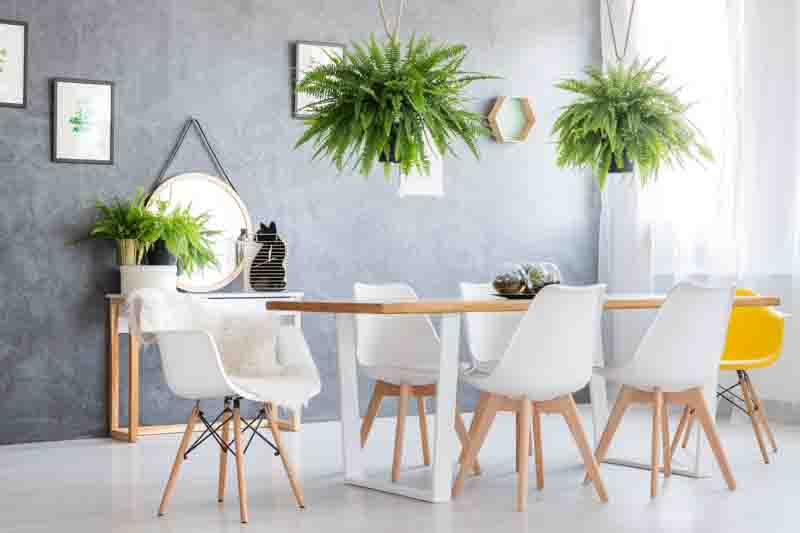


Few houseplants soften a room quite like ferns. A Boston Fern spills over a hanging basket, a Bird’s Nest Fern unfurls glossy green leaves from its center, and a Blue Star Fern brings an unexpected wash of silvery blue to a plant collection.
But not all ferns thrive in the same home. Some need consistently moist roots and humid air. Others grow naturally on trees, with creeping rhizomes that require more oxygen and less persistent moisture. This explains why a delicate Maidenhair Fern may struggle in a dry apartment while a leathery Holly Fern looks perfectly comfortable.
Discover 18 beautiful indoor ferns, from relatively forgiving houseplants to unusual specimens for experienced growers. Compare their growing requirements, find varieties for hanging baskets and small spaces, and learn how to prevent brown fronds, root damage, and disappointing growth.
What are the best ferns to grow indoors?
Before choosing: Match the fern’s light, humidity, moisture requirements, and mature size to your home. A forest-floor fern and a tree-growing epiphyte may need very different treatment.
Instead of treating every fern as a shade-loving, moisture-loving houseplant, use this comparison to identify the species most likely to succeed in your conditions. Compare light, watering requirements, care difficulty, and common problems before choosing.
| Indoor fern | Light | Watering preference | Difficulty | Main risk |
|---|---|---|---|---|
| Bird’s Nest Fern | Medium-bright indirect | Lightly, evenly moist | Moderate | Wet crown |
| Blue Star Fern | Medium-bright indirect | Some surface drying | Relatively forgiving | Buried rhizomes |
| Holly Fern | Medium indirect | Moist but drained | Relatively forgiving | Hot, dry air |
| Kangaroo Paw Fern | Medium-bright indirect | Slight surface drying | Relatively forgiving | Poor aeration |
| Button Fern | Bright indirect | Moderate, well-drained | Moderate | Soggy soil |
| Leatherleaf Fern | Bright indirect | Slight drying between waterings | Relatively forgiving | Heater drafts |
| Boston Fern | Bright indirect | Consistently moist | Moderate | Repeated drought |
| Rabbit’s Foot Fern | Bright indirect | Airy, slightly drying | Moderate | Buried rhizomes |
| Lemon Button Fern | Medium-bright indirect | Evenly moist | Moderate | Drying out |
| Fluffy Ruffles Fern | Bright indirect | Evenly moist | Moderate | Dry indoor air |
| Silver Brake Fern | Bright indirect | Evenly moist | Moderate | Sun scorch |
| Silver Lace Fern | Bright indirect | Consistent moisture | Moderate | Low humidity |
| Delta Maidenhair Fern | Bright filtered | Consistently moist | Demanding | Drought and dry air |
| Southern Maidenhair Fern | Bright filtered | Consistently moist, well-drained | Demanding | Drying out |
| Crocodile Fern | Bright indirect | Moist, airy mix | Moderate | Crowded placement |
| Staghorn Fern | Bright filtered | Wet mount, then partly dry | Moderate | Incorrect mount watering |
| Hen and Chickens Fern | Medium-bright indirect | Evenly moist, well-drained | Moderate | Drying out and insufficient space |
| Kimberley Queen Fern | Bright indirect | Evenly moist, well-drained | Relatively forgiving | Prolonged drought or waterlogging |
How to use the matrix: The difficulty ratings are Gardenia’s practical editorial assessments, not standardized botanical classifications. A relatively forgiving fern can still struggle when its roots remain saturated or its foliage receives too little light.
The Bird’s Nest Fern produces broad, glossy leaves that unfold from a central rosette. More architectural than feathery, it suits a tabletop or plant stand. Provide filtered light and a porous, lightly moist medium, and avoid leaving water pooled in the growing crown.
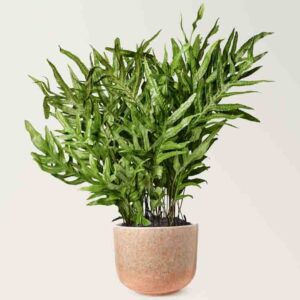
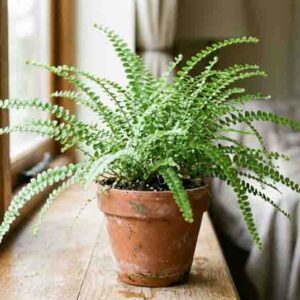
With irregularly divided, blue-green fronds, the Blue Star Fern looks unlike a conventional fern. Its creeping rhizomes need air, so keep them close to the surface. It tolerates modest drying better than Maidenhair Fern, making it a useful choice for ordinary indoor conditions.
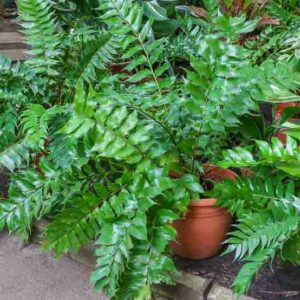
Thick, glossy leaflets resemble holly foliage rather than delicate fern fronds. This tough-looking Holly Fern tolerates moderately cool rooms and generally copes with lower humidity better than fine-leaved ferns. Give it filtered light, good drainage, and protection from hot, drying drafts.
Native to Australia, Kangaroo Paw Fern develops irregularly lobed, glossy fronds above creeping rhizomes. Its spreading habit looks particularly good in a raised planter. Bright indirect light and an airy growing medium help prevent root problems, while slight surface drying is generally acceptable.
Small, round leaflets arranged along dark stems give Button Fern a distinctive appearance. It appreciates bright indirect light and a well-drained medium, with modest drying between waterings. Its compact habit makes it attractive for shelves and small tables.
Better known as florist greenery, Leatherleaf Fern also makes an appealing houseplant. Its sturdy, dark green fronds tolerate ordinary indoor humidity better than many delicate ferns. Provide bright indirect light, allow the medium to dry slightly between waterings, and keep it away from heating vents.
| Plant Type | Ferns, Houseplants |
|---|---|
| Genus | Adiantum, Asplenium |
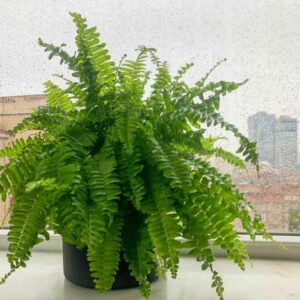
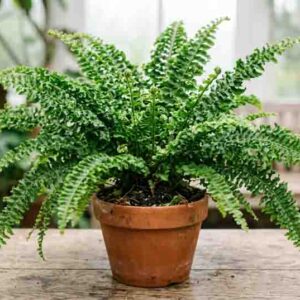
The Boston Fern is the classic hanging fern, with arching green fronds that can spill dramatically from a basket. But it is not effortlessly easy: repeated drought and dry, heated air often cause leaf shedding. Choose it when you can monitor moisture regularly.
Its furry rhizomes creep over the edge of the container like little animal feet. Fine, divided fronds rise above them, creating a charming hanging display. Keep the rhizomes exposed rather than burying them, and use an airy medium with bright filtered light.
This compact Lemon Button Fern has small, rounded leaflets on narrow, arching fronds. It is attractive on a shelf or in a small hanging planter and appreciates even moisture. The parent species is invasive in Florida, so do not plant or discard it outdoors in suitable climates.
A compact Boston Fern cultivar, ‘Fluffy Ruffles’ produces dense, finely divided fronds with a soft, ruffled appearance. It offers the beauty of a full-sized Boston Fern on a smaller scale, although dry air and irregular watering can still cause browning.
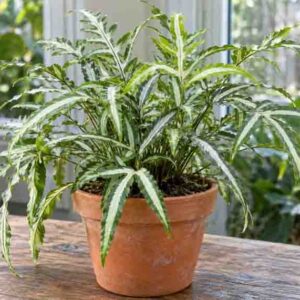
Slender green leaflets with pale silver-white centers give this fern its elegant variegation. White-Striped Cretan Brake works beautifully in a grouped foliage display. Provide bright indirect light, steady moisture, and protection from strong sunshine that can scorch its pale areas.
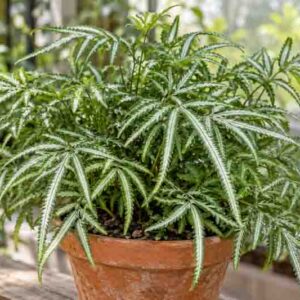
Fine, divided fronds patterned with creamy white and green give Slender Brake Fern a delicate appearance. It prefers filtered light, reliable root moisture, and moderate to high humidity. Compact and colorful, it suits shelves and humid plant displays but dislikes prolonged drying.
Small-space tip: Check the plant’s mature spread, not only its nursery pot size. A Lemon Button or Silver Lace Fern may fit a narrow shelf, while a mature Boston Fern can extend well beyond its container.
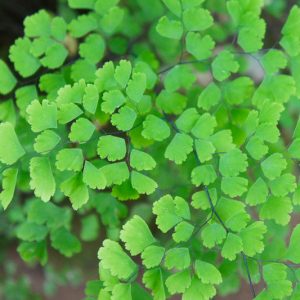
The delicate leaflets of Delta Maidenhair Fern seem to float on slender black stems. It is exquisite but unforgiving of drought. A bright, humid bathroom may suit it, provided the soil remains evenly moist and the room has adequate light.
Few ferns look as delicate as Southern Maidenhair Fern. Its graceful, finely divided fronds are carried on slender, dark stems, creating a light, airy appearance. It appreciates bright filtered light, consistently moist but well-drained growing media, and protection from dry indoor air. Particularly attractive in a humid bathroom or plant display, it is best suited to gardeners willing to monitor moisture regularly.
Raised veins across broad, glossy fronds resemble crocodile skin. Young Crocodile Fern plants look wonderful on tabletops, but mature specimens can become substantial, approaching 3 feet (90 cm) or more in overall size under favorable conditions. Give them generous space, filtered light, and a porous growing medium.
The Staghorn Fern is a remarkable epiphyte with antler-shaped fertile fronds and rounded basal shield fronds. Mount it on a board or grow it in an airy basket. The shield fronds naturally turn brown with age, so do not remove them merely because their color changes.
The Hen and Chickens Fern has a fascinating talent: small plantlets develop directly on its finely divided fronds. As they mature, these young ferns can be detached and grown separately. With graceful, arching foliage, it makes an attractive specimen for a bright, sheltered indoor position. Provide filtered light, a moisture-retentive but well-drained growing medium, and sufficient space for its eventual size.
For a more upright alternative to the cascading Boston Fern, choose the Kimberley Queen Fern. Its dense, sword-shaped fronds form an elegant, architectural clump, perfect for floor containers and bright indoor corners. It generally tolerates ordinary household humidity better than Boston Fern, although it still prefers consistently moist, well-drained soil and protection from harsh afternoon sun and drying drafts.
Most indoor ferns appreciate filtered natural light, often near an east- or north-facing window. Deep shade weakens growth, while intense afternoon sunshine can scorch delicate foliage. Use an appropriate grow light in rooms without sufficient daylight.
Moisture-loving ferns such as Boston and Maidenhair Ferns need regular watering before their root balls dry completely. Blue Star, Rabbit’s Foot, Button, and Leatherleaf Ferns appreciate greater aeration and some surface drying. Always allow excess water to drain.
Many ferns grow well with indoor humidity around 40-60%, while delicate tropical types may need consistently higher levels. These are general guidelines, not universal thresholds. A humidifier or suitable plant cabinet is more dependable than occasional misting for maintaining humidity.
Use a porous, moisture-retentive mix for terrestrial ferns and a more aerated medium for epiphytic species. Keep surface-running rhizomes exposed rather than burying them. Repot when roots become crowded or the medium deteriorates, and fertilize lightly during active growth.
Thoroughly wet the sphagnum or other suitable material surrounding the roots, then allow it to drain and partly dry before watering again. A removable mount can be soaked in a sink, drained, and rehung. Adjust the interval according to temperature, airflow, and the size of the root mass rather than using a fixed weekly schedule.
Gardenia’s indoor fern care principle: Identify whether the fern grows in terrestrial soil, on creeping surface rhizomes, or as an epiphyte. Its natural growing habit helps determine the right container, potting medium, and watering method.
Brown tips, yellow fronds, and damaged new growth can have different causes. Examine the growing medium and conditions before adding fertilizer or more water.
| Symptom | Possible causes | Check first |
|---|---|---|
| Dry, brown tips | Dry air, irregular watering, excess salts | Humidity, root moisture, fertilizer |
| Yellow, limp fronds | Root stress, waterlogging, aging | Drainage and root health |
| Crispy foliage, shedding | Repeated drought or excessive heat | Pot moisture and nearby heat sources |
| New fiddleheads fail to open | Moisture stress, crown damage, drafts, pests | Growing point and root moisture |
| Bleached patches | Too much direct sunlight | Window exposure |
| Sticky foliage, visible insects | Scale, mealybugs, other pests | Undersides and stems |
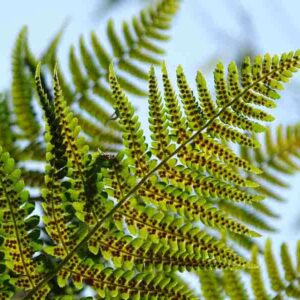
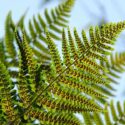
| Regular brown dots or lines beneath fronds | Often normal spore-producing sori | Species-specific spore pattern |
Don’t mistake spores for pests. Many healthy ferns produce orderly dots or lines called sori on the undersides of mature fronds. Identify the structures before using insecticides.
For genuine infestations, use Gardenia’s houseplant pest identification and treatment guide.
Many popular true ferns, including Boston, Bird’s Nest, and Staghorn Ferns, are generally considered non-toxic to cats and dogs. However, plant identity matters. Asparagus Fern is not a true fern and can be toxic to pets.
Even non-toxic foliage can cause digestive upset when eaten. Verify the botanical name and keep fertilizers, pest treatments, and hanging containers away from curious animals.
Explore Gardenia’s cat-safe and dog-safe houseplant guides.
The best fern isn’t necessarily the most unusual. It is the one whose light, moisture, humidity, and mature size fit your home. Choose a Blue Star or Leatherleaf Fern if you want a relatively forgiving plant, Boston Fern for a lush hanging basket, or a Staghorn Fern for a distinctive wall display.
Use Gardenia’s comparison to narrow your selection, then consult our botanical profiles for photographs, mature dimensions, growing conditions, and care information.
Choose your fern, check its mature size, and match its growing needs to the space you can offer.
Blue Star Fern, Holly Fern, Kangaroo Paw Fern, and Leatherleaf Fern are relatively forgiving choices in suitable conditions. Bird’s Nest Fern is another good option when its crown is kept free of standing water and the growing medium drains properly.
Watering depends on the species, growing medium, light, and room conditions. Boston and Maidenhair Ferns need consistent moisture, while Blue Star, Button, Leatherleaf, and Rabbit’s Foot Ferns appreciate greater aeration and some surface drying. Check the root zone rather than following a fixed schedule.
Many ferns grow well with moderate household humidity around 40-60 percent, but delicate tropical types may require higher, more stable humidity. A humidifier or suitable plant cabinet is generally more dependable than occasional misting.
Brown tips can result from dry air, irregular watering, excessive mineral salts, or strong sunlight. Examine root moisture, drainage, humidity, and light before changing care. Damaged fronds will not become green again.
Many true ferns, including Boston Fern, Bird’s Nest Fern, and Staghorn Fern, are generally non-toxic to cats and dogs. However, Asparagus Fern is not a true fern and can be toxic. Check the exact botanical species before purchasing.
Some ferns tolerate moderately low light, but they still need enough light to grow. Most indoor ferns perform best in filtered daylight or with appropriate supplemental lighting. Complete darkness is unsuitable.
Updated and reviewed by Gardenia: October 2026
| Plant Type | Ferns, Houseplants |
|---|---|
| Genus | Adiantum, Asplenium |
Create a membership account to save your garden designs and to view them on any device.
Becoming a contributing member of Gardenia is easy and can be done in just a few minutes. If you provide us with your name, email address and the payment of a modest $25 annual membership fee, you will become a full member, enabling you to design and save up to 25 of your garden design ideas.
Join now and start creating your dream garden!