Do deer eat ferns? Usually not much. Several familiar ferns rank among Rutgers' least-damaged plants, but they differ sharply in moisture needs, mature size, winter habit, and spreading behavior. Compare nine deer-resistant ferns and find the right choice for dry woodland shade, moist borders, or rain gardens.


Deer can eat ferns, but many of the species commonly grown in gardens have an excellent deer-resistance record. This makes ferns especially valuable in shaded landscapes where repeated browsing can make plants such as Hostas difficult to grow.
Ferns are not interchangeable, however. Some tolerate comparatively dry woodland soil, others need dependable moisture, some remain evergreen through winter, and others disappear after frost. There are compact clumpers, vigorous spreaders, cold-hardy natives, and tropical ferns better suited to warm climates or containers.
So once deer resistance is established, the more useful question becomes: which deer-resistant fern actually fits your garden?
Do deer eat ferns? Sometimes, but many familiar garden ferns are strongly deer resistant. Christmas, cinnamon, ostrich, sensitive, New York, and marginal wood ferns have excellent documented browse records, while many other hardy and tropical ferns are also seldom damaged by deer.
Several familiar ferns have stronger evidence behind them than a nursery label simply saying “deer resistant.”
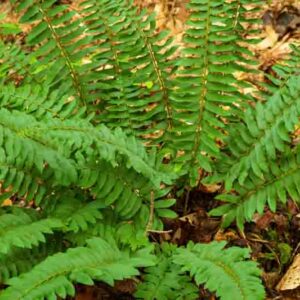
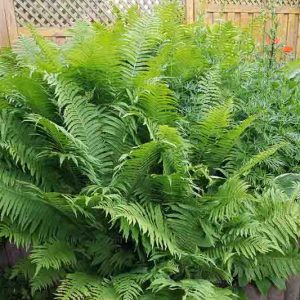
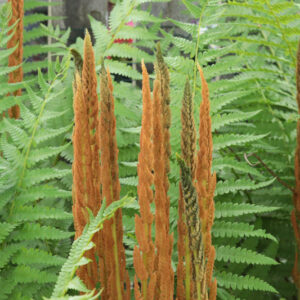
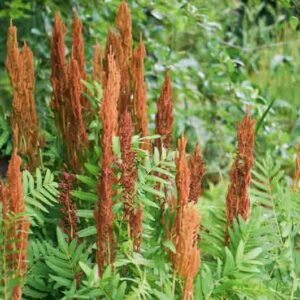
Rutgers places Christmas fern (Polystichum acrostichoides), cinnamon fern (Osmundastrum cinnamomeum), ostrich fern (Matteuccia struthiopteris), sensitive fern (Onoclea sensibilis), New York fern (Parathelypteris noveboracensis), and marginal wood fern (Dryopteris marginalis) in its highest deer-resistance category, A – Rarely Damaged.
University of Maryland Extension independently recommends a number of native ferns for deer-prone landscapes, while Missouri Botanical Garden has also identified Christmas fern, sensitive fern, and maidenhair fern as resistant to browsing.
The picture extends beyond those familiar woodland natives. North Carolina State Extension identifies a number of additional ferns as resistant or seldom damaged by deer, including southern and delta maidenhair ferns, mother fern, bird’s nest fern, Japanese holly fern, and hay-scented fern.
Gardenia’s Fern Fit Check: deer resistance gets a fern onto the shortlist. Then check climate and hardiness, moisture, shade, mature size, evergreen or deciduous habit, and spreading behavior. Those differences determine whether the fern actually belongs in your garden.
The following ferns show just how broad the choices can be. Some are hardy woodland natives, some thrive in wet ground, some tolerate relatively dry shade, and others are tropical species grown outdoors only in warm climates.
| Plant Type | Ferns |
|---|---|
| Genus | Adiantum, Asplenium, Athyrium, Dryopteris, Osmunda, Polystichum |
| Tolerances | Deer |
Deer-resistant does not mean interchangeable. A bird’s nest fern, hay-scented fern, Christmas fern, and ostrich fern may all resist browsing, but they differ radically in cold hardiness, moisture needs, mature size, and how they behave in the landscape.
Looking for more? These 15 ferns are a starting point, not the full list. Use the Gardenia Plant Finder to explore additional deer-resistant ferns and filter them by hardiness, sun, soil, drainage, water needs, native status, mature size, and garden use.
Even a fern with an excellent resistance record can be browsed when deer pressure becomes extreme.
Christmas fern is a useful example. University of Maryland Extension notes that it was once considered deer-proof, yet overpopulated herds have been observed grazing it where little else remains to eat.
Browsing becomes more likely when:
A damaged frond or two does not mean the species has suddenly become a preferred food. Repeated removal of emerging fronds matters much more, particularly while the plant is becoming established.
Gardenia browse check: one missing frond is usually incidental. Repeated loss of fresh fiddleheads or newly unfurled fronds is when temporary protection becomes worthwhile.
A struggling fern is not necessarily a browsed fern. Browning, disappearing foliage, and damaged young fronds can have several causes.
Look at what is actually missing. Fresh shoots removed overnight, torn fronds, tracks, droppings, or similar browsing on neighboring plants strengthen the case for deer. Uniform browning or gradual dieback usually points elsewhere.
Brown does not mean browsed. Ferns frequently respond to drought, excessive sun, frost, or seasonal dormancy by browning or disappearing. Diagnose the pattern before treating for deer.
Established ferns can often tolerate an occasional lost frond. Protect them when browsing becomes repetitive rather than reacting to every bit of cosmetic damage.
There is little reason to spray every fern simply because deer visit the property. Concentrate protection where repeated damage is actually occurring.
Once browse risk is acceptable, site fit matters more than trying to find the fern deer dislike most.
For comparatively dry woodland shade, Christmas fern and marginal wood fern are useful starting points. Hay-scented fern can also tolerate occasional dryness once established, but its rapid spread makes it a better naturalizer than a small-border plant.
For wet or consistently moist ground, cinnamon fern, royal fern, sensitive fern, and ostrich fern can turn difficult areas into some of the strongest parts of a shade garden.
For restrained clumps, Christmas fern, marginal wood fern, Japanese painted fern, and many maidenhair ferns are easier to place. Ostrich, sensitive, and hay-scented ferns need considerably more room.
For winter foliage, look toward evergreen or semi-evergreen species suited to your climate. Deciduous ferns will leave a seasonal gap, which should be considered when planning a border.
For warm climates or containers, bird’s nest fern, mother fern, and delta maidenhair fern expand the palette, but they should not be treated as substitutes for hardy temperate woodland ferns in cold climates.
For foliage color and texture, Japanese painted fern brings silver and burgundy tones, maidenhair ferns contribute exceptional delicacy, and Japanese holly fern provides glossy, coarse-textured foliage.
Gardenia’s Fern Fit Check: after deer resistance, check climate and hardiness first, then moisture, shade, mature size, winter habit, and spreading behavior. A fern that fits all of those conditions is far more useful than one chosen from a deer-resistant list alone.
The 15 ferns above are examples, not the limit of your choices. Knowing that a fern resists deer solves only the first part of the problem. It still has to survive your winters, handle your soil moisture, fit the available space, and behave the way you want it to.
Use the Gardenia Plant Finder to discover more deer-resistant ferns and compare them by hardiness, climate, sun, soil, drainage, water needs, native status, mature size, and garden use. Browse Deer-Resistant Garden Ideas for planting inspiration, then use the Garden Design Tool to check whether your ferns and companion plants actually fit the same conditions before you plant.
Deer can eat ferns, but many commonly grown species have excellent deer-resistance records. Rutgers rates Christmas, cinnamon, ostrich, sensitive, New York, and marginal wood ferns A – Rarely Damaged.
Many ferns have strong resistance records, including Christmas, cinnamon, ostrich, sensitive, marginal wood, maidenhair, Japanese holly, hay-scented, and several Asplenium ferns. The best choice also depends on climate, moisture, shade, and growth habit.
Yes. Rutgers rates ostrich fern A – Rarely Damaged. It is a large spreading fern that performs best in rich, consistently moist soil and needs enough room to form colonies.
Yes. Rutgers rates Christmas fern A – Rarely Damaged. However, University of Maryland Extension notes that overpopulated deer herds may graze it when little other food remains.
They can. Deer become less selective when populations are high or preferred forage is scarce. A resistant fern is less likely to suffer serious repeated damage, not guaranteed to remain untouched.
Deer may remove substantial sections of fronds or fresh shoots and leave ragged tissue. Brown tips, scorch, gradual dieback, or collapse after frost are more likely to result from environmental stress or normal seasonal changes.
No. Ostrich, cinnamon, sensitive, and royal ferns favor moist conditions, while Christmas and marginal wood ferns tolerate comparatively dry woodland soil. Fern moisture requirements vary greatly by species.
Updated: September 2026 – Reviewed by Gardenia Editors
| Plant Type | Ferns |
|---|---|
| Genus | Adiantum, Asplenium, Athyrium, Dryopteris, Osmunda, Polystichum |
| Tolerances | Deer |
Create a membership account to save your garden designs and to view them on any device.
Becoming a contributing member of Gardenia is easy and can be done in just a few minutes. If you provide us with your name, email address and the payment of a modest $25 annual membership fee, you will become a full member, enabling you to design and save up to 25 of your garden design ideas.
Join now and start creating your dream garden!