Want lush foliage and fragrant flowers indoors? This jasmine care guide shows you how to grow Arabian Jasmine and other indoor favorites with the right light, watering routine, pruning schedule, and feeding plan. Get practical tips to boost blooming, avoid common mistakes, and keep indoor jasmine thriving beautifully.


If you want a houseplant that does more than just look green in the corner, indoor jasmine is one of the best choices you can make. A healthy jasmine plant brings glossy foliage, elegant buds, starry flowers, and a fragrance that can completely change the feel of a room. It is not just decorative – it is atmospheric. That is exactly why so many gardeners want to know how to successfully grow jasmine indoors.
The good news is that growing jasmine indoors is absolutely possible. The catch is that jasmine is not a low-attention plant. It rewards the grower who gets the basics right: strong light, careful watering, good air circulation, smart pruning, and the right variety. If you understand those five variables, indoor jasmine can become one of the most satisfying flowering houseplants in your collection.
Give jasmine as much light as you can, keep the roots evenly moist but never soggy, and prune with purpose. Most indoor failures trace back to weak light, overwatering, or delayed pruning.
Not every jasmine performs equally well indoors. Some are far better suited to container life, seasonal bloom, and indoor conditions than others. If you are choosing a plant specifically for indoor growing, start with varieties that have a strong record in pots.
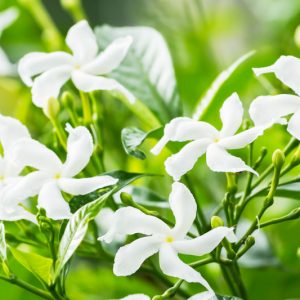
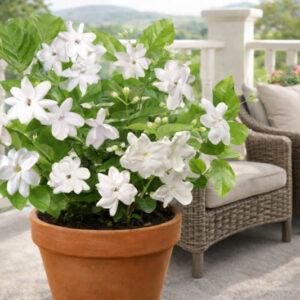
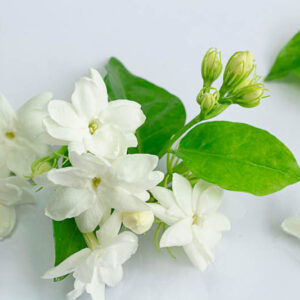
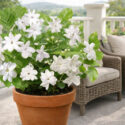
Best overall: Arabian Jasmine (Jasminum sambac). This is one of the best indoor jasmine plants because it stays relatively manageable in a container, responds well to pruning, and produces powerfully fragrant white blooms.
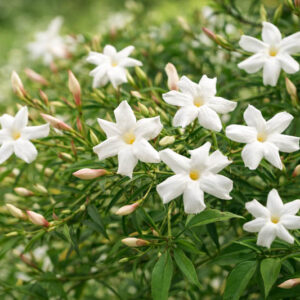
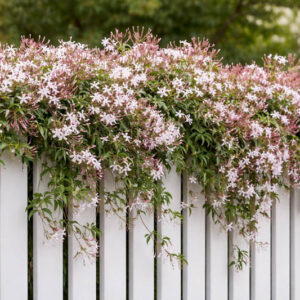
Best for winter to spring bloom: Pink Jasmine (Jasminum polyanthum). It is vigorous, twining, and famous for white flowers that open from pink buds. Indoors, it is especially valued as a cool-season bloomer.
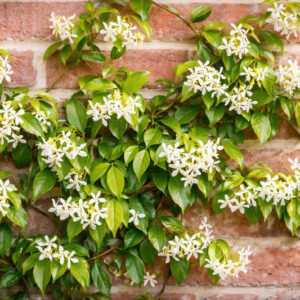
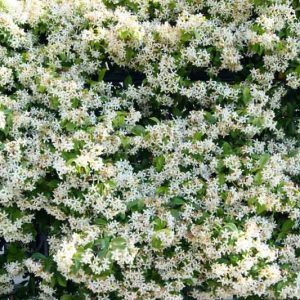
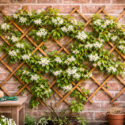
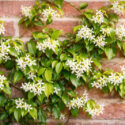
Best evergreen structure: Star Jasmine (Trachelospermum jasminoides). Technically not a true jasmine, but sometimes grown indoors in very bright rooms or sunrooms. It is better for growers who want glossy foliage plus fragrance.
Classic true jasmine option: Common Jasmine (Jasminum officinale). Beautiful and fragrant, but usually more vigorous than most indoor spaces comfortably allow.
Need the fastest recommendation? Use this quick guide to match the plant to your space, light, and indoor growing goals.
This comparison focuses specifically on indoor growing rather than patio or outdoor container use. It compares which jasmine types are easiest to manage inside the home, how much light they need, whether they benefit from cooler conditions, and how realistic they are for ordinary indoor spaces.
| Variety | Indoor Difficulty | Best Indoor Light | Needs Support? | Cool Rest Helpful? | Fragrance | Indoor Verdict |
|---|---|---|---|---|---|---|
| Arabian Jasmine (Jasminum sambac) | Moderate | Bright south or west window | Optional | Not essential | Very strong | Best all-around indoor choice |
| Pink Jasmine (Jasminum polyanthum) | Moderate to high | Very bright window | Yes | Yes, often helpful | Strong | Excellent for bright, cooler rooms |
| Star Jasmine (Trachelospermum jasminoides) | High | Sunroom or very bright conservatory | Usually | Sometimes | Strong | Best only in very bright indoor spaces |
| Common Jasmine (Jasminum officinale) | High | Very bright light | Yes | Helpful | Strong | Too vigorous for many average homes |
| Spanish Jasmine (Jasminum grandiflorum) | High | Very bright, warm room | Yes | Not usually | Very strong | More specialized indoor choice |
| Downy Jasmine (Jasminum multiflorum) | Moderate | Bright window | No | Not usually | Light | Good if fragrance is not the priority |
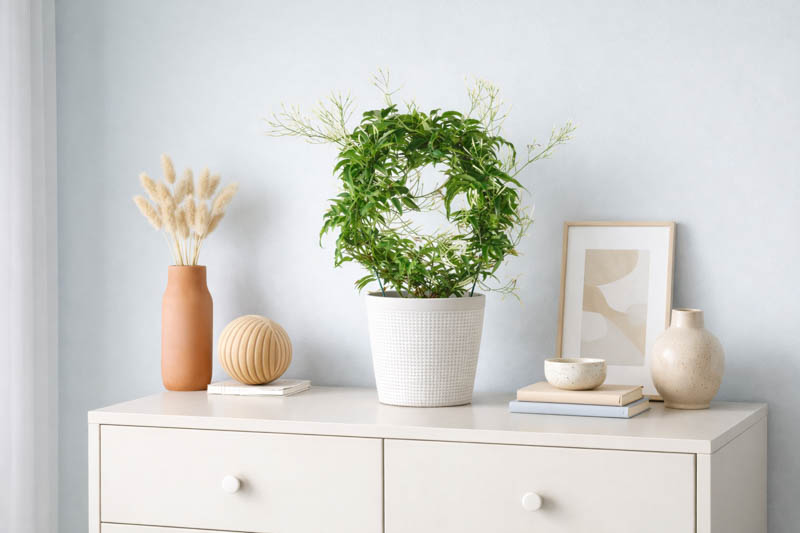
The best indoor jasmine depends heavily on where you plan to grow it. In a bright south-facing or west-facing window, Arabian Jasmine is often the best all-around choice because it combines strong fragrance with a more manageable growth habit. Pink Jasmine also performs well in bright rooms, especially where it can be trained on a hoop or compact trellis.
In a sunroom, enclosed porch, or very bright conservatory, Star Jasmine can work well if you want evergreen structure as well as fragrance. In cooler, bright spaces, Pink Jasmine is often the better pick because it appreciates bright conditions paired with somewhat cooler temperatures before bloom.
For ordinary indoor rooms with only medium light, jasmine is usually not the best fit. It may survive, but it is unlikely to stay dense or flower well. In that situation, it is better to choose a brighter location or use a grow light rather than force jasmine into an underlit space.
If you want indoor jasmine to bloom reliably, you need to recreate the conditions that matter most outdoors without exposing the plant to environmental stress. That starts with light.
Jasmine is not a low-light houseplant. It needs a very bright position to stay dense, healthy, and floriferous. A south-facing or west-facing window is usually best. An east-facing window can work for some plants, especially in brighter climates, but dim rooms almost always lead to leggy growth, reduced flowering, and pest problems.
For many homes, the difference between a jasmine that survives and one that flowers is just one window. That is why placement matters so much. Put it where the plant gets several hours of direct sun or the brightest possible indirect light. If your home is naturally dark, supplement with a grow light.
Jasmine can tolerate average indoor temperatures better than it can tolerate weak light. Gardeners often blame watering first, but insufficient light is the more common reason indoor jasmine stops blooming.
One of the biggest mistakes with indoor jasmine care is treating jasmine like a thirsty tropical plant that wants wet soil all the time. It does not. Jasmine likes evenly moist, well-drained soil during active growth, but the root zone should never stay waterlogged. Water thoroughly, allow excess water to drain, and then wait until the top layer of the potting mix begins to dry before watering again.
In winter, especially when growth slows, reduce watering frequency. Overwatering in cool, low-light conditions is one of the fastest ways to create yellow leaves, root stress, and poor flowering performance.
The best soil for jasmine indoors is rich enough to support active growth but open enough to drain sharply. A high-quality indoor potting mix improved with perlite, bark, or coarse material works well. The goal is not dryness – it is oxygen around the roots. Healthy roots support healthy blooms.
Jasmine appreciates moderate humidity, especially in heated homes during winter, but constant misting is not the answer. Better solutions include grouping plants, using a pebble tray, or simply avoiding placement near hot air vents and dry drafts. Good airflow matters just as much as humidity because stagnant air encourages pests and fungal issues.
During spring and summer, feed indoor jasmine with a balanced fertilizer or a bloom-supporting fertilizer at moderate strength. Too much nitrogen produces lush leaves and fewer flowers. That is one reason some jasmine plants look healthy but bloom poorly indoors – they are being fed for greenery, not floral performance.
Most jasmine grown indoors is happiest in ordinary room temperatures during active growth, roughly 60 – 75°F (16 – 24°C). That range suits Arabian Jasmine especially well, provided the plant also gets strong light and good airflow. Avoid placing jasmine against radiators, heating vents, fireplaces, or drafty exterior doors because repeated temperature swings can stress the plant and trigger bud drop.
Some types, especially Pink Jasmine, often bloom better after experiencing cooler but still frost-free conditions. A bright room kept a bit cooler in fall or winter can help encourage flowering. Indoor jasmine does not want freezing temperatures, but it also does not always perform best in constant warmth.
Choose a container with strong drainage. Jasmine prefers to be slightly snug in its pot rather than swimming in excess soil. A pot that is too large holds too much moisture, increasing the risk of root problems. Repot only when the plant becomes clearly rootbound or when watering becomes difficult to manage.
For placement, think like a designer and a grower at the same time. Jasmine should sit where it receives excellent light and where the fragrance can actually be enjoyed. Near a bright kitchen window, sunroom, enclosed porch, or well-lit bedroom can work beautifully. Just avoid places near radiators, heating vents, or constantly opened exterior doors in winter.
Indoor jasmine is most rewarding when you place it where light is strongest and scent is noticeable – beside a sunny sitting area, near a bright entry, or in a sunroom where blooms can be appreciated up close.
The best time to repot indoor jasmine is usually in late winter or spring, just before or as active growth begins. That timing helps the plant settle into fresh mix and resume growth quickly. Avoid frequent repotting just for the sake of it. Jasmine often flowers better when slightly snug in its container.
Signs it is time to repot include roots circling heavily around the pot, water running straight through without being absorbed, or a plant that dries out unusually fast. Move up only one pot size at a time. Overpotting can lead to slow drying soil, root stress, and reduced flowering.
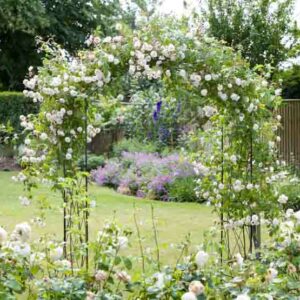
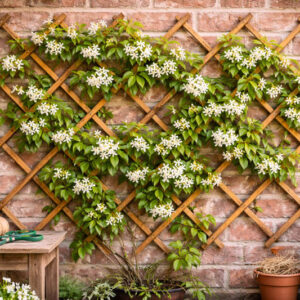
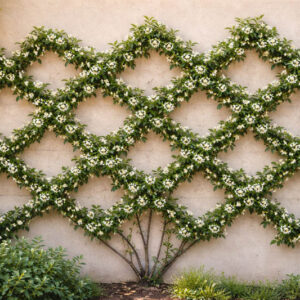
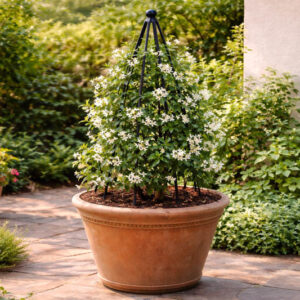
Many indoor jasmines, especially Pink Jasmine, look and perform better when they are trained rather than left to sprawl. A hoop, ring support, small obelisk, or compact trellis helps keep the plant tidy and makes better use of vertical space near a bright window.
Start while the stems are still flexible. Gently guide new shoots around a hoop or tie them loosely to the support with soft ties. Do not force thick, woody stems into sharp bends. Instead, train gradually over time and redirect fresh growth early. Pinch or prune excessively long shoots after flowering to keep the plant full rather than top-heavy.
The goal is not rigid formality. It is structure with airflow. A well-trained indoor jasmine gets better light penetration, looks more intentional, and is easier to manage in a small space.
Pruning is one of the most overlooked parts of growing jasmine indoors. Without it, many varieties become tangled, thin, and less floriferous. With it, jasmine stays denser, better shaped, and more likely to bloom well the following cycle.
The timing matters. In general, prune jasmine after its main flowering period. This gives the plant time to produce and mature new growth that will support future blooms. Remove weak, tangled, or excessively long shoots first. Then shape the plant lightly rather than shearing it harshly. If you are growing a vining type like Pink Jasmine, train shoots onto a hoop, trellis, or small support as they grow.
A useful rule is simple: prune after bloom, not before buds. That one habit prevents a lot of accidental flower loss.
If your jasmine grows leaves but no flowers, the plant is telling you something. Most often, the issue is one of these: not enough light, too much nitrogen, incorrect pruning, or too-warm winter conditions for varieties that prefer a cooler rest period before blooming.
Pink Jasmine, in particular, often performs best when it experiences bright light and somewhat cooler conditions before bloom. Arabian Jasmine is a little more forgiving in warm interiors, but still flowers best when light levels are high and growth is balanced, not overly soft.
To improve flowering, increase light, moderate feeding, avoid overpotting, and prune at the right time. Also remember that a newly purchased or recently moved jasmine may need time to adjust before blooming at full strength.
Some jasmine types benefit from a cooler rest period before they bloom again, while others are more adaptable. Pink Jasmine is the classic example. It often flowers better after a bright, cool spell rather than constant indoor warmth. That does not mean it wants frost. It means it usually responds well to cooler indoor conditions than many tropical houseplants.
Arabian Jasmine is less dependent on a cool rest, but it still benefits from seasonal rhythm. Slightly reduced feeding, careful watering, and very bright light help the plant reset without pushing weak, soft growth. If jasmine grows well but refuses to set buds, a lack of seasonal contrast may be part of the problem.
If you grow jasmine outdoors in the warm season, bring it inside before nights turn truly cold. Inspect the plant carefully first. Check the undersides of leaves, wash the foliage if needed, and remove weak or damaged growth. Moving pests indoors with the plant is one of the most common avoidable mistakes.
Once indoors, place jasmine in the brightest window available and reduce watering compared to summer. Growth usually slows, so the plant does not need the same amount of moisture or fertilizer. Keep airflow good, avoid crowding it into a dark corner, and monitor for spider mites or aphids as indoor air becomes drier in winter.
For many growers, jasmine performs best with a seasonal routine. Move it outdoors once temperatures are reliably warm and place it in bright shade or gentle morning sun at first. Then gradually increase sun exposure over a week or two so the foliage can adjust without scorching.
During summer, the plant usually grows faster, flowers more strongly, and develops sturdier stems than it would indoors all year. Before fall temperatures drop, reverse the process. Bring the plant indoors early, clean it thoroughly, and place it directly into the brightest possible spot. This routine often produces stronger plants than trying to keep jasmine in average indoor conditions year-round.
Bud drop usually happens because the plant experiences abrupt change. Jasmine may go from bright outdoor light and better airflow to lower light, drier air, and different watering patterns almost overnight. That transition can cause the plant to abort buds, especially if it is already under mild stress.
To reduce bud drop, bring jasmine inside before cold weather becomes severe, not after it has already been stressed outdoors. Give it the brightest possible indoor position immediately, water carefully rather than heavily, and avoid moving it repeatedly from one room to another. Stable conditions reduce shock.
The flowers themselves are usually short-lived compared to the overall blooming season. Individual jasmine blooms may last only a few days, but a healthy plant can continue opening new flowers over weeks, and sometimes longer depending on the variety and conditions.
Arabian Jasmine often produces successive flushes in summer, while Pink Jasmine is more known for a dramatic seasonal show from late winter into spring. If you want longer display, focus less on the life of one flower and more on creating conditions that encourage a steady sequence of buds.
The ASPCA lists true jasmine (Jasminum species) as non-toxic to cats, dogs, and horses. Star Jasmine (Trachelospermum jasminoides) is also listed as non-toxic, making both good options for pet-friendly homes.
Still, it is best to discourage pets from chewing leaves or flowers, since eating plant material can cause mild digestive upset even when the plant is not considered toxic.
Indoor jasmine usually fails for predictable reasons, not mysterious ones. In most homes, the biggest problem is insufficient light. Jasmine may stay alive in a dim room for a while, but it will rarely stay compact, bloom well, or resist pests without very bright exposure.
The second major problem is overwatering. Jasmine likes evenly moist soil during active growth, but roots sitting in soggy potting mix quickly lead to yellow leaves, weak growth, and poor flowering. A pot that is too large can make that problem worse by staying wet too long.
Other common reasons indoor jasmine struggles include pruning at the wrong time, keeping cool-blooming types too warm all winter, skipping support for vining varieties, and moving plants indoors too abruptly in fall. In most cases, indoor jasmine performs best when light is strong, watering is measured, and seasonal changes are handled gradually rather than suddenly.
Brightest window in the house
Sharp drainage and a snug pot
Water thoroughly, then let the top layer begin to dry
Train vining types early
Prune after bloom, not before buds
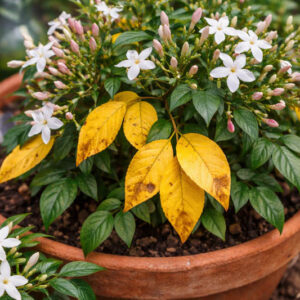
Yellow leaves: Usually linked to overwatering, inconsistent moisture, or low light.
No flowers: Most often caused by weak light, overfeeding with nitrogen, or pruning at the wrong time.
Leggy growth: A clear sign the plant needs more light and earlier pinching or pruning.
Buds dropping: Often tied to sudden environmental changes, underwatering, or dry indoor air combined with stress.
Spider mites or aphids: Jasmine can attract pests indoors, such as spider mites and aphids, especially when the air is dry and circulation is poor. Inspect the undersides of leaves regularly and act early.
Leaves but no flowers – more light, less nitrogen, correct pruning
Yellowing foliage – improve drainage and watering rhythm
Weak, stretched stems – move to a brighter window
Sticky leaves or fine webbing – check for aphids or spider mites
Yes, jasmine can live indoors year-round, but performance depends on the variety and the quality of the indoor environment. Arabian Jasmine is one of the strongest candidates for long-term indoor culture. Pink Jasmine is often grown indoors seasonally or as a bright-room specimen with support. In many homes, jasmine performs best when it spends the warm season outdoors in bright conditions and then comes inside before temperatures drop.
That approach often delivers the best of both worlds – stronger growth in summer, followed by protected indoor performance when the weather cools. For many gardeners, that is the most realistic way to keep jasmine healthy and blooming over time.
The best indoor jasmine is not simply the most fragrant plant. It is the variety that matches your light, your space, and your willingness to prune, train, and water with precision.
Yes. Jasmine can grow indoors very successfully when it receives bright light, sharp drainage, careful watering, and timely pruning.
Arabian Jasmine is usually the best indoor jasmine for most growers because it combines strong fragrance, manageable size, and good performance in containers.
Water indoor jasmine when the top of the potting mix begins to dry. Keep the soil evenly moist during active growth, but never saturated.
The most common causes are insufficient light, overfeeding with nitrogen, incorrect pruning, or environmental stress after moving the plant.
In most homes, yes. Some direct sun or extremely bright light is often the difference between a jasmine plant that merely survives and one that flowers well.
Updated: March 2026 • Reviewed by Gardenia Editors
| Hardiness |
6 - 11 |
|---|---|
| Plant Type | Climbers, Shrubs |
| Plant Family | Apocynaceae, Oleaceae |
| Genus | Jasminum, Trachelospermum |
| Exposure | Full Sun, Partial Sun |
| Season of Interest | Spring (Early, Mid, Late), Summer (Early, Mid, Late), Fall, Winter |
| Maintenance | Low |
| Water Needs | Average |
| Soil Type | Chalk, Loam, Sand |
| Soil pH | Acid, Alkaline, Neutral |
| Soil Drainage | Moist but Well-Drained, Well-Drained |
| Characteristics | Showy |
| Attracts | Bees, Butterflies |
| Landscaping Ideas | Arbors, Pergolas, Trellises, Banks And Slopes, Ground Covers, Patio And Containers, Wall-Side Borders |
| Garden Styles | City and Courtyard, Coastal Garden, Informal and Cottage |
| Hardiness |
6 - 11 |
|---|---|
| Plant Type | Climbers, Shrubs |
| Plant Family | Apocynaceae, Oleaceae |
| Genus | Jasminum, Trachelospermum |
| Exposure | Full Sun, Partial Sun |
| Season of Interest | Spring (Early, Mid, Late), Summer (Early, Mid, Late), Fall, Winter |
| Maintenance | Low |
| Water Needs | Average |
| Soil Type | Chalk, Loam, Sand |
| Soil pH | Acid, Alkaline, Neutral |
| Soil Drainage | Moist but Well-Drained, Well-Drained |
| Characteristics | Showy |
| Attracts | Bees, Butterflies |
| Landscaping Ideas | Arbors, Pergolas, Trellises, Banks And Slopes, Ground Covers, Patio And Containers, Wall-Side Borders |
| Garden Styles | City and Courtyard, Coastal Garden, Informal and Cottage |
Create a membership account to save your garden designs and to view them on any device.
Becoming a contributing member of Gardenia is easy and can be done in just a few minutes. If you provide us with your name, email address and the payment of a modest $25 annual membership fee, you will become a full member, enabling you to design and save up to 25 of your garden design ideas.
Join now and start creating your dream garden!
Create a membership account to save your garden designs and to view them on any device.
Becoming a contributing member of Gardenia is easy and can be done in just a few minutes. If you provide us with your name, email address and the payment of a modest $25 annual membership fee, you will become a full member, enabling you to design and save up to 25 of your garden design ideas.
Join now and start creating your dream garden!