Yes, you can grow grapes in containers - but success depends on doing it properly. With a large pot, full sun, strong support, careful watering, moderate feeding, and confident pruning, potted grapevines can deliver healthy growth and real harvests. This guide shows exactly how to grow productive container grapes.
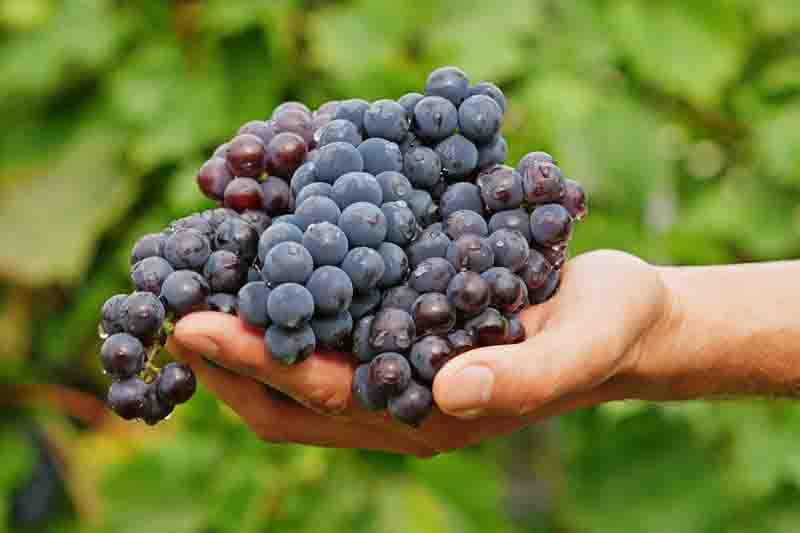


Yes, grapes can grow and fruit well in containers. A potted grapevine can live for years and produce useful harvests on a patio, balcony, courtyard, terrace, or other small-space garden if you give it full sun, a large container, a strong support system, and disciplined yearly pruning.
That said, container grapes are not a casual, low-effort plant. Grapevines are woody perennial vines with vigorous growth and long-term root needs. In the ground, they naturally spread into a large root zone. In a pot, that root system is restricted, so watering, feeding, pruning, training, and winter protection all become more important. If you want good results, you need to grow grapes as a fruit crop, not treat them like a decorative annual climber.
Jump to: Grapes in Containers at a Glance | Can Grapes Really Grow in Pots? | Best Grapes for Containers | Best Pot Size and Type | Best Soil and Potting Mix | Where to Place Container Grapes | How to Plant Grapes in Containers | Watering and Feeding | Training and Pruning | Pollination and Fruit Set | When Container Grapes Bear Fruit | Realistic Yield Expectations | Winter Care | Repotting and Root Care | Common Problems | FAQ
They can, and many gardeners succeed with them, but only when the basics are taken seriously. Grapevines are not naturally compact plants. They are long-lived climbers that need abundant sunlight, structural support, yearly pruning, and enough root room to stay healthy.
Container growing works because it gives you control over drainage, soil type, and placement. It also makes grape growing possible where there is no open ground, where the native soil is poor, or where the site is paved or rented. But the smaller root zone also means the vine is less forgiving. Potting mix dries out faster than garden soil, nutrients are depleted sooner, and roots are more exposed to both heat and winter cold.
The practical takeaway is simple: grapes in pots are realistic, but they are more management-intensive than grapes in the ground. If the container is too small, the support is weak, the watering is erratic, or the pruning is neglected, the vine will usually decline in performance quickly.
The best grape for a container is usually one that matches your climate, ripens reliably, and responds well to regular pruning and training. The best choice is not always the most vigorous or famous variety. In a pot, moderate vigor is often easier to manage than a vine that wants to cover a fence in one season.
Most container grapes fall into four broad groups:
When choosing a grape for a container, prioritize:
General guidance by region:
Muscadines need one special caution: some cultivars are self-fertile, while others are female and require a self-fertile muscadine nearby for pollination. If you choose muscadines for container growing, always check the cultivar label before planting. NC State identifies self-fertile muscadines such as Carlos, Noble, and Triumph..
Container size is one of the biggest success factors. Small pots dry out too quickly, heat up faster in summer, freeze harder in winter, and become rootbound sooner. For long-term growing, a grapevine usually needs at least a 15- to 20-gallon container, and larger planters are often even better if drainage remains excellent.
Think of 15 to 20 gallons as a practical minimum, not an ideal finish line. A mature grapevine gains weight as the trunk thickens, the canopy expands, and the support begins catching wind. The planter needs enough volume for roots and enough mass to keep the whole system stable.
Good container features include:
Wooden planters are often especially useful because they insulate roots better than thin plastic and may overheat less in intense sun. Dark plastic pots can work, but in hot climates they can drive root-zone temperatures higher than ideal.
If you are growing on a balcony or roof terrace, remember that a large container filled with wet potting mix and supporting a mature vine can become very heavy. Structural safety matters as much as horticultural technique in elevated spaces.
Do not use ordinary garden soil in a container. It compacts too easily, drains unpredictably, and can become difficult to re-wet once it dries hard. Use a high-quality container mix that stays airy and free-draining while still retaining enough moisture for steady growth.
A good grape mix should do three things at once: hold moisture, drain excess water, and keep enough air around the roots. Many gardeners improve a premium potting mix with ingredients such as bark fines or perlite to maintain structure over time. The exact blend can vary, but the goal does not change: roots need oxygen as much as they need water.
If the mix stays wet and dense, roots weaken. If it dries so fast that the vine repeatedly wilts between waterings, fruiting and growth suffer. Container grapes perform best in a mix that remains evenly moist but never stagnant.
A slightly acidic to neutral pH is generally suitable for most grapes, and refreshing the mix over time matters because potting media break down and compact with age.
Grapes need full sun to ripen properly. Weak light is one of the fastest ways to end up with poor growth, poor sweetness, and disappointing crops. In most settings, you should aim for at least 6 to 8 hours of direct sun each day, and more is often better if heat and watering are managed well.
The best site also offers good airflow and enough room for training. On patios and balconies, a sunny wall can improve ripening in cooler climates. In very hot climates, however, reflected heat from masonry can increase water stress and overheat the root zone, especially in smaller pots.
If you are growing grapes on a balcony, account for three things before planting:
Planting itself is simple, but the setup matters. Install the support before or at planting time so you do not disturb the root ball later. If the vine will be trained along a wall, put the wires or trellis in place first. When planting against masonry, leave some space between the plant and the wall so airflow remains better and roots are not trapped in a dry heat pocket.
The most common beginner mistake is planting a grape into a decorative pot with no clear training plan. Grapes need structure from the beginning. A vine guided early is much easier to manage than a vine corrected later.
When to Plant Grapes for Healthier Vines
Watering is the part of container grape growing that requires the most regular attention. Pots dry much faster than garden soil, especially during hot weather, in windy conditions, and in porous containers. Water deeply enough to moisten the whole root zone, then let the surface begin to dry before watering again.
The goal is steady moisture, not a permanently wet pot. Repeated drought stress can reduce shoot growth, berry size, and fruit quality. Constant saturation, on the other hand, can suffocate roots and encourage decline. Newly planted vines need especially close monitoring until they are established.
In warm weather, daily checking is often necessary. Large containers buffer moisture swings better than small ones, but even a big planter can dry quickly in midsummer.
Feeding should be moderate and balanced. Too much fertilizer, especially high-nitrogen fertilizer, can push excessive leafy growth that is harder to manage and does not necessarily improve fruiting. A restrained feeding program usually produces a healthier, more balanced vine.
As a general rule, use a balanced fertilizer lightly during active growth if the vine shows it needs support, but do not chase every problem with more feeding. Many potted-grape problems begin with watering, root stress, compaction, or lack of sunlight rather than a true fertilizer shortage.
Grapes must be pruned every year. This is not optional, and it matters even more in containers where space is limited. Grapes bear fruit on shoots that arise from one-year-old wood, so pruning is not just about tidiness. It directly affects productivity.
For most home gardeners, the easiest container system is a single trunk trained to one or two permanent arms along wires or a compact trellis. This keeps the vine organized, lets sunlight into the canopy, and makes dormant pruning much easier.
Bilateral cordon: A single trunk rises to a wire, then forms two permanent arms, one in each direction. Short fruiting spurs are renewed along those arms each year. This is often the easiest long-term system for container and wall-trained grapes.
Single cordon: Similar to a bilateral cordon, but with one permanent arm instead of two. Useful where space is very limited.
Cane-pruned systems: These rely on renewing fruiting canes each year rather than maintaining a permanent spur framework. They can work well, but many beginners find them more complex than spur-pruned cordons.
Compact standard form: In very small spaces, grapes can be trained as a short trunk with a compact head, almost like a miniature fruiting standard. This can be attractive in a container, but it still requires careful annual pruning.
During the growing season: Tie in new shoots, remove obvious tangles, and keep the canopy open enough for light and airflow. Summer management is about guidance and balance, not heavy restructuring.
During dormancy: Do the real structural pruning. Remove excess wood, renew fruiting areas, and keep the vine within the limits of its support system. If you skip dormant pruning, a potted grape quickly turns into a congested mass of leaves and wood with weaker fruiting and more disease pressure.
A simple rule helps beginners: always know which wood you are keeping for next year and which wood has already served its purpose. Once you understand that grapes fruit on shoots arising from one-year-old wood, the logic of pruning becomes much clearer.
Most bunch grapes are self-fertile, so a single vine can usually produce fruit on its own if the flowers are healthy and conditions are suitable. That makes container growing practical for many home gardeners with room for only one plant.
Muscadines are the important exception to watch closely. Some muscadine cultivars are self-fertile, while others are female and need a compatible self-fertile muscadine nearby for pollination. If a muscadine flowers but never sets fruit, pollination is one of the first things to check.
Poor fruit set can also come from late frost injury, very weak vine health, excessive shade, or pruning mistakes that remove the wrong wood.
Why your Grapevine has Leaves but No Grapes
Most container-grown grapes begin producing a meaningful crop in about two to three years, depending on the age and size of the plant when purchased, the training system, and the quality of care. Under favorable conditions, some fruit may appear earlier, but early heavy cropping is usually not the goal.
In the first years, the better strategy is to build a strong trunk, a sound framework, and healthy roots. A vine that is allowed to overcrop too early often ends up with weaker structure and less long-term performance.
If you buy a more mature vine, you may see fruit sooner. If you start with a smaller bare-root or young nursery plant, progress may be slower but often leads to better long-term training.
Container grapes can be productive, but expectations should stay realistic. A potted vine is not likely to match the yield of a mature in-ground vine with unrestricted roots.
Actual harvest depends on variety, climate, pot size, pruning skill, sunlight, and vine age, but these rough expectations are reasonable:
In practical terms, think of a container grape as a compact edible landscape plant that can reward you with fruit, not as a heavy commercial producer. The goal is a healthy vine with reliable, good-quality clusters, not maximum yield at any cost.
Winter is often the most challenging part of container grape growing because roots are far less insulated in a pot than they are in open soil. The aim is not to keep the vine warm indoors. Grapes need winter dormancy. The real goal is to protect the root zone from severe cold, repeated freeze-thaw stress, and drying winds.
Once the vine is dormant, reduce watering but do not let the root ball become bone dry. In colder climates, move the container to a sheltered but cold place if practical, such as an unheated garage, shed, or a protected outdoor wall. If the pot must stay outside, insulate the container and protect it from the harshest exposure.
In container culture, roots are usually more vulnerable than the top growth. That is why the pot itself deserves winter protection, not just the vine above it.
Usually, yes. A grapevine is not a permanent small-pot plant. Over time, roots fill the container, the potting mix breaks down, drainage slows, and watering becomes harder to manage. The vine may become weak, dry out unusually fast, or show declining vigor even when the top growth looks crowded.
Check the vine in late winter or early spring if growth has slowed, the pot is clearly rootbound, or watering has become difficult. Depending on its age and size, you may:
Do not jump straight from a tiny nursery pot into an excessively huge container that stays wet for long periods. The better approach is to establish the vine in a suitable large planter and then manage root health over time with periodic maintenance.
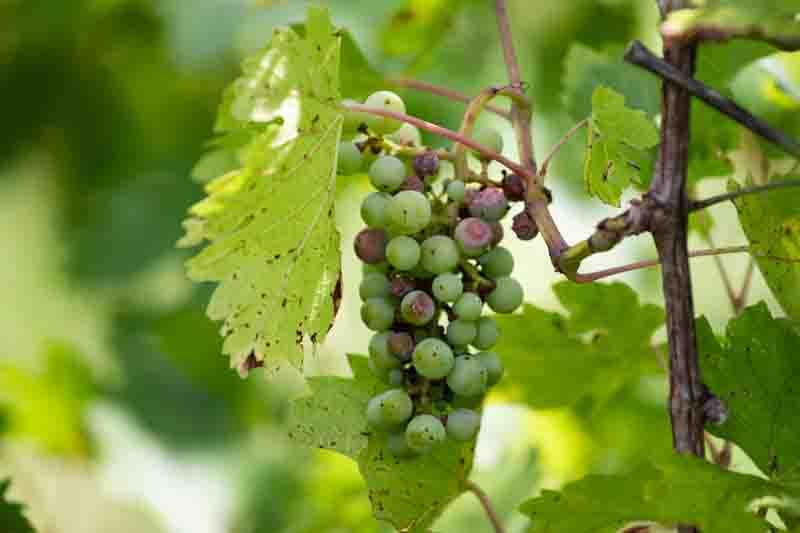
Most container grape problems trace back to a small number of causes: too little sun, poor drainage, irregular watering, weak pruning, root restriction, or the wrong variety for the climate.
Often linked to overwatering, poor drainage, root stress, exhausted potting mix, or nutrient imbalance.
Usually caused by low light, a too-small root zone, underfeeding, compacted mix, or a vine that was never trained properly.
Common causes include vine immaturity, pruning off the wrong wood, insufficient sunlight, winter bud injury, or poor pollination in female muscadines without a self-fertile partner.
Usually caused by lack of sun, repeated water stress, excessive crop load on a weak vine, or too much shade inside the canopy.
Powdery mildew, downy mildew, and black rot can still affect container grapes, especially in humid conditions and dense canopies. Container culture does not remove the need for sanitation, spacing, and airflow.
Container grapes can also attract birds, beetles, leaf-feeding insects, and other regional pests. Birds may target ripening fruit heavily, especially on exposed patios and balconies. In some areas, Japanese beetles and other chewing insects can damage foliage. The best response is regular monitoring, a healthy open canopy, and prompt action before a small issue becomes a serious one.
Common Grapevine Problems and How to Fix Them
Those habits are what turn container grapes from a novelty into a durable, productive edible landscape plant.
Yes, grapevines can live for years in containers if the pot is large, drainage is excellent, the vine is pruned annually, and the roots are managed over time.
A large container is best, generally at least 15 to 20 gallons for long-term growing, with more room being even better for strong vines.
Yes, if the balcony gets full sun, can support the weight of the container and trellis, and is not so windy that the vine becomes stressed or unstable.
Yes. Grapes are climbing vines and need a strong support system from the beginning, whether that is a trellis, wire frame, obelisk, or wall-mounted training system.
Water when the potting mix begins to dry near the surface, but before the entire root zone becomes dry. In hot weather, daily monitoring is often necessary.
Not well in ordinary indoor conditions. Grapes need full sun, room to grow, airflow, and winter dormancy. A greenhouse or conservatory is far more suitable than a typical room indoors.
Most begin producing a meaningful crop in about two to three years, depending on the age of the plant when purchased and how well it is trained and maintained.
Yes. They are entirely possible in containers, but they need more precise watering, feeding, pruning, and winter protection than in-ground vines.
Usually no. Most bunch grapes are self-fertile, so one vine can often produce fruit on its own. Muscadines are different because some cultivars are female and need a self-fertile muscadine nearby for pollination.
For most home gardeners, a single trunk with one or two permanent cordons on wires or a compact trellis is one of the easiest systems to manage in a container.
Container grape growing is absolutely realistic, but it works best when you treat the vine as a long-term fruit plant rather than a decorative filler. Give it sun, root room, support, steady moisture, a clear training system, and yearly pruning, and it can become one of the most rewarding edible plants for small spaces.
The formula is simple: one vine, one large pot, full sun, free-draining potting mix, moderate feeding, strong structure, and annual pruning. Protect the roots in winter, refresh the root zone over time, and keep expectations realistic. Do that, and a grapevine in a container can provide fruit, shade, structure, and ornamental value for years.
Updated: March 2026 • Reviewed by Gardenia Editors
| Hardiness |
3 - 10 |
|---|---|
| Plant Type | Climbers, Fruits |
| Plant Family | Vitaceae |
| Genus | Vitis |
| Exposure | Full Sun |
| Maintenance | High |
| Water Needs | Average |
| Soil Type | Chalk, Loam, Sand |
| Soil pH | Alkaline, Neutral |
| Soil Drainage | Well-Drained, Moist but Well-Drained |
| Attracts | Bees, Birds |
| Hardiness |
3 - 10 |
|---|---|
| Plant Type | Climbers, Fruits |
| Plant Family | Vitaceae |
| Genus | Vitis |
| Exposure | Full Sun |
| Maintenance | High |
| Water Needs | Average |
| Soil Type | Chalk, Loam, Sand |
| Soil pH | Alkaline, Neutral |
| Soil Drainage | Well-Drained, Moist but Well-Drained |
| Attracts | Bees, Birds |
Create a membership account to save your garden designs and to view them on any device.
Becoming a contributing member of Gardenia is easy and can be done in just a few minutes. If you provide us with your name, email address and the payment of a modest $25 annual membership fee, you will become a full member, enabling you to design and save up to 25 of your garden design ideas.
Join now and start creating your dream garden!
Create a membership account to save your garden designs and to view them on any device.
Becoming a contributing member of Gardenia is easy and can be done in just a few minutes. If you provide us with your name, email address and the payment of a modest $25 annual membership fee, you will become a full member, enabling you to design and save up to 25 of your garden design ideas.
Join now and start creating your dream garden!