Planting grapes at the right time can make the difference between a struggling vine and a long-lived backyard producer. This guide explains the best season to plant grapes, how climate changes the timing, and what to avoid so your vines establish quickly, grow vigorously, and produce better fruit for years.
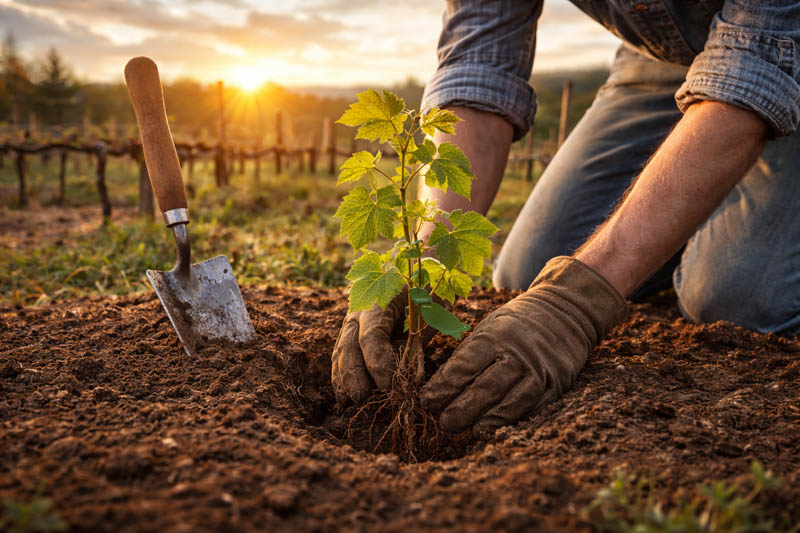


If you want healthy grapevines, sweeter fruit, and fewer long-term problems, planting time matters. It influences how well the roots establish, how much transplant stress the vine experiences, and how quickly a young plant grows into a productive, well-structured grapevine.
For most home gardeners, the best time to plant grapes is early spring, while vines are still dormant or just beginning to wake up. This is especially true for bare-root grapevines, which are typically planted before vigorous top growth starts. Spring planting gives roots time to spread, settle, and prepare for the first summer.
Spring is not the only option, however. In mild-winter climates with excellent drainage, container-grown grapes can also be planted in fall. The right planting window depends on climate, soil conditions, grape type, and whether you are planting bare-root or potted vines.
Jump to: Best Time to Plant Grapes | Spring vs Fall Planting | When to Plant by Climate | When to Plant by Grape Type | Bare-Root vs Potted Grapes | Best Soil Conditions at Planting | How to Plant Grapes | What to Do Right After Planting | Mistakes to Avoid | FAQ
Grapes are long-lived woody vines, not quick seasonal crops. A grapevine may produce for many years, so the planting window affects much more than the first season. A vine planted at the right time establishes faster, suffers less transplant shock, and begins building the root system and framework it will depend on for the rest of its life.
Plant too early into frozen or saturated soil, and roots may stall or rot. Plant too late into rising heat, and the vine may spend its first season under stress instead of establishing strongly. Plant at the right moment, and the vine can put its energy into root expansion, trunk growth, and healthy early training.
For most home gardeners, spring is the safest and most reliable time to plant grapes. The soil is beginning to warm, the vine is still dormant or nearly dormant, and the plant has a full growing season ahead to establish. That combination is why spring is the standard planting season for grapes in most climates.
Spring planting is especially valuable in cold-winter regions, short-season areas, and places where young vines may be damaged by their first winter. It gives the plant time to build roots and wood before cold weather returns.
Fall planting can work well, but it is more conditional. In regions with mild winters and well-drained soil, container-grown grapevines can be planted successfully in fall. The roots may continue establishing in cool soil while top growth remains quiet, giving the plant a head start for spring.
However, fall planting is riskier in colder climates, heavy soils, and places with frequent freeze-thaw cycles. A vine planted too late in autumn may not establish enough roots before winter, leaving it more vulnerable to cold injury, heaving, and slow spring recovery.
The best planting month varies by region, but the principle stays the same: plant when the soil is workable, drainage is good, and the young vine is unlikely to face immediate temperature stress.
In colder regions, plant grapes in early to mid-spring, after the soil can be worked and before the vine leafs out heavily. This gives the vine the longest possible establishment period before the next winter. In these climates, spring is strongly preferred over fall.
In moderate climates with distinct but not severe winters, early spring remains the best default. Gardeners in these regions often have more flexibility, but spring still offers the most reliable balance of root establishment and reduced stress.
In warm regions with low humidity, grapes still establish best in the cooler part of the year. Spring planting is excellent, and fall planting can also work where winters are mild and soils do not stay wet.
In humid regions, planting time matters, but site quality matters just as much. Plant only when the soil is workable and not soggy. Humidity increases disease pressure later, so start with generous spacing, strong airflow, and a sturdy support system. For many Southern gardens, Muscadine grapes are often more dependable than bunch grapes in heat and humidity.
Not all grapes perform the same way in every region, and planting decisions should reflect that. The best planting season is still usually early spring, but the right grape type helps determine how flexible your timing can be and how forgiving the vine will be after planting.
American grapes are often the easiest choice for colder or more humid regions because they are generally more cold-hardy and more tolerant of disease pressure than European grapes. They are usually best planted in early spring, especially in climates with cold winters, so they have the full growing season to establish before their first dormant period.
Examples: Concord, Niagara, Catawba, Edelweiss, Mars, Reliance, and Canadice.
Hybrid grapes combine traits from different grape species and are often excellent for variable climates, cooler regions, and gardens where disease resistance matters. Like American grapes, they are usually planted in early spring for the safest establishment, especially where winters are serious or seasons are shorter.
Examples: Marquette, Frontenac, La Crescent, St. Croix, and Marechal Foch.
European grapes, usually Vitis vinifera, include many classic table and wine grapes. They are often better suited to warm, dry climates and are usually less forgiving in poorly drained or humid sites. They still benefit from planting in the cooler part of the year, with early spring as the best default and fall planting possible only where winters are mild and drainage is excellent.
Examples: Chardonnay, Cabernet Sauvignon, Cabernet Franc, Merlot, and Thompson Seedless.
Muscadine grapes are especially well-suited to the hot, humid Southeast, where many bunch grapes struggle. They should be planted when the soil is workable and not waterlogged, with spring as the safest choice. In areas with colder winters, spring planting is strongly preferred because muscadines are less cold-hardy than many American and hybrid bunch grapes.
Examples: Carlos, Noble, Triumph, Supreme, and Tara. For more on this grape group, see Muscadine grapes.
Bare-root grapes should be planted while dormant, usually from late winter into early spring, depending on your climate. This is often the best planting method for grapes because bare-root vines are easy to inspect, easy to position correctly, and quick to establish when planted at the proper time.
Do not let bare-root roots dry out before planting. Keep them moist and protected until they go into the ground. If the site is ready, plant promptly rather than storing them too long.
Container grapes offer a wider planting window. They are commonly planted in spring, and in mild climates, they may also be planted in fall. Even so, avoid midsummer planting unless you can provide careful watering and protection from heat stress during establishment.
Many gardeners assume potted vines can be planted at any time because they already have soil around the roots. They are more flexible, but they still establish best before major heat arrives.
Even perfect timing cannot rescue a poor site. Grapes need well-drained soil above all else. They tolerate a range of soil textures and moderate fertility, but they do not tolerate roots sitting in cold, wet ground.
Before planting, check three things:
Grapes are woody perennial vines in the Vitis genus, and like most long-lived fruiting plants, they reward good preparation more than later correction. If drainage is weak, fix it before planting. If the site is still and crowded, improve airflow before the vine ever goes in the ground.
You do not need a specific calendar date nearly as much as you need the right conditions. The ground is ready when you can dig without smearing mud, the soil is no longer frozen, and excess winter moisture has drained away. A handful of soil should crumble, not form a sticky lump.
If the site stays wet after rain, wait. Planting into saturated ground compacts the soil around the roots and creates a weak start that can follow the vine for years.
Planting day should be simple, deliberate, and structured. The goal is to establish the vine correctly from the beginning.
If you want a deeper pruning guide later, this resource is relevant: How to Prune Grapevines for Bigger Harvests: Cane Pruning vs Spur Pruning.
1 The biggest mistake is planting for convenience rather than conditions. Gardeners often plant on the first warm weekend, even when the ground is still too wet. Others wait until late spring or summer, when heat stress makes establishment slower and harder.
2 Another common mistake is planting before the support system is ready. A grapevine needs structure from day one. A delayed or weak trellis leads to confused early growth and unnecessary retraining.
3 Choosing the wrong grape type for the region is another avoidable problem. A grape that thrives in a dry Mediterranean climate may struggle badly in a humid backyard with high disease pressure.
4 Finally, many gardeners push for fruit too soon. The first season should focus on roots, trunk, and framework. A disciplined start usually leads to healthier vines and better harvests later.
If you want the simplest and most reliable plan, choose a climate-adapted grapevine, prepare the support system first, wait for early spring, and plant while the vine is dormant or barely active. Choose a sunny, open site with excellent drainage, water deeply after planting, prune appropriately, and focus on training instead of fruit in the first year.
This approach works because it aligns planting time with the vine’s biological needs. It reduces transplant shock, maximizes root establishment, and sets the stage for strong canes, easier pruning, and more dependable crops later.
In mild climates, fall can still be a useful second option, especially for container-grown vines. But for most home gardeners, early spring remains the gold standard.
How Long Grapevines Take to Produce Fruit
Why your Grapevine has Leaves but No Grapes
In most regions, plant grapes in early spring. The exact month depends on your climate, but the ideal window is when the ground is workable, no longer frozen, and not waterlogged.
Yes, but mainly in mild climates with well-drained soil. Fall planting is usually best for container-grown vines, not for areas with severe winter cold.
Spring is better for most gardeners because it gives grapevines a full growing season to establish before winter. Fall is a secondary option in mild climates.
They can be, especially if container-grown, but summer is usually not ideal. Heat and water stress make establishment harder, and young vines need more intensive care.
Bare-root grapes are excellent for early spring planting and often establish very well. Potted grapes offer more flexibility, but they still perform best when planted before major heat arrives.
The best time to plant grapes is early spring for most climates and most gardeners. That timing gives young vines the best chance to root deeply, grow strongly, and enter their first summer with less stress. In mild regions, fall planting can also succeed, especially with container-grown vines, but it is not as universally reliable.
In the end, successful grape planting comes down to matching the season to the site. Plant when the soil is workable, drainage is good, the vine is not under heat stress, and your support system is already in place. Get that right, and you are not just planting a vine – you are building the foundation for years of healthy growth and better harvests.
Updated: March 2026 • Reviewed by Gardenia Editors
| Hardiness |
3 - 10 |
|---|---|
| Plant Type | Climbers, Fruits |
| Plant Family | Vitaceae |
| Genus | Vitis |
| Exposure | Full Sun |
| Maintenance | High |
| Water Needs | Average |
| Soil Type | Chalk, Loam, Sand |
| Soil pH | Alkaline, Neutral |
| Soil Drainage | Well-Drained, Moist but Well-Drained |
| Attracts | Bees, Birds |
| Hardiness |
3 - 10 |
|---|---|
| Plant Type | Climbers, Fruits |
| Plant Family | Vitaceae |
| Genus | Vitis |
| Exposure | Full Sun |
| Maintenance | High |
| Water Needs | Average |
| Soil Type | Chalk, Loam, Sand |
| Soil pH | Alkaline, Neutral |
| Soil Drainage | Well-Drained, Moist but Well-Drained |
| Attracts | Bees, Birds |
Create a membership account to save your garden designs and to view them on any device.
Becoming a contributing member of Gardenia is easy and can be done in just a few minutes. If you provide us with your name, email address and the payment of a modest $25 annual membership fee, you will become a full member, enabling you to design and save up to 25 of your garden design ideas.
Join now and start creating your dream garden!
Create a membership account to save your garden designs and to view them on any device.
Becoming a contributing member of Gardenia is easy and can be done in just a few minutes. If you provide us with your name, email address and the payment of a modest $25 annual membership fee, you will become a full member, enabling you to design and save up to 25 of your garden design ideas.
Join now and start creating your dream garden!