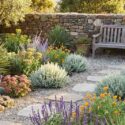
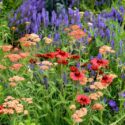
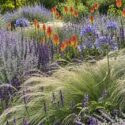
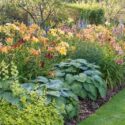
Tired of endless yard work? Discover how to create a low-maintenance garden that delivers maximum beauty with minimal effort. From smart plant choices to efficient layouts, this guide helps you reduce maintenance while enjoying a lush, colorful outdoor space that feels effortless and rewarding.



A low-maintenance garden should not look sparse or improvised. The best ones feel full, calm, and intentional. They change through the seasons without falling apart, and they need less work because they were designed to stay stable from the beginning.
That distinction matters. Many gardens are called low-maintenance simply because they use a short plant list or a lot of mulch. In practice, those gardens often become more demanding over time. Plants outgrow their spaces, bare soil fills with weeds, thirsty species struggle in dry spots, and the layout starts requiring constant correction.
A genuinely low-maintenance garden works differently. It is planned as a system rather than assembled plant by plant. The design reduces recurring problems before they appear. Water use becomes more efficient, weed pressure drops, structure holds even when bloom cycles shift, and seasonal transitions feel deliberate instead of patchy.
This guide explains how to build that kind of garden: one that looks generous, performs reliably, and gets easier to manage as it matures. It also shows how tools like the Gardenia Plant Finder and the Gardenia Design Tool can help turn general ideas into a workable planting plan.
Most difficult gardens do not fail because the owner is careless. They fail because the design asks too much of the space, the plants, or the gardener.
A plant that needs even moisture is placed in a hot, dry border. A shrub chosen for a small bed doubles its intended width. A newly planted area is left too open, so weeds take over before the planting fills in. Spring bulbs create a strong early display, but by midsummer the bed feels thin and exhausted. By late season, the garden looks unfinished and the owner starts editing, pruning, replacing, and watering just to hold it together.
This pattern is common because many gardens are planned around first impressions rather than long-term performance. They are built for the nursery visit, the first month of bloom, or a photograph in peak season. What they are not built for is endurance.
A garden becomes labor-intensive when it repeatedly runs into one or more of these five problems:
The easiest gardens to live with are usually built on two connected frameworks: one for choosing plants, and one for arranging them.
Before choosing a single plant, evaluate the site through four conditions:
This sounds basic, but it is the most important step in the process. A plant that fits the site usually asks for less water, less feeding, and fewer interventions. A plant that does not fit the site keeps asking for help.
The Gardenia Plant Finder is especially useful here because it allows you to filter by hardiness zone, sun exposure, soil type, moisture conditions, bloom season, and plant type. That helps you narrow choices based on real performance rather than impulse.
Once the site is understood, the garden should be built in layers. A stable, low-maintenance planting usually includes four:
When one or more of these layers is missing, maintenance rises quickly. Without ground coverage, weeds increase. Without structure, the garden looks tired between bloom peaks. Without seasonal continuity, the design goes flat after one strong moment.

Walk the space at different times of day. Notice which areas receive morning sun, which are exposed to hot afternoon light, and where shade deepens as the season progresses. After rainfall, look for places that stay wet, places that drain quickly, and places where water runs away almost immediately.
For example, a dry, sunny border may be ideal for lavender, salvia, yarrow, sedum, ornamental grasses, and other drought-tolerant plants that prefer leaner conditions. A shaded bed near the house may perform better with hellebores, hardy geraniums, brunnera, heuchera, ferns, and compact evergreen shrubs that tolerate lower light and steadier moisture.
The point is not to make the plant palette smaller. It is to make it more compatible.
Every garden area should have a job. Without a clear purpose, plant selection becomes scattered and maintenance rises.
Most successful low-maintenance gardens combine several of these goals, but one should lead. A front entry border may prioritize clarity and structure. A side yard may focus on durability and coverage. A rear garden may support wildlife while staying visually coherent.
One of the most common mistakes in garden planning is choosing plants first and only later trying to make them fit together. A stronger approach is to map the garden in broad strokes before getting specific.
This order matters because it keeps the garden from depending entirely on flowers. Even when bloom is between peaks, the layout still reads clearly.
Plants behave more reliably in a low-maintenance design when each one has a defined role. Instead of selecting every plant as an isolated feature, assign functional jobs within the system.
These examples show how the same principles can be applied in very different settings.

Before: The bed is filled with a mix of short-lived flowering plants chosen for spring color. By midsummer, gaps open up, the soil dries quickly, and weeds appear between plants.
After: The planting is rebuilt around a stronger framework: a few compact evergreen shrubs, a repeated drift of ornamental grasses, and long-season perennials such as salvia, yarrow, echinacea, and sedum. Lamb’s ear and low groundcovers soften the front edge and reduce exposed soil.
What changed: Structure was added, repetition increased, and the palette shifted toward species that tolerate heat and dry conditions.
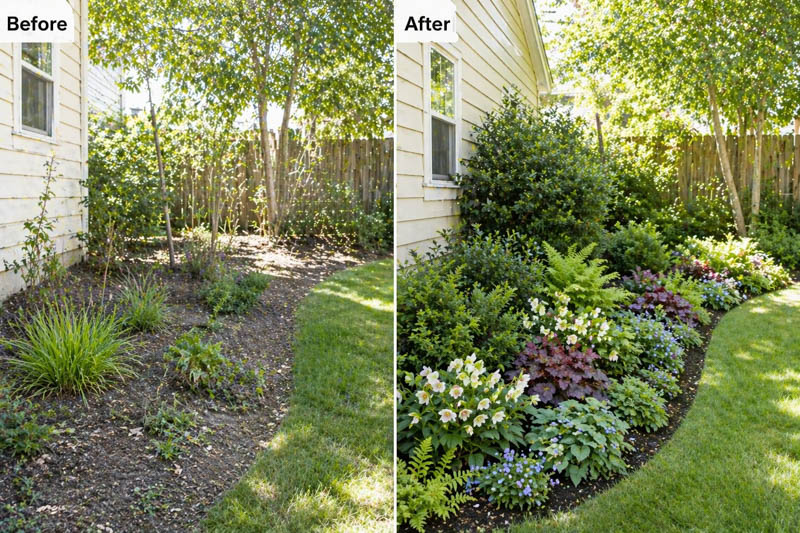
Before: The area is too dim for sun-loving plants, but it keeps being planted that way anyway. The result is weak growth, uneven watering needs, and a bed that always looks like it is struggling.
After: The layout is simplified with evergreen shrubs, hellebores, hardy geraniums, brunnera, heuchera, and ferns. The planting is arranged in repeated groups instead of many singles, and the ground layer is tightened so the bed closes faster.
What changed: The design stopped fighting the site. Matching plants to light and moisture conditions reduced stress and eliminated the need for constant rescue work.

Before: Every section is maintained to the same standard, so the entire space requires frequent weeding, deadheading, edging, and mowing.
After: The garden is reorganized into zones. The patio and main view receive the most polished planting. Side areas become more structural and lower-input. A farther rear section shifts toward grasses, shrubs, seedheads, and longer seasonal persistence with lighter cleanup.
What changed: Effort is concentrated where it has the greatest visual payoff.
Exact plant choices always depend on region, soil, exposure, and style, but some categories consistently support a lower-maintenance design.
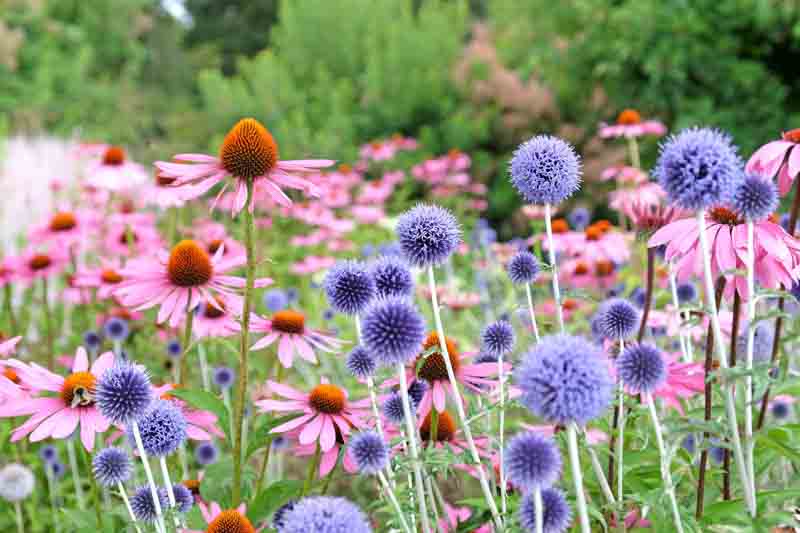
Drought-tolerant perennials are valuable in sunny, free-draining conditions. Lavender, salvia, catmint, agastache, yarrow, echinacea, and sedum all perform well when they are given the conditions they prefer and allowed to establish properly.
Ornamental grasses add movement, structure, and long-season presence. Many continue to look good after flowering plants have faded and support winter interest.
Evergreen shrubs provide year-round stability. Even a few well-placed evergreens can make a garden feel composed through winter and between bloom peaks.
Native plants often reduce maintenance because they are adapted to local conditions and support pollinators, birds, and broader ecological resilience. With repetition, clean edges, and careful grouping, native plants can still look highly polished.
Long-season performers are usually more valuable than short-lived spectacles. A plant that keeps its form, foliage, or flower presence for many weeks is often more useful than a plant that peaks dramatically and then disappears into visual silence.
👉 Small nursery plants are misleading. A shrub that looks compact in a pot may eventually spread far beyond the space it was given. Always select plants based on mature height and width, not purchase size.
If a plant will regularly outgrow the space, it is not low-maintenance for that location, no matter how tough it is.
👉 Repeated drifts are easier to water, easier to edit, and visually stronger than a collection of isolated single specimens. As a general rule, a planting will feel more stable with fewer species used in larger groups than with many species used once or twice.
👉 In a low-maintenance design, form matters as much as flower. Favor plants that remain upright, mound cleanly, or age gracefully through the season. That includes many grasses, strong perennials such as amsonia, bergenia, brunnera, epimedium, iris, and echinops, along with shrubs that keep a tidy, reliable habit.
Spacing has a major effect on maintenance. Plants placed too far apart leave open soil for too long. Plants packed too tightly compete early, reduce airflow, and create unnecessary editing later. The goal is not crowding. It is planned closure.
Scattered one-offs are harder to manage and visually weaker. Repeated groups simplify watering, strengthen rhythm, and make the garden feel calmer and more coherent.
A crisp edge makes the garden read as cared for, even when the planting inside is naturalistic, layered, and habitat-friendly.
Lawn often requires the most repeated labor. Replacing difficult or unnecessary lawn sections with shrubs, grasses, groundcovers, or mixed planting can reduce mowing, edging, and irrigation.
Not every part of the garden should be maintained to the same standard. Concentrate polish near entries, patios, and important views, and allow lower-traffic areas to operate with less intervention.
Water strategy is one of the clearest places where low-maintenance gardens succeed or fail. Many gardens are described as drought tolerant long before they are actually established. Even drought-tolerant plants need regular watering while roots are developing.
As a general approach, deep watering is more effective than frequent shallow watering because it encourages roots to move downward. Exact frequency will depend on climate, soil, exposure, and plant type.
One of the smartest design choices is hydrozoning: placing plants with similar moisture needs together. Thirsty woodland plants should not share the same irrigation rhythm as drought-tolerant Mediterranean plants.
Mulch moderates soil temperature, reduces evaporation, and limits weed germination. Organic mulch can also improve soil over time. It works best as part of a broader planting strategy, not as a permanent substitute for ground coverage.
Dense planting is what ultimately reduces maintenance most effectively. The long-term goal is a garden where the plants themselves shade the soil and close gaps.
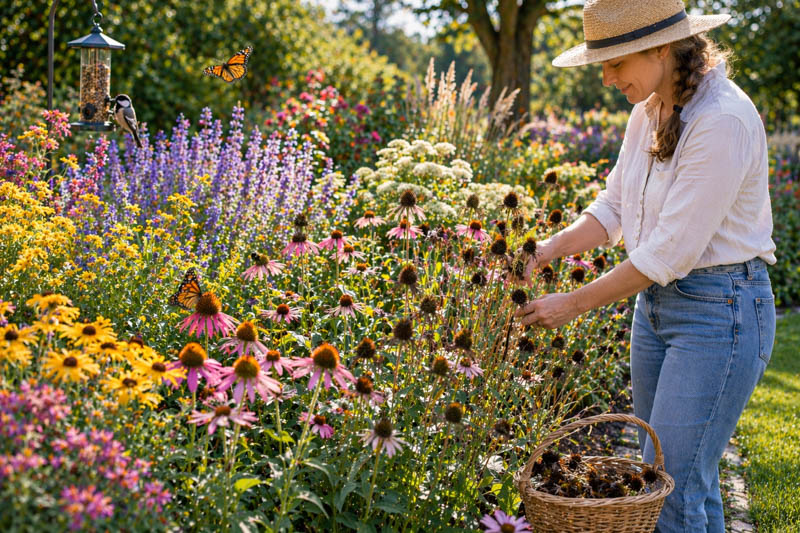
The easiest garden to manage is one that remains visually convincing across the year without constant rescue planting, heavy trimming, or cosmetic correction. That only happens when plants are selected for structure, foliage, timing, durability, and seasonal overlap, not just for flower.
The table below shows a useful low-maintenance seasonal palette. Each plant earns its place through function as well as beauty.
| Plant | Season of Interest | Role in the Garden | Key Characteristics | Why It’s Useful |
|---|---|---|---|---|
| Bergenia | Late winter to spring, with foliage value beyond bloom | Early-season anchor | Bold leaves, early flowers, evergreen or semi-evergreen presence in many climates | Gives visual substance very early in the year and still looks useful afterward. |
| Heuchera | Spring through fall, often longer for foliage | Foliage connector | Colorful leaves, compact habit, fine flowers | Keeps the planting layered when flowering plants slow down. |
| Brunnera | Spring to early summer, with foliage afterward | Shade brightener | Heart-shaped leaves, airy blue flowers, refined texture | Adds light and texture in shady borders without becoming fussy. |
| Baptisia | Late spring to early summer, with strong post-bloom form | Early-summer backbone plant | Shrub-like habit, durable stems, deep roots | Keeps contributing after flowering instead of collapsing. |
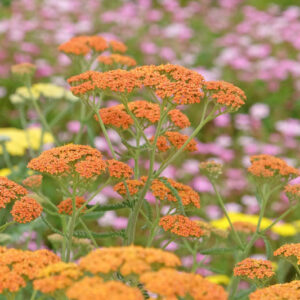
| Yarrow | Late spring through summer | Bridge plant | Flat flower clusters, drought tolerance, long bloom | Helps connect seasons and performs well in sunny, lower-input gardens. |
| Lamb’s Ear | Spring through fall, mainly for foliage | Ground-layer softener | Silvery leaves, drought tolerance, weed-suppressing spread | Softens edges and reduces exposed soil in sunny beds. |
| Russian Sage | High summer into fall | Heat-tolerant midsummer cloud | Airy lavender-blue flowers, aromatic foliage, drought tolerance | Carries the hottest part of the season with very little intervention. |
| Calamagrostis | Summer through winter | Vertical structural grass | Upright habit, strong lines, persistent form | Adds clarity and winter structure where the planting needs stronger rhythm. |
| Panicum (Switch Grass) | Summer through winter | Native late-season framework plant | Airy seedheads, upright form, strong winter presence | Extends the garden deep into fall and winter while supporting a resilient structure. |
| Bluebeard | Late summer to fall | Late-season shrub accent | Compact habit, blue flowers, tidy woody form | Adds late-season color in a manageable shrub form. |
| Season | What to Do | What to Avoid |
|---|---|---|
| Spring | Clean up gradually, cut back selectively, divide only when needed, and refresh mulch where it has thinned. | Avoid resetting the entire garden at once or over-clearing areas that still provide structure. |
| Summer | Water deeply during prolonged dry periods, especially for younger plants. Deadhead selectively where it improves rebloom or appearance. | Avoid shallow, frequent watering and excessive tidying that disrupts the garden’s structure. |
| Fall | Do less. Leave grasses, seedheads, and strong stems standing. Add plants only where real gaps or weaknesses are identified. | Avoid cutting everything back or overplanting without a clear purpose. |
| Winter | Observe the garden’s structure. Use this time to assess what works and what needs improvement. | Avoid unnecessary intervention. |
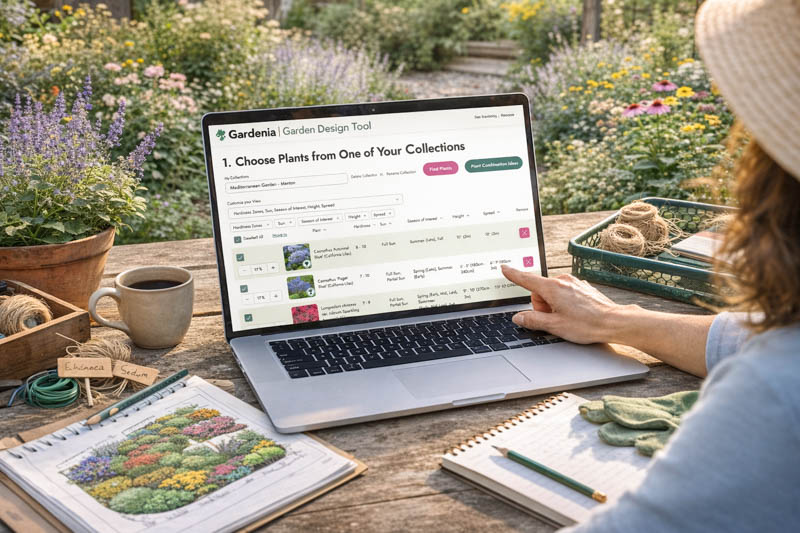
The most effective way to use the Gardenia Plant Finder is not simply to browse attractive plants. Use it to answer specific planning questions. Which plants tolerate dry shade? Which shrubs stay compact in my hardiness zone? Which perennials flower in late summer and prefer full sun with well-drained soil?
Then move to the Gardenia Design Tool to test grouping, layering, and seasonal spread. This is where a plant list becomes a design. You can see whether your backbone plants, bridge plants, and late-season sustainers are all represented and whether the layout has enough structure between flowering peaks.
Together, these tools help prevent one of the biggest sources of maintenance overload: making plant decisions without a coherent layout.
A low-maintenance garden is not a compromise. Done well, it is one of the most sophisticated kinds of garden design because it combines beauty, resilience, ecological value, and practical restraint. It saves time not by lowering standards, but by making those standards sustainable.
When you start with the site, use the Site-First Filter, build with the Four-Layer Stability Model, and choose plants by role instead of impulse, the garden becomes easier to manage and better to live with. It develops strength as it matures. That is the real goal: not less garden, but a garden that works.
The best layout combines layered planting, repeated groups, clear edges, and enough ground coverage to reduce weeds and exposed soil. It should also include a strong structural layer so the garden still looks intentional between bloom peaks.
The best plants are the ones that match your site conditions. In many sunny gardens, lavender, salvia, yarrow, sedum, ornamental grasses, and well-chosen shrubs are strong low-maintenance performers. In shade, hellebores, hardy geraniums, heuchera, brunnera, and evergreen shrubs are often better choices.
Start by identifying recurring problems such as weeds, dry spots, seasonal gaps, and overcrowded plants. Then improve plant placement, tighten soil coverage, add more structure, and group plants with similar water needs together.
Space plants according to mature size, not nursery size. The goal is planned closure: close enough that the planting knits together within a reasonable time, but not so tight that plants compete heavily and need constant editing.
Water deeply during establishment so roots grow down into the soil. After plants are established, reduce frequency and water according to soil type, weather, and plant needs. Grouping plants with similar moisture requirements makes watering much easier.
Gardenia Plant Finder helps narrow plant choices by conditions such as sun, soil, zone, and bloom time. Gardenia Design Tool helps organize those plants into a workable layout with stronger layering, repetition, and season-long performance.
Updated: April 2026 • Reviewed by Gardenia Editors
Create a membership account to save your garden designs and to view them on any device.
Becoming a contributing member of Gardenia is easy and can be done in just a few minutes. If you provide us with your name, email address and the payment of a modest $25 annual membership fee, you will become a full member, enabling you to design and save up to 25 of your garden design ideas.
Join now and start creating your dream garden!
Create a membership account to save your garden designs and to view them on any device.
Becoming a contributing member of Gardenia is easy and can be done in just a few minutes. If you provide us with your name, email address and the payment of a modest $25 annual membership fee, you will become a full member, enabling you to design and save up to 25 of your garden design ideas.
Join now and start creating your dream garden!