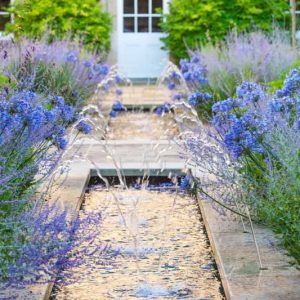
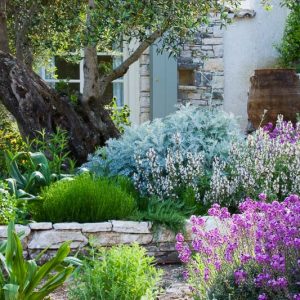
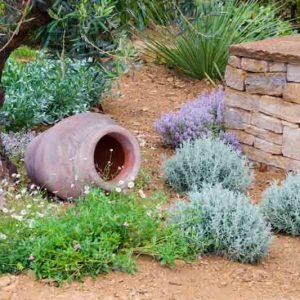
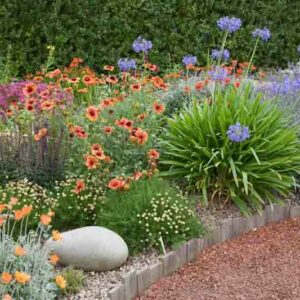
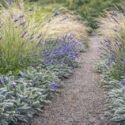
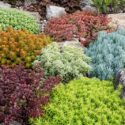
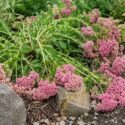
From courtyard to backyard, craft a Mediterranean garden with drought-smart plants, gravel, and drip. Plans, plant lists, seasonal care.
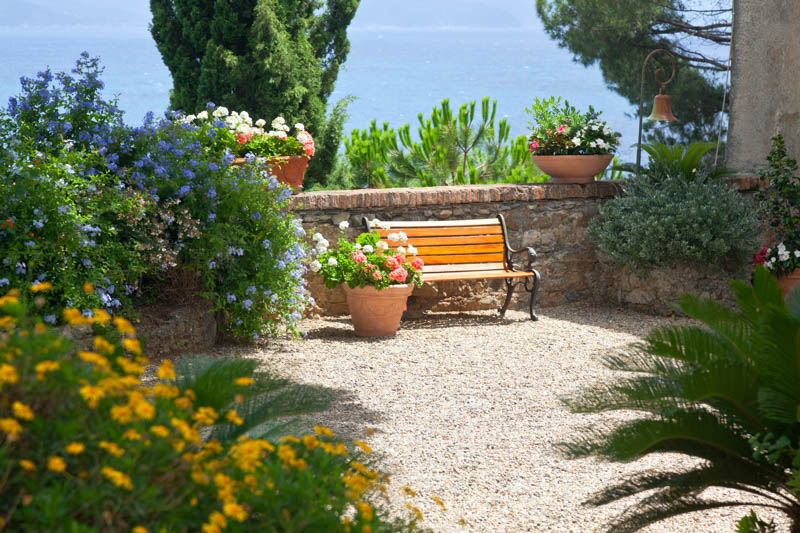


Create a sun-kissed, low-water landscape with timeless style. This hub walks you through Mediterranean garden design principles, plant lists by layer, ready-to-copy planting ideas, regional care tips, and FAQs—so you can build a beautiful, drought-tolerant Mediterranean garden from a balcony to a whole backyard.
A Mediterranean garden borrows its look from the coasts of Spain, Italy, Greece, and southern France: sun-loving evergreens, silvery foliage, fragrance, gravel or stone underfoot, and low, efficient watering. It’s climate-smart by default—perfect for dry summers, windy sites, and water-wise living. Think clipped forms (box, germander, rosemary) playing against loose grasses, with Olea europaea (olive) or Cupressus sempervirens (Italian cypress) providing structure and shade.
Core ideas include hydrozoning (grouping plants by water need), sharp drainage, mineral mulch (gravel, decomposed granite), drip irrigation, and evergreen bones for year-round form. You’ll often combine drought-tolerant Mediterranean natives with climate-adapted companions to extend the palette and bloom season.
Design in layers for structure, shade, scent, and four-season interest. Always verify USDA hardiness zone, sun, and soil for your site before choosing varieties.
See More Mediterranean Perennials
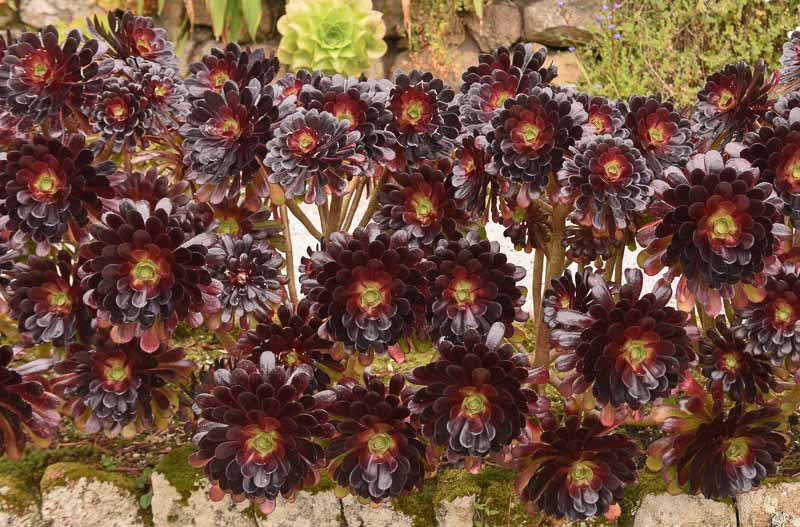
Note: Check regional guidance for species with invasive potential. Always choose site-appropriate, non-invasive selections.
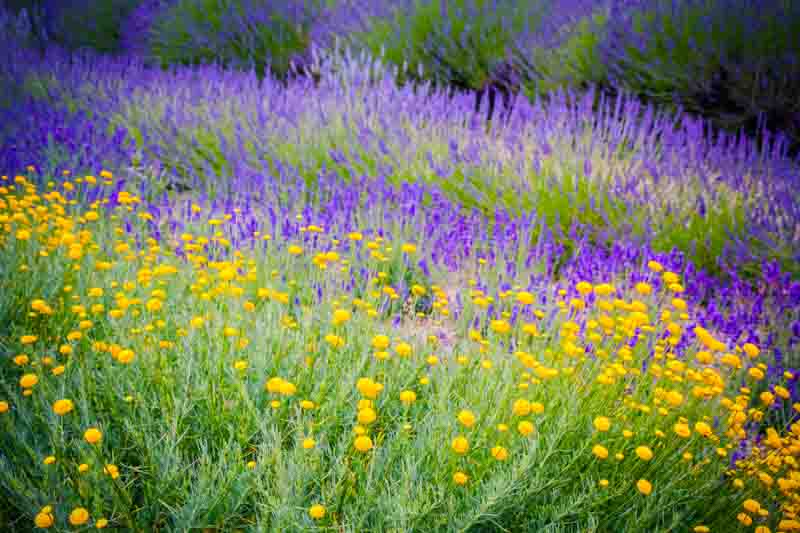
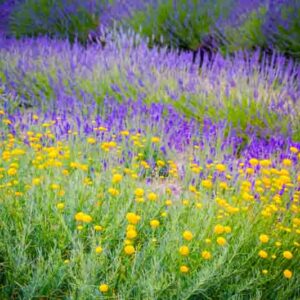
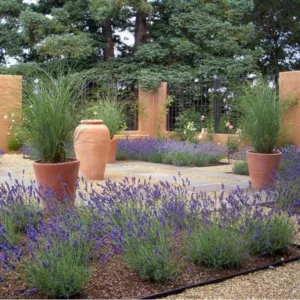
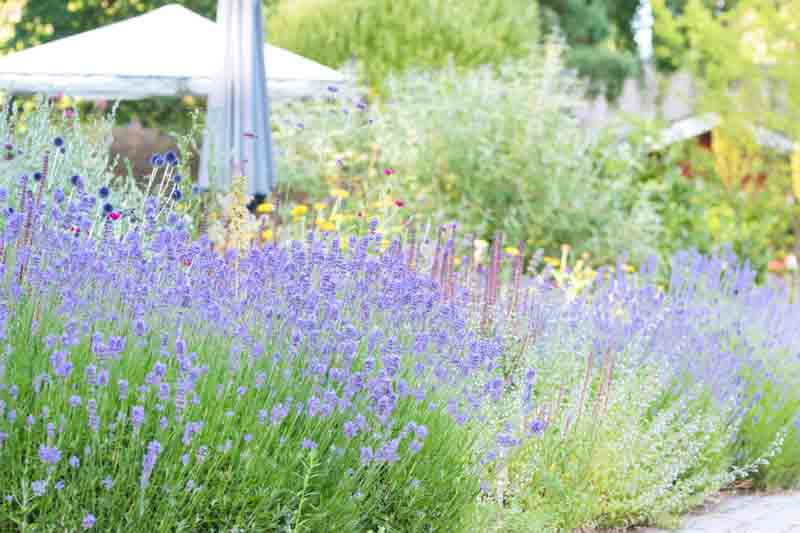
This duo nails that sun-baked, Mediterranean vibe – crisp, fragrant, and effortlessly tidy even in tough, dry spots. Mounded green santolina (Santolina rosmarinifolia) forms neat, aromatic cushions topped with golden button flowers, while English lavender (Lavandula angustifolia) lines the scene with purple spikes and soothing scent. Together they deliver clean structure, color, and texture that thrive in hot, well-drained sites.
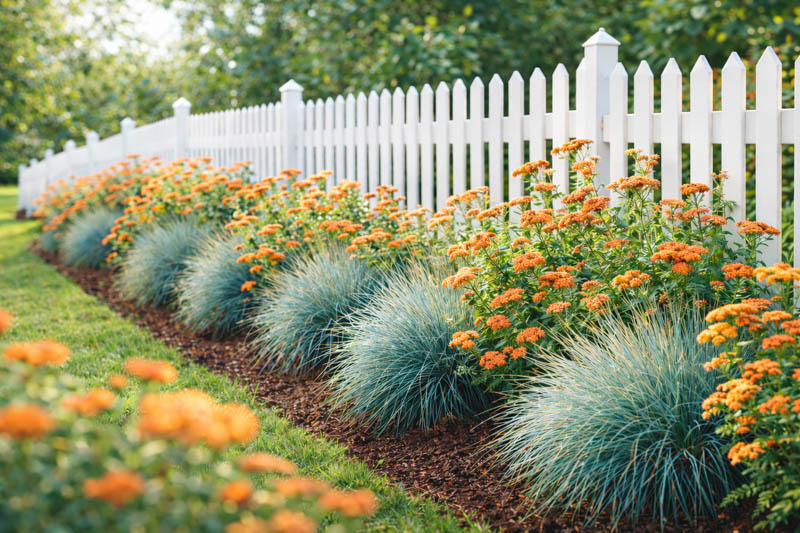
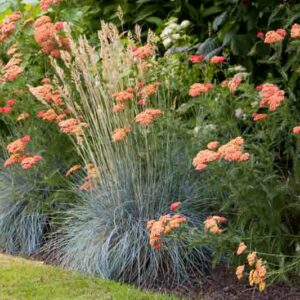
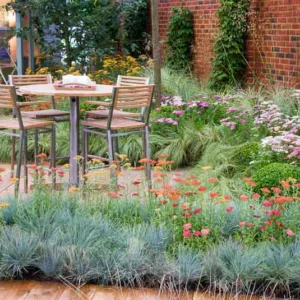
Yarrow (Achillea) stacks flat, crimson-tinged flower plates for weeks, while blue fescue (Festuca glauca) forms tidy blue clumps topped with elegant, creamy plumes. Together, they deliver a crisp, modern meadow vibe that’s easy to repeat in any sunny spot.
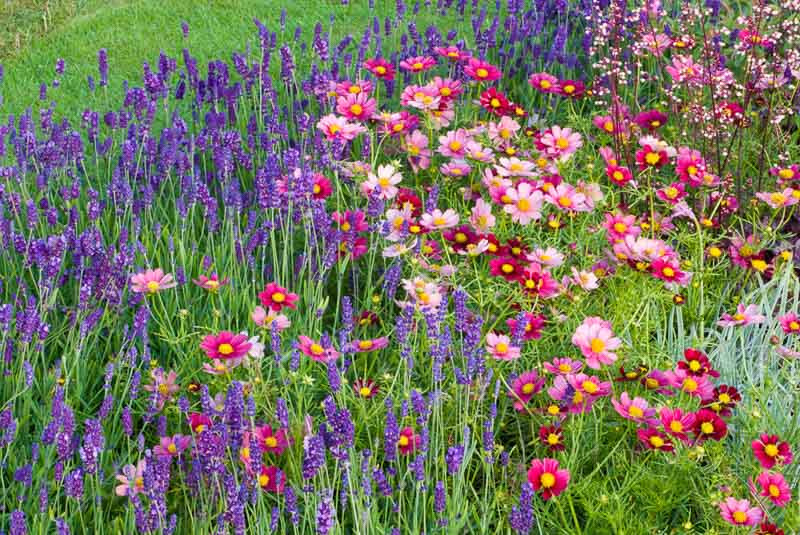
Think of this border as your breezy summer postcard – fragrant, floaty, and impossibly charming. Neat mounds of English lavender (Lavandula angustifolia) anchor the design while airy cosmos (Cosmos bipinnatus) dance overhead, creating a sun-washed look that feels both wild and refined.
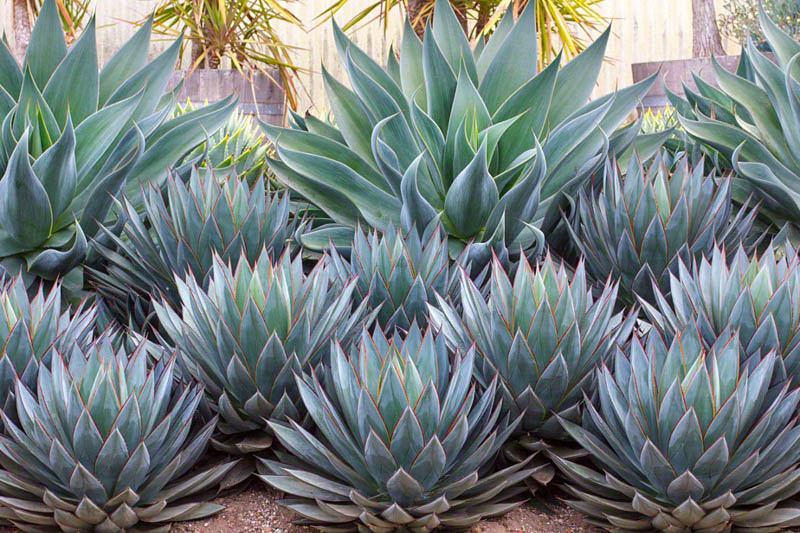
This pairing is pure sculpture—minimal water, maximum drama.
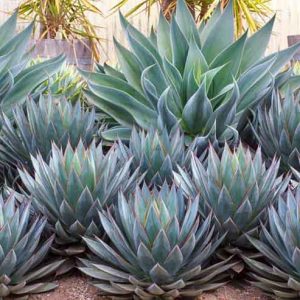
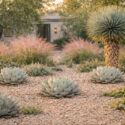
Graceful Agave ‘Blue Flame’ arcs into large, smooth blue-gray rosettes edged with tiny teeth and a red-brown line kissed by a thin yellow-green ribbon. Compact, jewel-like Agave ‘Blue Glow’ answers with tidy, blue-green rosettes whose golden-and-red margins ignite when the sun shines through. Together they’re breathtaking—especially backlit at dawn or dusk—on gravel, among boulders, in sleek containers, or against modern architecture.
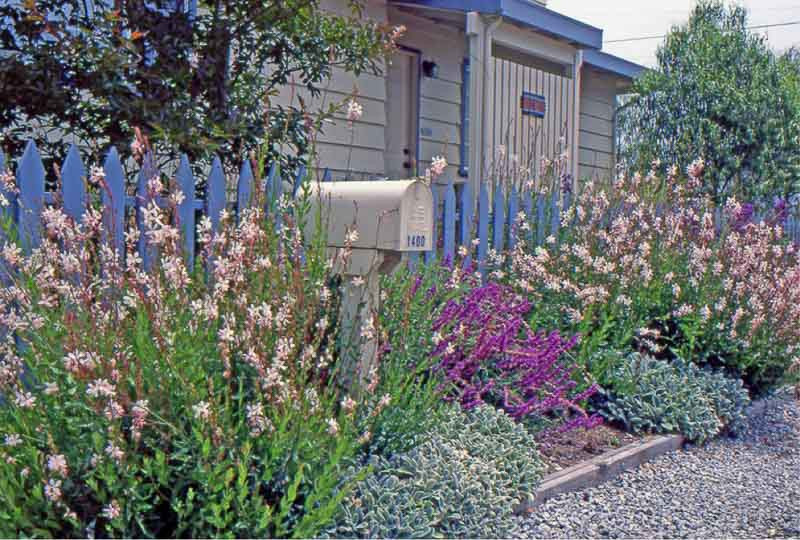
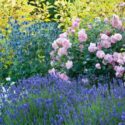
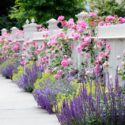
This mix has that breezy, just-right cottage look—casual, colorful, and full of soft movement. Airy pink wands of beeblossom (Gaura/Oenothera lindheimeri) dance above the silver, velvety carpet of lamb’s ears (Stachys byzantina), while Mexican bush sage (Salvia leucantha) pours on rich purple plumes. The blue picket fence echoes the house trim, tying garden and cottage into one cheerful coastal scene.

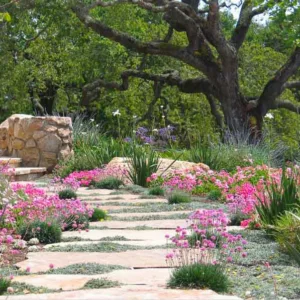
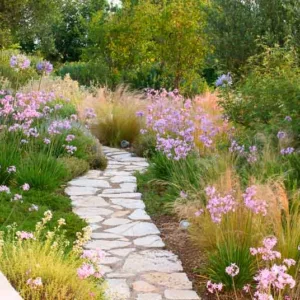
This sun-warmed flagstone path feels like a mini Mediterranean getaway—soft pastels, silvery foliage, and fragrance drifting as you walk—yet it’s wonderfully low-fuss and water-wise. Sea thrift (Armeria maritima) tucks along the edges, forming neat cushions that send up spring-to-summer pom-poms of pink. Fortnight lilies (Dietes iridioides) add grace and height, throwing up iris-like white blooms on repeat from spring well into fall. Lavender (Lavandula) threads the scene with purple spikes and a soothing scent that pollinators adore. Between the stones, silver carpet (Dymondia margaretae) acts as living grout—dense, silvery, and tough—keeping weeds at bay and handling light foot traffic.
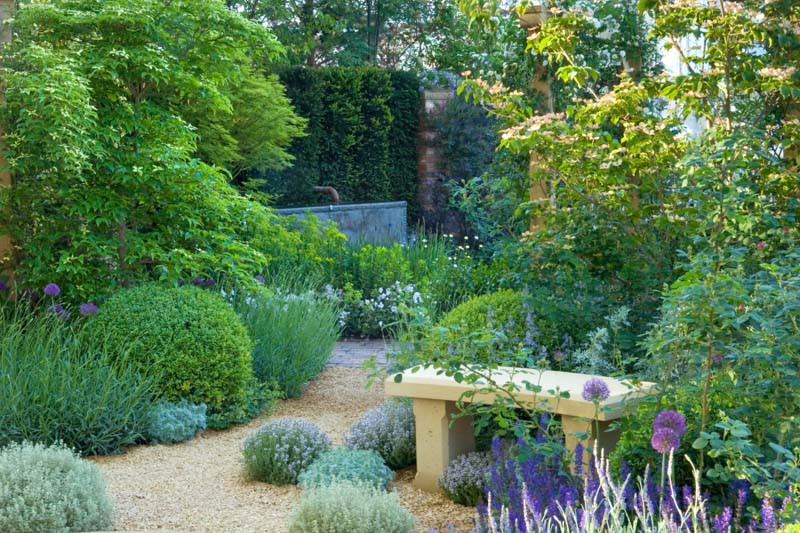
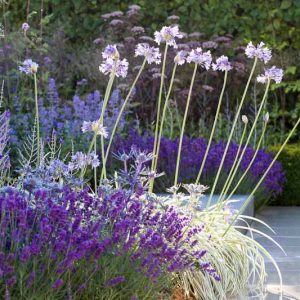
This sun-soaked border channels pure Mediterranean ease—silvery foliage, aromatic herbs, and purple spikes—elegant, low-fuss, and water-wise.
Lavender (Lavandula) and thyme (Thymus) knit the edges with fragrance and fine texture, keeping the palette calm and coastal. Wormwood (Artemisia) adds cool, silvery mounds that make everything around it glow.
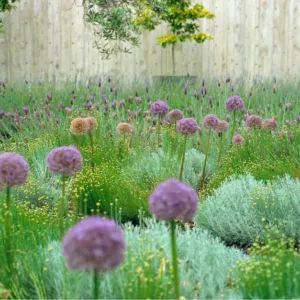
For height and rhythm, woodland sage (Salvia nemorosa) sends up inky-purple wands, allium pops late-spring globes, and Martin’s spurge (Euphorbia x martinii) lights the scene with lime-green domes.
Find More Mediterranean Garden Design Ideas
A small olive anchored in gravel, with fragrant lavender ribbons and tidy santolina cushions—instant Provence with minimal water.
Deep-rooted shrubs and shimmering grasses that lock down slopes, shrug off heat, and look dramatic all summer.
A living carpet of fragrance and shimmer—silvery mounds, airy wands, and stepable thyme between stones.
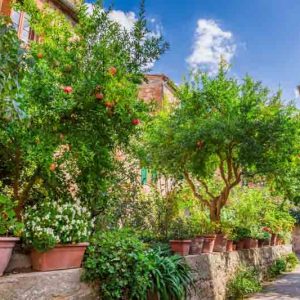
Portable Mediterranean magic for balconies and patios—fragrance, fruit, and sculptural form on a smart watering budget.
Wind-whipped coast? Salt spray? This trio keeps its cool with glossy foliage, perfume, and steel-blue motion.
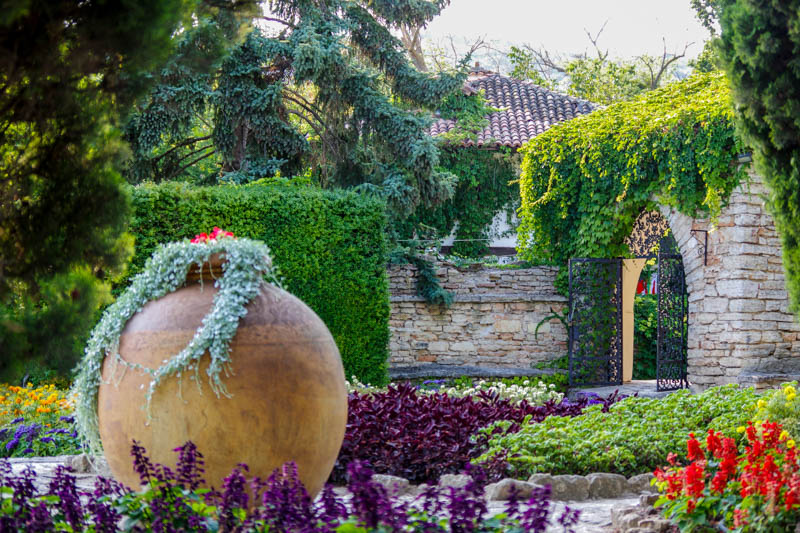
Mound beds 6–10 in., amend with coarse grit and compost, and choose plants that tolerate heavier soils: Strawberry tree, Jerusalem sage, sage, yarrow, and blue oat grass.
Choose leathery, resinous, or silvery foliage. Try mastic, myrtle, rock rose, santolina, sea thrift, and grasses like blue oat grass. Stake new trees and use windbreak netting for year one.
Go vertical and evergreen. Use bay laurel standards, dwarf olive, agave, aloe, and cascading thymes. Place pots where you can water easily and uniformly.
Use gravel, pavers, and widely spaced, low-resin plants within 5–10 ft of structures. Keep plants green and pruned, remove litter regularly, and break up fuel with hardscape. Check local codes and plant lists.
Match plants to place using USDA zones, sun, and drainage. Favor drought- and heat-tolerant species; note deer resistance where needed.
Style menu: Classic Mediterranean courtyard, gravel garden, terraced slope, coastal dry garden, fire-wise front yard, thyme lawn replacement, and container-based balcony garden.
Browse ideas or jump straight into planning:
Filter by zone, sun, soil, bloom season, height, color, and water needs to plan with confidence.
A Mediterranean garden is inspired by the landscapes of southern Europe, particularly Italy, Spain, and Greece. It blends drought-tolerant plants, sun-drenched textures, and natural materials to create a relaxed, timeless look. Gravel paths, terracotta pots, stone walls, and silvery foliage plants like lavender, rosemary, olive trees, and sage are common. The design emphasizes simplicity, low water use, and a warm, inviting atmosphere that connects indoor and outdoor living.
Mediterranean plants are adapted to hot, dry summers and mild, wet winters. Popular choices include aromatic herbs such as rosemary, thyme, lavender, and oregano; structural plants like olive trees, cypress, agave, and yucca; and colorful perennials such as salvias, rockroses (Cistus), and geraniums. Ornamental grasses like Stipa tenuissima and Carex also add movement. These plants prefer full sun and well-drained, often gravelly soils.
You can evoke the Mediterranean feel by focusing on texture, color, and structure rather than relying solely on native Mediterranean species. Use warm-hued paving stones, terracotta pots, and gravel mulches. Choose drought-tolerant plants suitable for your region that have a similar look — silver leaves, aromatic scents, or compact shapes. Add focal points such as urns, water basins, or pergolas with climbing vines like jasmine or wisteria.
Mediterranean gardens are designed for low maintenance. Once established, most plants need minimal watering and pruning. Occasional shaping of shrubs, removing faded flowers, and weeding are typically enough. Mulching with gravel or pebbles helps reduce water loss and keeps weeds down. Fertilizing is rarely needed, as these plants prefer lean soils.
Many Mediterranean plants are rich in nectar and pollen, attracting bees, butterflies, and beneficial insects. Lavender, sage, thyme, and verbena are excellent pollinator plants. Adding a small water feature, such as a shallow bowl or birdbath, supports birds and other wildlife. Avoid chemical pesticides to maintain a balanced ecosystem.
Updated: November 2025 • Reviewed by Gardenia Editors
| Plant Type | Cactus & Succulents, Ornamental Grasses, Perennials, Shrubs, Trees |
|---|---|
| Genus | Achillea, Aeonium, Agave, Aloe, Artemisia, Buxus, Cistus, Delosperma, Festuca, Gaura, Helianthemum, Lavandula, Origanum, Punica, Rosmarinus, Salvia, Santolina, Sedum, Stipa, Thymus |
| Garden Styles | Mediterranean Garden |
| Plant Type | Cactus & Succulents, Ornamental Grasses, Perennials, Shrubs, Trees |
|---|---|
| Genus | Achillea, Aeonium, Agave, Aloe, Artemisia, Buxus, Cistus, Delosperma, Festuca, Gaura, Helianthemum, Lavandula, Origanum, Punica, Rosmarinus, Salvia, Santolina, Sedum, Stipa, Thymus |
| Garden Styles | Mediterranean Garden |
Create a membership account to save your garden designs and to view them on any device.
Becoming a contributing member of Gardenia is easy and can be done in just a few minutes. If you provide us with your name, email address and the payment of a modest $25 annual membership fee, you will become a full member, enabling you to design and save up to 25 of your garden design ideas.
Join now and start creating your dream garden!
Create a membership account to save your garden designs and to view them on any device.
Becoming a contributing member of Gardenia is easy and can be done in just a few minutes. If you provide us with your name, email address and the payment of a modest $25 annual membership fee, you will become a full member, enabling you to design and save up to 25 of your garden design ideas.
Join now and start creating your dream garden!