Herbaceous, tree or Itoh peony? They may share spectacular flowers, but their stems, winter behavior, size, planting depth, pruning, bloom season and garden roles are remarkably different. Compare all three peony types side by side and discover which offers the flowers, structure, strength and performance your garden needs.
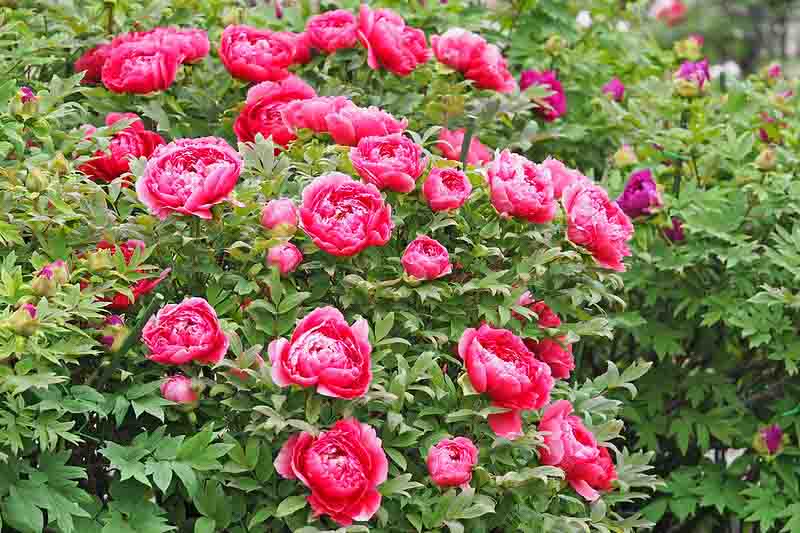


Herbaceous, tree, and Itoh peonies all belong to the genus Paeonia, and all can produce extraordinary flowers. But in the garden, they behave very differently.
Those differences affect far more than appearance. They influence mature size, flower form, bloom season, planting depth, pruning, staking, price, longevity, and the role each peony plays in a garden.
The quickest way to choose: Pick a herbaceous peony for classic flowers, fragrance, cutting, and the widest cultivar choice. Pick a tree peony for permanent woody structure and exceptionally large flowers. Pick an Itoh peony for strong stems, handsome foliage, broad rounded habit, and unusual colors.
| Feature | Herbaceous Peonies | Tree Peonies | Itoh Peonies |
|---|---|---|---|
| Stem type | Soft, nonwoody annual stems | Permanent woody stems | Stout annual stems, often woody-looking near the base |
| Winter behavior | Dies completely to the ground | Drops leaves but retains woody framework | Usually dies back to the crown |
| Typical mature size | About 2-4 ft. tall and wide | Commonly 3-7 ft. tall and wide, sometimes larger | About 2-4 ft. tall, often 3-5 ft. wide |
| Typical flower size | Medium to very large, often 4-8+ in. | Very large, often 6-10+ in. | Very large, commonly 6-8+ in. |
| Color range | White, blush, pink, coral, red, burgundy, cream, some yellow | White, pink, red, purple, lavender, yellow, apricot and blends | Yellow, gold, peach, coral, pink, red, white, lavender and multicolors |
| Bloom season | Very Early through Very Late, depending on cultivar | Often earlier than the main lactiflora season, with overlap | Often Midseason to Late Midseason, depending on cultivar |
| Staking | Sometimes needed, especially tall doubles | Usually unnecessary once established | Usually little or no support needed |
| Planting depth | Eyes usually 1-2 in. below soil | Grafted plants are planted much deeper | Crown and buds kept relatively shallow; follow supplier guidance |
| Pruning | Cut to ground after foliage dies | Retain woody stems; remove dead or damaged wood | Cut back dormant top growth close to the crown |
| Longevity | Many decades, often generations | Many decades and potentially generations | Long-lived perennial, commonly decades |
| Typical price | Usually least expensive | Often moderate to premium | Usually premium, though prices have declined |
| Best use | Borders, cutting gardens, classic peony beds | Specimens, shrub borders, courtyards, Japanese-style gardens | High-impact borders, specimens, low-support displays |
These are group-level tendencies, not rigid rules. Individual cultivars can differ substantially in height, fragrance, flower size, stem strength, bloom time, and mature spread. Gardenia’s Peony Comparison Tool is more useful when you are comparing specific cultivars rather than broad peony types.
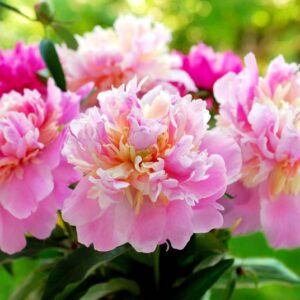
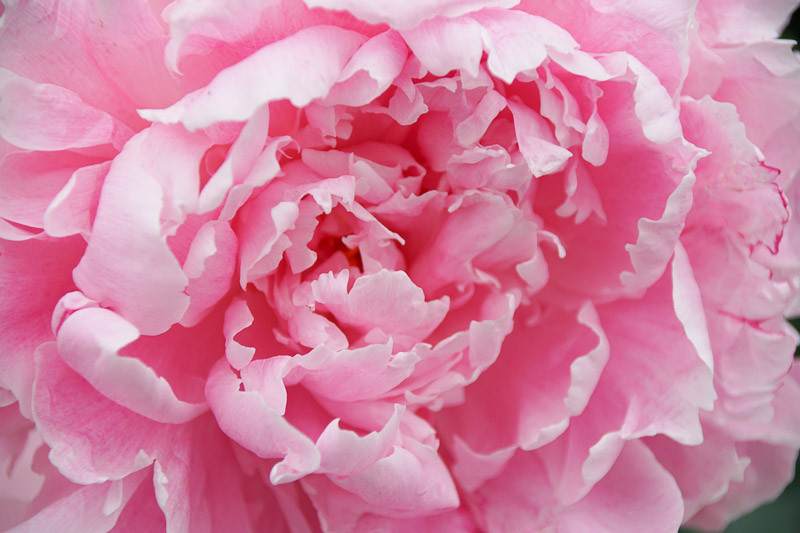 Paeonia lactiflora ‘Sarah Bernhardt’
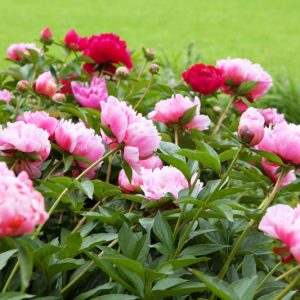
Herbaceous peonies are the classic garden peonies most people recognize immediately. This broad group includes many familiar Paeonia lactiflora cultivars as well as interspecific herbaceous hybrids.
The defining feature is that the stems are not permanent. New shoots emerge from the crown every spring, grow rapidly, flower, carry foliage through summer, and die completely after frost.
That annual renewal makes herbaceous peonies natural companions for other perennials. In winter, the space above the crown is empty. In spring, reddish shoots emerge and quickly form a dense mound of foliage.
Many familiar cultivars mature around 2-4 ft. (60-120 cm) tall and wide, although species, hybrids, and compact selections may be smaller or larger.
Gardeners interested in fragrance can explore Gardenia’s Fragrant Peonies, while those concerned about flopping should see Peonies That Do Not Require Staking.
The tradeoff: Herbaceous peonies offer unmatched cultivar choice, fragrance, and cutting value, but stem strength varies. Tall, densely double cultivars can become top-heavy after rain and may benefit from support.
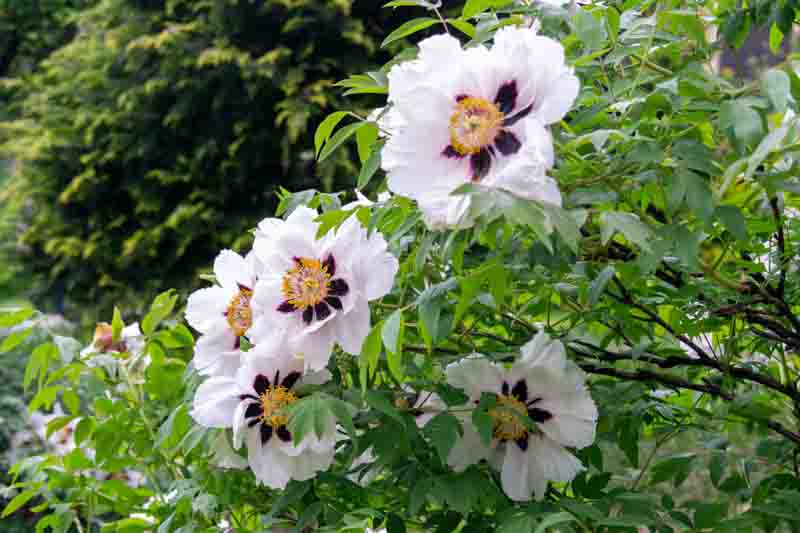
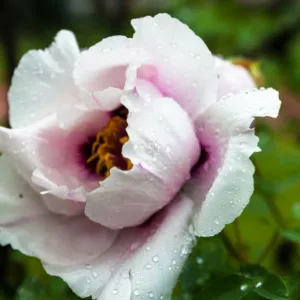
The name is misleading. A tree peony is not a tree in the ordinary sense. It is a deciduous woody shrub.
Unlike herbaceous peonies, its stems remain alive above ground through winter. The leaves fall, but the woody framework persists and produces new growth the following spring.
This gives tree peonies a very different role in the landscape. Rather than disappearing after frost, they remain as a permanent shrub structure. Mature plants are commonly 3-7 ft. (90-210 cm) tall and wide, but older specimens and certain cultivars can become larger.
Tree peonies are especially admired for enormous flowers, unusual colors, and dramatic basal flares. Their palette includes white, pink, crimson, lavender, purple, yellow, apricot, and smoky blended shades that are uncommon among traditional lactiflora peonies.
Tree peonies generally bloom before the main traditional Paeonia lactiflora season. That does not mean every tree peony flowers before every herbaceous peony.
Some species peonies and herbaceous hybrids are exceptionally early, and the flowering periods overlap. Cultivar-level timing is therefore more useful than a simplistic sequence of tree peonies first, herbaceous peonies second, and Itohs last.
Gardeners trying to extend the display should use Gardenia’s guide to extending the peony blooming season and compare actual bloom periods.
Do not cut a tree peony to the ground in fall. Its permanent woody stems carry future growth. Remove dead, damaged, diseased, or badly placed wood as needed, but preserve the living framework.
Itoh peonies combine characteristics from herbaceous and woody peonies.
The name honors Japanese breeder Toichi Itoh, whose pioneering crosses helped establish this now-famous group. Their ancestry gives them features that gardeners often associate with tree peonies – strong stems, bold foliage, large flowers, basal flares, and unusual colors – while their seasonal behavior is much closer to an herbaceous perennial.
In everyday horticulture, the terms Itoh peony and intersectional peony are often used interchangeably. More precisely, intersectional is the broader term for hybrids between different sections of Paeonia, while Itoh refers to the familiar group derived from crosses involving herbaceous and woody peony ancestry.
What makes Itohs distinctive: They usually die back like herbaceous peonies but inherit many of the structural and ornamental traits gardeners prize in woody peonies.
Most Itoh peonies form broad, rounded mounds with sturdy stems. Mature plants are commonly 2-4 ft. tall and may spread 3-5 ft. wide, so their width deserves as much attention as their height when planning a border.
The foliage is another major strength. Itoh leaves are often dense and handsome long after flowering ends, giving the plant a substantial presence through summer.
Many Itoh cultivars carry numerous flowers and side buds that open in succession. A mature plant may therefore remain visually effective for longer than a cultivar that produces one concentrated flush.
That does not mean every Itoh automatically has a longer bloom season. Duration still depends on cultivar, weather, side-bud production, and the number of flowering stems.
Gardenia profiles such as ‘Bartzella’, ‘First Arrival’, and ‘Garden Treasure’ show why cultivar-level comparison matters even within the Itoh group.
Bloom-time caution: Itoh peonies are sometimes described as flowering only after herbaceous peonies. That is too simple. Many popular Itohs flower around Midseason to Late Midseason and overlap substantially with herbaceous cultivars.
If maximum individual flower size is the priority, tree peonies generally have the advantage. Their blooms can be exceptionally large, sometimes approaching dinner-plate proportions.
Itoh peonies are also impressive, commonly producing flowers around 6-8 in. (15-20 cm) across, with some cultivars larger.
Herbaceous peonies vary much more widely. Some classic doubles are enormous, while species and compact hybrids may produce much smaller flowers.
Flower size should not be judged in isolation. A very large flower on a weak stem may collapse after rain, while a slightly smaller bloom on a strong plant can remain far more effective in the garden.
No single group wins across every color. Each has particular strengths.
Some Itoh flowers also change color as they age, so a mature plant can display several shades at once as fresh and older blooms overlap.
This is one of the most practical distinctions between the three groups.
For a low-support border: Itoh peonies and strong-stemmed herbaceous hybrids are often better choices than assuming every large double peony will remain upright without help.
Gardenia’s Peonies That Do Not Require Staking compares this trait at cultivar level.
Herbaceous, tree, and Itoh peonies should not all be planted the same way.
In most climates, position the uppermost eyes roughly 1-2 in. (2.5-5 cm) below the finished soil surface. Planting substantially deeper is one of the classic reasons an otherwise healthy herbaceous peony produces foliage but few flowers.
Many tree peonies are sold as grafted plants. These are planted much deeper than herbaceous peonies so the woody scion can eventually form its own roots.
The graft union is commonly positioned several inches below soil level, often around 4-6 in. (10-15 cm), although exact recommendations vary with plant form and supplier.
Own-root tree peonies are treated differently, so identify whether the plant is grafted before planting.
Itoh peonies are generally planted with the crown and upper buds relatively shallow, but exact depth depends on the form of the division and the position of the buds.
Follow the grower’s instructions for the specific plant rather than treating an Itoh exactly like either a conventional herbaceous division or a grafted tree peony.
Do not use one planting-depth rule for every peony. Planting a herbaceous peony as deeply as a grafted tree peony can suppress flowering. Planting a grafted tree peony as shallowly as a herbaceous division can prevent the scion from establishing properly.
For detailed planting instructions, see Gardenia’s Peony: How to Grow and Care with Success.
The peony’s winter structure tells you how to prune it.
One of the most serious mistakes gardeners can make is treating a tree peony like an herbaceous peony and cutting all living woody stems to the ground.
Peonies are not short-lived perennials.
Think in decades, not seasons: Peonies are poor candidates for temporary planting. Give mature size and site selection serious thought before planting because the right peony may remain in place far longer than most neighboring perennials.
Herbaceous peonies are generally the least expensive because they are widely propagated, commercially established, and available in enormous numbers.
Tree peonies often cost more because propagation is slower, and many are produced by grafting, which requires additional labor and production time.
Itoh peonies were historically extremely expensive because the original crosses were difficult to produce and plants were scarce. Modern propagation has made them much more accessible, but desirable Itoh cultivars are still usually priced above common herbaceous peonies.
Exact dollar figures are not especially useful because price varies by cultivar rarity, root size, plant age, container size, nursery, and availability. Relative price is more meaningful:
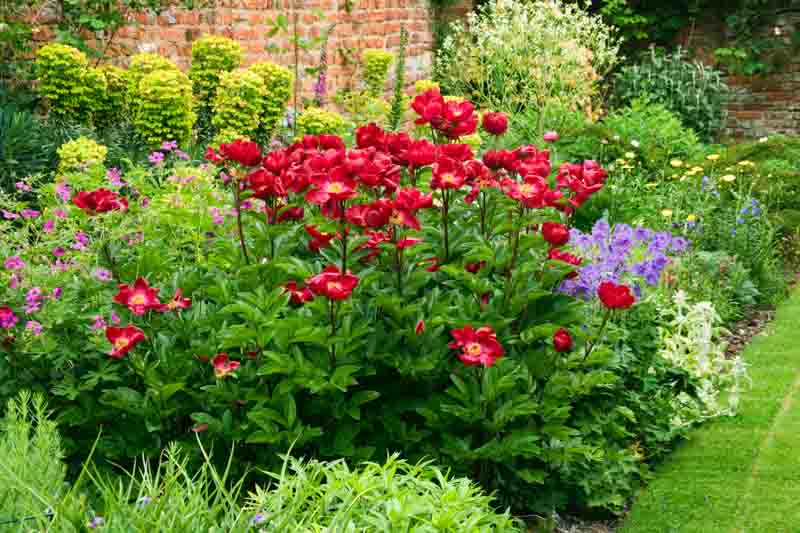
Compact herbaceous cultivars are often the easiest fit where space is limited, but moderate-sized Itohs can also work beautifully.
Tree peonies need more forethought because a mature plant can become a substantial woody shrub. Itoh peonies are relatively low but can spread broadly, so their width should not be underestimated.
For a small garden, choose by actual cultivar dimensions rather than by peony type alone. Gardenia’s Plant Finder and Peony Comparison Tool allow you to compare mature height and spread.
Herbaceous peonies remain the traditional favorite for cutting.
Many cultivars combine long stems, abundant buds, fragrance, and classic flower forms prized for bouquets and wedding arrangements. They can also be harvested in soft-bud stage and stored for later opening.
Itoh peonies can also be cut, but their shorter, broader, stockier architecture often makes them especially valuable in the landscape.
Tree peony flowers can be spectacular in arrangements, but cutting long stems removes part of the permanent woody framework, so gardeners usually harvest them more selectively.
Tree peonies and Itohs have the advantage when foliage and plant architecture matter almost as much as flowers.
There is no universally superior type. The useful question is what role you want the plant to perform.
| Your priority | Start with | Why |
|---|---|---|
| Classic fragrant doubles | Herbaceous | Outstanding selection among lactiflora cultivars |
| Cut flowers | Herbaceous | Long stems and enormous cultivar choice |
| Largest dramatic flowers | Tree | Exceptional flower size and color range |
| Permanent shrub structure | Tree | Woody framework remains through winter |
| Strong stems and little staking | Itoh | Stocky habit and sturdy flowering stems |
| Long effective display | Itoh | Many buds may open sequentially |
| Yellow and unusual blends | Itoh or Tree | Excellent yellows, apricots, flares, and blended colors |
| Best value and widest choice | Herbaceous | Largest commercial selection and typically lower prices |
Gardenia’s selection approach: Use peony type as the first filter, not the final decision. Then compare the actual cultivar for bloom season, mature size, fragrance, flower color, stem strength, weather performance, and garden role.
Yes – and mixed collections can be especially rewarding.
Combining the three groups creates differences in height, foliage, flower shape, architecture, and seasonal timing. Tree peonies may begin early, herbaceous hybrids and lactiflora cultivars provide much of the classic spring display, and Itohs can overlap with the middle and later portions of the herbaceous season.
The result can be more interesting than a garden planted with only one peony type.
If extending the season is the goal, use Gardenia’s peony succession-planning guide and Gardenia’s Peony Bloom Calendar rather than assuming type alone predicts flowering order.
These three mistakes explain many problems that occur when gardeners buy a peony by flower color or cultivar name without first identifying whether it is herbaceous, woody, or Itoh.
Herbaceous peonies produce annual stems that die completely to the ground. Tree peonies are deciduous woody shrubs that retain permanent stems. Itoh peonies combine herbaceous and woody peony ancestry but usually die back to the crown each winter.
The terms are often used interchangeably in everyday horticulture, but intersectional is the broader term for hybrids between different sections of Paeonia. Itoh usually refers to the familiar group derived from herbaceous and woody peony crosses.
Tree peonies generally produce the largest individual blooms. Itoh peonies are also known for very large flowers, while herbaceous peony flower size varies widely by cultivar and species.
Itoh peonies are generally among the least likely to need support because of their sturdy stems and rounded habit. Established tree peonies also usually support themselves. Some tall double herbaceous cultivars may need staking, particularly after heavy rain.
Tree peonies often flower before the main traditional lactiflora season, but some herbaceous species and hybrids are equally early or earlier. Bloom timing should be compared by cultivar rather than by peony type alone.
Many Itoh cultivars produce numerous flowers and side buds that open sequentially, so a mature plant may remain visually effective for longer than some herbaceous cultivars. Duration still varies by cultivar and weather.
No. Tree peonies lose their leaves but retain permanent woody stems above ground. Those living stems should not be cut to the ground like herbaceous peony stems.
Yes. Itoh peonies usually die back to the crown after frost and are generally cut back during dormancy. Their stems may be very stout, but they do not retain the permanent shrub framework of a tree peony.
The uppermost eyes of herbaceous peonies are generally planted about 1-2 inches below the finished soil surface. Planting substantially deeper is a common reason healthy plants fail to flower well.
Grafted tree peonies are planted much deeper than herbaceous peonies, commonly with the graft union several inches below soil level so the woody scion can develop its own roots. Own-root tree peonies require different placement.
Itoh peonies were historically difficult to hybridize and slow to build up in commercial quantities. Modern propagation has reduced prices, but desirable Itoh cultivars generally remain more expensive than common herbaceous peonies.
A dependable herbaceous cultivar is usually the easiest and least expensive starting point. Itoh peonies are also excellent low-support landscape plants if the higher purchase price is acceptable. Tree peonies require greater attention to planting depth and woody-shrub pruning.
Updated: August 2026 • Reviewed by Gardenia Editors
| Hardiness |
3 - 9 |
|---|---|
| Plant Type | Perennials, Shrubs |
| Plant Family | Paeoniaceae |
| Genus | Paeonia |
| Exposure | Full Sun, Partial Sun |
| Season of Interest | Spring (Late), Summer (Early), Fall |
| Maintenance | Average |
| Water Needs | Average |
| Soil Type | Chalk, Clay, Loam, Sand |
| Soil pH | Acid, Alkaline, Neutral |
| Soil Drainage | Moist but Well-Drained |
| Characteristics | Cut Flowers, Fragrant, Showy |
| Tolerance | Deer, Rabbit |
| Attracts | Bees, Butterflies |
| Landscaping Ideas | Beds And Borders, Wall-Side Borders |
| Garden Styles | City and Courtyard, Informal and Cottage |
| Hardiness |
3 - 9 |
|---|---|
| Plant Type | Perennials, Shrubs |
| Plant Family | Paeoniaceae |
| Genus | Paeonia |
| Exposure | Full Sun, Partial Sun |
| Season of Interest | Spring (Late), Summer (Early), Fall |
| Maintenance | Average |
| Water Needs | Average |
| Soil Type | Chalk, Clay, Loam, Sand |
| Soil pH | Acid, Alkaline, Neutral |
| Soil Drainage | Moist but Well-Drained |
| Characteristics | Cut Flowers, Fragrant, Showy |
| Tolerance | Deer, Rabbit |
| Attracts | Bees, Butterflies |
| Landscaping Ideas | Beds And Borders, Wall-Side Borders |
| Garden Styles | City and Courtyard, Informal and Cottage |
Create a membership account to save your garden designs and to view them on any device.
Becoming a contributing member of Gardenia is easy and can be done in just a few minutes. If you provide us with your name, email address and the payment of a modest $25 annual membership fee, you will become a full member, enabling you to design and save up to 25 of your garden design ideas.
Join now and start creating your dream garden!
Create a membership account to save your garden designs and to view them on any device.
Becoming a contributing member of Gardenia is easy and can be done in just a few minutes. If you provide us with your name, email address and the payment of a modest $25 annual membership fee, you will become a full member, enabling you to design and save up to 25 of your garden design ideas.
Join now and start creating your dream garden!

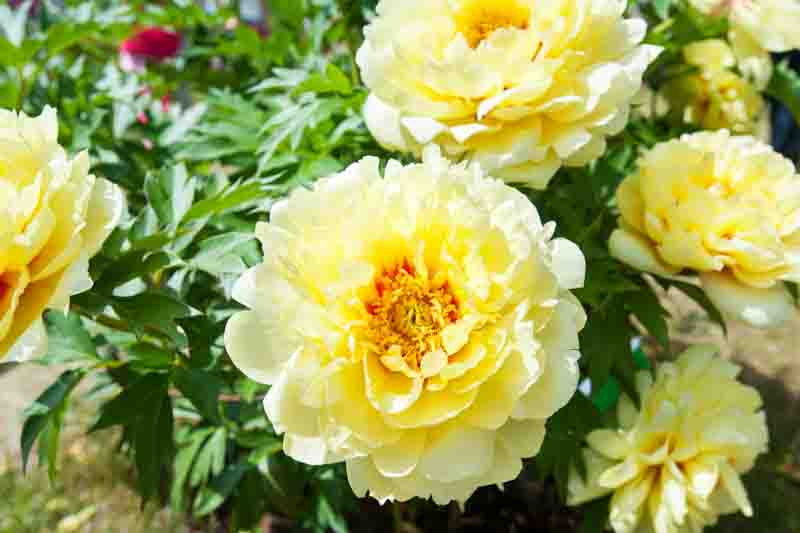 Paeonia ‘Bartzella’