Your peony looks healthy, but where are the flowers? Diagnose 12 common causes of bloom failure, from planting too deeply and excess shade to frost, drought, Botrytis, winter chill, root competition, and transplant shock. Learn what your peony's leaves and buds are telling you - and exactly how to fix it.
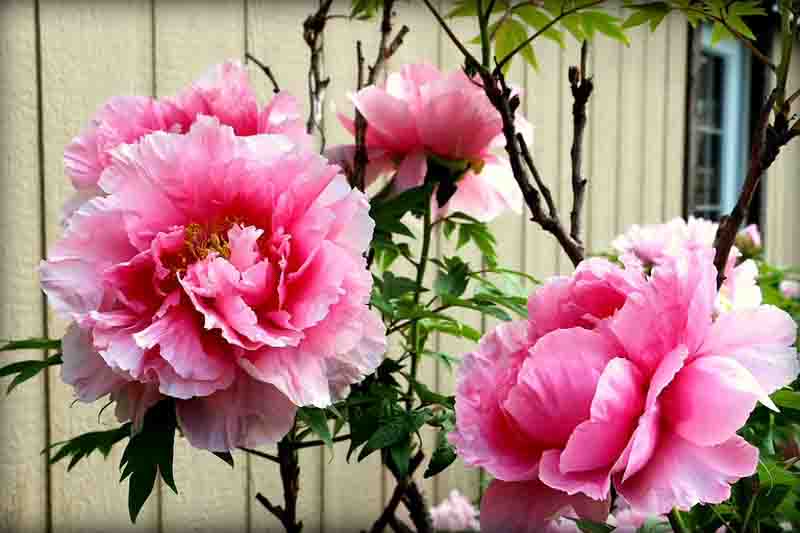


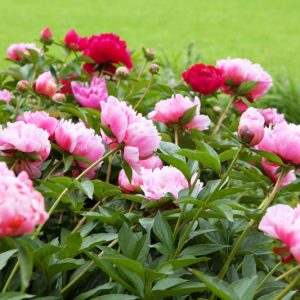
Your peony looks healthy. The foliage is green, the stems are growing, and the plant may even be larger than last year – but there are still no flowers.
Peonies are famously long-lived, yet they can be surprisingly particular about flowering. A plant may survive for years in conditions that are just wrong enough to suppress bloom. The key is to diagnose what stage of flowering is failing rather than treating every non-blooming peony the same way.
Start with one question: Did the plant form flower buds?
The fastest diagnostic shortcut: A lush, leafy peony that never forms buds usually has a different problem from a peony whose buds swell and then turn brown, black, or dry. Identify which pattern you have before changing fertilizer, watering, or planting depth.
| What you see | Most likely causes | What to check first |
|---|---|---|
| Healthy foliage but no buds | Planted too deeply, shade, excess nitrogen | Crown depth, hours of direct sun, fertilizer use |
| Recently planted, few or no flowers | Normal establishment | Planting date, root size, crown depth |
| Small plant with only a few stems | Young or undersized division | Age and number of viable eyes |
| Buds blacken after a cold night | Late frost | Recent minimum temperatures |
| Buds stay tiny, brown, or dry | Bud blast, drought, frost | Moisture and recent weather |
| Buds rot or develop gray mold | Botrytis blight | Diseased shoots, rotting tissue, gray spores |
| Poor flowering beside trees or hedges | Root competition and possibly shade | Competing roots and soil dryness |
| Healthy plant in a mild-winter climate | Insufficient winter chill | Regional performance and cultivar suitability |
| Flowering declined after summer cutback | Foliage removed too early | When foliage was cut the previous year |
| Old peony stopped blooming after it was moved | Whole mature clump replanted without proper division | How the root was handled during transplanting |
More than one problem can occur at once. A peony planted beneath a mature tree may receive too little light, compete for water, and dry out during bud development. Fix the strongest limiting factor first rather than applying several treatments at random.
For a mature herbaceous peony with vigorous leaves but few or no flowers, planting depth is one of the first things to investigate.
The growing buds, usually called eyes, form at the top of the crown. In most climates, the uppermost eyes should sit about 1-2 in. (2.5-5 cm) below the finished soil surface. In warmer peony-growing regions, planting toward the shallower end of that range is particularly important.
A peony can become too deep even if it was planted correctly years ago. Repeated additions of compost, topsoil, or thick mulch gradually raise the soil level around the crown.
Clue: Lots of healthy foliage + a mature plant + few or no flower buds is the classic pattern that should make you check planting depth.
Fix: In fall, locate the uppermost eyes and measure from the finished soil surface. If the crown is substantially too deep, carefully lift and reset the plant. Do not bury the crown beneath several inches of mulch afterward.
Do not apply this rule blindly to every peony. Woody or tree peonies, particularly grafted plants, have different planting requirements. Itoh peonies also require slightly different handling. Gardenia’s complete peony planting and care guide explains the differences.
Peonies may survive in partial shade, but flowering usually declines as direct sunlight decreases. Most herbaceous and Itoh peonies perform best with at least six hours of direct sun.
This problem often develops gradually. A peony planted in a sunny bed 15 years ago may now sit beneath the expanding canopy of a tree or behind an overgrown shrub.
Look for: Tall or leaning stems, abundant foliage, relatively few buds, or a noticeable decline in flowering as nearby trees and shrubs mature.
Before moving the plant, measure the actual direct sunlight reaching it during the growing season. A site that looks “bright” may still receive mostly filtered light.
Fix: If the plant now receives substantial shade, move it in fall to a more open site. In very hot climates, some afternoon protection can be beneficial, but deep shade is rarely compatible with heavy flowering.
Peonies generally prefer to be left alone. After division or transplanting, flowering often decreases temporarily while the plant rebuilds its root system.
A correctly divided herbaceous peony may produce little or no bloom the following spring and can take two or three years to return to strong flowering.
Clue: The plant bloomed normally before you moved or divided it, and the new site otherwise has suitable sun, soil, drainage, and planting depth.
Do not dig it up again simply because it skipped a flowering season. Repeated disturbance can restart the establishment process every time.
Fix: Confirm that the crown is at the correct depth, keep the plant adequately watered while it establishes, and give it time.
This looks similar to transplant shock, but it is a different situation. Here, the peony has never developed enough crown and root mass to support strong flowering.
Good herbaceous peony divisions generally have several healthy eyes and enough storage root to support establishment. Very small divisions can take considerably longer to bloom.
Seed-grown peonies require even more patience and may take several years to reach flowering maturity.
Good sign: If the plant produces more stems each spring and the foliage looks healthy, it may simply be maturing normally.
Fix: Be patient. Avoid compensating with heavy fertilizer or repeatedly lifting the root. Increasing stem count and crown size are better signs of progress than first-year flowers.
A huge, dark-green peony is not automatically a well-balanced peony.
Excess nitrogen encourages stems and foliage and can reduce flowering. This is especially worth investigating where peonies grow beside heavily fertilized lawns or receive frequent applications of manure or high-nitrogen fertilizer.
Do not assume “no flowers” means “needs feeding.” A peony already producing abundant foliage may need less nitrogen, not more.
Fix: Stop unnecessary feeding and review how fertilizer is being applied nearby. If fertility is uncertain, a soil test is more informative than adding fertilizer blindly.
Peonies are extremely cold hardy while dormant, but young spring shoots and developing flower buds are more vulnerable.
A hard freeze after growth has emerged can damage flower buds without killing the entire plant. The foliage may recover while the year’s flowers are lost.
Signs: Buds blacken or stop developing immediately after a cold event, tender stems wilt, or only the most exposed shoots are affected.
Fix: Damaged buds cannot be restored that season. When a hard late freeze is forecast after shoots have emerged, temporary frost cloth can reduce injury. Avoid breaking tender stems while covering plants.
Frost injury can resemble disease, so timing matters. Damage appearing directly after a freeze points more strongly toward cold injury; progressive browning, rotting, and gray mold suggest Botrytis.
Herbaceous peonies require a period of winter cold to complete dormancy and flower normally. This is one reason they are generally more reliable in colder temperate climates than in regions with very mild winters.
Insufficient chilling becomes more plausible when the plant is mature, correctly planted, adequately sunny, and healthy, yet flowering remains consistently poor year after year in a warm-winter climate.
Climate clue: If traditional herbaceous peonies struggle throughout your local area, the problem may be climate rather than your individual plant.
Warm-region gardeners should favor cultivars with a documented record of good performance in mild-winter areas, particularly earlier-flowering selections. Herbaceous crowns should remain shallow rather than heavily buried, and thick winter mulch can be counterproductive where chilling is already marginal.
Fix: Choose peonies proven locally, keep herbaceous crowns shallow, and avoid insulating the crown heavily in winter. Cultivar choice matters more as winter chill becomes marginal.
A peony can receive adequate sunlight and still struggle because the real competition is underground.
Mature trees, large shrubs, and vigorous hedges can intercept both water and nutrients. Their expanding root systems may gradually turn what was once an excellent peony site into a dry, competitive planting bed.
Clues: Soil dries unusually quickly, flowering declines as nearby woody plants mature, or the peony remains smaller than expected despite reasonable care.
Root competition and shade often occur together, so evaluate both above and below ground.
Fix: If competition is severe, relocation to an open bed is usually more effective than trying to compensate indefinitely with extra water and fertilizer.
Established peonies tolerate ordinary periods of dryness, but significant water stress during critical growth stages can cause buds to stop developing.
Affected buds may remain tiny, dry up, or turn brown without opening. Drought is one possible trigger of bud blast.
Long or severe drought during summer can also weaken a plant and reduce its ability to support strong flowering the following season.
Fix: Water deeply during prolonged dry periods, especially while plants are establishing and while buds are enlarging. Aim for consistent moisture, not constantly wet soil. Peony storage roots require good drainage as well as water.
If buds form but turn brown, rot, or develop fuzzy gray growth, the problem may be Peony wilt (Botrytis blight) rather than simple environmental stress.
Botrytis is favored by cool, wet spring conditions. It can attack emerging shoots, stems, leaves, and flower buds. Young shoots may collapse, while affected buds may blacken or rot before opening.
Disease clue: Gray mold, soft or rotting tissue, blackened shoots, and progressive decay point more strongly toward Botrytis than ordinary drought or frost injury.
Reduce future infection by:
For detailed identification and management, see Gardenia’s Peony wilt and Peony Common Problems, Pests and Diseases.
After flowering, peony leaves still have an important job. They continue photosynthesizing and replenishing the underground storage roots that support future growth and flowers.
Cutting healthy herbaceous foliage to the ground in midsummer simply because flowering has finished removes months of useful energy production.
Clue: A previously healthy peony produces fewer flowers the spring after its foliage was cut down in July or August.
Fix: Deadhead spent flowers if desired, but leave healthy foliage intact through summer. Cut herbaceous stems down after they naturally decline, typically after frost. Remove diseased foliage earlier when sanitation requires it.
Woody or tree peonies are different: their permanent woody framework should not be cut to ground level each fall.
This is different from the temporary flowering setback that follows normal division.
When a large, old herbaceous peony is dug up and replanted as one enormous intact crown, it may establish poorly and languish for years. Mature peony root systems are massive, and digging inevitably removes a substantial portion of their storage roots.
Proper division creates manageable sections with viable eyes and adequate storage roots. Large old crowns moved intact can lose substantial root mass during digging and may re-establish slowly.
Clue: An old peony that once bloomed heavily stops flowering after being moved as a large intact clump.
Fix: When a mature herbaceous peony must be moved, divide it into healthy sections with several viable eyes and adequate storage root. Then replant at the correct depth and allow the divisions time to establish.
If you remember only one diagnostic distinction from this article, make it this one.
| No flower buds form | Buds form but fail to open |
|---|---|
| Planted too deeply | Late frost |
| Too much shade | Botrytis blight |
| Plant still immature | Drought during bud development |
| Recently divided or transplanted | Other environmental bud blast |
| Excess nitrogen | Weather injury |
| Insufficient chill or root competition | Occasionally pest damage |
This is a diagnostic guide rather than an absolute rule. A deeply planted or shaded peony can occasionally form weak buds, and several stresses may occur together. But separating failure to initiate buds from failure of existing buds to develop quickly narrows the possibilities.
Bud blast is a symptom, not a single disease.
The bud begins developing but then stops, remains small, turns brown, dries up, or fails to open. Environmental and cultural stresses such as drought, frost, shade, poor nutrition, or planting problems can cause bud blast. Fungal diseases may produce similar-looking failures.
Do not treat “bud blast” as the diagnosis. It describes what happened to the bud. The useful question is why the bud blasted.
Ants crawling across peony buds are normal. They are attracted to sugary secretions on the outside of the buds.
They do not have to “open” the flower, and a peony does not require ants in order to bloom. Likewise, ants on healthy buds are not a reason to spray the plant.
Peony myth: Ants neither prevent peonies from opening nor provide a service required for the flower to open. They are usually just feeding on the sugary material produced around the bud.
Not automatically.
Peonies resent repeated disturbance, so moving the plant should correct a real problem rather than become the default response after one disappointing spring.
Relocation makes sense when the plant is:
If the plant was just divided or transplanted, is still young, or lost its buds to one unusual frost, leaving it alone may be the better decision.
Once you have identified the likely cause, keep the correction specific.
Gardenia’s diagnostic rule: Do not fertilize, dig, prune, or move a peony simply because it failed to bloom. First determine whether the problem is crown depth, light, maturity, root disturbance, climate, bud injury, disease, or competition. The correct fix depends on the cause.
For planting depth, watering, fertilizing, division, transplanting, deadheading, and fall maintenance, see Gardenia’s complete guide to growing and caring for peonies.
If buds, shoots, or foliage look diseased rather than merely flowerless, use Gardenia’s Peony Common Problems, Pests and Diseases guide for further diagnosis.
A mature leafy peony with no flowers is often planted too deeply, growing in too much shade, receiving excess nitrogen, competing with nearby roots, or growing where winter chilling is insufficient. Young or recently transplanted plants may simply need more time.
In most climates, position the uppermost eyes about 1-2 inches below the finished soil surface. In warmer peony-growing regions, planting toward the shallower end of that range is especially important. Woody peonies have different planting requirements.
A newly planted or divided herbaceous peony may flower lightly at first and can take two or three years to establish strong flowering. Very small divisions and seed-grown plants may take longer.
Yes. Most herbaceous and Itoh peonies flower best with at least six hours of direct sun. Increasing shade can produce leafy growth with fewer flowers, especially as nearby trees and shrubs mature.
Buds that form but fail to open may be affected by late frost, drought stress, Botrytis blight, or another form of bud blast. Examine whether the buds are dry, blackened, rotten, or moldy and review recent weather to narrow the cause.
Herbaceous peonies require winter chilling for reliable growth and flowering. In mild-winter regions, flowering may be weaker or less dependable, making suitable cultivar choice and shallow crown placement especially important.
Excess nitrogen can encourage lush leaves and stems at the expense of flower production. If a mature peony is already growing vigorously, additional fertilizer is unlikely to be the first solution.
Normal division and transplanting can temporarily reduce flowering while roots re-establish. If a large mature clump was moved intact rather than properly divided, recovery may take considerably longer.
Yes. Healthy foliage should remain after bloom so it can replenish underground storage roots. Cutting herbaceous peony foliage down in midsummer can weaken the plant and reduce flowering the following year.
No. Ants are attracted to sugary secretions around peony buds, but peonies do not require ants to open. Their presence on healthy buds is normal and usually harmless.
Bud blast is a symptom in which flower buds stop developing, dry up, turn brown, or fail to open. Possible causes include drought, frost, shade, cultural stress, and fungal disease, so the underlying cause must be diagnosed.
Not automatically. First check planting depth, sunlight, plant age, transplant history, winter climate, root competition, fertilizer use, bud condition, and recent weather. Digging is justified when the crown is too deep or the site is unsuitable, but unnecessary disturbance can delay bloom further.
Updated: August 2026 • Reviewed by Gardenia Editors
| Hardiness |
3 - 9 |
|---|---|
| Plant Type | Perennials, Shrubs |
| Plant Family | Paeoniaceae |
| Genus | Paeonia |
| Exposure | Full Sun, Partial Sun |
| Season of Interest | Spring (Late), Summer (Early), Fall |
| Maintenance | Average |
| Water Needs | Average |
| Soil Type | Chalk, Clay, Loam, Sand |
| Soil pH | Acid, Alkaline, Neutral |
| Soil Drainage | Moist but Well-Drained |
| Characteristics | Cut Flowers, Fragrant, Showy |
| Tolerance | Deer, Rabbit |
| Attracts | Bees, Butterflies |
| Landscaping Ideas | Beds And Borders, Wall-Side Borders |
| Garden Styles | City and Courtyard, Informal and Cottage |
| Hardiness |
3 - 9 |
|---|---|
| Plant Type | Perennials, Shrubs |
| Plant Family | Paeoniaceae |
| Genus | Paeonia |
| Exposure | Full Sun, Partial Sun |
| Season of Interest | Spring (Late), Summer (Early), Fall |
| Maintenance | Average |
| Water Needs | Average |
| Soil Type | Chalk, Clay, Loam, Sand |
| Soil pH | Acid, Alkaline, Neutral |
| Soil Drainage | Moist but Well-Drained |
| Characteristics | Cut Flowers, Fragrant, Showy |
| Tolerance | Deer, Rabbit |
| Attracts | Bees, Butterflies |
| Landscaping Ideas | Beds And Borders, Wall-Side Borders |
| Garden Styles | City and Courtyard, Informal and Cottage |
Create a membership account to save your garden designs and to view them on any device.
Becoming a contributing member of Gardenia is easy and can be done in just a few minutes. If you provide us with your name, email address and the payment of a modest $25 annual membership fee, you will become a full member, enabling you to design and save up to 25 of your garden design ideas.
Join now and start creating your dream garden!
Create a membership account to save your garden designs and to view them on any device.
Becoming a contributing member of Gardenia is easy and can be done in just a few minutes. If you provide us with your name, email address and the payment of a modest $25 annual membership fee, you will become a full member, enabling you to design and save up to 25 of your garden design ideas.
Join now and start creating your dream garden!