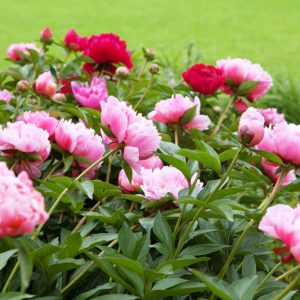
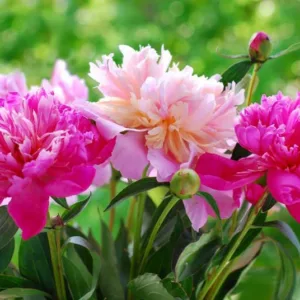
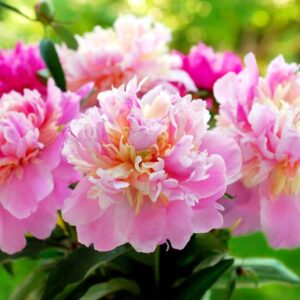
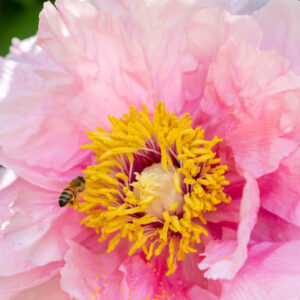
Are peonies deer resistant? Yes - they are among the flowering perennials deer usually avoid, though buds and tender growth may occasionally be sampled. Learn how resistant peonies really are, what deer damage looks like, whether browsed plants recover, and when temporary protection may still make sense.


Yes. Peonies are considered deer resistant and are among the flowering perennials deer are less likely to browse. Rutgers rates Paeonia A – Rarely Damaged, although deer may occasionally eat the buds. Iowa State also lists peonies among perennials rarely damaged by deer. They are not deer-proof, but they are generally a strong choice for gardens with deer pressure.
Peonies have one of the stronger deer-resistance records among popular flowering perennials.
Rutgers places Paeonia in its A – Rarely Damaged category, the most deer-resistant group in its rating system. It adds one useful qualification: deer may occasionally eat the buds.
Iowa State likewise lists peonies among perennials rarely damaged by deer.
NC State independently describes both herbaceous peonies and woody or tree peonies as plants deer generally shun.
That puts peonies in a very different category from highly vulnerable ornamentals such as tulips, daylilies, hostas, or many roses.
Local deer pressure still matters. Drought, winter food shortages, high deer populations, or limited forage can cause animals to sample plants they normally ignore.
The practical conclusion is simple: peonies are genuinely lower-browse plants, but no peony should be described as completely deer-proof.
When deer do sample peonies, they are most likely to take tender, accessible growth such as:
The flower buds are especially important because Rutgers specifically notes that deer may eat them.
A missing bud does not usually threaten the health of an established peony, but that flower is gone for the season.
This is an important distinction: occasional bud loss does not mean peonies have suddenly become a preferred deer food. Their overall resistance rating reflects how frequently and severely the plants are damaged compared with more attractive landscape plants.
Think in terms of frequency, not immunity. Peonies rank well because serious or repeated deer damage is relatively uncommon, not because no deer will ever taste one.
Established peonies generally recover well from light browsing.
If deer remove a few leaves or shoot tips, the plant can usually continue growing normally.
If they eat a flower bud, however, that particular bloom is lost for the year even though the peony itself may remain healthy.
More extensive foliage loss is more significant because the leaves support the crown and roots through photosynthesis. Repeated heavy browsing should therefore not be ignored simply because peonies are normally deer resistant.
Young or newly planted peonies deserve more attention because they have less established growth and fewer reserves than mature clumps.
After browsing, leave healthy foliage in place. For herbaceous and Itoh peonies, remove stems only after they naturally decline later in the season. Woody peonies keep their permanent framework and should not be cut to the ground like herbaceous types.
Because peonies are relatively resistant to deer, sudden damage should not automatically be blamed on browsing.
Deer damage is more likely when you see:
Peony diseases can look very different.
Botrytis blight can cause shoots or buds to brown, blacken, rot, collapse, or fail to open. Powdery mildew produces a pale or powdery coating on foliage. Frost or cold injury can also damage developing buds without removing them.
The first diagnostic question is therefore useful: is the plant tissue missing, or is it still present but damaged?
Gardenia’s Peony Damage Check: missing buds, flowers, leaves, or shoot tips with rough ends suggest browsing. Buds that remain attached but turn brown, black, soft, distorted, or fail to open point more toward disease, frost, or another plant problem.
There is not good evidence for a dependable deer-resistance hierarchy among peony cultivars.
Extension evidence is strongest for herbaceous peonies and woody or tree peonies, both of which NC State describes as shunned by deer.
Intersectional or Itoh peonies are hybrids between herbaceous and woody peonies, but reliable extension sources do not provide a useful separate deer-resistance rating for Itoh peonies.
There is therefore no solid basis for claiming that Itoh peonies are more or less deer resistant than other peony types.
The same caution applies to individual cultivars. Flower color, fragrance, double or single form, bloom season, plant height, and stem structure do not establish a proven deer-resistance ranking.
If you want peonies, use Gardenia’s Peony Comparisons to compare varieties by hardiness, sun, water needs, season of interest, height, spread, soil, and other garden characteristics rather than searching for an unsupported “most deer-resistant peony.”
In many gardens, they do not.
That is one of the advantages of peonies: several extension sources place them among plants that deer usually leave alone.
Temporary protection becomes more reasonable when:
Physical exclusion is the most dependable response if an individual plant is being targeted. A temporary enclosure may be enough for a valuable young peony or one with developing buds.
Repellents may also help under light or moderate pressure when used according to the product label.
Do not expect lower-browse companion plants to protect peonies. Lavender, catmint, daffodils, and similar plants may themselves be less attractive to deer, but they do not form a dependable barrier around neighboring plants.
Peonies combine two qualities that do not always occur together: large, showy flowers and relatively low deer pressure.
They can provide strong late-spring to early-summer impact, attractive foliage after flowering, excellent cut flowers, and decades of performance when well sited.
That makes them useful where gardeners want a substantial flowering perennial without choosing a plant that will routinely require deer protection.
The advantage is not that peonies are immune to browsing. It is that their ornamental value is high while their typical deer risk is comparatively low.
Because peonies already have a strong deer-resistance record, there is little value in trying to identify a supposedly “most deer-resistant” cultivar.
Once the plant clears your acceptable deer-risk threshold, compare the characteristics that actually determine whether it will succeed in your garden.
Gardenia’s Deer-Smart Peony Strategy: use deer resistance as a threshold, not a cultivar ranking. Once peonies meet your acceptable browse-risk level, choose among them by peony type + bloom season + mature size + climate fit + flower form + fragrance + stem strength + garden role.
Browse Gardenia’s Peony Collection to explore peonies by type and garden use, or use Gardenia’s Peony Comparisons to compare hardiness, sun, water needs, season of interest, height, spread, soil, and other growing requirements.
For planting and care advice, explore Gardenia’s Peony Guides, including guidance for herbaceous, tree, and Itoh peonies.
If deer resistance is only one of several requirements, use the Gardenia Plant Finder to combine it with hardiness, sun, soil, drainage, water needs, mature size, flower color, bloom season, and garden style.
Then use the Gardenia Design Tool to check whether your peonies and companion plants share compatible growing conditions before planting them together.
Yes. Peonies are considered deer resistant. Rutgers rates Paeonia A – Rarely Damaged, while Iowa State also lists peonies among perennials rarely damaged by deer.
Yes. Deer-resistant does not mean deer-proof. Deer may occasionally sample tender shoots, foliage, buds, or flowers, and Rutgers specifically notes that deer may eat peony buds.
They can. Rutgers rates peonies Rarely Damaged but specifically notes that deer may eat the buds. A bud that is eaten will not produce its flower that season.
Established peonies usually recover from light browsing. Leave healthy foliage in place so it can continue supporting the crown and roots. Eaten flower buds, however, are lost for that season.
Yes. NC State describes woody or tree peonies as shunned by deer. They should still be considered deer resistant rather than completely deer-proof.
Peonies overall have a strong deer-resistance record, but reliable extension sources do not provide a separate deer-resistance rating for Itoh peonies. There is no good evidence that Itoh peonies are either more or less deer resistant than herbaceous or tree peonies.
Usually not. Peonies are among the lower-browse flowering perennials. Temporary protection may be worthwhile for newly planted peonies or plants whose buds or shoots are being browsed repeatedly.
There is not strong evidence for a dependable cultivar-level ranking. Since peonies already have good deer resistance, choose varieties by type, bloom season, mature size, hardiness, flower form, fragrance, stem strength, and garden role.
Updated: September 2026 – Reviewed by Gardenia Editors
| Hardiness |
3 - 9 |
|---|---|
| Plant Type | Perennials, Shrubs |
| Plant Family | Paeoniaceae |
| Genus | Paeonia |
| Exposure | Full Sun, Partial Sun |
| Season of Interest | Spring (Late), Summer (Early), Fall |
| Maintenance | Average |
| Water Needs | Average |
| Soil Type | Chalk, Clay, Loam, Sand |
| Soil pH | Acid, Alkaline, Neutral |
| Soil Drainage | Moist but Well-Drained |
| Characteristics | Cut Flowers, Fragrant, Showy |
| Tolerances | Deer |
| Attracts | Bees, Butterflies |
| Landscaping Ideas | Beds And Borders, Wall-Side Borders |
| Garden Styles | City and Courtyard, Informal and Cottage |
Create a membership account to save your garden designs and to view them on any device.
Becoming a contributing member of Gardenia is easy and can be done in just a few minutes. If you provide us with your name, email address and the payment of a modest $25 annual membership fee, you will become a full member, enabling you to design and save up to 25 of your garden design ideas.
Join now and start creating your dream garden!