Yellow leaves, crispy brown tips, drooping stems, or sudden leaf drop? Discover what's troubling your houseplants before reaching for the watering can. Gardenia's practical diagnostic guide helps you distinguish similar symptoms, recognize root problems and pests, and choose effective solutions to restore healthy growth and prevent further damage.


Your Peace Lily has collapsed overnight. Your Spider Plant has crispy brown tips. Or perhaps your Pothos is losing leaves even though you’ve been watering it faithfully. What’s going wrong?
Yellow leaves, brown edges, drooping stems, and sudden leaf drop are among the most common houseplant problems. The difficulty is that one symptom can have several causes. Too little water makes leaves wilt, but so can roots damaged by excessively wet soil. Brown tips may point to dry air, inconsistent watering, or accumulated fertilizer salts.
The best approach is to investigate before treating. This practical houseplant troubleshooting guide helps you recognize warning signs, distinguish problems that look alike, and choose the right next step. From normal leaf aging to root rot and pest damage, you’ll learn what matters, what doesn’t, and how to help your plant recover.
What’s wrong with my houseplant? Quick answers
Remember: A symptom is a clue, not a diagnosis. Two plants with identical-looking leaves may need completely different treatment.
Before adding water, fertilizer, or a treatment, take a few minutes to investigate the plant’s growing conditions.
Finally, examine leaf undersides and stem joints for pests. Fine webbing, cottony clusters, and sticky deposits may explain symptoms that otherwise resemble watering problems.
If the plant remains wilted despite appropriate moisture, checking its roots may be necessary. Healthy roots are generally firm; badly damaged roots often become soft, fragile, or mushy. Root color alone is not conclusive.
Start with what you can see, then look for a second clue. This comparison helps distinguish similar houseplant problems without assuming that every yellow leaf means overwatering or every wilted plant needs a drink.
| What you see | Possible cause | Check first | Next step |
|---|---|---|---|
| Yellow lower leaves | Natural aging, water stress, low light | Number of leaves affected; soil moisture | Monitor or correct confirmed stress |
| Yellowing new growth | Root stress, nutrient availability, pests | Leaf pattern, roots, feeding history | Investigate before fertilizing |
| Crispy brown tips | Moisture stress, dry air, salts | Watering, humidity, fertilizer | Correct the most likely stress |
| Drooping; dry root ball | Underwatering | Moisture throughout the pot | Rehydrate thoroughly; drain |
| Drooping; wet root ball | Poor aeration, root damage | Drainage and root firmness | Avoid extra watering; investigate |
| Sudden leaf drop | Environmental change, root stress | Recent moves, temperature, moisture | Restore stable conditions |
| Bleached, dry patches | Sun scorch | Window-facing damage | Adjust exposure gradually |
| Speckles, webbing | Spider mites or other pests | Leaf undersides | Identify and treat the pest |
| Soft, dark stem base | Crown or stem rot | Tissue firmness; root condition | Act promptly; preserve healthy growth |
How to use Gardenia’s diagnostic approach: Match the symptom, confirm it with another observation, and then act. For example, yellow leaves with a dry root ball call for a different response from yellow leaves with persistently wet soil.
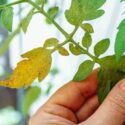
The location and progression of yellowing often reveal more than the color itself.
For a detailed species-specific example, explore Gardenia’s guide to yellow Peace Lily leaves.
Brown tips are especially common on Spider Plants, Dracaenas, palms, and ferns, but their causes are not identical.
Look for the pattern. Dry, brittle edges on a fern near a heating vent suggest a different investigation from brown tips on a heavily fertilized Dracaena.
Use appropriate water for sensitive species, avoid unnecessary fertilizer, and improve humidity with a humidifier when needed. If soluble salts are suspected, check the medium and drainage before flushing; a badly waterlogged pot should not receive additional water simply to wash out salts.
Will brown tips turn green again? No. Dead leaf tissue cannot recover. Correct the underlying problem to protect future growth. Dry tips can be trimmed neatly with clean scissors, but there is no need to remove an otherwise healthy leaf.
A drooping Peace Lily is tempting to water immediately. But wilting means the leaves lack adequate water pressure, not necessarily that the soil lacks moisture.
Two wilted plants. Opposite treatments.
Dry roots: Rehydrate a plant that genuinely needs water.
Wet, oxygen-starved roots: Avoid unnecessary watering, improve aeration and drainage, and assess damage.
Watering a wilted plant without checking the root zone can make an existing problem much worse.
Some leaf loss is natural, but widespread shedding usually indicates a change the plant has struggled to tolerate.
Ficus plants are especially well known for dropping leaves after relocation or abrupt changes in light. Tropical houseplants may also shed foliage after cold exposure, prolonged drought, or excessively wet roots.
Winter presents another challenge. Shorter days often slow growth and water consumption, so a summer watering routine may leave potting mix wet for too long.
Think back over the previous days or weeks. Was the plant moved to a new window? Did the heating come on? Has the container remained damp unusually long?
Restore suitable conditions rather than immediately fertilizing or repeatedly changing its location. Fallen leaves won’t reattach, but healthy roots and stems can support new foliage when the plant resumes growth.
Waterlogged conditions can deprive roots of oxygen, while root-rot pathogens may damage tissues directly. These processes can occur separately or together. Dark, mushy roots reveal serious deterioration but do not identify the exact cause.
If roots remain firm: Focus on drainage, watering frequency, light, and the suitability of the potting mix. Repotting may be unnecessary and can add stress.
If many roots are rotten: Remove clearly decayed tissue with clean tools. Where sufficient healthy roots remain, repot in a fresh, appropriate growing medium and a container with drainage. Avoid an oversized pot that holds excessive moisture around a reduced root system.
If the stem base is soft and collapsing: Recovery may be unlikely. Take healthy stem cuttings if the species can be propagated that way, keeping potentially diseased material separate from healthy plants.
Discard severely diseased material and contaminated medium when recovery is not realistic. Clean tools and containers before reusing them.
Warning sign: A rapidly collapsing plant with persistently wet soil and a soft, darkened stem base needs prompt inspection. More water or fertilizer will not restore severely damaged roots.
Some pests create yellowing, spotting, curling, and leaf drop that resemble environmental stress.
Separate affected plants, identify the pest, and begin with appropriate physical or cultural controls. If a pesticide is necessary, use only a product labeled for the pest, plant, and indoor use, following every label precaution.
For identification photographs and more detailed advice, explore Gardenia’s Houseplant Pest Identification and Treatment Guide.
Once you’ve identified the likely problem, resist the urge to change everything at once.
Gardenia’s diagnostic framework is a starting point, not a substitute for species-specific care. A Snake Plant and a Boston Fern respond differently to moisture, light, and seasonal changes.
Yellowing Peace Lily leaves, crispy Dracaena tips, and a drooping fern may have very different causes. Once you’ve narrowed down the symptom, explore the growing requirements of your particular plant.
Identify the symptom. Check the evidence. Choose the right treatment for your plant.
Yellow houseplant leaves can result from wet or dry roots, insufficient light, natural aging, nutrient availability problems, or pests. Check soil moisture, which leaves are affected, drainage, and recent changes before treating the plant.
Drooping with wet soil can indicate poor root aeration or damaged roots. Check drainage and root health before adding more water. Roots that are soft and collapsing indicate serious deterioration, while firm roots may recover when conditions improve.
No. Dead brown leaf tissue cannot turn green again. You can trim dry tips for appearance, but correcting water stress, humidity problems, excess salts, or other causes is necessary to protect future growth.
Sudden leaf drop may follow changes in light, temperature, location, or watering, or a pest problem. Review recent changes and restore suitable, stable conditions. Ficus plants are particularly sensitive to environmental changes.
Sometimes, if enough healthy roots and stems remain. Correct waterlogged conditions, remove clearly rotten tissue when necessary, and repot only when root damage or an unsuitable medium justifies it. Healthy cuttings may save a severely damaged plant.
A fully yellow, dying leaf generally will not regain its green color. Some early, reversible chlorosis may improve once the underlying problem is corrected. Focus on preventing further yellowing and supporting healthy new growth.
Updated and reviewed by Gardenia: October 2026
| Plant Type | Houseplants |
|---|
| Plant Type | Houseplants |
|---|
Create a membership account to save your garden designs and to view them on any device.
Becoming a contributing member of Gardenia is easy and can be done in just a few minutes. If you provide us with your name, email address and the payment of a modest $25 annual membership fee, you will become a full member, enabling you to design and save up to 25 of your garden design ideas.
Join now and start creating your dream garden!