Yellow leaves, crispy brown edges, mysterious holes, wilting, or a Hosta that gets smaller every year? Learn how to read the damage before treating it. This diagnostic guide separates drought, sun scorch, slugs, deer, rabbits, foliar nematodes, anthracnose, Hosta Virus X, crown rot, bacterial soft rot, and other common problems.
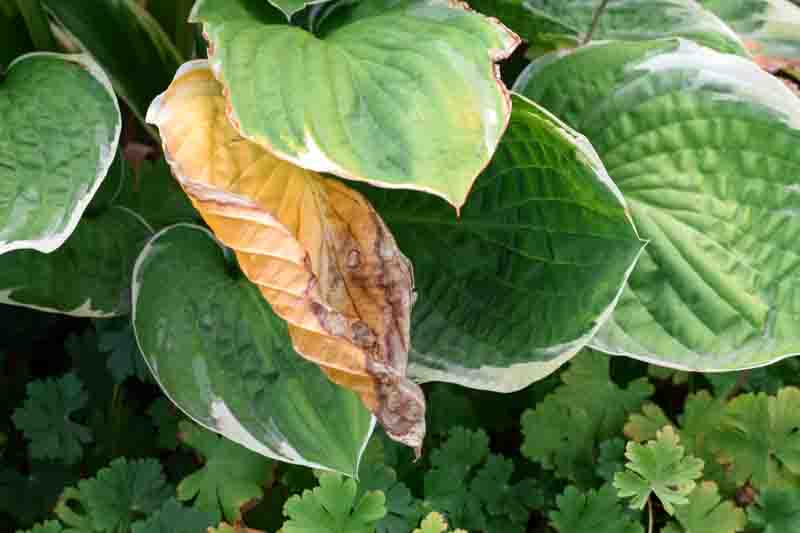


A healthy Hosta should produce a steadily expanding mound of substantial foliage from spring through summer. When leaves suddenly turn yellow, develop crisp brown edges, fill with holes, wilt, collapse, or become smaller from year to year, the plant is telling you something has changed.
The difficult part is that very different problems can produce similar symptoms. A brown Hosta leaf may be suffering from drought, excessive sun, foliar nematodes, anthracnose, or crown disease. A wilted plant may desperately need water – or may be sitting in wet soil with damaged roots. Holes may come from slugs, but they can also result from hail or from the centers of diseased leaf spots falling away.
This guide helps you diagnose Hosta problems by looking at the pattern, position, texture, timing, and progression of damage rather than treating every yellow or brown leaf the same way.
Start with the symptom, not the treatment. Before adding water, fertilizer, pesticide, or fungicide, ask where the damage starts and how it develops. Crisp leaf margins, vein-bounded brown streaks, wet crown decay, and irregular chewing holes may all look like a “damaged Hosta,” but they point to completely different causes.
| Symptom | Check First | Common Possibilities |
|---|---|---|
| Yellow leaves | Season, soil moisture, crown | Dormancy, drought, waterlogging, crown/root disease, nematodes, virus |
| Brown crispy edges | Soil moisture, afternoon sun, wind | Drought, heat, sun scorch, root competition |
| Irregular holes | Nighttime pests, slime trails | Slugs, snails |
| Tan spots that become holes | Dark borders around lesions | Anthracnose |
| Wilting in dry soil | Root-zone moisture | Drought, root competition, container drying |
| Wilting in wet soil | Crown, roots, odor | Petiole rot, Fusarium, bacterial soft rot, poor drainage |
| Yellow/brown bands between veins | Whether veins contain the damage | Foliar nematodes |
| Mottled or puckered foliage | Repeated abnormal pattern | Possible Hosta Virus X |
| Plant gets smaller each year | Water, roots, shade, browsing | Chronic stress, root competition, disease, repeated browsing |
Yellow Hosta leaves are not a diagnosis by themselves. The first question is when the yellowing occurs.
Hostas are deciduous herbaceous perennials. At the end of the growing season, their foliage naturally turns yellow and collapses as the plant enters winter dormancy. If the entire clump declines gradually in fall after a healthy growing season, this is normal.
Once foliage has died naturally, it can be removed close to ground level.
Yellowing during active growth deserves more investigation. Check:
Soil moisture. Both chronically dry and poorly drained soil can cause decline.
The pattern. Yellow areas confined between major veins strongly suggest foliar nematodes rather than general water stress.
The crown. Yellow leaves combined with collapsing petioles or crown decay can indicate disease.
New growth. Unusual mottling, color bleeding, puckering, or distortion raises concern about a virus.
Recent disturbance. Newly transplanted or divided Hostas can temporarily struggle while roots re-establish.
Do not fertilize automatically because leaves are yellow. If the real problem is drought, saturated soil, damaged roots, or crown disease, extra fertilizer will not solve it and may add another stress.
Crisp brown margins are among the most common Hosta complaints and are usually environmental rather than infectious.
The most frequent causes are:
Dry soil. Hostas perform best with dependable moisture. Repeated drying commonly produces brown leaf margins.
Too much strong sun. Hot afternoon sun can bleach foliage and scorch leaf edges, particularly when moisture is limited.
Heat. High temperatures increase water loss through large Hosta leaves.
Drying wind. Exposed sites can pull moisture from foliage faster than roots can replace it.
Tree-root competition. A Hosta can sit in perfect shade and still suffer drought because nearby roots take most of the available moisture.
Containers drying rapidly. Potted Hostas can move from adequately moist to stressed surprisingly quickly in warm weather.
Check the soil several inches below the surface before watering. Mulch can make the surface look damp while the active root zone is dry.
Sun tolerance is not drought tolerance. A Hosta that tolerates additional sunlight still needs moisture at its roots. If brown edges appear on the sunniest side of the plant during hot weather, investigate both exposure and soil moisture.
If your site receives more direct light, compare plants in Gardenia’s Hostas Tolerant of Sun guide. A cultivar such as Hosta ‘Sum and Substance’ can tolerate brighter conditions than many Hostas when moisture is adequate, but even sun-tolerant selections can scorch if the soil becomes too dry.
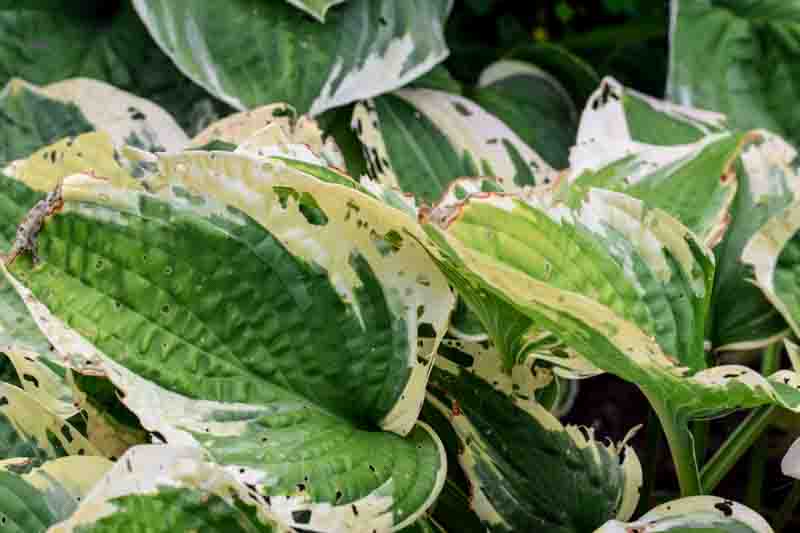
Slugs and snails are famous for damaging Hostas, but they are not the only explanation for holes and torn foliage.
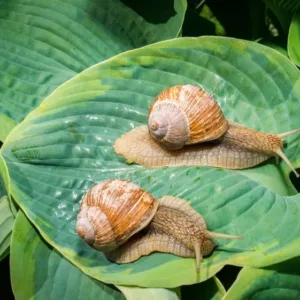
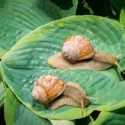
Slugs and snails chew irregular holes through leaves and can severely damage tender foliage as it unfolds. Slime trails, nighttime feeding, and pests hiding beneath debris or pots during the day strengthen the diagnosis.
To reduce damage:
remove dense debris and other damp hiding places near vulnerable plants;
inspect Hostas after dark or during damp weather;
keep excessive mulch away from the crown;
water the soil rather than keeping surface debris continuously wet;
consider thicker-leaved cultivars where slug pressure is chronic.
Thick foliage does not make a Hosta slug-proof, but it may reduce feeding. Hosta ‘Silver Bullet’ has exceptionally thick leaves, while ‘Sum and Substance’ is another substantial-leaved selection.
For detailed control options, see Prevent Slugs and Snails from Feasting on Your Hostas.
Not every hole was eaten.
Anthracnose produces irregular or rounded tan spots with darker margins. As lesions age, the dead centers may fall away, leaving holes and tattered foliage.
Look for the remnants of a bordered lesion around the opening. Slug holes generally lack the characteristic tan-and-brown lesion pattern.
Hail can punch holes through exposed Hosta leaves in minutes, while strong wind can split or shred broad foliage. If damage appeared suddenly after a storm and affects many plants at the same time, weather may be responsible.
Timing matters. Gradually accumulating holes point toward feeding. Dozens of fresh tears appearing immediately after a storm point toward weather. Holes surrounded by tan or brown lesion tissue may be disease-related.
When a Hosta wilts, check the soil before reaching for the hose. The distinction between wilting in dry soil and wilting in wet soil is one of the most useful diagnostic shortcuts.
Likely causes include drought, a newly planted root system that has not established, a container that has dried out, or severe competition from tree and shrub roots.
Water slowly and deeply enough to wet the root zone. If the soil dries again unusually quickly, investigate surrounding roots rather than simply increasing the frequency of shallow watering.
A wilted Hosta in persistently wet soil may have compromised roots or crown tissue and therefore be unable to take up water normally.
Inspect for:
brown petioles at soil level;
soft or collapsing crown tissue;
an unpleasant odor;
dry brown-to-black decay around stems or crown;
poor drainage or standing water.
These signs help separate ordinary drought from diseases such as petiole rot, Fusarium root and crown rot, or bacterial soft rot.
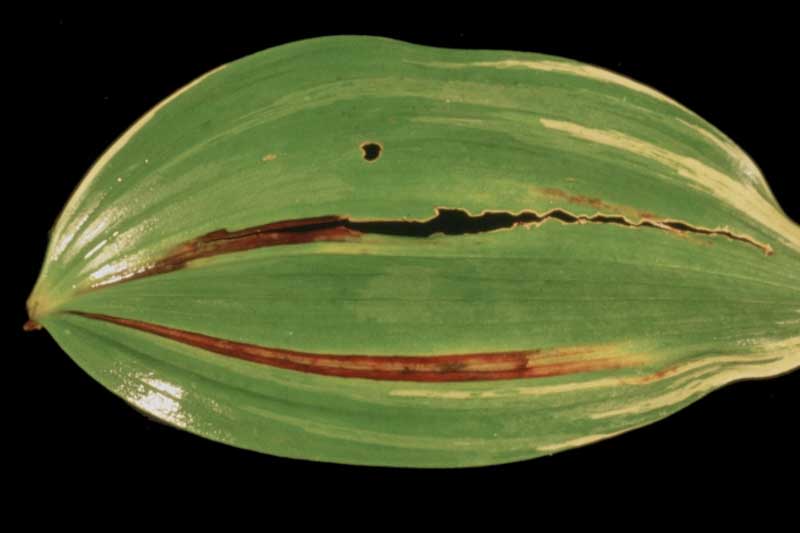
Foliar nematodes produce one of the most distinctive Hosta symptoms.
Damage often begins as yellow discoloration and later becomes chocolate brown. The key feature is that the affected tissue remains between the major veins, creating stripes, wedges, islands, or bands. The discoloration may be visible from both sides of the leaf and often becomes more obvious from midsummer onward.
Unlike ordinary scorch, which tends to begin at exposed margins, nematode damage is constrained by the leaf’s vein structure.
Because foliar nematodes can move in films of water and survive in infected plant debris, management should emphasize sanitation and reducing unnecessary leaf wetness:
remove badly affected foliage;
do not compost known infested material;
clean tools between plants;
favor drip or soil-level irrigation;
inspect neighboring susceptible plants for similar vein-bounded symptoms.
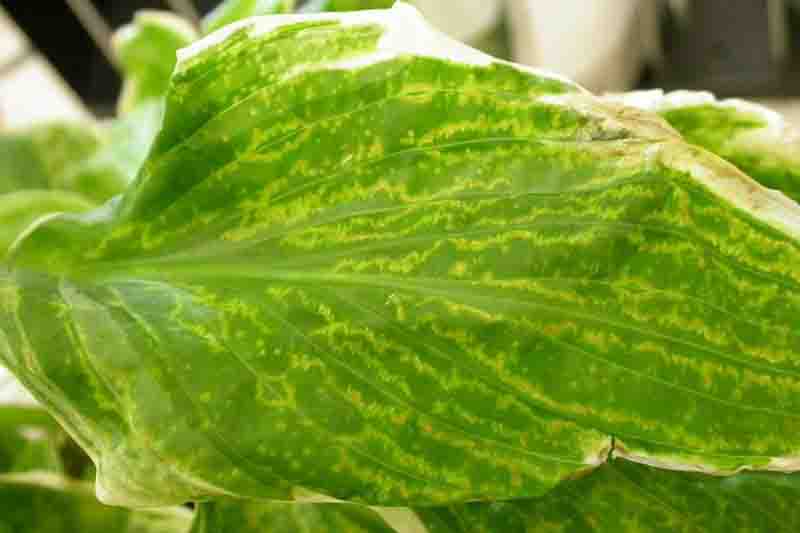
Hosta Virus X, usually abbreviated HVX, is particularly troublesome because infected plants can initially look normal and symptoms vary considerably among cultivars.
Possible signs include:
light or dark green discoloration following veins;
green and yellow mottling;
colors appearing to bleed into one another on variegated leaves;
puckered, lumpy, or distorted foliage;
ringspots;
stunting;
in severe cases, wilting or dead tissue.
However, unusual foliage does not automatically mean HVX. Healthy cultivars, sports, mutations, other viruses, environmental injury, and herbicide damage can sometimes produce confusing patterns. When the diagnosis matters, laboratory or kit testing is more reliable than appearance alone.
There is no cure for an infected Hosta. HVX spreads through contaminated sap, especially when tools cut or divide infected and healthy plants. Avoid dividing a suspicious Hosta and clean equipment carefully between plants.
HVX warning: Do not deliberately cut suspicious leaves from plant after plant with the same uncleaned tool. The act of “tidying up” can spread contaminated sap.
When the entire plant wilts, yellows, collapses, or fails to emerge normally, inspect the base of the plant rather than focusing only on the leaves.
Petiole rot causes leaf stalks to brown near soil level as leaves yellow, wilt, and collapse. White, fan-like fungal growth may appear around the base, eventually accompanied by small dark structures.
Avoid piling soil or deep mulch against the crown. Infected plants should be removed carefully because contaminated material can spread the pathogen.
Root rot and crown rot are broad categories, but Fusarium infection in Hostas has a particularly useful symptom pattern. Plants may be stunted, emerge unusually late in spring, and develop yellow then brown foliage. Tissue near the soil line develops a dry brown-to-black decay.
Bacterial soft rot looks and feels different. Petioles and lower foliage become wet and soft, and the decaying tissue develops a characteristic unpleasant odor as leaves wilt and yellow.
| Problem | Key Clue |
|---|---|
| Petiole rot | Petiole browns at soil level; white fan-like growth may appear |
| Fusarium root/crown rot | Stunting or late emergence with dry brown-black decay |
| Bacterial soft rot | Wet, soft decay with a bad odor |
Not Sure What Is Wrong With Your Hosta?
Brown spots, yellow leaves, strange mottling, collapsing petioles, or crown rot can have very different causes. Use Gardenia’s Hosta Diseases: Symptoms, Diagnosis and Treatment guide to compare symptoms, narrow the likely cause, and decide what to check next.
When foliage disappears rather than simply discolors, examine the way it has been removed.
Deer can consume large portions of a Hosta overnight. Browsed stems often have a torn or ragged appearance because deer lack upper incisors and pull vegetation rather than clipping it neatly.
Rabbits particularly enjoy tender emerging foliage. Their sharp incisors often leave a cleaner, angled cut on petioles or shoots. Small round droppings nearby are another clue.
Voles present a different problem because they may feed below ground on roots and crowns. A Hosta that declines unexpectedly without obvious leaf damage may warrant inspection of its root system, especially where vole activity is already known.
With persistent deer or rabbit pressure, physical exclusion is generally more dependable than searching for a supposedly resistant Hosta cultivar.
A Hosta that survives but remains small, produces fewer leaves, or becomes weaker each year is usually experiencing chronic stress rather than a single dramatic event.
Work through these possibilities:
The soil is too dry. This is particularly common beneath mature trees.
The site has become darker. Trees and shrubs grow, and a location that once provided bright filtered light can become deep shade.
The site is too sunny or hot. Persistent scorch forces the plant to operate with damaged foliage.
Drainage is poor. Constantly wet soil can weaken or destroy roots.
Browsing is repeated. Deer or rabbits removing leaves again and again reduces the plant’s ability to rebuild its crown.
The plant is diseased. Late emergence, abnormal mottling, crown decay, or progressive yellowing deserve investigation.
A container is overcrowded. Mature potted Hostas eventually may need division or a larger container.
The cultivar is poorly matched to the climate or exposure. Hostas vary considerably in their response to heat, sun, and very mild winters.
Before feeding a poorly growing plant, identify which of these limiting factors is actually operating.
Hosta problems become easier to separate when you describe the damage precisely instead of starting with a presumed cause.
| What You See | What to Check Next | Most Likely Direction |
|---|---|---|
| Crispy damage beginning at leaf margins | Moisture, sun, heat, wind | Environmental scorch |
| Yellow/brown tissue trapped between veins | Both leaf surfaces; progression through summer | Foliar nematodes |
| Tan spots with dark borders | Whether spot centers are dropping out | Anthracnose |
| Irregular holes with slime trails | Nighttime activity | Slugs or snails |
| Foliage torn off roughly | Tracks and browsing height | Deer |
| Shoots clipped cleanly near ground level | Round droppings, low browsing | Rabbits |
| Sudden tears after severe weather | Recent hail or wind | Physical damage |
| Mottling, vein discoloration, puckering | Repeated pattern, testing if needed | Possible virus |
| Petiole browning and collapse at soil line | White fungal growth at crown | Petiole rot |
| Wet, foul-smelling crown | Soft watery tissue | Bacterial soft rot |
| Late emergence plus dry dark crown decay | Soil-line tissue and roots | Fusarium root/crown rot |
Gardenia’s diagnostic shortcut: Ask five questions in order: Where did the damage start? What shape is it? Is the tissue dry, wet, or missing? Did it appear suddenly or spread gradually? What was happening with weather and soil moisture when it began? Those observations often narrow the problem faster than leaf color alone.
Most cosmetic damage does not justify removing a Hosta. Drought scorch, hail, slug holes, deer browsing, and frost injury can look terrible while leaving the crown perfectly viable.
Removal becomes more appropriate when:
Hosta Virus X is confirmed;
a plant has advanced bacterial soft rot;
petiole or crown rot has extensively damaged the crown;
roots and crown are largely dead;
a chronically declining plant cannot be given suitable growing conditions.
When an infectious disease is involved, dispose of affected material appropriately and clean tools before using them on healthy Hostas.
You cannot prevent hail, deer, or every disease, but good siting and routine care eliminate many of the conditions that predispose Hostas to trouble.
Match the cultivar to the light. Do not assume every Hosta needs deep shade or that a sun-tolerant cultivar will tolerate dry soil.
Maintain dependable moisture. Hostas dislike repeated drought, especially during establishment.
Provide drainage. Moisture-retentive soil should not remain saturated.
Account for tree roots. Dry shade is one of the most overlooked causes of poor Hosta performance.
Keep crowns clear. Do not pile deep mulch or soil around the base.
Use clean tools. This matters particularly when dividing plants or when HVX or bacterial disease is a possibility.
Inspect new Hostas. Avoid purchasing plants with suspicious mottling, necrotic tissue, crown decay, or unexplained distortion.
Watch patterns over time. A symptom that spreads progressively deserves different attention from damage that appears immediately after heat, frost, or hail.
To compare Hosta cultivars, growing conditions, sizes, foliage colors, and garden uses, browse Gardenia’s Hosta collection. You can also explore the complete Hosta guide hub for selection and care advice.
Yellow Hosta leaves may be normal in fall as the plant enters dormancy. Yellowing during active growth can result from drought, waterlogged soil, root or crown disease, foliar nematodes, virus infection, or other stress. Check timing, soil moisture, and the pattern of discoloration before treating the plant.
Crisp brown leaf margins most often point to dry soil, excessive sun, heat, drying wind, or root competition from nearby trees and shrubs. Check soil moisture several inches down and consider whether the plant receives strong afternoon sun.
Slugs and snails are common causes of irregular holes, but hail and wind can tear foliage, and anthracnose lesions can lose their centers and leave holes. Slime trails suggest slugs or snails, while holes surrounded by tan or brown lesion tissue suggest disease.
First check the soil. Wilting in dry soil usually indicates drought, container drying, or root competition. Wilting in wet soil can indicate damaged roots, poor drainage, petiole rot, Fusarium root and crown rot, or bacterial soft rot.
Foliar nematodes typically cause yellow areas that later become brown streaks, bands, islands, or wedges confined between major leaf veins. This vein-bounded pattern is one of the most useful clues distinguishing nematode damage from ordinary scorch.
Possible Hosta Virus X symptoms include green or yellow mottling, color bleeding along veins, puckering, ringspots, distortion, stunting, and sometimes tissue death. Symptoms vary greatly among cultivars and appearance alone may not be enough for a definite diagnosis.
Slugs produce irregular chewing holes and often leave slime trails. Damage is usually worse in moist conditions and may occur at night while the pests hide beneath debris, pots, boards, or dense vegetation during the day.
Deer typically tear vegetation and leave ragged petiole ends, while rabbits often make cleaner angled cuts with their sharp incisors. Rabbit damage is commonly low to the ground, and small round droppings nearby provide another clue.
A shrinking Hosta may be suffering from chronic drought, increasing tree-root competition, heavier shade, repeated browsing, poor drainage, root or crown disease, container congestion, or growing conditions poorly matched to the cultivar.
Yes. Hosta anthracnose produces tan spots with darker borders. As lesions age, their dead centers may fall out, leaving holes and tattered foliage that can sometimes be mistaken for insect or slug feeding.
Remove badly diseased or collapsed foliage when necessary, but cosmetic scorch, hail, slug damage, or browsing does not automatically require cutting the whole plant back. Healthy green leaves continue supporting the crown and should generally be retained.
Yes. Hostas prefer consistently moist soil, but saturated or poorly drained soil can damage roots and contribute to yellowing, wilting, root decline, and crown disease. Moist soil and waterlogged soil are not the same thing.
Royal Horticultural Society – How to Grow Hostas
Penn State Extension – Hosta Diseases
University of Wisconsin-Madison Extension – Hosta Virus X
Missouri Botanical Garden – Hosta Leaf Nematodes
Updated: September 2026 • Reviewed by Gardenia Editors
| Hardiness |
3 - 9 |
|---|---|
| Heat Zones |
1 - 8 |
| Climate Zones | 1, 1A, 1B, 2, 2A, 2B, 3, 3A, 3B, 4, 5, 6, 7, 8, 9, 10, 14, 15, 16, 17, 18, 19, 20, 21 |
| Plant Type | Perennials |
| Plant Family | Asparagaceae |
| Genus | Hosta |
| Exposure | Partial Sun, Shade |
| Season of Interest | Spring (Mid, Late), Summer (Early, Mid, Late), Fall |
| Maintenance | Low |
| Water Needs | Average |
| Soil Drainage | Moist but Well-Drained |
| Attracts | Bees, Butterflies, Hummingbirds |
| Landscaping Ideas | Patio And Containers, Small Gardens |
| Garden Styles | City and Courtyard, Gravel and Rock Garden, Informal and Cottage, Pollinator Garden, Woodland Garden |
| Hardiness |
3 - 9 |
|---|---|
| Heat Zones |
1 - 8 |
| Climate Zones | 1, 1A, 1B, 2, 2A, 2B, 3, 3A, 3B, 4, 5, 6, 7, 8, 9, 10, 14, 15, 16, 17, 18, 19, 20, 21 |
| Plant Type | Perennials |
| Plant Family | Asparagaceae |
| Genus | Hosta |
| Exposure | Partial Sun, Shade |
| Season of Interest | Spring (Mid, Late), Summer (Early, Mid, Late), Fall |
| Maintenance | Low |
| Water Needs | Average |
| Soil Drainage | Moist but Well-Drained |
| Attracts | Bees, Butterflies, Hummingbirds |
| Landscaping Ideas | Patio And Containers, Small Gardens |
| Garden Styles | City and Courtyard, Gravel and Rock Garden, Informal and Cottage, Pollinator Garden, Woodland Garden |
Create a membership account to save your garden designs and to view them on any device.
Becoming a contributing member of Gardenia is easy and can be done in just a few minutes. If you provide us with your name, email address and the payment of a modest $25 annual membership fee, you will become a full member, enabling you to design and save up to 25 of your garden design ideas.
Join now and start creating your dream garden!
Create a membership account to save your garden designs and to view them on any device.
Becoming a contributing member of Gardenia is easy and can be done in just a few minutes. If you provide us with your name, email address and the payment of a modest $25 annual membership fee, you will become a full member, enabling you to design and save up to 25 of your garden design ideas.
Join now and start creating your dream garden!