A lush tomato plant with no fruit does not have one universal problem. Learn how to tell whether your tomato is failing to flower, dropping blossoms, missing successful pollination, or aborting young fruit, then diagnose heat, cold, nitrogen, sunlight, watering, humidity, pruning, and root stress without reaching for the wrong remedy.
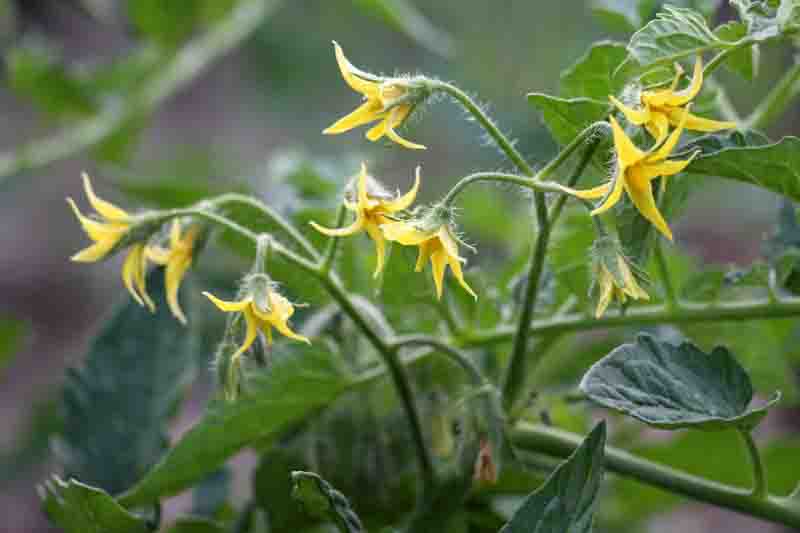


A tomato plant can look spectacular – tall, leafy, deep green, apparently healthy – and still refuse to produce tomatoes. Other plants flower generously but drop every blossom. Some flowers open normally, yet no tiny green fruit begins to swell before the blossom eventually falls.
Those symptoms may look like one problem, but they are not. A tomato that produces no flowers needs a different diagnosis from a tomato that flowers but fails to set fruit. The fastest route to a solution is to identify exactly where the plant’s reproductive process is breaking down.
Gardenia diagnostic principle: Do not begin with “Why aren’t I getting tomatoes?” Begin with “How far did the plant get?” No buds, flowers that drop, flowers that fail to set, and tiny fruit that abort point to different causes and require different responses.
Before changing fertilizer, watering more, pruning the plant, or trying to hand-pollinate every flower, look carefully at what the tomato is doing.
| What You See | Most Useful Causes to Check First |
|---|---|
| Lots of leaves, few or no flowers | Too much nitrogen, insufficient sunlight, plant maturity, severe stress, cultivar habit |
| Flowers form, then yellow, dry, or fall | Heat, cold, drought, waterlogging, root stress, humidity problems, excessive nitrogen |
| Flowers open normally, but no fruit begins swelling and the blossom eventually drops | Temperature stress, poor pollen release, unsuitable humidity, insufficient vibration in protected conditions |
| Tiny fruit starts developing but stalls or aborts | Severe heat, drought or waterlogging, root stress, poor fertilization, or broader plant stress |
Gardenia Flower-to-Fruit Diagnostic Ladder: Ask four questions in order: Did buds form? Did flowers stay attached? Did pollination and fertilization succeed? Did the newly set fruit continue growing? Find the failed step before choosing the remedy.
If your tomato plant is enormous, dark green, lush, and producing stems and leaves enthusiastically but few flowers, excessive nitrogen should be high on the list of suspects.
Nitrogen drives vegetative growth. Tomatoes need it, but a plant receiving more nitrogen than it requires may continue investing heavily in foliage instead of shifting efficiently toward flowering and fruit production.
This often happens when gardeners:
Apply a high-nitrogen lawn fertilizer near the vegetable bed.
Add large amounts of manure or rich compost and then fertilize heavily as well.
Feed repeatedly because a large plant is assumed to need even more fertilizer.
Use concentrated liquid fertilizers too frequently.
If excessive nitrogen is likely, stop adding nitrogen-rich fertilizer and allow the plant time to rebalance. Do not try to “cancel out” nitrogen by dumping phosphorus or potassium into the soil. That can create additional nutrient problems without correcting the original cause.
Gardenia feeding rule: A lush tomato is not necessarily a well-balanced tomato. When foliage is vigorous but flowering is weak, more fertilizer is often the wrong response.
Tomatoes need abundant light to support the energy-intensive process of flowering and developing fruit. Aim for at least 6 hours of direct sunlight, with 8 hours or more generally preferable for strong flowering and production.
A tomato in partial shade may remain alive and green but grow slowly, stretch toward light, flower sparsely, or produce fewer tomatoes than the same cultivar grown in full sun.
Seasonal shade can also creep up on a garden. A bed that receives good spring sun may become shaded later as trees leaf out or nearby plants grow taller.
Container tomatoes have an advantage because they can sometimes be moved to a brighter position. In-ground tomatoes cannot be relocated easily, so site selection matters before planting.
Tomato pollination and fruit set work best within a favorable temperature range. Plants may continue looking healthy outside that range while their flowers quietly fail.
Repeated cool nights – particularly in roughly the low-to-mid 50s°F (about 10-13°C) – can interfere with pollen performance and fruit set. At the other extreme, sustained daytime heat around 90°F (32°C) or higher, especially when nights remain warm around 70°F (21°C) or above, can disrupt flower development, reduce pollen viability, and cause blossom drop.
These are useful guidelines rather than hard biological cutoffs. Cultivars differ, and duration matters. One hot afternoon is very different from a week of hot days and warm nights.
The weather you experience today may not be the weather that caused today’s flowers to fail. Heat can disrupt developing reproductive structures before the flower opens. Blossom drop appearing now may therefore reflect stress experienced a week or more earlier.
Gardenia’s delayed-stress clue: A flower dropping today may have been damaged while it was developing days earlier. Diagnose tomato fruit-set problems from the recent weather pattern, not only today’s temperature.
When heat is the primary cause, there may be little to fix immediately. Keep plants adequately watered, avoid additional stress, maintain mulch, and wait for more favorable temperatures. Healthy indeterminate plants commonly begin setting new fruit when conditions improve.
A widespread misconception is that a tomato plant with no fruit must be missing bees.
Tomato flowers contain both male and female reproductive structures and are capable of self-pollination. They do not require pollen from another tomato plant or cultivar. However, pollen still needs to be released from the anthers and reach the receptive stigma within the flower.
Outdoors, normal air movement often provides enough vibration for this to happen. Bumblebees and other capable buzz pollinators can improve pollen release by vibrating the flower rapidly.
That means:
You do not need two tomato plants for pollination.
You do not need a different cultivar nearby.
A lack of honeybees does not automatically explain poor fruit set.
Still, enclosed, or highly protected growing conditions can reduce the vibration needed to release pollen.
Usually not in an open outdoor garden. Wind movement and insects generally provide enough vibration.
However, tomatoes growing in a greenhouse, enclosed patio, protected balcony, or unusually still location may benefit from gentle vibration. Lightly shake the flower cluster or vibrate its supporting stem briefly with an electric toothbrush without touching or damaging the flower itself.
Gardenia pollination rule: Tomato flowers are self-fertile, not motion-free. They do not need another tomato as a pollen donor, but pollen still has to move within the flower. Outdoors, wind and buzz-pollinating insects usually do that work.
Temperature is not the only environmental factor affecting tomato pollen.
Very humid conditions can keep pollen damp and sticky, reducing its ability to shed and move efficiently within the flower. At the other extreme, very dry air combined with high temperatures and plant water stress can also reduce successful fruit set.
Temperature, humidity, and plant hydration frequently interact, which is one reason fruit set can become difficult during prolonged hot weather.
This is particularly relevant in greenhouses and protected growing spaces, where humidity and air movement may differ substantially from conditions in an open garden.
Improve ventilation where possible, avoid unnecessary crowding, and do not try to compensate for humid weather with excessive pruning. Leaves are still needed for photosynthesis and fruit protection.
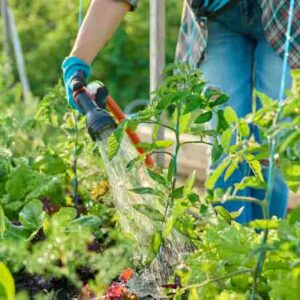
Flowering and early fruit development are vulnerable to water stress. A tomato repeatedly allowed to become severely dry may sacrifice blossoms rather than continue supporting reproduction.
At the opposite extreme, saturated soil can deprive roots of oxygen and impair their ability to supply the canopy. A wilted tomato is therefore not automatically a thirsty tomato.
The goal is reasonably consistent root-zone moisture, not permanently wet soil.
Water deeply enough to moisten the active root zone.
Allow well-drained soil to breathe rather than keeping it waterlogged.
Use mulch to reduce rapid moisture fluctuations.
Check containers more frequently because they dry faster than garden soil.
Increase attention during hot, windy weather when water demand rises sharply.
For complete tomato watering and growing guidance, see Gardenia’s How to Grow Tomatoes: Complete Planting & Care Guide.
Not every flowerless tomato has a problem. A young transplant may simply still be building enough leaves and roots to support reproduction.
Flowering time varies with cultivar, transplant age, temperature, light, nutrition, and stress. Fast-maturing cherry tomatoes may begin flowering relatively early, while some large-fruited or long-season cultivars take longer.
If the plant was recently transplanted, remember that root establishment takes priority for a period. A plant that was chilled, root-bound, damaged during transplanting, or poorly hardened may pause before resuming vigorous growth and flowering.
For guidance on transplant timing and establishment, see Gardenia’s When and How to Plant Tomatoes Outdoors.
Growth habit can completely change what “not flowering anymore” means.
Determinate tomatoes grow to a genetically limited size and produce much of their flowering and fruiting over a relatively concentrated period. Once the main crop has formed and begun ripening, new flowering normally declines substantially.
Indeterminate tomatoes continue producing new stems and flower clusters as long as conditions remain favorable. A healthy indeterminate plant that abruptly stops setting flowers or fruit during midsummer deserves closer attention to temperature, water, nutrition, root conditions, or other stress.
Do not assume a determinate plant is failing simply because it does not continue producing flower clusters indefinitely.
See Gardenia’s Determinate vs. Indeterminate Tomatoes if you are unsure which growth habit you are growing.
Yes, if pruning becomes excessive.
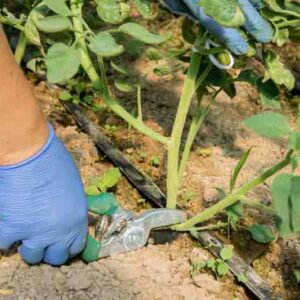
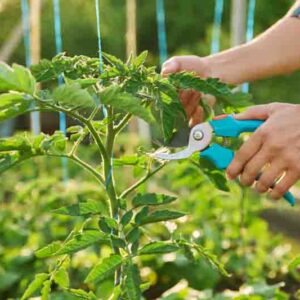
A tomato sucker is a lateral stem capable of producing leaves, flowers, and fruit. Removing every sucker does not automatically increase yield. It changes plant architecture and reduces the number of potential flowering stems.
For a vertically trained indeterminate tomato, selective sucker removal can make the plant easier to support and improve airflow. But aggressive pruning can remove productive growth and reduce the leafy canopy that supplies energy to developing fruit.
Determinate tomatoes need particularly cautious pruning because their productive growth is finite. Repeatedly removing healthy shoots can remove flower clusters the plant will not endlessly replace.
See Gardenia’s Tomato Suckers: Should You Remove Them? and How and When to Prune Tomatoes.
Before blaming the plant for not flowering, ask what has been removed. Every healthy sucker you prune away is also a potential flowering stem.
A tomato’s reproductive growth depends on a functioning root system. Anything that seriously restricts water, oxygen, or nutrient uptake can reduce flowering or cause flowers and newly developing fruit to abort.
Common root-zone stresses include:
Waterlogging: saturated soil limits oxygen around the roots.
Severe drought: roots cannot supply enough water to foliage and flowers.
Small containers: root volume, water reserve, and nutrient supply become increasingly limiting as the plant grows.
Root damage: cultivation, transplant injury, pests, or disease can reduce uptake.
Excess fertilizer salts: high salt concentrations make water uptake more difficult and can damage roots.
If the entire plant is wilting, yellowing, stunted, or showing leaf spots or stem symptoms as well as poor fruiting, the problem may extend well beyond pollination. Use Gardenia’s Tomato Problems: What Is Wrong With My Plant? and Tomato Diseases: Identification, Treatment & Prevention to diagnose the broader symptom pattern.
When a tomato is otherwise healthy, environmental conditions and nutrition are usually more useful places to begin than disease. But a heavily stressed or damaged plant may also reduce flower and fruit production.
Look beyond the flowers if you see:
Unusual leaf mottling or distortion.
Persistent wilting despite adequate soil moisture.
Brown or black leaf lesions.
Severe insect infestations.
Twisted, narrow, cupped, or strangely deformed new growth.
Tomatoes are particularly sensitive to certain herbicides. Drift can distort new growth and contribute to flower loss or abnormal fruit development. Do not assume severely twisted new growth is a fertilizer deficiency.
When tomato flowers develop and then yellow, dry, or fall at the flower stem without producing fruit, the condition is commonly called blossom drop.
The flower itself is often not the root problem. Blossom drop is usually a response to conditions that interfere with pollen release, fertilization, flower development, or the plant’s ability to support reproduction.
Check these causes first:
Recent heat: especially persistent days around 90°F or higher combined with warm nights.
Cold nights: repeated cool conditions can interfere with pollen performance.
Water stress: severely dry roots or badly waterlogged soil.
Excess nitrogen: particularly when the plant is exceptionally leafy.
Humidity or poor pollen movement: particularly in enclosed or protected environments.
Severe plant stress: root damage, pests, disease, or herbicide injury.
Do not fertilize automatically when flowers drop. Excess nitrogen can itself contribute to poor flowering and fruit set. Diagnose the failed step first.
Tomatoes that fail to flower or set fruit attract a surprising amount of bad advice. Avoid trying several remedies simultaneously because you may create new problems while obscuring the original cause.
Epsom salts supply magnesium and sulfur. They do not correct heat stress, failed pollination, excessive nitrogen, insufficient light, drought, or poor root aeration. Add magnesium only when there is evidence that magnesium is deficient.
A high-phosphorus product cannot force a heat-damaged flower to set fruit. Excess fertilizer can increase soluble salts and worsen root stress.
Calcium is important to tomato fruit development, but adding calcium does not solve a plant’s failure to flower or pollinate.
Healthy suckers can become flowering stems. Prune according to growth habit, support system, spacing, and management goals rather than treating all lateral growth as waste.
Vibrating flowers cannot restore pollen or flower structures already damaged by unsuitable temperatures. Hand assistance is useful only where pollen movement is actually limiting.
The right response depends on which stage of reproduction failed.
| Problem | Best First Response |
|---|---|
| Huge leafy plant, no flowers | Review nitrogen inputs and sunlight; stop unnecessary feeding. |
| Plant still young | Maintain good care and allow more time. |
| Flowers dropping during or after a heat wave | Maintain moisture, reduce additional stress, and wait for a new flower cluster under improved conditions. |
| Flowers dropping after cold nights | Wait for warmer conditions; later flowers may set normally. |
| Flowers open but do not set in a still greenhouse or enclosed patio | Improve air movement or gently vibrate flower clusters. |
| Soil repeatedly dries out | Improve watering consistency and mulch the root zone. |
| Whole plant looks unhealthy | Diagnose the root, pest, disease, herbicide, or environmental problem before trying to stimulate flowering. |
Gardenia recovery rule: Correct the limiting factor, then let the plant produce a new round of flowers. You cannot repair a flower already damaged by heat, cold, or failed fertilization, but you can create better conditions for the next cluster.
When a tomato is not producing fruit, work through this sequence:
No flowers? Check maturity, sunlight, nitrogen, cultivar habit, and overall plant health.
Flowers dropping? Review temperatures over the previous one to two weeks, then check moisture and root stress.
Flowers open normally but fail to set and later drop? Consider temperature, pollen release, humidity, and air movement.
Tiny fruit begins swelling but then stalls or aborts? Check for severe heat, drought or waterlogging, root stress, poor fertilization, or broader plant stress.
The whole plant looks abnormal? Diagnose disease, pests, herbicide injury, or root problems before treating the flowering symptom.
The important point is that “no tomatoes” is an outcome, not a diagnosis. A tomato plant has to grow enough healthy foliage, initiate flowers, develop functional pollen, release that pollen, complete fertilization, and then support the developing fruit. Identifying which step failed makes the solution much easier.
For broader care information, visit Gardenia’s Tomato (Solanum lycopersicum) profile and complete tomato growing guide.
Excessive nitrogen is a common cause of lush leafy growth with weak flowering. Insufficient sunlight, plant immaturity, stress, and cultivar timing can also contribute. Review fertilizer use and light before adding more nutrients.
Flowers may fail to set fruit because of heat, cold, unsuitable humidity, poor pollen release, drought, root stress, or excessive nitrogen. Check whether the flowers are dropping quickly or opening normally but failing to produce a swelling fruit.
Tomato blossom drop commonly follows unsuitable temperatures, drought, root stress, excessive nitrogen, or conditions that interfere with pollination and fertilization. Sustained heat and warm nights are frequent causes during summer.
It can be. Sustained daytime temperatures around 90°F (32°C) or higher, especially with warm nights around 70°F (21°C) or above, can interfere with pollen viability, flower development, and fruit set. Cultivars differ in heat tolerance.
Yes. Repeated nights in the low-to-mid 50s°F (about 10-13°C) can reduce pollen performance and fruit set. New flower clusters may set normally after temperatures become more favorable.
No. Tomato flowers are self-fertile, and outdoor wind often provides enough vibration to release pollen. Bumblebees can improve pollen release through buzz pollination, but a second tomato plant or honeybee visits are not required.
Usually it is unnecessary outdoors because wind and insects provide vibration. In a greenhouse, enclosed patio, or very still location, gently vibrating flower clusters can improve pollen release.
Yes. Excessive nitrogen can encourage vigorous stems and leaves at the expense of flower production and fruit set. More fertilizer is not automatically the solution to a fruitless tomato plant.
Tomatoes should receive at least about 6 hours of direct sunlight, with 8 hours or more generally preferable for strong flowering and fruit production. Excessive shade can reduce flowering and yield.
Waterlogged soil can stress tomato roots by reducing oxygen and impairing water and nutrient uptake. Severe root stress can reduce flowering and contribute to blossom or small-fruit abortion. Aim for consistent moisture in well-drained soil rather than permanently wet conditions.
Yes. Severe drought stress can cause flowers to dry and drop. Maintain reasonably consistent root-zone moisture, particularly during flowering and early fruit development.
Not unless magnesium deficiency has been identified. Epsom salts do not correct excessive nitrogen, insufficient sunlight, unsuitable temperatures, drought, root stress, or failed pollination and can contribute to unnecessary nutrient imbalance.
Not automatically. High-phosphorus fertilizer cannot correct heat stress, poor pollination, lack of sunlight, or excessive nitrogen. Base fertilizer additions on soil fertility and plant needs rather than attempting to force flowering.
Often yes. If the plant remains healthy, new flowers produced after temperatures moderate may pollinate and set normally. Keep the plant adequately watered and avoid adding unnecessary stress while waiting for more favorable conditions.
Yes. Determinate tomatoes produce much of their flowering and crop over a relatively concentrated period. Once the main crop is set and ripening, new flowering normally declines. Indeterminate tomatoes continue producing flower clusters for much longer under favorable conditions.
Updated: September 2026 • Reviewed by Gardenia Editors
| Hardiness |
2 - 11 |
|---|---|
| Climate Zones | 1, 1A, 1B, 2, 2A, 2B, 3, 3A, 3B, 4, 5, 6, 7, 8, 9, 10, 11, 12, 13, 14, 15, 16, 17, 18, 19, 20, 21, 22, 23, 24, A1, A2, A3, H1, H2 |
| Plant Type | Fruits |
| Plant Family | Solanaceae |
| Genus | Solanum, Tomatoes |
| Common names | Love Apple, Tomato |
| Exposure | Full Sun |
| Season of Interest | Spring (Late), Summer (Early, Mid, Late), Fall |
| Height | 3' - 10' (90cm - 3m) |
| Spread | 1' - 4' (30cm - 120cm) |
| Spacing | 24" - 36" (60cm - 90cm) |
| Maintenance | Average, High |
| Water Needs | Average |
| Soil Type | Clay, Loam, Sand |
| Soil pH | Acid, Neutral |
| Soil Drainage | Moist but Well-Drained |
| Tolerance | Rabbit, Clay Soil |
| Attracts | Bees |
| Landscaping Ideas | Patio And Containers |
| Garden Styles | City and Courtyard, Informal and Cottage, Pollinator Garden |
| Hardiness |
2 - 11 |
|---|---|
| Climate Zones | 1, 1A, 1B, 2, 2A, 2B, 3, 3A, 3B, 4, 5, 6, 7, 8, 9, 10, 11, 12, 13, 14, 15, 16, 17, 18, 19, 20, 21, 22, 23, 24, A1, A2, A3, H1, H2 |
| Plant Type | Fruits |
| Plant Family | Solanaceae |
| Genus | Solanum, Tomatoes |
| Common names | Love Apple, Tomato |
| Exposure | Full Sun |
| Season of Interest | Spring (Late), Summer (Early, Mid, Late), Fall |
| Height | 3' - 10' (90cm - 3m) |
| Spread | 1' - 4' (30cm - 120cm) |
| Spacing | 24" - 36" (60cm - 90cm) |
| Maintenance | Average, High |
| Water Needs | Average |
| Soil Type | Clay, Loam, Sand |
| Soil pH | Acid, Neutral |
| Soil Drainage | Moist but Well-Drained |
| Tolerance | Rabbit, Clay Soil |
| Attracts | Bees |
| Landscaping Ideas | Patio And Containers |
| Garden Styles | City and Courtyard, Informal and Cottage, Pollinator Garden |
Create a membership account to save your garden designs and to view them on any device.
Becoming a contributing member of Gardenia is easy and can be done in just a few minutes. If you provide us with your name, email address and the payment of a modest $25 annual membership fee, you will become a full member, enabling you to design and save up to 25 of your garden design ideas.
Join now and start creating your dream garden!
Create a membership account to save your garden designs and to view them on any device.
Becoming a contributing member of Gardenia is easy and can be done in just a few minutes. If you provide us with your name, email address and the payment of a modest $25 annual membership fee, you will become a full member, enabling you to design and save up to 25 of your garden design ideas.
Join now and start creating your dream garden!