Why are your tomato leaves curling? The answer may be harmless heat stress, watering problems, pruning, aphids, mites, herbicide injury or a virus. Learn how to read the curl pattern, distinguish physiological leaf roll from serious trouble, and use Gardenia's five-clue diagnostic test to find the real cause.
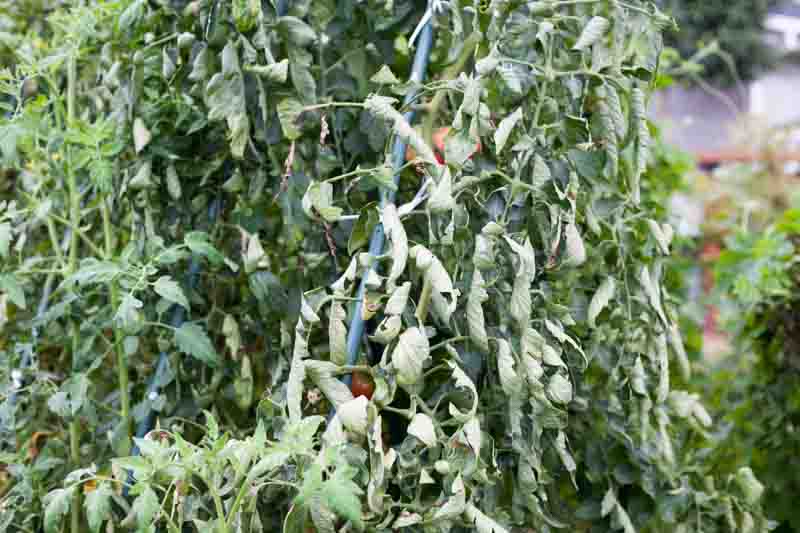


Tomato leaves curling can look alarming, but curled foliage does not automatically mean your plant is diseased. Tomatoes roll, cup, twist, or distort their leaves for very different reasons – from ordinary heat and moisture stress to aphids, herbicide exposure, mites, or viral infection.
The pattern matters far more than the curl itself.
If older leaves remain green but roll upward during hot weather, the plant may simply be showing physiological leaf roll, a common stress response that usually does not seriously affect the crop. If the newest leaves are twisted, narrow, yellow, sticky, mottled, bronzed, or accompanied by stunted growth, something more significant may be happening.
Gardenia tomato-curl principle: Do not diagnose a tomato from “curled leaves” alone. Look at which leaves are affected, which direction they curl, whether their color or texture has changed, what other evidence is present, and what happened to the plant recently.
Start with the accompanying clues rather than immediately spraying, fertilizing, pruning, or removing the plant.
| What You See | Possible Cause | What to Check Next |
|---|---|---|
| Older green leaves roll upward | Physiological leaf roll | Heat, drought, wet soil, pruning, root stress |
| Leaves roll during extreme heat | Heat / moisture stress | Soil moisture several inches deep |
| Tender shoots distorted; leaves sticky | Aphids / whiteflies | Honeydew, insects, ants, leaf undersides |
| Fine stippling, bronzing, webbing | Spider mites | Leaf undersides and fine webbing |
| New growth twisted, narrow, cupped | Possible herbicide injury | Recent lawn, pasture, weed-control exposure |
| Curling plus mosaic, yellowing, stunting | Possible virus | Whole-plant pattern, fruit symptoms, insect vectors |
| Thick crisp leaves, upward roll, stunted plant | Possible curly top virus | Yellowing, purple veins, poor new growth |
Quick reassurance: Green older leaves rolling upward on an otherwise vigorous, fruiting tomato are much less concerning than distorted new growth accompanied by yellowing, mottling, stunting, stem twisting, or abnormal fruit.
Gardeners often use “leaf curl” for every folded tomato leaf, but separating harmless physiological rolling from true leaf distortion is useful.
Physiological leaf roll is a noninfectious response to stress. Leaflets usually roll upward and inward, often beginning on older foliage. In severe cases they may become thick, leathery, or nearly tube-like while remaining relatively green.
The plant may continue growing, flowering, and ripening tomatoes normally.
Disease, insect feeding, or chemical injury is more likely to add other symptoms, including:
Yellow or pale foliage.
Mosaic or mottled coloration.
Very small or distorted new leaves.
Twisted stems or petioles.
Sticky honeydew.
Stippling, bronzing, or webbing.
Severe plant stunting.
Abnormal fruit.
This distinction prevents a common mistake: treating a harmless stress response as though it were an infectious disease.
Physiological leaf roll is common in tomatoes, particularly during stressful weather or periods of vigorous growth and fruit production.
Typical clues include:
Older leaves are affected first.
Leaf margins roll upward and inward.
Leaves usually remain green.
Rolled foliage may feel thicker or leathery.
Flowers and fruit continue developing normally.
The plant is not progressively collapsing or severely stunted.
Physiological leaf roll has been associated with drought, excessive moisture, hot weather, heavy pruning, root disturbance, rapid growth, high fruit load, and excessive nitrogen. Some tomato cultivars are simply more prone to rolling than others.
In most cases, physiological leaf roll does not significantly reduce tomato yield or fruit quality.
If the leaves are green, older, rolled upward, and the plant is otherwise thriving, resist the urge to treat the curl. Correct obvious stress, then watch the new growth. Physiological leaf roll does not require a pesticide or fungicide.
Hot, dry, windy weather increases the amount of water tomato leaves lose through transpiration. When roots cannot replace that moisture quickly enough, leaves may roll inward and reduce the surface area exposed to intense sun and drying air.
This is especially common during summer heat waves.
Before automatically adding water, check the soil. A tomato can curl or droop during intense afternoon heat even when adequate moisture remains around the roots.
Soil dry several inches down: water slowly and thoroughly.
Surface dry but deeper soil moist: wait and recheck later.
Leaves curl in the afternoon but recover overnight: heat stress may be more important than actual drought.
Plant remains wilted in the morning and soil is dry: true water stress is more likely.
For a complete moisture strategy, see Gardenia’s How Often Should You Water Tomato Plants?.
Curled tomato leaves do not always mean “water me.”
Persistently saturated soil can stress roots by reducing oxygen around them. Wet conditions can also contribute to physiological leaf roll in susceptible plants.
Signs that excessive moisture may be involved include:
Soil remains wet for days after irrigation or rain.
Leaves roll despite no obvious drought.
Growth appears soft or stalled.
Lower foliage begins yellowing.
The plant wilts even though the root zone is wet.
If a tomato is wilting or curling in soggy soil, adding more water can make the root problem worse.
Improve drainage, allow the root zone to begin drying, and reassess the plant rather than responding to every curled leaf with another irrigation.
Check the soil before the hose. Both dry roots and oxygen-starved wet roots can produce stressed foliage. The appearance of the leaf alone cannot tell you which one is happening.
Tomatoes can also respond to sudden physical stress by rolling their leaves.
Common triggers include:
Heavy pruning: removing a large amount of foliage or several substantial suckers at once.
Transplanting: roots need time to re-establish after plants are moved outdoors.
Root damage: deep cultivation, digging, construction, or disturbance close to the plant.
Rapid environmental change: moving from protected indoor conditions into strong sun, heat, and wind.
Heavy fruit load: vigorous plants carrying substantial crops sometimes develop physiological roll.
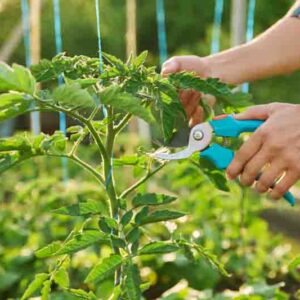
If leaf rolling appeared soon after aggressive pruning, the best response is usually to stop pruning and allow the plant to stabilize.
Gardenia’s How and When to Prune Tomatoes explains why pruning should change with tomato habit, support system, climate, and canopy needs rather than following a rule to remove as much foliage as possible.
Likewise, do not automatically remove every sucker. See Tomato Suckers: Should You Remove Them? for the tradeoffs between pruning, fruiting stems, airflow, and leaf cover.
If tender new leaves are curling or distorted, turn them over and inspect the undersides closely.
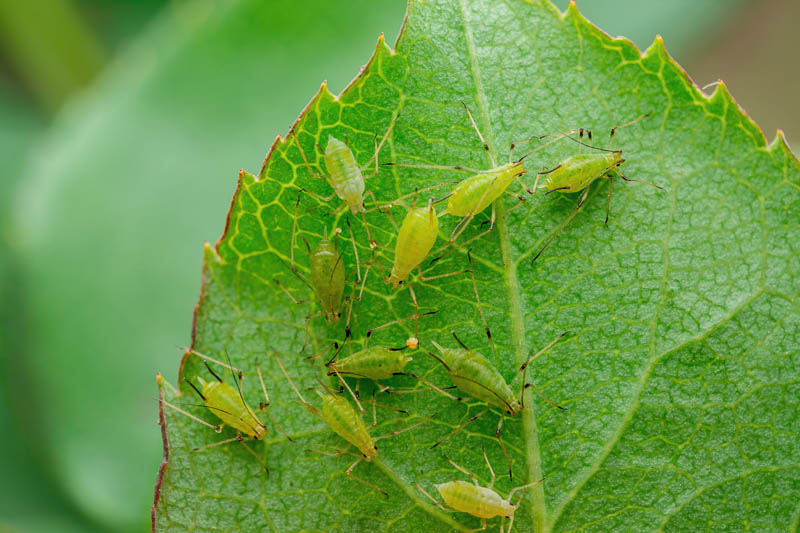
Aphids are small, soft-bodied insects that cluster on tender shoots, stems, and leaf undersides. Large populations can distort developing foliage.
Useful clues include:
Visible colonies: small green, black, pink, yellow, or grayish insects clustered together.
Sticky honeydew: a sugary coating produced as the insects feed.
Black sooty mold: fungi may grow on accumulated honeydew.
Ant activity: ants may repeatedly visit honeydew-producing colonies.
Distortion concentrated around young growth.
Whiteflies also feed on plant sap. Adults often flutter from leaf undersides when the plant is disturbed. Heavy populations may produce yellowing, honeydew, weakened growth, and some curling or distortion.
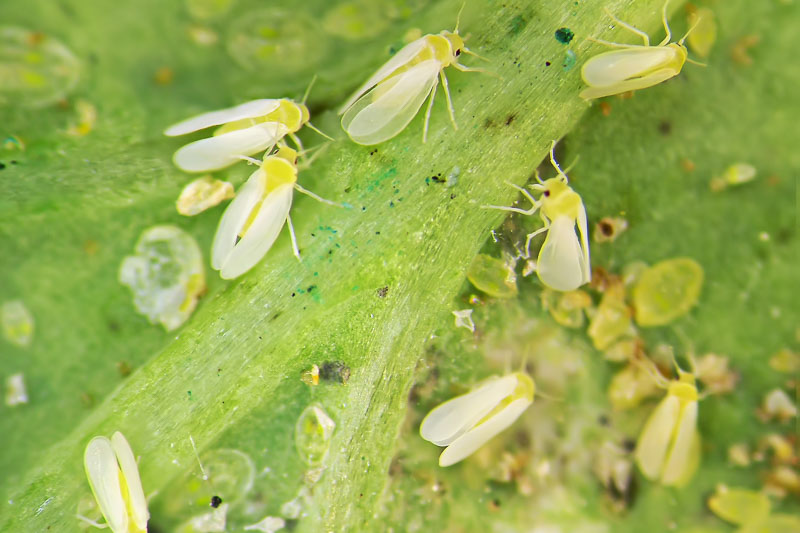
Sticky foliage is often a stronger clue than curling alone.
Do not assume every curled leaf needs insecticide. Confirm that insects are actually present.
Small aphid populations are often controlled by natural enemies or can be dislodged with water. If treatment becomes necessary, insecticidal soap or horticultural oil must contact the pests directly to work effectively.
For damage patterns, identification, and lower-impact control options, see Gardenia’s Tomato Pests: Identification, Control & Prevention.
Some very small pests distort tomato foliage before gardeners ever see the culprit.
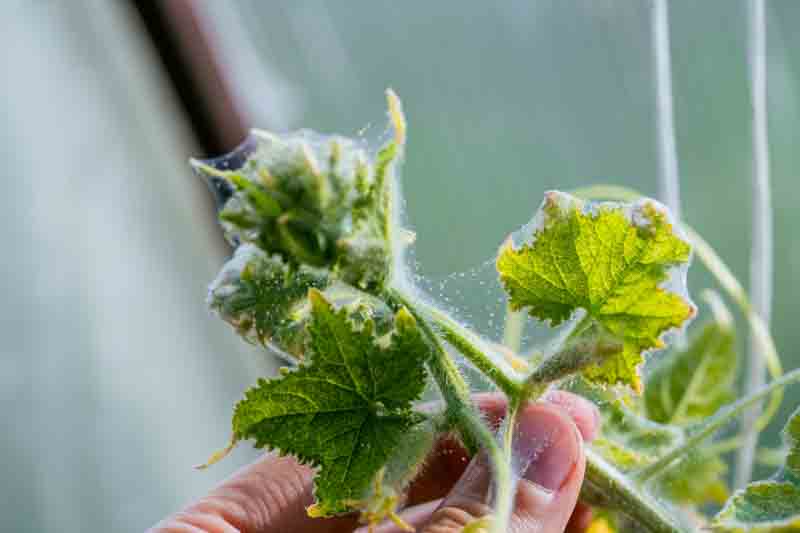
Spider mites thrive especially well during hot, dry weather. Their feeding usually produces fine pale stippling rather than simple leaf roll.
As populations increase, look for:
Hundreds of tiny pale dots on leaves.
Yellowing or bronzing.
Fine webbing, especially beneath leaves.
Dry-looking foliage during hot weather.
Tomato russet mites are extremely small. Damage may begin low on the plant and progress upward, with bronzing, drying, and distorted foliage. Fine webbing is not expected as it is with heavy spider-mite infestations.
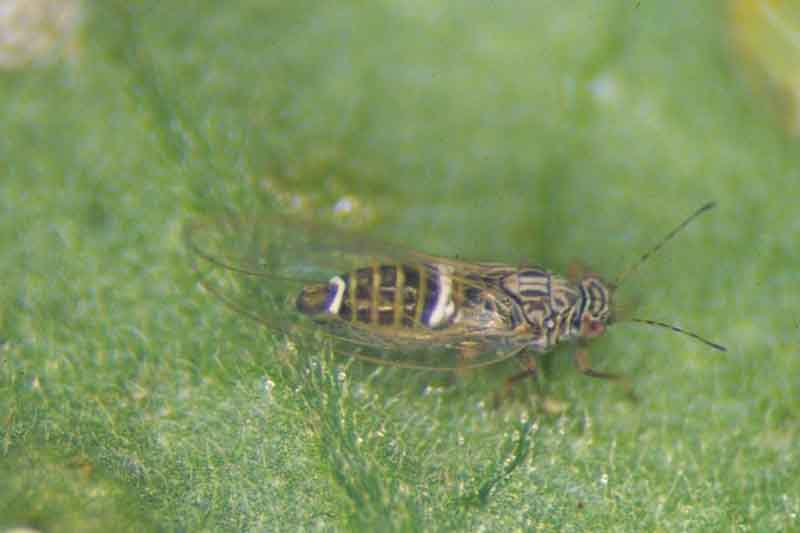
Tomato or potato psyllids can cause yellowing, curling, and stunting. When unusual curled growth is accompanied by tiny nymphs on leaf undersides or progressive plant decline, inspect carefully rather than assuming physiological leaf roll.
The pest clue is usually more than curl. Look for stippling, bronzing, honeydew, webbing, visible insects, nymphs, cast skins, or damage concentrated on particular parts of the plant.
Tomatoes are highly sensitive to several herbicides, particularly products used to control broadleaf weeds in lawns, pastures, roadsides, and landscaped areas.
Herbicide injury often looks quite different from ordinary physiological leaf roll.
Watch for:
Very narrow, stretched, or strap-like new leaves.
Twisting or severe cupping.
Thickened or unusually close leaf veins.
Distorted growing tips.
Bending or twisting of stems and petioles.
Symptoms stronger on the side facing a recent herbicide application.
Exposure can come from direct spray, spray drift, volatilization, contaminated grass clippings, compost, manure, or other organic materials carrying persistent herbicide residues.
If herbicide injury is suspected, identify the likely exposure and prevent additional contact.
Recovery depends on the herbicide, dose, plant age, and severity of injury. Mild exposure may be followed by healthier new growth, but severely distorted tomatoes – especially after exposure to growth-regulator herbicides – may recover poorly enough that replacing the plant becomes the better option.
Herbicide warning: Severe twisting of the newest leaves is not typical physiological leaf roll. Before blaming heat or watering, ask whether lawn treatments, weed sprays, manure, compost, or treated grass clippings could have reached the tomato.
Several viruses can cause curling or distorted tomato foliage, but leaf curl alone is not enough to diagnose a virus.
Viral infection becomes more suspicious when curling occurs with:
Yellow or light-green mottling.
Mosaic patterns.
Very narrow or misshapen leaves.
Stunting.
Reduced flowering or fruit set.
Abnormal color patterns, rings, or blotches on fruit.
A plant that looks markedly different from healthy neighboring tomatoes.
Mosaic viruses, tomato spotted wilt virus, Tomato yellow leaf curl virus, Beet curly top virus, and other viruses can all produce foliar distortion, but their symptoms, insect vectors, geographic importance, and transmission routes differ.
Viruses cannot be cured with fungicides.
When viral disease is strongly suspected, identification matters because the appropriate response may involve removing infected plants, managing insect vectors, avoiding infected transplants, controlling weed hosts, or using resistant cultivars in future plantings.
Gardenia’s Tomato Diseases: Identification, Treatment & Prevention compares viral symptoms with fungal, bacterial, vascular, and noninfectious tomato problems.
Tomato yellow leaf curl virus (TYLCV) is a whitefly-transmitted virus that can cause serious tomato losses where it occurs.
Typical symptoms may include:
Upward curling or cupping of leaves.
Yellowing, particularly around leaf margins or between veins.
Small, thickened leaves.
Shortened internodes and a compact, stunted plant.
Poor flowering and reduced fruit production.
Whiteflies transmit the virus, but seeing whiteflies does not prove that a tomato has TYLCV. Whitefly feeding itself can also weaken plants and cause yellowing or distortion.
If TYLCV is known in your region and the symptom pattern fits, seek regional Extension or diagnostic guidance where appropriate.
Resistant cultivars and healthy virus-free transplants are important preventive tools in affected areas.
Beet curly top virus is particularly important in parts of the western United States and is transmitted by the beet leafhopper.
Infected tomatoes may show:
Upward-rolled leaves.
Thick, crisp foliage.
Yellowing.
Purple coloration along veins.
Stunting.
Reduced or stopped flowering and fruit set.
Plants infected when young may decline severely, while later infections can leave plants alive but permanently stunted.
There is no curative spray for an infected plant.
Again, the clue is not “curling” by itself. It is the combination of curling with thickened foliage, abnormal color, severe stunting, and failure to continue growing normally.
Sometimes nutrient or root-zone problems can contribute to abnormal foliage, but leaf curl by itself is a poor basis for diagnosing a nutrient deficiency.
True nutrient disorders generally produce a recognizable pattern involving leaf color, position, and overall plant growth as well as shape.
Before applying fertilizer, ask:
Are older leaves yellowing between the veins?
Are the newest leaves abnormally pale?
Is the soil pH outside a useful range for tomatoes?
Has the root zone remained saturated?
Has a large amount of fertilizer already been applied?
Does a soil or growing-medium test indicate an actual deficiency?
Phosphorus deficiency is more likely to cause purpling than a distinctive leaf-curl pattern, particularly when cool soil limits phosphorus uptake. Curling alone is not evidence that a tomato needs phosphorus.
Excessive nitrogen can also contribute to lush, rapid vegetative growth and has been associated with physiological leaf roll. Adding fertilizer to every curled tomato may therefore make the underlying problem worse rather than better.
For feeding decisions, see Gardenia’s How to Fertilize Tomatoes: What to Feed & When.
Do not diagnose nutrients from curl alone. Fertilizer is useful when the plant actually needs the nutrient it supplies – not simply because the foliage looks unusual.
Seedlings and newly transplanted tomatoes can curl for many of the same reasons as mature plants, but their small root systems make them particularly sensitive to sudden changes.
Check for:
Transplant shock: recently moved plants need time to establish roots.
Sudden full sun: inadequately hardened seedlings can be stressed by intense outdoor conditions.
Cold soil: roots function less efficiently in chilly conditions.
Overwatering: small root systems suffer in continuously saturated soil or potting mix.
Underwatering: small containers can dry surprisingly quickly.
Aphids or whiteflies: inspect tender growing tips and leaf undersides.
Herbicide exposure: severely twisted or strap-like new growth deserves particular attention.
If a recently transplanted tomato has mild curl but continues producing healthy, normally shaped new growth, give it time to establish before assuming disease.
Instead of starting with a long list of diseases, work through the symptom in this order.
Which leaves are curling? Older lower leaves suggest physiological roll more strongly. Distorted new growth raises suspicion of pests, viruses, chemical injury, or another active growing-point problem.
Which direction are they curling? Upward rolling of green older foliage is classic for physiological leaf roll. Severe twisting, cupping, or narrow new growth points elsewhere.
Have color or texture changed? Green and leathery is different from yellow, mottled, bronzed, purple-veined, sticky, or sharply distorted.
What other evidence is present? Look for insects, honeydew, webbing, stippling, fruit symptoms, stunting, stem distortion, or uneven damage.
What happened recently? Heat wave? Drought? Heavy rain? Aggressive pruning? Transplanting? Root damage? Lawn herbicide? New manure, compost, or grass clippings?
Gardenia Five-Clue Tomato Curl Test: Leaf age → Curl direction → Color and texture → Other evidence → Recent stress or exposure. The diagnosis becomes much more reliable when all five clues point in the same direction.
A green older leaf rolled upward after a heat wave tells a very different story from tiny yellowing new leaves curled upward on a severely stunted plant with whiteflies nearby.
Before treating anything, take ten minutes to inspect the plant carefully.
Check the soil several inches deep. Is it dry, comfortably moist, or saturated?
Look at old and new leaves separately. Where did the problem begin?
Turn leaves over. Look for aphids, whiteflies, mites, nymphs, webbing, honeydew, or cast skins.
Inspect the whole plant. Is growth vigorous or severely stunted? Are stems twisted? Are flowers and fruit normal?
Think backward. Was there recent heat, drought, flooding, pruning, transplanting, fertilizing, herbicide use, or a new compost, mulch, or manure source?
Compare nearby plants. One badly distorted tomato among healthy neighbors suggests a different problem from an entire bed rolling leaves during a heat wave.
Then respond to the cause rather than the symptom.
If the pattern still does not make sense, use Gardenia’s Tomato Problems: What Is Wrong With My Plant? to work outward from the symptoms.
Usually, no – not simply because they are curled.
Green leaves affected by physiological roll are still photosynthesizing and supporting the crop. Removing them can reduce useful leaf area and expose fruit to stronger sunlight.
Remove foliage when there is a specific reason, such as:
Leaves are badly diseased and selective removal forms part of the management strategy.
Foliage is dead or no longer functional.
Lower leaves are touching the soil and removal improves sanitation.
A pest infestation is concentrated on a small removable portion of the plant and removal is appropriate.
Do not defoliate a plant simply to make it look normal.
Curled but healthy green foliage may still be doing useful work.
Leaf roll is generally less concerning when the plant remains vigorous, green, flowering, and productive.
Investigate promptly when curling is accompanied by:
Severe stunting.
Yellow or mosaic-patterned foliage.
Very small or malformed new leaves.
Purple veins with thick, crisp leaves.
Twisted stems or dramatically cupped growth.
Heavy pest populations.
Bronzing, stippling, or webbing.
Abnormal fruit.
Failure to produce new flowers or fruit.
Progressive decline rather than stable leaf rolling.
If a virus or unusual regional pest is suspected, photographs or samples submitted through a local Extension office or plant diagnostic laboratory may be far more useful than trying several sprays at random.
You cannot prevent every curled tomato leaf, and harmless physiological rolling does not need to be eliminated. You can, however, reduce avoidable stress.
Water consistently: avoid repeated swings between very dry and saturated soil.
Mulch the root zone: mulch moderates soil temperature and slows moisture loss.
Provide good drainage: tomato roots need oxygen as well as moisture.
Prune thoughtfully: avoid removing large amounts of foliage at once, particularly during extreme heat.
Protect roots: cultivate shallowly around established tomato plants.
Avoid excessive nitrogen: fertilize according to plant need rather than pushing maximum vegetative growth.
Inspect for pests regularly: check growing tips and leaf undersides before infestations become severe.
Be careful with herbicides: protect tomatoes from drift and from questionable grass clippings, manure, or compost.
Start with healthy transplants: do not introduce obviously distorted, pest-infested, or diseased plants into the garden.
The goal is not perfectly flat tomato leaves. The goal is a healthy, productive plant. A vigorous tomato can roll its leaves during stressful weather and still produce an excellent crop.
For complete planting, watering, fertilizing, support, pruning, and harvesting advice, continue with Gardenia’s How to Grow Tomatoes: Complete Planting & Care Guide.
Tomato leaves can curl because of physiological leaf roll, heat, drought, overly wet soil, pruning, root damage, aphids, whiteflies, mites, herbicide injury, or viral disease. The location, direction, color, texture, and accompanying symptoms are more useful diagnostically than curl alone.
Green older leaves rolling upward are commonly associated with physiological leaf roll caused by heat, moisture stress, pruning, root disturbance, or other environmental stress. Upward curling accompanied by yellowing, stunting, or distorted new growth may have another cause and should be investigated.
It can be. Physiological leaf roll may occur with excessive moisture as well as drought. If the soil remains saturated, roots can also become oxygen stressed. Check moisture several inches below the surface before deciding whether the plant needs more or less water.
Yes. Hot, dry conditions and insufficient soil moisture can trigger upward leaf rolling. Water deeply when the root zone is becoming dry, but do not assume every curled tomato needs water without checking the soil first.
Yes. Physiological leaf roll is common during hot weather, particularly when heat is combined with moisture stress. If older leaves remain green and the plant continues growing and fruiting normally, the rolling itself is usually not harmful.
Not simply because they are curled. Green leaves with physiological roll can remain functional. Remove foliage only when there is a specific reason, such as severe disease, dead tissue, or another diagnosed problem that makes selective removal useful.
Heavy aphid feeding can distort tender tomato growth. Check leaf undersides and growing tips for visible colonies, sticky honeydew, black sooty mold, and ants repeatedly moving over the plant.
Heavy whitefly feeding can weaken tomatoes and contribute to yellowing or distorted growth. Whiteflies can also transmit important viruses, including Tomato yellow leaf curl virus in areas where the virus occurs.
Herbicide injury often affects new growth, producing narrow, twisted, cupped, or severely distorted leaves and sometimes bent stems or petioles. Consider recent weed-control applications, spray drift, treated grass clippings, compost, or manure when the pattern fits.
Physiological leaf roll usually affects older green leaves while the plant remains otherwise productive. Viruses are more likely to cause additional symptoms such as mottling, yellowing, abnormal new growth, severe stunting, unusual fruit symptoms, or reduced flowering and fruit set.
Possible symptoms include upward curling or cupping, yellowing, small thickened leaves, shortened internodes, plant stunting, and reduced flowering and fruit production. The virus is transmitted by whiteflies and occurs primarily in affected regions.
Curly top can produce thick, crisp leaves that roll upward, yellowing, purple veins, severe stunting, and reduced flowering and fruit production. It is transmitted by the beet leafhopper and is particularly important in parts of the western United States.
Excessive nitrogen and rapid vegetative growth have been associated with physiological leaf roll. Avoid adding fertilizer simply because leaves are curled. Check the complete symptom pattern and fertilize according to plant and soil needs.
When older lower leaves remain green but roll upward and inward, physiological leaf roll is a common explanation. Heat, drought, wet soil, pruning, root stress, heavy fruit load, and cultivar susceptibility can all contribute.
Distortion concentrated in the newest growth deserves closer investigation. Aphids, herbicide injury, viruses, and some other pests or stresses can affect tender shoots. Look for insects, honeydew, unusual color, narrow leaves, stem distortion, and recent chemical exposure.
Sometimes older leaves remain rolled even after the original stress improves. The more useful sign is whether new growth develops normally and the plant continues flowering and fruiting. Healthy new growth is generally more reassuring than whether an older rolled leaf becomes flat again.
Updated: September 2026 • Reviewed by Gardenia Editors
| Hardiness |
2 - 11 |
|---|---|
| Climate Zones | 1, 1A, 1B, 2, 2A, 2B, 3, 3A, 3B, 4, 5, 6, 7, 8, 9, 10, 11, 12, 13, 14, 15, 16, 17, 18, 19, 20, 21, 22, 23, 24, A1, A2, A3, H1, H2 |
| Plant Type | Fruits |
| Plant Family | Solanaceae |
| Genus | Solanum, Tomatoes |
| Common names | Love Apple, Tomato |
| Exposure | Full Sun |
| Season of Interest | Spring (Late), Summer (Early, Mid, Late), Fall |
| Height | 3' - 10' (90cm - 3m) |
| Spread | 1' - 4' (30cm - 120cm) |
| Spacing | 24" - 36" (60cm - 90cm) |
| Maintenance | Average, High |
| Water Needs | Average |
| Soil Type | Clay, Loam, Sand |
| Soil pH | Acid, Neutral |
| Soil Drainage | Moist but Well-Drained |
| Tolerance | Rabbit, Clay Soil |
| Attracts | Bees |
| Landscaping Ideas | Patio And Containers |
| Garden Styles | City and Courtyard, Informal and Cottage, Pollinator Garden |
| Hardiness |
2 - 11 |
|---|---|
| Climate Zones | 1, 1A, 1B, 2, 2A, 2B, 3, 3A, 3B, 4, 5, 6, 7, 8, 9, 10, 11, 12, 13, 14, 15, 16, 17, 18, 19, 20, 21, 22, 23, 24, A1, A2, A3, H1, H2 |
| Plant Type | Fruits |
| Plant Family | Solanaceae |
| Genus | Solanum, Tomatoes |
| Common names | Love Apple, Tomato |
| Exposure | Full Sun |
| Season of Interest | Spring (Late), Summer (Early, Mid, Late), Fall |
| Height | 3' - 10' (90cm - 3m) |
| Spread | 1' - 4' (30cm - 120cm) |
| Spacing | 24" - 36" (60cm - 90cm) |
| Maintenance | Average, High |
| Water Needs | Average |
| Soil Type | Clay, Loam, Sand |
| Soil pH | Acid, Neutral |
| Soil Drainage | Moist but Well-Drained |
| Tolerance | Rabbit, Clay Soil |
| Attracts | Bees |
| Landscaping Ideas | Patio And Containers |
| Garden Styles | City and Courtyard, Informal and Cottage, Pollinator Garden |
Create a membership account to save your garden designs and to view them on any device.
Becoming a contributing member of Gardenia is easy and can be done in just a few minutes. If you provide us with your name, email address and the payment of a modest $25 annual membership fee, you will become a full member, enabling you to design and save up to 25 of your garden design ideas.
Join now and start creating your dream garden!
Create a membership account to save your garden designs and to view them on any device.
Becoming a contributing member of Gardenia is easy and can be done in just a few minutes. If you provide us with your name, email address and the payment of a modest $25 annual membership fee, you will become a full member, enabling you to design and save up to 25 of your garden design ideas.
Join now and start creating your dream garden!