Lilac leaves turning yellow, brown, black, spotted, or curled can signal anything from drought and wet roots to mildew, blight, borers, leaf miners, herbicide injury, or witches'-broom. Learn how to read the symptom pattern, check the right part of the shrub, rule out lookalikes, and act wisely.
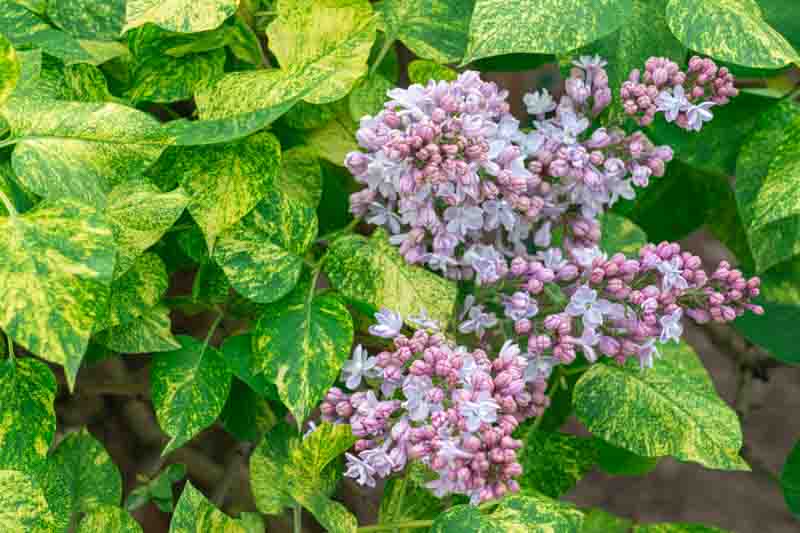


A few yellow leaves on a lilac are easy to overlook. When half the shrub begins to yellow, the leaf edges turn crisp and brown, or the newest growth comes out twisted and curled, it is a different story.
The frustrating part is that leaf color alone rarely tells you what is wrong.
A lilac (Syringa) can develop yellow, brown, spotted, scorched, curled, or distorted leaves for many reasons. Dry soil can scorch the margins. Saturated roots can make an entire shrub pale. Powdery mildew coats foliage in white and may distort young leaves. Bacterial blight can blacken tender shoots. Leaf miners create brown blotches from inside the leaf. Herbicide exposure can twist new growth into shapes that look nothing like normal disease damage.
Then there are problems that are easy to miss. One yellowing branch may lead you to a borer hidden inside the stem. Yellow, distorted foliage accompanied by dense clusters of weak shoots can point toward lilac witches’-broom rather than a simple watering problem.
So instead of asking only, “Why are my lilac leaves turning yellow?”, look at the whole pattern. Which leaves changed first? Where did the problem begin? Is it affecting one stem or the whole shrub? Did it happen suddenly or gradually?
Before treating a yellow, brown, or curling lilac, work through five clues:
Gardenia’s diagnostic principle: A convincing diagnosis should explain the whole pattern, not simply the color of one damaged leaf.
Yellowing, technically called chlorosis, is one of the least specific symptoms a plant can produce. It tells you that the leaf has lost chlorophyll. It does not tell you why.
Before adding fertilizer, study the pattern:
One of the most common mistakes is assuming that yellow foliage means the lilac needs feeding.
Yellow does not automatically mean hungry. Fertilizer cannot correct waterlogged roots, drought, borers, herbicide injury, or most leaf diseases. Diagnose first.
Lilacs are fairly adaptable about soil texture, but they do not thrive with chronically waterlogged roots.
When the root zone stays saturated, air spaces fill with water and roots receive less oxygen. Root function suffers, nutrient uptake becomes less efficient, and foliage may begin to yellow. If poor drainage persists, root and crown problems can follow.
Wet-root stress is more likely when you see several clues together:
The wilt can be misleading. A plant with damaged, oxygen-starved roots may wilt even though plenty of water surrounds them.
Before watering again, check the soil several inches down and consider whether drainage has changed. New paving, altered grades, compacted soil, or an irrigation adjustment can turn a previously acceptable site into a wet one.
For planting depth, drainage, and establishment guidance, see Gardenia’s When and How to Plant Lilacs.
Drought tends to look different from chronic waterlogging.
As a lilac struggles to replace the water being lost through its leaves, the foliage may wilt, fold, curl, or develop dry brown tissue along the tips and margins. Severe water stress can lead to premature leaf drop and branch dieback.
Drought or heat scorch becomes more likely when:
Established lilacs do not need constantly wet soil, but prolonged drought can still cause substantial foliage damage.
When irrigation is needed, water deeply enough to moisten the root zone rather than repeatedly wetting only the surface. Organic mulch can help reduce evaporation and moderate soil temperature, but keep it pulled away from direct contact with the stems.
Both wet roots and dry roots can produce wilt. Check the soil before reaching for the hose. The same visible symptom can require completely opposite treatment.
When the tissue between the veins turns yellow while the veins remain distinctly greener, the pattern is called interveinal chlorosis.
Iron availability is one possible cause, particularly when the youngest leaves at the shoot tips show the symptoms first. Iron is relatively immobile within the plant, so deficiency within the leaf often appears most clearly on new growth.
But green veins on yellow leaves do not prove that your lilac simply needs iron.
Similar symptoms can develop because of other nutrient imbalances or conditions that prevent roots from taking up nutrients effectively. Soil pH, excess moisture, very dry soil, compaction, root injury, and poor aeration can all play a role.
If the pattern persists:
Common lilacs generally tolerate neutral and moderately alkaline conditions better than acid-loving shrubs such as azaleas and rhododendrons. Significant chlorosis should therefore prompt a look at the entire root environment rather than an automatic attempt to acidify the soil.
Think availability, not just quantity. A nutrient can be present in the soil yet difficult for stressed roots to absorb. Correcting the root-zone problem may matter more than adding more fertilizer.
A lilac whose young leaves and shoots suddenly turn dark brown or black in spring deserves a closer look.
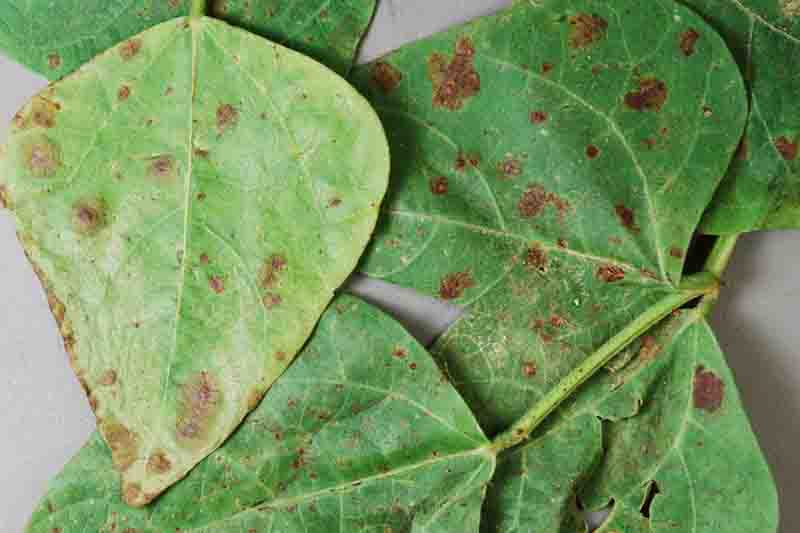 bacterial brown spot of bean/canker of stone fruit, twig blight (Pseudomonas syringae pv. syringae
Lilac bacterial blight, commonly associated with Pseudomonas syringae, can kill tender shoots, buds, leaves, and flower clusters. Cool, wet spring weather favors infection.
Possible clues include:
Frost damage can look remarkably similar because tender young leaves and shoots may blacken almost overnight.
Recent weather is therefore important. If damage appeared immediately after freezing temperatures and primarily affects the softest new growth, frost becomes a strong possibility.
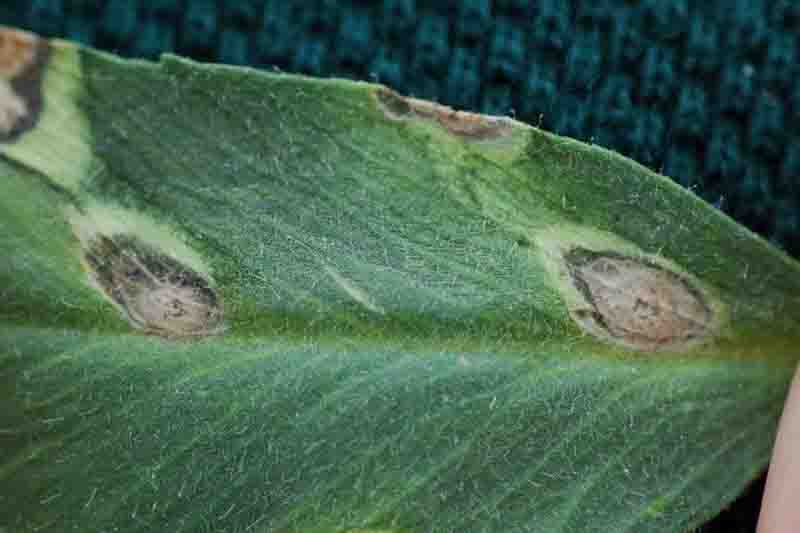 Ascochyta blight of chickpea
Ascochyta blight is another useful lookalike to know.
In spring, current-year shoots and flower stalks can become girdled, wilted, and brown. The dead area may be tan to gray and shrunken, and tiny dark fungal fruiting structures can develop on affected tissue during wet conditions.
Later in the season, olive-green leaf spots may turn tan or brown and enlarge.
That overlap is exactly why diagnosing “black leaves” from a photograph alone can be risky.
Black spring growth has lookalikes. Check recent temperatures, rainfall, stem lesions, and the progression of symptoms before calling it bacterial blight.
For a fuller differential diagnosis, see Gardenia’s Lilac Diseases: What’s Wrong With My Lilac?.
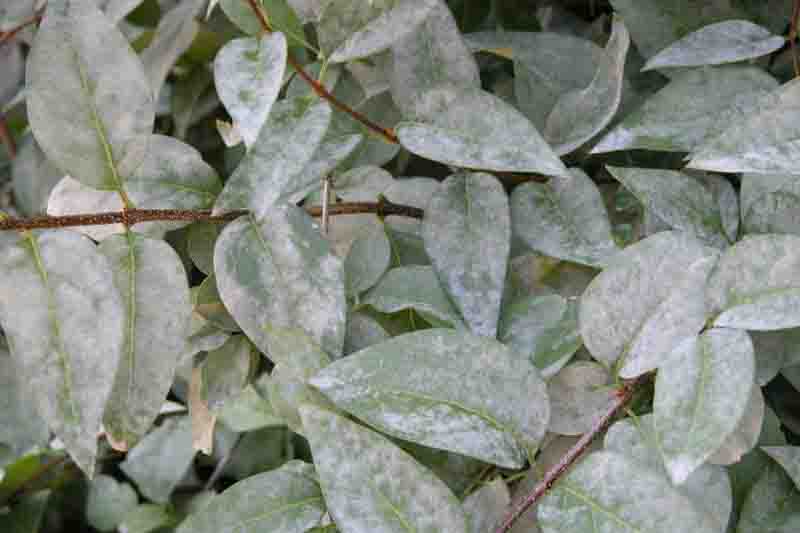
Powdery mildew is one of the easiest lilac foliage problems to recognize because it usually provides its own calling card: a white or gray powdery coating over the leaf surface.
Heavy infection may also be accompanied by:
On established common lilacs, powdery mildew often becomes especially conspicuous later in summer.
It can make a shrub look terrible without necessarily posing a serious threat to its long-term survival. That distinction matters. A lilac does not automatically need aggressive treatment simply because the foliage looks unattractive in August.
Where mildew recurs heavily every year:
For detailed prevention and treatment, see Gardenia’s Powdery Mildew on Lilacs: Prevention and Treatment.
Do not judge severity by ugliness alone. Late-season powdery mildew on a vigorous lilac is often more of an appearance problem than a structural threat.
A brown patch on a lilac leaf does not automatically mean fungal leaf spot.
Look at what the damaged tissue is actually doing.
Leaf spots are dead areas of leaf tissue. Depending on the cause and stage of disease, they may appear tan, brown, olive, gray, or almost black. Some have darker borders, yellow halos, or tiny fungal structures.
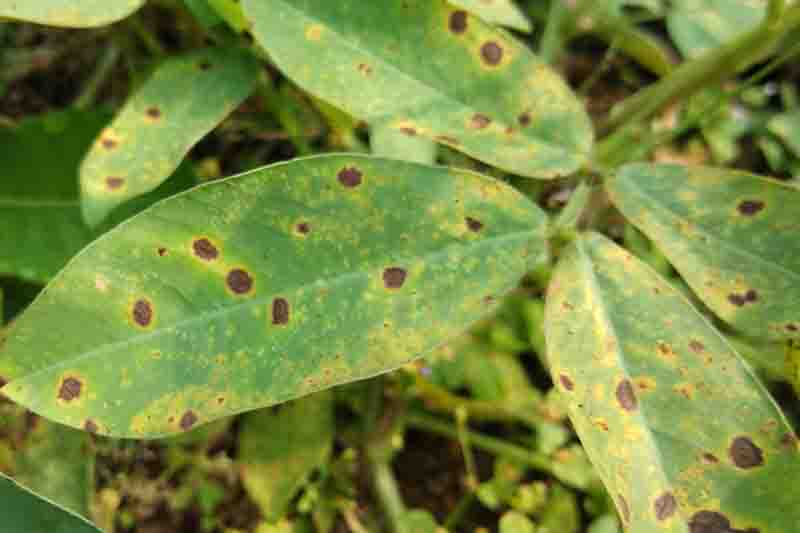 Early Leaf Spot of groundnut
Lilac leafminer damage develops inside the leaf instead. The larvae feed between the upper and lower surfaces, creating mines that can enlarge into pale, tan, or brown blotches. Later feeding may also lead to folded or rolled foliage.
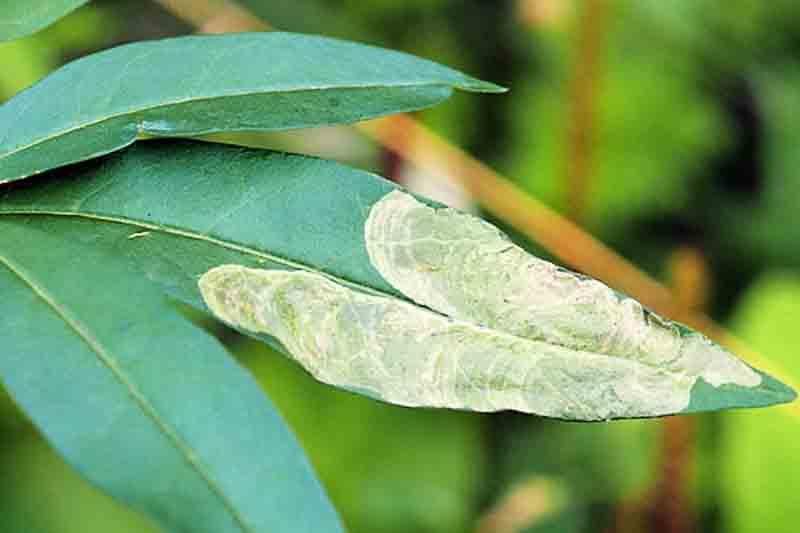
One practical way to investigate a suspicious blotch is to hold the leaf toward the light or carefully open the damaged area. A hollow space containing a larva or frass strongly favors leafminer rather than a conventional leaf spot.
Scattered late-season spots on an otherwise vigorous shrub may need little intervention. Rapid defoliation, blackened shoots, or significant branch decline deserves a closer diagnosis.
When the newest lilac leaves emerge twisted, narrow, cupped, or strangely distorted, disease is not your only suspect.
Growth-regulating herbicides used on broadleaf lawn weeds can injure nearby shrubs through spray drift, contaminated equipment, or other unintended exposure.
Herbicide injury becomes more convincing when:
Existing distorted tissue will not return to normal. If exposure was limited, prevent further contact, maintain appropriate care, and watch whether subsequent growth develops normally.
Look beyond the lilac. If lilac, rose, tomato, and other broadleaf plants nearby suddenly produce similarly twisted new growth, a shared environmental or chemical cause is more plausible than several unrelated diseases appearing at once.
 Candidatus Phytoplasma fraxini
There is another reason not to dismiss pale, distorted lilac leaves as a simple fertilizer problem.
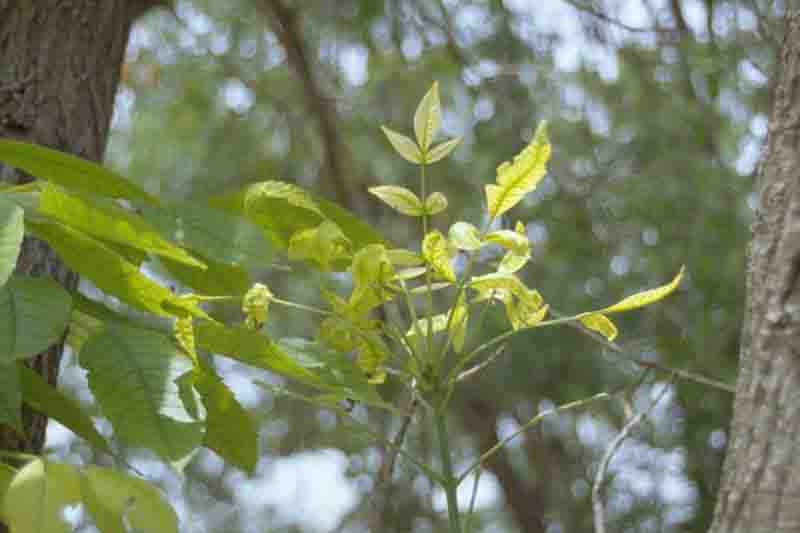
Lilac witches’-broom is associated with a phytoplasma, Candidatus Phytoplasma fraxini, and can produce a distinctive combination of foliage symptoms and abnormal shoot growth.
Look for:
The clusters of weak shoots are the important clue. Yellow leaves alone could have dozens of explanations. Yellow, distorted leaves combined with true witches’-brooms narrow the field considerably.
Herbicide injury can also distort foliage, but it does not typically create the same persistent broom-like clusters of numerous weak shoots.
Do not diagnose witches’-broom from yellow leaves alone. The abnormal clusters of short shoots, distorted foliage, and progressive decline are what make the pattern meaningful.
If a single branch turns yellow, wilts, or browns while the rest of the shrub stays healthy, stop studying individual leaves for a moment.
Follow that branch down.
A branch-specific pattern shifts suspicion toward the stem itself.
Check for:
Lilac/ash borer larvae tunnel inside woody stems and can cause individual branches to wilt or die. Vascular diseases such as Verticillium wilt can also cause yellowing and wilting in one or several branches.
With Verticillium, olive to gray discoloration may sometimes be visible in the sapwood when affected tissue is examined, although absence of obvious discoloration does not by itself rule out every vascular problem.
The foliage tells you that the branch is failing. The stem may tell you why. One declining branch calls for a different investigation than an entire shrub turning yellow.
For borer, scale, thrips, and leafminer diagnosis, see Gardenia’s Lilac Pests: Borers, Scale, Thrips and Leaf Miners.
Not every insect problem leaves obvious holes.
Some pests feed by piercing tissues, scraping surfaces, mining inside leaves, or attacking woody stems. The foliage may simply look pale, stippled, distorted, or weak.
On lilacs, check for:
The important step is finding the pest or its characteristic feeding evidence. Yellow leaves alone are not enough reason to spray an insecticide. For help distinguishing borer damage from scale, thrips, leaf miners, and disease lookalikes, see Gardenia’s Lilac Pests: Borers, Scale, Thrips and Leaf Miners.
When the entire lilac is doing poorly rather than just a few leaves or one branch, widen the investigation.
Yellow foliage, weak growth, wilt, thinning canopy, and progressive dieback can result when roots or the crown are failing.
Ask:
Root and crown diseases, including problems associated with organisms such as Phytophthora or Armillaria, can produce yellowing, wilt, reduced vigor, and dieback.
But those foliage symptoms are not specific enough to identify a particular root disease.
This is where restraint matters. Do not diagnose Armillaria from a photograph of yellow leaves, or Phytophthora simply because the soil happens to be wet. Confirmation may require examination of roots, crown tissue, characteristic signs of the pathogen, or laboratory diagnosis.
Gardenia’s Root-or-Leaf Check: If the whole shrub is yellowing and losing vigor, stop focusing only on individual leaves. Examine the roots, crown, stems, drainage, and recent changes around the plant.
Sometimes the correct diagnosis is not a disease or pest at all.
A spring freeze can blacken tender young leaves, shoots, and flower buds quickly. If the damage appeared immediately after freezing temperatures and older woody tissue remains healthy, frost injury may explain the problem.
Hot, dry, windy weather can leave exposed foliage with crisp brown margins and tips, particularly when soil moisture is inadequate.
Lilacs are deciduous shrubs. Their leaves eventually age, yellow, and fall.
Gradual yellowing late in the season on an otherwise healthy shrub is very different from premature summer yellowing accompanied by wilt, distorted shoots, stem dieback, or poor growth.
Sometimes observation is the correct treatment.
| What You See | Check Next | Possible Direction |
|---|---|---|
| Whole shrub pale or yellow | Soil moisture, drainage, roots | Root stress, waterlogging, drought, systemic decline |
| Yellow tissue with green veins | Young vs old leaves, soil conditions, soil test | Chlorosis, nutrient availability, impaired uptake |
| Dry brown edges and curled leaves | Soil dryness, heat, wind | Drought or leaf scorch |
| Blackened young shoots | Recent frost, cool wet weather, stem lesions | Bacterial blight, frost, Ascochyta blight |
| White powder and distorted foliage | Leaf surface, season, plant vigor | Powdery mildew |
| Brown blotches inside leaves | Open blotch and check for mine, frass, or larva | Lilac leafminer |
| Twisted or cupped new leaves | Recent herbicide use and nearby plants | Possible herbicide injury |
| Yellow distorted leaves plus clusters of weak shoots | Look for broom-like shoot clusters and progressive decline | Lilac witches’-broom |
| One branch yellows and wilts | Stem holes, frass, wounds, bark, sapwood | Borer, vascular problem, physical injury |
The fastest diagnostic shortcut is distribution. One damaged leaf tells you little. One declining branch sends you toward the stem. Whole-shrub yellowing sends you toward roots, water, or systemic stress. Distorted new growth on several nearby plants points toward the environment.
When a lilac suddenly looks wrong, resist the urge to fertilize, spray, and water it all at once.
Work through the evidence:
If several major branches are dying, the shrub is declining rapidly, or the pattern remains unexplained, consider contacting a local Extension service or plant diagnostic laboratory. A correct diagnosis is particularly important before treating suspected vascular, root, bacterial, or phytoplasma problems.
Lilac leaves can turn yellow because of excess or insufficient water, root stress, chlorosis, disease, pests, or normal seasonal aging. The most useful clue is where the yellowing begins – new leaves, old leaves, one branch, or the entire shrub.
Dry, crispy brown margins often develop with drought, heat, wind, or leaf scorch. Brown lesions or blotches within the leaf may instead indicate disease or leafminer feeding, so look at the shape and texture of the damage.
Curling can occur with drought, powdery mildew, pest feeding, or chemical injury. Strongly twisted or cupped new leaves, especially after nearby lawn treatment or when other broadleaf plants are similarly distorted, can indicate herbicide injury.
Yes. Persistently wet soil can reduce oxygen around the roots, interfere with nutrient uptake, and weaken the root system. Yellow foliage, reduced growth, wilt, premature leaf drop, and eventual dieback may follow.
Check the soil rather than relying on wilt alone. Drought can cause wilt, leaf curling, crispy margins, and premature drop, but waterlogged roots can also cause wilt because damaged roots cannot supply the foliage normally.
This is an interveinal chlorosis pattern. Iron availability is one possibility, especially when young leaves are affected first, but other nutrient imbalances and root-zone problems can look similar. Check soil moisture, drainage, root health, and soil conditions before treating.
Blackened spring foliage and shoots can result from bacterial blight, late frost, or diseases such as Ascochyta blight. Recent weather, stem symptoms, and how the damage progresses help separate these lookalikes.
Yes. Heavy powdery mildew can be accompanied by puckering, yellowing, and distortion, especially on younger leaves. The defining clue is the white or gray powdery growth on the leaf surface.
Leaf spots and lilac leafminer can both produce brown areas. Leafminer larvae feed inside the leaf, creating hollow mines or blotches that may contain frass or a larva. Conventional leaf spots are areas of dead leaf tissue rather than insect mines.
Lilac witches’-broom can produce pale yellow or distorted leaves together with dense clusters of short, weak shoots. The combination of broom-like growth, abnormal foliage, branch dieback, and progressive decline is more meaningful than yellowing alone.
A problem limited to one branch should prompt inspection of that stem. Lilac borers, wounds, vascular problems such as Verticillium wilt, or localized damage can cause one or several branches to yellow and wilt while the rest of the shrub remains healthy.
Not automatically. Yellow foliage can result from drought, wet roots, root injury, pests, disease, herbicide damage, or nutrient problems. Determine the likely cause first. Fertilizer cannot correct most of these conditions.
Not until you know what caused the browning. Drought, bacterial disease, fungal disease, frost, herbicide injury, leaf miners, and root decline can all produce brown foliage, and fungicide will not correct most of them.
Yes. Lilacs are deciduous, so leaves naturally age, yellow, and fall as the growing season ends. Gradual autumn yellowing on a healthy shrub is different from premature discoloration accompanied by wilting, distorted growth, or branch dieback.
It depends on the cause and extent of injury. A lilac stressed by drought, temporary root stress, frost, or a cosmetic foliage problem may recover well. Advanced vascular disease, severe root decline, or progressive phytoplasma disease can be much more serious.
A yellow lilac leaf is not a diagnosis. Neither is a brown edge, a black shoot, or a curled leaf.
The useful information comes from how those symptoms fit together.
A whole shrub turning pale after prolonged wet weather points in a different direction from one stem wilting beside a borer exit hole. White powder strongly suggests powdery mildew. A hollow brown blotch makes leafminer more likely. Twisted new growth after lawn spraying suggests chemical injury. Yellow, distorted foliage accompanied by dense broom-like shoot clusters raises a very different concern.
That is why observation should usually come before treatment.
Gardenia’s Lilac Leaf Triage: Define the symptom → locate where it started → check its distribution → judge how quickly it appeared → connect the pattern to weather, soil, roots, pests, disease, or recent garden activity.
And remember the shortcut: one leaf tells you little, one branch sends you toward the stem, and a whole declining shrub sends you toward the root system and growing environment.
If disease appears likely, continue with Gardenia’s Lilac Diseases: What’s Wrong With My Lilac?. If you find insect evidence, see Lilac Pests: Borers, Scale, Thrips and Leaf Miners. For watering, soil, planting, and long-term care, visit How to Grow and Care for Lilacs.
Updated: September 2026 • Reviewed by Gardenia Editors
| Hardiness |
3 - 7 |
|---|---|
| Plant Type | Shrubs, Trees |
| Plant Family | Oleaceae |
| Genus | Syringa |
| Exposure | Full Sun |
| Season of Interest | Spring (Mid, Late) |
| Maintenance | Low |
| Water Needs | Average |
| Soil Type | Chalk, Clay, Loam, Sand |
| Soil pH | Alkaline, Neutral |
| Soil Drainage | Moist but Well-Drained, Well-Drained |
| Characteristics | Cut Flowers, Fragrant, Showy |
| Landscaping Ideas | Beds And Borders, Hedges And Screens, Patio And Containers |
| Garden Styles | City and Courtyard, Informal and Cottage |
| Hardiness |
3 - 7 |
|---|---|
| Plant Type | Shrubs, Trees |
| Plant Family | Oleaceae |
| Genus | Syringa |
| Exposure | Full Sun |
| Season of Interest | Spring (Mid, Late) |
| Maintenance | Low |
| Water Needs | Average |
| Soil Type | Chalk, Clay, Loam, Sand |
| Soil pH | Alkaline, Neutral |
| Soil Drainage | Moist but Well-Drained, Well-Drained |
| Characteristics | Cut Flowers, Fragrant, Showy |
| Landscaping Ideas | Beds And Borders, Hedges And Screens, Patio And Containers |
| Garden Styles | City and Courtyard, Informal and Cottage |
Create a membership account to save your garden designs and to view them on any device.
Becoming a contributing member of Gardenia is easy and can be done in just a few minutes. If you provide us with your name, email address and the payment of a modest $25 annual membership fee, you will become a full member, enabling you to design and save up to 25 of your garden design ideas.
Join now and start creating your dream garden!
Create a membership account to save your garden designs and to view them on any device.
Becoming a contributing member of Gardenia is easy and can be done in just a few minutes. If you provide us with your name, email address and the payment of a modest $25 annual membership fee, you will become a full member, enabling you to design and save up to 25 of your garden design ideas.
Join now and start creating your dream garden!