Is your rhododendron turning yellow, developing brown spots, curling its leaves, or suddenly wilting? Learn how to distinguish environmental stress from pests and diseases, recognize warning signs, and decide what to check first. Gardenia's symptom-based diagnostic guide helps you identify likely causes and take the right action.


Yellow leaves, brown edges, curled foliage, black spots, and wilting are among the most common rhododendron problems. Some result from drought, unsuitable soil, or winter weather. Others are caused by insects, fungi, or root diseases. The challenge is that very different problems can produce almost identical symptoms.
A rhododendron with yellow leaves and green veins may be struggling to absorb iron. Silvery leaves with tiny black spots underneath suggest lace bugs. Leaves curling on a freezing morning may be perfectly healthy. But a shrub wilting in wet soil could have seriously damaged roots.
How do you tell the difference? Start with the symptom, look for distinguishing clues, and check the growing conditions before attempting treatment.
This illustrated Gardenia guide helps you identify common rhododendron and azalea problems, understand what the symptoms mean, and decide what to do next.
Before reaching for fertilizer or fungicide: Examine where the damage occurs, whether it is spreading, and what happened before it appeared. A few aging leaves need very different care from a shrub rapidly declining in saturated soil.
Use this table to narrow down possible causes. The symptoms suggest where to investigate, but do not always identify a disease conclusively.
| What you see | Possible causes | Check first |
|---|---|---|
| Yellow leaves, green veins | Iron or magnesium chlorosis, root stress | Leaf age, soil pH, drainage |
| Whole leaves yellow | Normal aging, moisture or nutrient problems | Old versus new foliage |
| Brown tips and margins | Drought, winter burn, heat, salts | Moisture and recent weather |
| Leaves curl or distort | Cold response, water stress, gall midge, leafminer | Temperature and leaf age |
| Wilting in wet soil | Waterlogging, Phytophthora root rot | Drainage and roots |
| Brown or black leaf spots | Fungal leaf spot, injury, insect deposits | Lesion pattern and both leaf surfaces |
| Pale, stippled leaves | Lace bugs, whiteflies | Leaf undersides and active insects |
| White powder or cottony growth | Powdery mildew, bark scale, leaf gall | Texture and location |
| Brown, collapsing flowers | Petal blight, Botrytis, frost | Water-soaked petals and weather |
| Individual branches dying | Botryosphaeria, borers, other dieback | Stem lesions, holes, pattern |
| Healthy foliage, no flowers | Shade, late pruning, drought, bud damage | Bud history and flowering season |
Before jumping to a diagnosis, ask yourself these five questions:
These observations help separate environmental damage from infectious disease and reveal when testing is necessary. The symptom sections below explain what to look for.
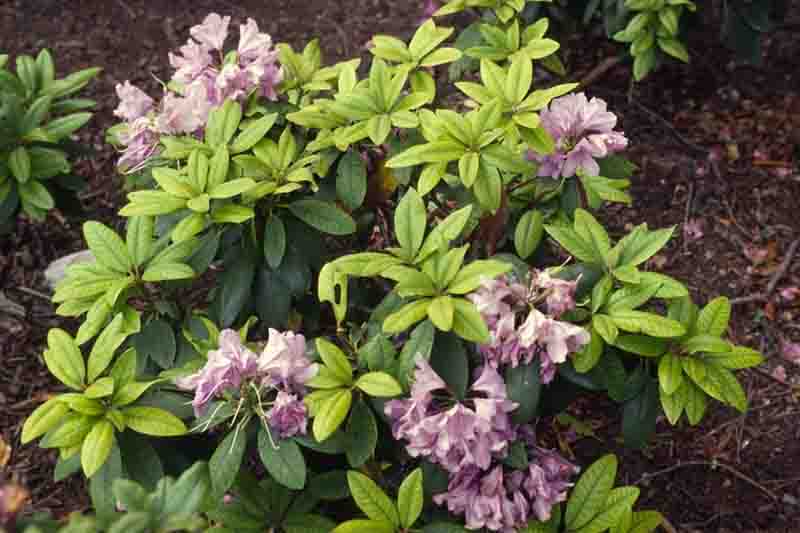
Yellow leaves are common, but the location and pattern of yellowing matter more than the color alone.
Rhododendrons generally prefer acidic soil, commonly around pH 4.5-6.0. Above the preferred range, iron may be present but unavailable to roots, leaving young foliage yellow with conspicuously green veins.
Alkaline soil near concrete foundations, poorly drained ground, and unhealthy roots can contribute to the problem.
Magnesium deficiency may produce similar interveinal yellowing, often beginning on older leaves. A laboratory soil test helps distinguish a genuine nutrient shortage from a pH or root problem.
Check first: Which leaves are yellow? Test soil pH and inspect moisture and drainage.
What to do: Correct documented soil or nutrient problems according to a soil test. Avoid indiscriminate iron, magnesium, or fertilizer applications.
Go deeper: Gardenia’s iron deficiency guide explains chlorosis and appropriate corrections. For detailed advice on soil acidity, drainage, and feeding, see our Rhododendron Soil & Fertilizer Guide.
Brown rhododendron leaves often result from environmental stress, but not all browning is harmless. Look at the shape of the damaged areas and when they appeared.
Evergreen rhododendrons lose moisture through their leaves throughout the year. During freezing weather, wind and sunlight may increase water loss while frozen soil limits replacement. This produces winter burn, often concentrated on exposed leaf edges.
Summer drought and excessive heat can cause similar crispy margins. Damaged tissue will not recover its green color, but surviving branches may produce healthy new growth.
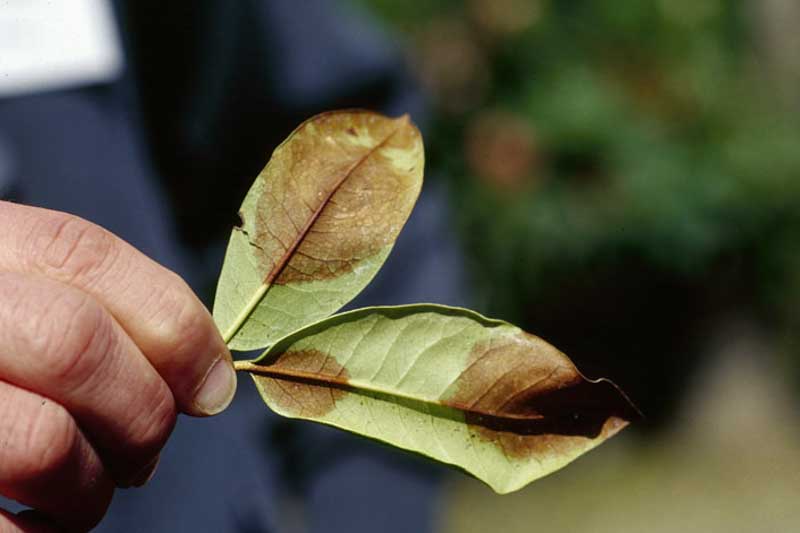
Large, irregular brown lesions may indicate ramorum blight, caused by Phytophthora ramorum, the regulated pathogen associated with Sudden Oak Death in susceptible oaks and tanoaks.
On rhododendrons, infection may begin at leaf tips, margins, or areas where moisture persists. Lesions can extend along the midrib, and affected shoots may die back.
These symptoms are not unique to ramorum blight. Environmental scorch and other pathogens can look similar, so laboratory testing is necessary to confirm a suspected infection.
Check first: Is the damage mainly crispy along exposed leaf edges, or are irregular lesions expanding into the leaf? Consider recent drought, freezing temperatures, and prolonged wet weather.
What to do: Correct confirmed moisture or exposure problems. Wait for spring growth before removing branches affected by winter injury.
Important: If ramorum blight is suspected, do not transport potentially infected plants, cuttings, or soil. Contact your local extension service or state plant health authority for testing and instructions.
A rhododendron with tightly rolled, drooping leaves can look seriously ill on a freezing morning. Yet this is often a normal response to cold, called thermonasty.
The important distinction is whether the curling disappears when temperatures rise or affects developing leaves during the growing season.
Rhododendron gall midge larvae feed on developing leaves, causing distorted, puckered growth and curled margins. Older leaves generally retain their normal shape.
Azalea leafminer larvae initially feed between the leaf surfaces, producing pale blotch mines. Later, they may roll leaf tips with silk and continue feeding inside.
These injuries differ from the uniform curling associated with freezing temperatures.
Check first: Note the temperature and examine whether curling affects old leaves or new growth. Look for mines, puckering, or larvae.
What to do: Cold-related curling requires no treatment. Maintain appropriate soil moisture. Remove localized leaves containing confirmed gall midge larvae or leafminers where practical.
When to worry: Persistent wilting during mild weather, especially when soil is wet, requires prompt investigation of root health.
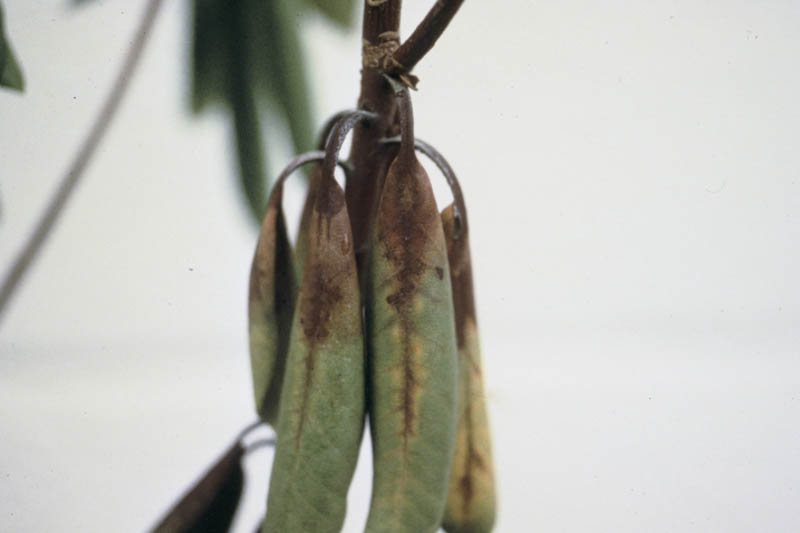
Your rhododendron is wilting, so you water it again. Two days later, it looks worse, even though the soil is still wet. At this point, more watering may be contributing to the problem.
Roots need oxygen as well as moisture. In compacted or saturated soil, they may become oxygen-starved and lose their ability to absorb water.
Phytophthora root rot can produce similar symptoms. Several Phytophthora species infect rhododendron roots and may cause progressive wilting, yellowing, dieback, and plant collapse.
Waterlogging without infection and infectious root rot can look nearly identical aboveground. Visual root examination alone may not distinguish them.
Check first: Examine drainage, soil moisture, planting depth, and accessible roots without unnecessarily damaging the root system.
What to do: Stop unnecessary watering, address drainage problems, and seek testing if decline persists. Do not move potentially infected soil or root material to other planting areas.
Can it recover? A plant with limited noninfectious root damage may improve once conditions are corrected. Advanced Phytophthora root rot is much harder to manage, and severely affected shrubs may not survive.
Discrete brown spots are different from entire leaf edges turning crispy. Fungal leaf spots, rust, insect droppings, and sooty mold can all create dark markings.
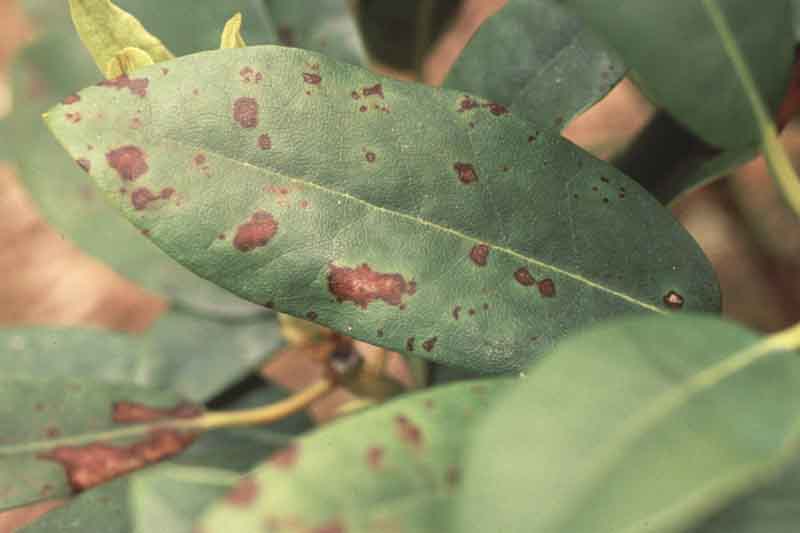
One documented rhododendron leaf spot disease is caused by Chuppomyces handelii, formerly known as Cercospora handelii or Pseudocercospora handelii.
The disease produces reddish-brown to dark-brown spots that may have darker margins. Lesions can enlarge and merge, sometimes causing premature leaf drop.
Other fungi cause similar symptoms. A photograph may help narrow the diagnosis, but cannot reliably identify the exact pathogen.
Check first: Are the spots embedded in the leaf, or can the dark material be rubbed from the surface? Examine both sides of several leaves.
What to do: Remove heavily affected fallen foliage, reduce unnecessary overhead irrigation, and maintain suitable spacing.
When to worry: Limited leaf spotting is often cosmetic. Rapid spread, substantial leaf loss, or accompanying dieback warrants closer diagnosis.
If leaves look silvery, mottled, or covered with tiny pale specks, turn them over. The insects responsible often remain on the undersides while their feeding damage appears above.
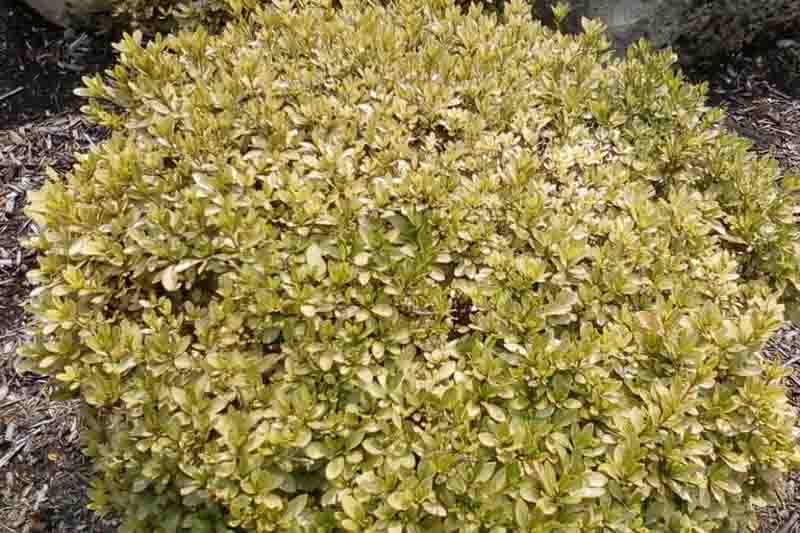
Lace bugs feed from beneath the foliage, leaving pale stippling above and small black fecal spots underneath. Adults have delicate lace-like wings; immature insects are darker and often spiny.
Old stippling remains even after insects disappear. Treating discolored foliage without checking for active populations may accomplish nothing.
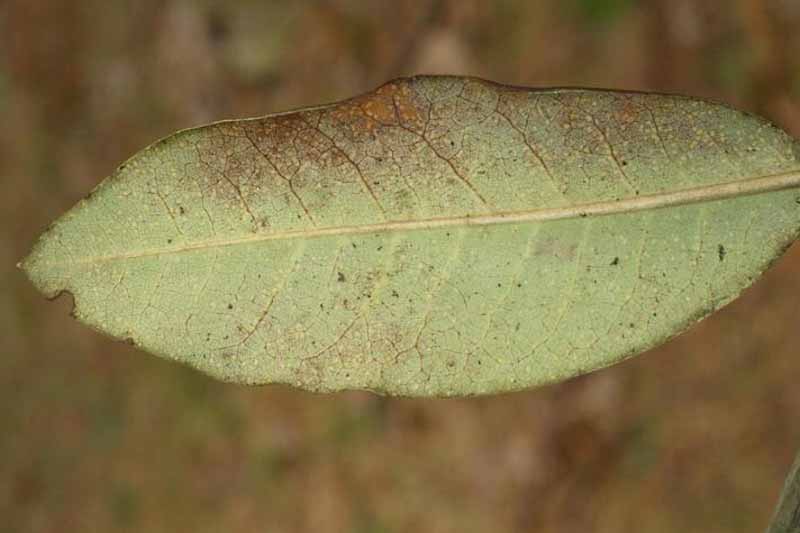
Whiteflies also feed beneath leaves. Heavy infestations may produce yellowing, cupped leaf margins, sticky honeydew, and sooty mold.
When disturbed, tiny white adults may fly up. Immature stages remain attached to the undersides of leaves.
Check first: Examine leaf undersides for living insects, fecal spots, honeydew, or whitefly immatures.
What to do: Encourage beneficial insects and reduce drought stress. If active infestations justify control, use an appropriately labeled insecticidal soap or horticultural oil, carefully covering the affected undersides.
Avoid: Spraying merely because old leaves remain stippled. Follow all pesticide label instructions, including precautions against leaf injury and risks to pollinators.
Three very different problems can produce white material on rhododendrons and azaleas. The location and texture usually provide the quickest clues.
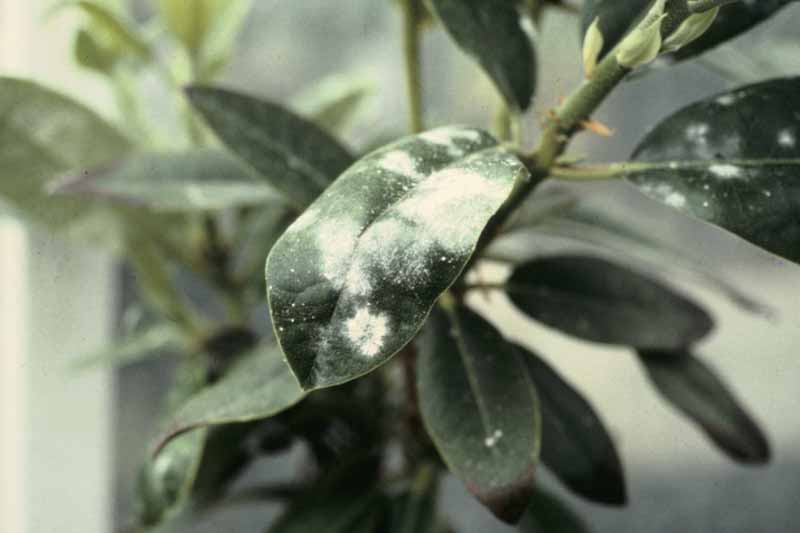
Powdery mildew produces a superficial, powder-like coating, particularly on susceptible deciduous azaleas. Infections can also cause leaf discoloration.
Light infections are often cosmetic. Improve air circulation and avoid overcrowding before considering treatment.
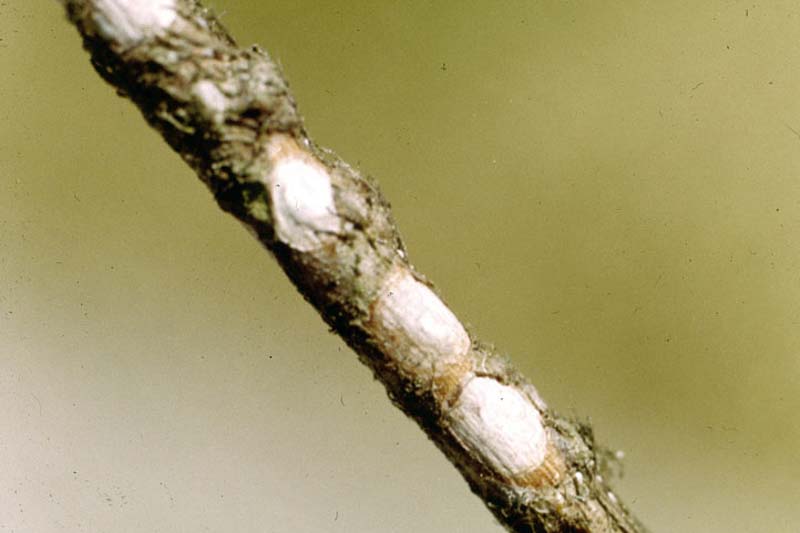
Azalea bark scale produces conspicuous white, cotton-like waxy egg sacs around twigs and branch forks. Feeding insects produce honeydew, which can lead to black sooty mold and yellowing foliage.
Heavy infestations may weaken shoots and cause twig dieback.
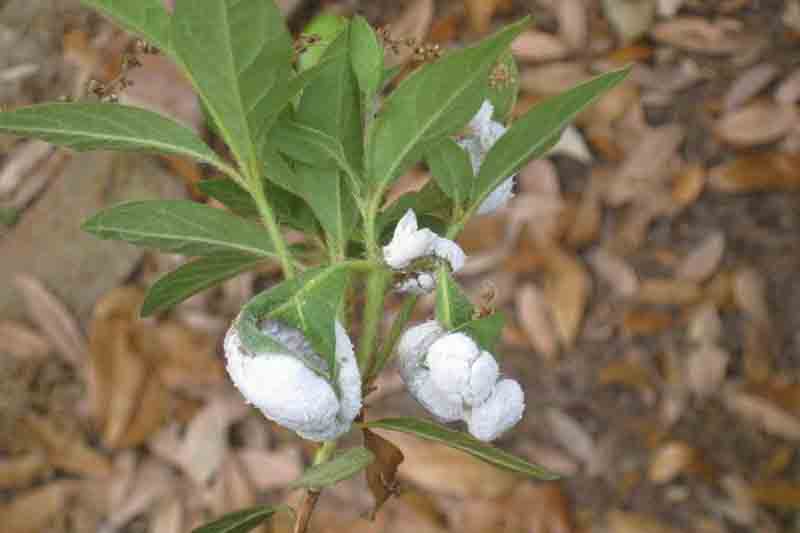
Azalea leaf gall causes new leaves or flowers to become swollen, thick, and fleshy. Galls may begin pale green and later develop a white coating as spores form.
Although conspicuous, a few isolated galls rarely seriously harm an established shrub.
Check first: Is the white material powder on leaves, cottony wax on twigs, or a coating on swollen plant tissue?
What to do: Improve airflow for mildew. Inspect and monitor scale populations, intervening where infestation is damaging. Remove isolated leaf galls before spores are released.
When to worry: Spreading scale infestations with yellow leaves or twig decline deserve attention. A few leaf galls or limited mildew are generally less serious.
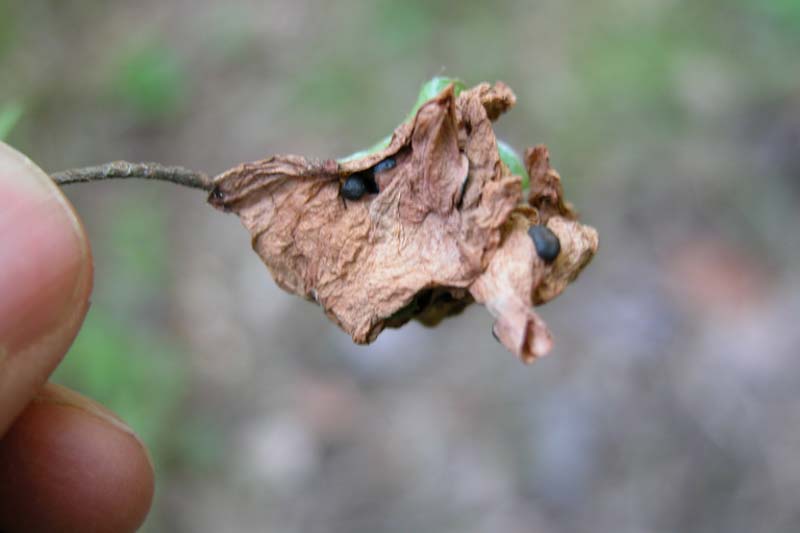
Brown flowers are not always diseased. Blooms naturally fade, and late frost can ruin an otherwise beautiful spring display. The texture and speed of deterioration provide important clues.
Ovulinia azaleae causes petal blight in azaleas and rhododendrons. Infected flowers may remain attached, and fungal resting structures can persist in fallen flower debris.
Botrytis gray mold can also damage flowers, especially in cool, moist conditions, but the characteristic slimy collapse is particularly useful when considering Ovulinia.
Check first: Look for water-soaked spots, soft petals, recent rain, and how quickly the flowers collapsed.
What to do: Remove diseased blossoms and fallen flower debris where practical. Reduce prolonged flower wetness and replace contaminated surface mulch when blight recurs.
When to worry: Recurring severe blight may justify a local diagnosis and a more specific management program.
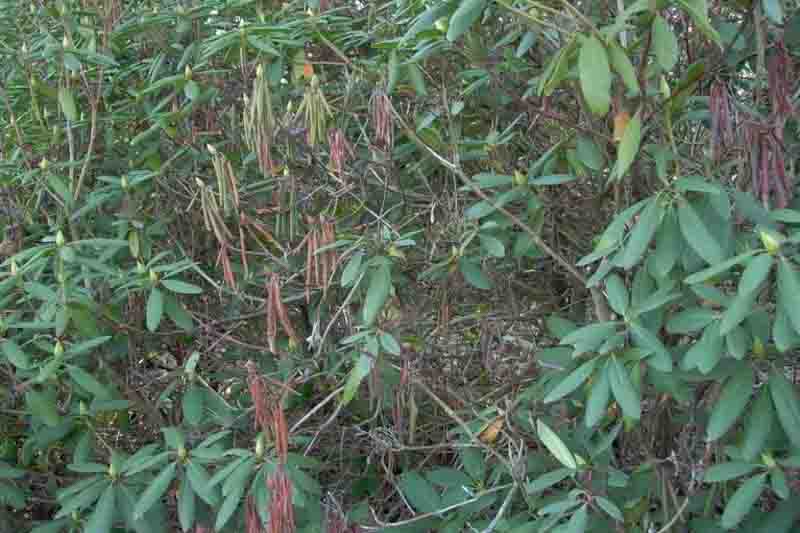
One branch turns brown while the rest of your rhododendron looks healthy. That distribution is an important clue: investigate the affected stem before assuming the entire root system is failing.
Botryosphaeria dieback can cause scattered branches to wilt and turn brown. Leaves may roll inward and remain attached to dead shoots. Drought and other environmental stresses can increase susceptibility.
Stem-boring insects may produce similar localized decline.
Check first: Examine stems for lesions, dead bark, insect holes, and the boundary between healthy and affected wood.
What to do: Prune confirmed dead or diseased shoots into healthy wood, using clean tools and disposing of suspect material appropriately.
When to worry: Continuing dieback, several affected branches, or sudden whole-plant decline warrants laboratory or professional diagnosis.
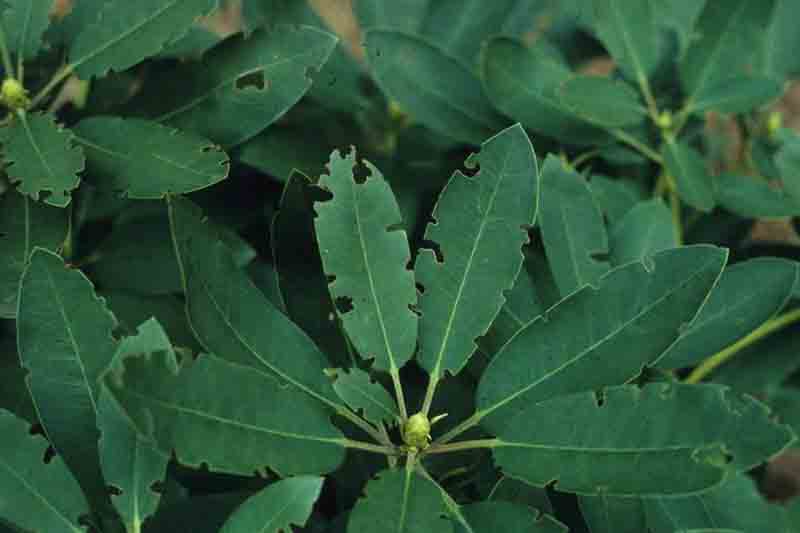
Missing leaf tissue usually points toward chewing insects. The shape of the damage helps narrow the possibilities.
Adult black vine weevils commonly feed at night, while their larvae live in the soil and can damage roots and the root crown.
Check first: Examine damaged foliage after dark with a flashlight. If growth is weak or the shrub wilts, consider root-feeding larvae.
What to do: Remove accessible adult weevils by hand when practical. For confirmed damaging larval populations, appropriately selected beneficial nematodes may help under suitable soil conditions.
When to worry: Cosmetic notching alone is usually less concerning than root damage, wilting, or progressive decline.
A rhododendron with healthy foliage but few flowers may have a problem with bud formation or survival rather than a leaf disease.
Common causes include excessive shade, late pruning, summer drought, winter bud injury, excessive nitrogen, and unsuitable growing conditions. Dead brown buds may also result from fungal bud blast.
Check first: Did flower buds form during the previous growing season? Were they removed by pruning or damaged before opening?
Go deeper: Gardenia’s guide to eight reasons rhododendrons fail to bloom explains how to distinguish these causes and encourage better flowering.
Some changes are normal, some require monitoring, and others deserve prompt attention. The speed and extent of decline help determine the priority.
| Symptom | Priority | Recommended response |
|---|---|---|
| A few older yellow leaves | Usually low | Monitor new growth |
| Winter curling that reverses | Usually normal | No treatment needed |
| Limited fungal leaf spots | Usually low | Monitor and improve hygiene |
| Increasing lace bug damage | Moderate | Confirm active insects and assess control |
| Progressive branch dieback | High | Investigate promptly |
| Whole-shrub wilt in wet soil | High | Check drainage and roots urgently |
| Suspected ramorum blight | Requires official guidance | Avoid moving material; contact plant health authority |
The healthiest rhododendrons begin with a suitable planting site. Good growing conditions will not prevent every pest or disease, but they make many problems less likely.
For detailed cultivation instructions, see Gardenia’s rhododendron and azalea growing guide.
A rhododendron repeatedly struggling with alkaline soil, persistent waterlogging, intense summer heat, or exposure may simply be poorly suited to its location.
Before replacing it with another similar shrub, identify what went wrong. Gardenia’s Plant Finder helps you find plants adapted to your conditions, while the Garden Design Tool helps you check sun, soil, drainage, water needs, mature size, and plant compatibility before planting.
Common causes include drought, waterlogging, unsuitable soil, root damage, winter injury, and diseases such as Phytophthora root rot. Check whether individual branches or the entire shrub are affected, then investigate moisture, drainage, roots, and recent weather.
Young yellow leaves with green veins may indicate iron chlorosis, often associated with high soil pH. Older leaves with interveinal yellowing may suggest magnesium deficiency, while a few yellow interior leaves can be normal seasonal aging.
Brown leaf margins commonly result from drought, winter burn, heat, drying winds, or salt injury. Distinct brown lesions may indicate fungal or other leaf blights. The shape, location, and timing of the damage help distinguish the causes.
Many evergreen rhododendrons naturally roll and droop their leaves during freezing weather. If they recover when temperatures rise, the response is usually normal. Persistent curling during mild weather may indicate drought, root stress, or insect damage.
Pale stippling may indicate lace bug feeding, especially when black droppings occur beneath the leaves. Powdery white growth suggests powdery mildew, while cottony material around twigs may indicate azalea bark scale.
No. Black marks may be fungal leaf lesions, insect droppings, or sooty mold growing on honeydew. Examine both leaf surfaces and determine whether the markings are embedded in the tissue or sitting on its surface.
Recovery depends on the cause and severity of root damage. Correcting waterlogging may help if sufficient healthy roots remain, but advanced Phytophthora root rot is difficult to manage. Confirm the diagnosis before treating or replanting.
The most useful clues to rhododendron problems are often in the details: which leaves are affected, how the damage develops, what appears beneath the foliage, and whether the soil is too dry or too wet.
Use Gardenia’s symptom guide and diagnostic checklist to narrow the cause before acting. Recognizing what is normal, what can be managed, and what needs expert testing will help you avoid unnecessary treatments and give your rhododendron the best chance of recovery.
Updated by Gardenia: October 2026
| Hardiness |
3 - 10 |
|---|---|
| Plant Type | Shrubs |
| Genus | Rhododendron |
| Exposure | Full Sun, Partial Sun |
| Season of Interest | Spring (Early, Mid, Late), Summer (Early), Fall, Winter |
| Maintenance | Low |
| Water Needs | Average |
| Soil Type | Clay, Loam, Sand |
| Soil pH | Acid |
| Soil Drainage | Moist but Well-Drained |
| Tolerances | Rabbit |
| Attracts | Butterflies, Hummingbirds |
| Landscaping Ideas | Beds And Borders, Patio And Containers, Small Gardens |
| Garden Styles | City and Courtyard, Gravel and Rock Garden, Informal and Cottage, Japanese Garden, Traditional Garden |
Create a membership account to save your garden designs and to view them on any device.
Becoming a contributing member of Gardenia is easy and can be done in just a few minutes. If you provide us with your name, email address and the payment of a modest $25 annual membership fee, you will become a full member, enabling you to design and save up to 25 of your garden design ideas.
Join now and start creating your dream garden!